pilgrimage, a journey undertaken for a religious motive. Although some pilgrims have wandered continuously with no fixed destination, pilgrims more commonly seek a specific place that has been sanctified by association with a divinity or other holy personage. —Encyclopedia Brittanica
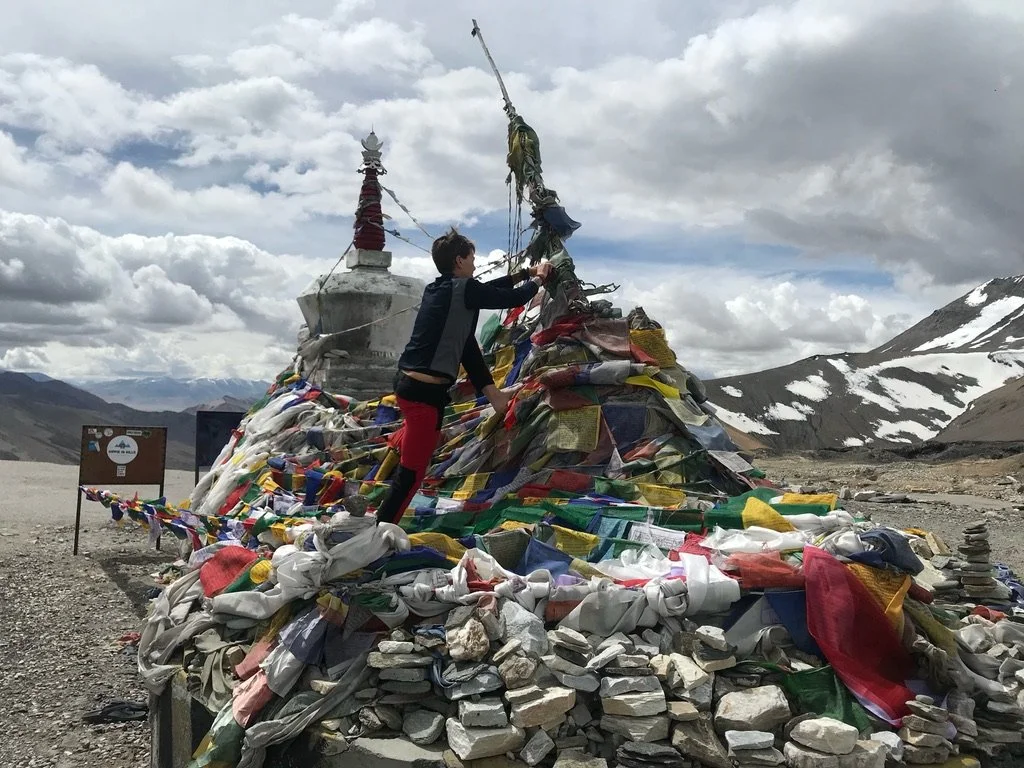
On August 2nd, I’m leaving San Francisco on the first leg of a four-month pilgrimage. I will visit 3 sites: Ladakh in Indo-Tibet, Nepal, and Shikoku, a large island in Japan. If things go according to plan (and of course they probably will not), I will walk more than 2500 km and visit around 200 temples, monasteries, and other religious sites. In Ladakh and Nepal, the sites will be Tibetan Buddhist, Bön, and Hindu. In Japan, the focus of the pilgrimage is Shingon Buddhism, although I will also be visiting sites important in my own tradition of Zen.
Why now? I have been practicing in the Zen tradition for a little over 20 years. Shikoku Pilgrimage—or Henro—is something I have longed to complete since the first time I heard of it. Ladakh is like a second home to me—this will be my eighth visit, with only the two summers of COVID interrupting my annual pilgrimage there. I cannot wait to return. Nepal is new to me, but the meeting of Hindu and Buddhist spiritual traditions there has also called me for many decades. As Dōgen Zenji says, “this is the mountain training.”
At 55, I can safely say that I am more than halfway through my life. Adventures in the mountains have been part of my life for decades, and I know that they will not always be available to me. The world is changing rapidly, and not in a good way, and I do not assume that travel of this type will or should be available to me in the future. From carbon footprint to aging knees, causes and conditions mean a walk like this will not always be possible. I am enormously grateful to UC Santa Cruz for releasing me to walk and pray in what remains a challenging time.
The last three years have been brutal, and some part of my desire to walk and pray is a desire to metabolize the grief and trauma of COVID, racial violence, war, and climate catastrophe. I’ve been occupied with the ten thousand things, and I know there is a backlog of feelings that need to be felt. Yet even as this walk is backward looking, I also know that it is preparation for the time left to me, time in which I hope to be of service in and to a suffering world.
I am walking with two questions:
-
What do I want to do with my freedom in the time left to me?
-
What is my ministry?
I have no doubt that other questions will emerge along the way.
I am grateful to all the beings who walk with me—teachers, friends, sangha, loved ones human and non human. I walk with and for all beings, in the footsteps of the Buddhas and ancestors.
 Walking and Praying