High speed air and train travel, continuous connectivity, and a kind of “optimizing” approach to planning have rendered intentional and measured transitions between different places and experiences in our lives something close to optional. Given the chance, I’ll barrel home from a trip or a visit with a friend or even a long retreat within hours of needing to be at work and resume the usual routines of home—and vice versa—without giving the wisdom of this approach to my living a second thought.
One of the things I most … appreciate? … and learn from when arriving in Ladakh is the sheer ferocity and necessity of a carefully considered transition. We fly in from Delhi, which is at sea level, to approximately 11,300 ft above sea level. There is no place to descend to should we run into trouble, short of getting back on the plane and retracing our flight path to lower ground. Even with meticulous attention to what I eat and drink, how I move, when I rest, and what support I give my body for the transition in the way of supplements and medications, the challenge of adaptation is no joke. I’ve now done this demanding thing 8 times, and while it gets less mysterious, I wouldn’t say it gets substantially easier with repetition.
Just getting to Delhi from the US is a journey of a minimum of about 18 hours, and for many of us the total time taken is inching closer to 30. Then there is a pause of a day or two in Delhi, in part to begin to work on the jet lag, and in part to be sure that even with travel delays it’s possible to make the connecting flight over the Himalayas and into the Ladakh region. Those days in Delhi are surreal but in their own way marvelous—an in between space to honor the great leap we’re about to make.
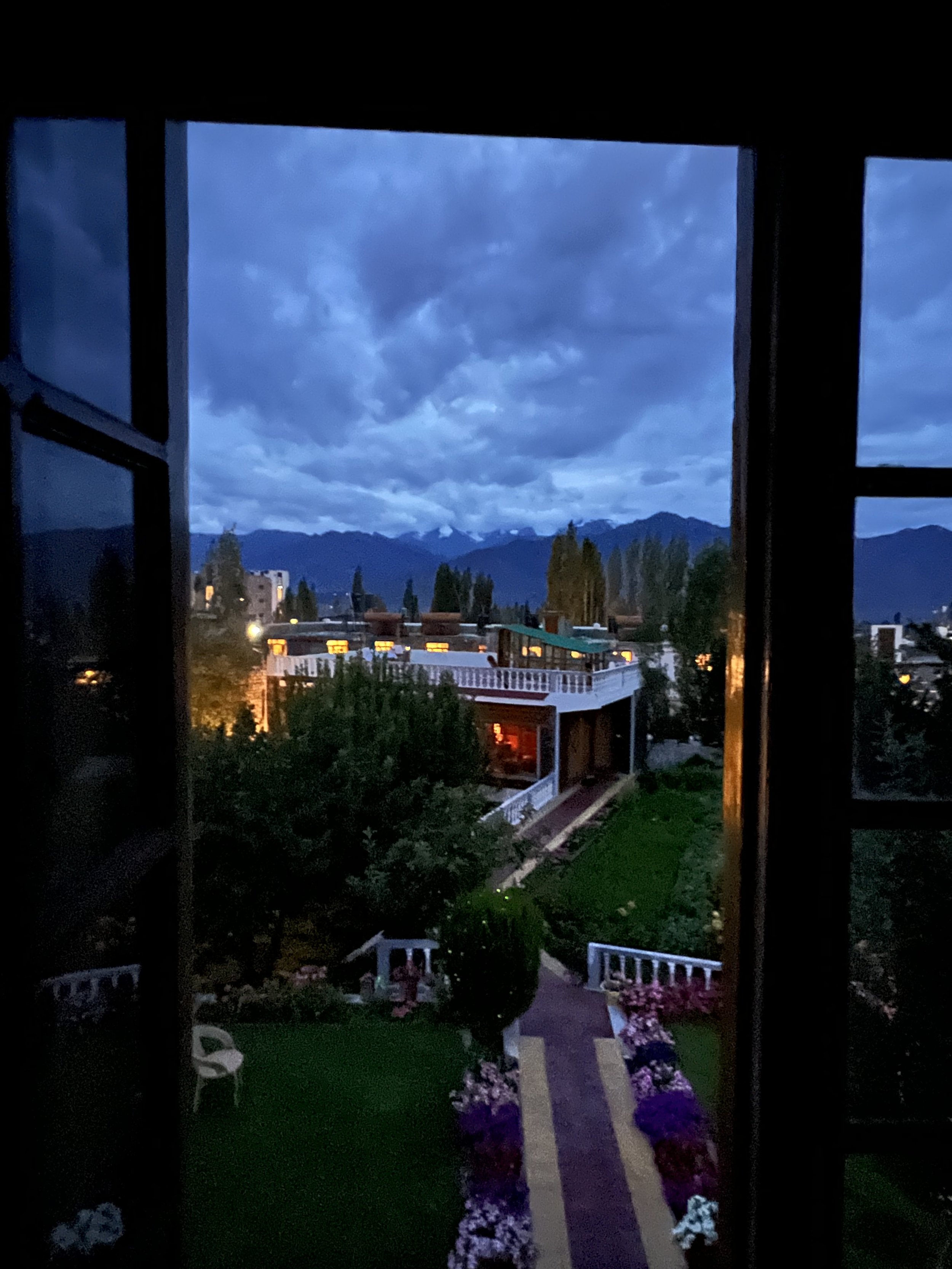
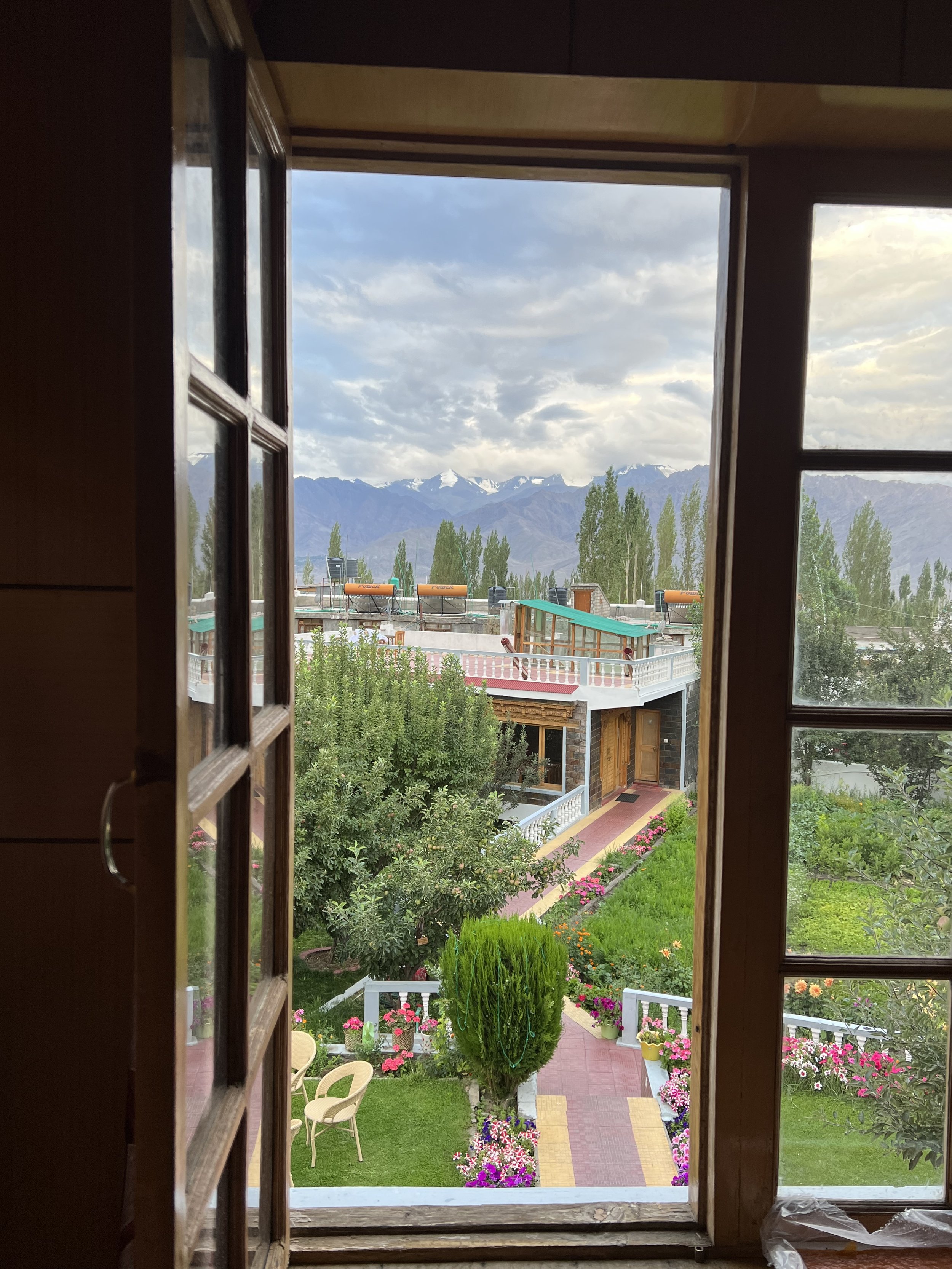
All flights into Leh, Ladakh’s largest town, arrive early in the morning, and the instructions from there are clear: go to your hotel or guest house and do your best not to move. Given that I and my fellow travelers have generally been looking forward to this trip for months, it seems an incredibly strange assignment: finally arrive in the place you’ve been looking forward to exploring and just stay put in your room or in the hotel garden—for at least 24 hours. Drink water, eat lightly, rest, and let your body use its wisdom to make the astonishing transition required at the level of individual cells and tissues to comfortably maintain life and health at this altitude—and higher, which is the only place to go from here. On the second day, take a walk, but don’t overdo it. Go back to the hotel and rest some more. Maybe take another nap.
In the ordinary course of my life, it’s frankly unheard of to spend an entire day or two not moving or really doing anything. Short of being really ill (and even sometimes then), just being still for 24 hours is a radically new experience. I am invariably amazed at what bubbles into my head in the hours after I arrive in Leh—the memories, curiosities, the things I at one time set aside for later consideration and promptly forgot. It’s like uncovering a pile of possessions I’ve been tossing into a corner of my bedroom or opening the junk drawer in my kitchen to really check out what’s been accumulating there.
In addition to the fascinating and often painful backlog of unmetabolized experience, there’s also of course some level of physical discomfort to this transition. Following the guidelines for acclimatization can minimize the discomfort, but it can’t eliminate it, though some years it’s worse than others. Symptoms vary for everyone, but this is not like going to 6, or 8, or even 10,000 feet. For me, there is always a headache, no matter how carefully I approach the first few days in Leh. It’s a headache felt individually and discretely in all the parts of my neck, jaw, temples, forehead, scalp, and skull. Over the years I’ve experimented with using breath, stillness, and concentrated relaxation to mitigate and move the pain, but, for me at least, there is some remainder that never goes away and that I think of as the price of admission. There’s a level of surrender, submission, and absolute humility required to enter this place on the earth (if it really is on the earth—I’m never quite sure). Barrel in here and you very well might end up, at worst, dead, and at best, on a plane right back to where you came from.
I have rituals I undertake to aid in the transition. I do my best to stay still and simply look at the mountains for the first day, the mountains and the sky, from whom I will be receiving teachings throughout my time here. I thank them for allowing me to return, ask them if it’s okay if I stay a while, and give any molecules that may have gotten left behind somewhere along the way the opportunity to catch up. I rest even if I can’t sleep, pay attention to my breath, and listen carefully to the sounds of the dogs, the voices, the cars, construction, street noise, and, always, the crack of pigeons’ wings ricocheting back and forth between the mountain ranges ahead of and behind me.
On the first morning after I arrive, often on little sleep, I go just before sunrise to the beautiful south-facing room that is set aside for us while we are here to practice. The room is filled with carpets, low carved tables with dragons, and a well worn wooden floor. I stretch, sit, breathe, recite prayers and mantram and texts from all of my practice traditions, and watch in awe as the sun rises over the Himalayas. My head aches on and off and each movement feels tentative, careful, and also necessary and healing. My body is trying to figure out its new reality. My heart-mind, by contrast, feels like it’s coming home, remembering what is ultimately true and real.
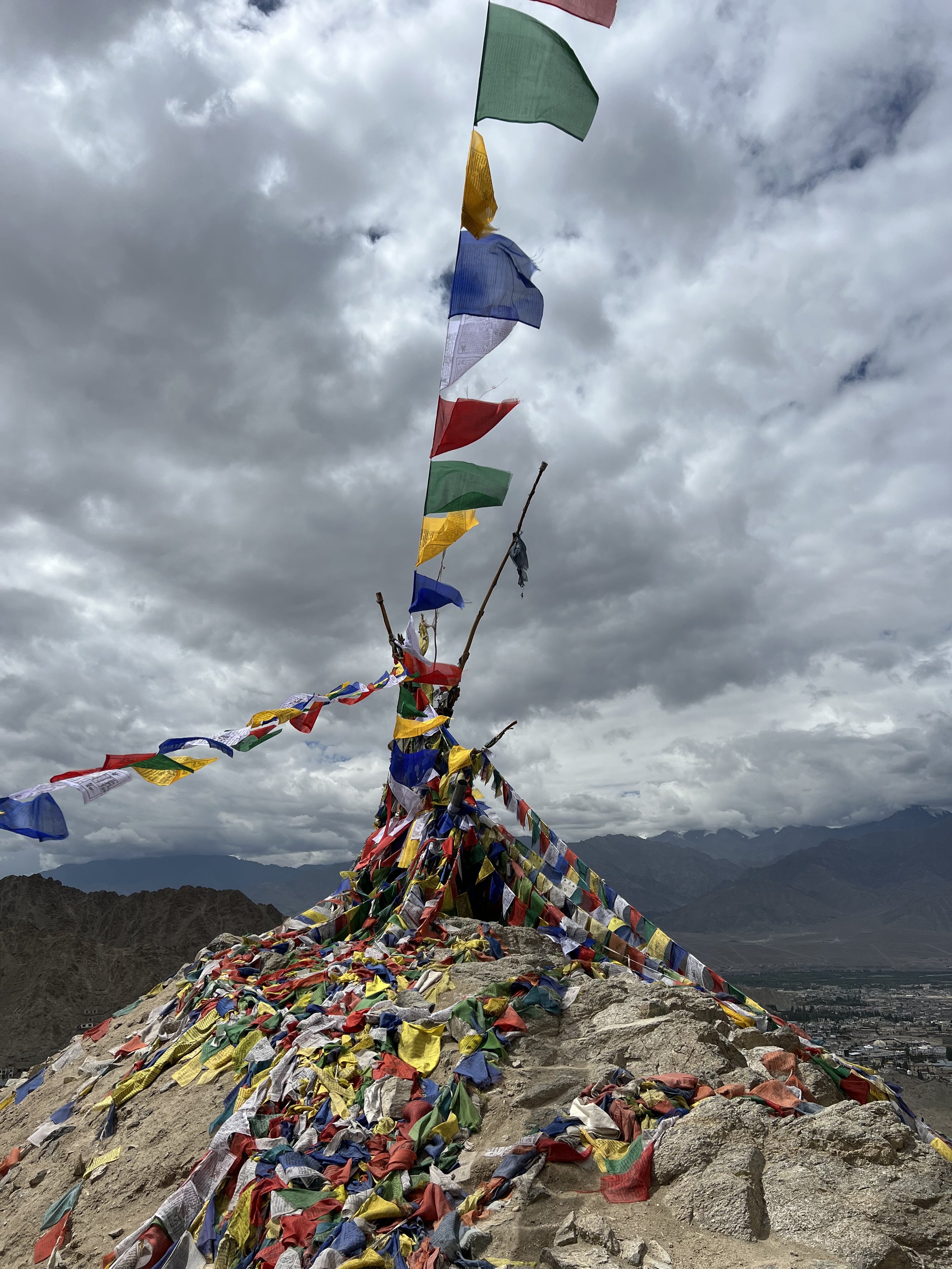
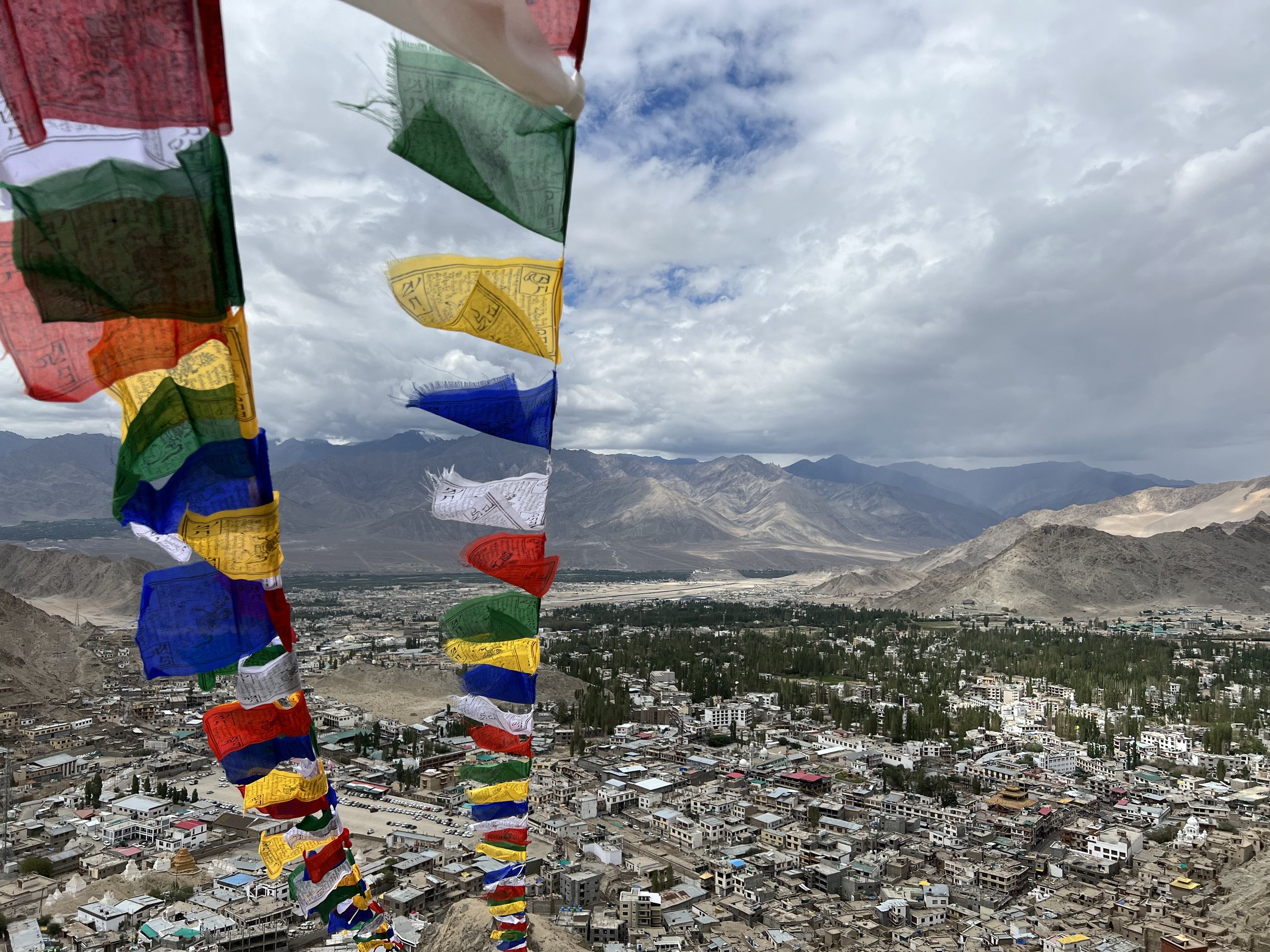
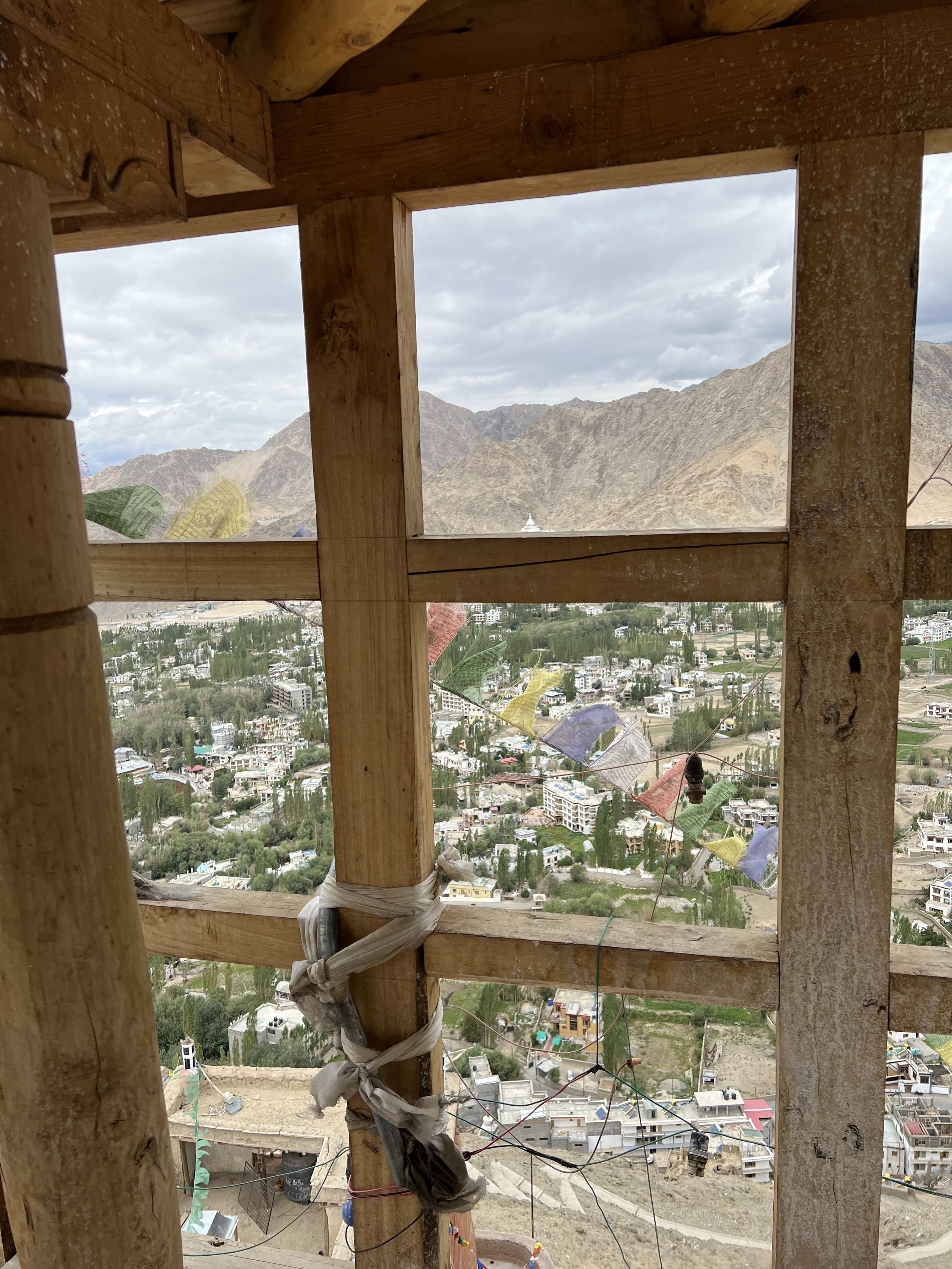
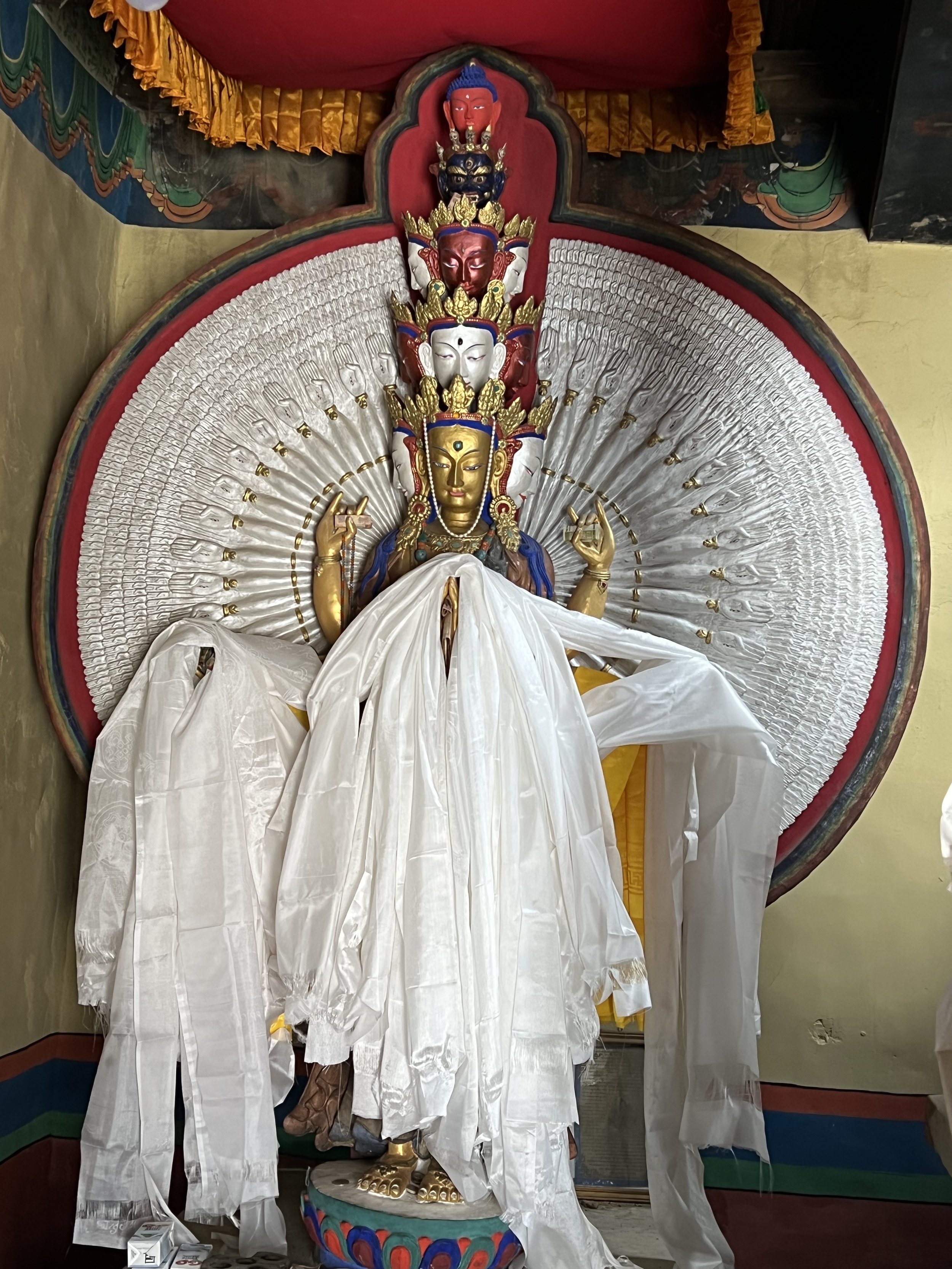
Later in the day, we walk up through the town slowly, a little groggily, trying to take it all in and maintain the breath at the same time. We walk up and up to the top of the town, to a 14th-century temple complex that has also been a fort many times over. We pause frequently looking back to the South, as I did in morning practice. This time, though, the entire Indus river valley unfolds itself, East to West. I stand on a perilous but miraculously enduring walkway around the temple and imagine spiritual seekers and teachers, invading armies, tradespeople, artists, artisans, and ordinary people of the transhimalayan region moving back and forth across this landscape for a thousand years. And I imagine people sitting up above the valley in this temple that is also a fort, witnessing the coming and going, the transitions from West to East and back again, through the centuries. I stop in to pay my respects to Avalokiteshvara, the Bodhisattva of compassion with a thousand arms and eyes, around whom so much in these parts revolves (and about whom there will be much more to say). I put my forehead on the cool stone floor of that room of the temple and ask for relief from suffering—mine, yours, every bit of the madness and delusion that is afflicting this world.
I’m not quite here yet, but I am grateful for the opportunity to arrive in this way, to surrender, give thanks, notice, and be humbled and amazed.

 Walking and Praying