Ravi, who is in charge of camp and food, wakes me at 5 with hot water, sugar, and instant coffee. I hear him coming from the kitchen, which is good, because it is pitch black outside and, unusually, I’m still asleep. This is much earlier than he usually comes. I note quickly in my mind that a day short of a month ago, when I arrived in Ladakh, it would have been getting light at this time. Given how plastic and mutable time is here, the later and later rising of the sun is one of the only ways i know how much time is passing.
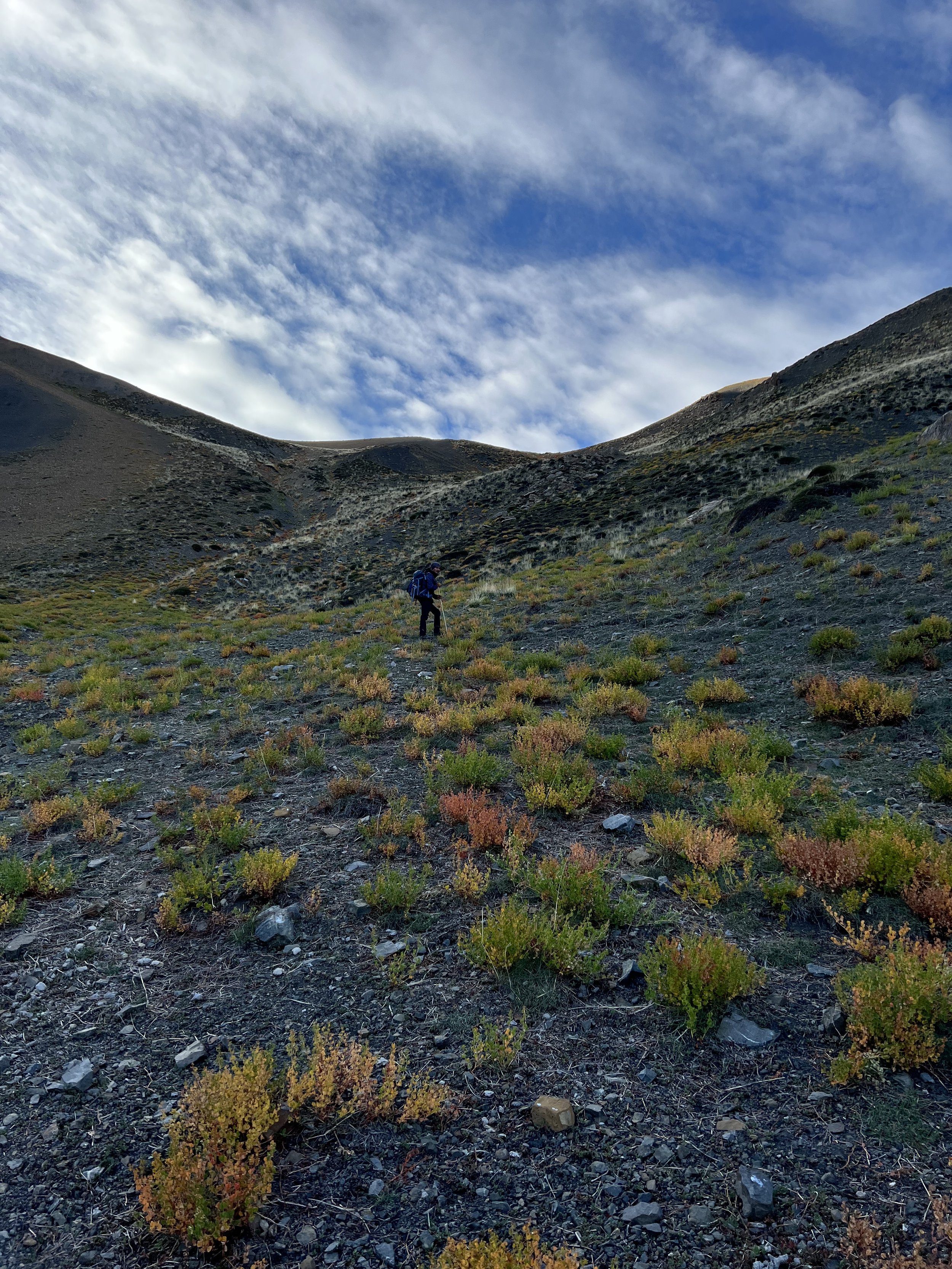
The reason for the early wake up is that this is a two pass day. This is not something we attempt out here very often and we do it with great humility and care. today will ultimately be an eight hour walking day at what Jigmet calls “locals” pace, which he distinguishes from what would be a 10-12 hour day for a larger or less trek-seasoned group. There is no alternative to the itinerary: the only water we will see between this past night’s camp and our ultimate arrival at the Tsarap Chu river—the river on whose banks we will walk for the last three days of our journey, all the way to the roadhead—is one tiny pond that would not make for much of a camp, although if we got into real trouble, we’d make it work.
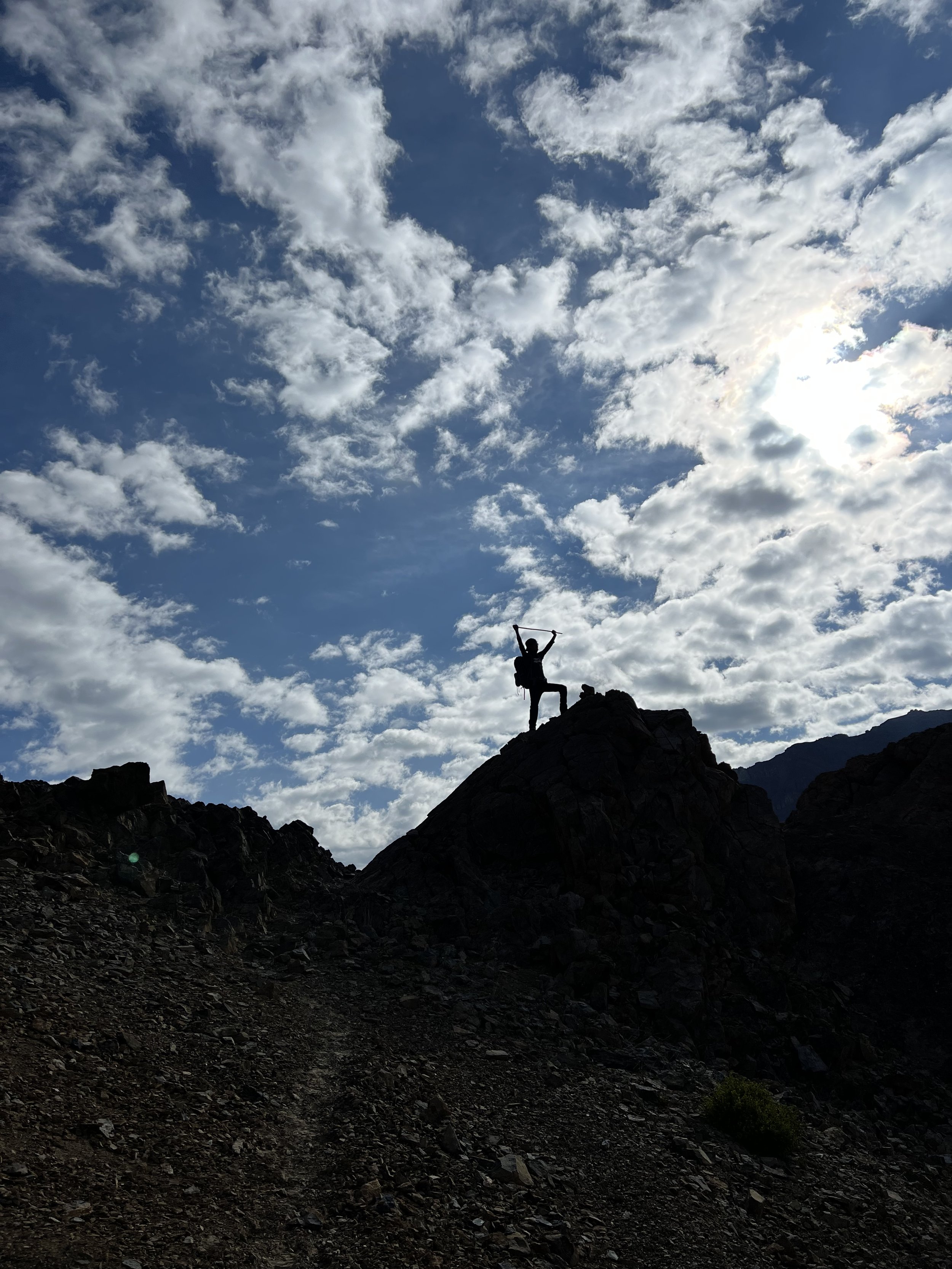
The two passes we will walk over today are new to all of us. We know that one other group has come this way in the past two weeks, and we hope they have left some indication of the route. The two passes—at 15,800 and 16,700 feet, respectively—are only the first half of the day’s challenges. After that are miles of walking on high mountain plateaus and a final 4000 foot descent to the Tsarap Chu valley.
Ravi prepares a special breakfast for me. He knows that one of the only persistent physical obstacles I face out here is a tendency to develop intense stomach cramps above 16000 feet if i’m not diligent about how I eat—and sometimes even when I am. He (to my mind, magically) steam-poaches eggs in cabbage leaves, offering me a breakfast of these eggs and rice soup. No oil seems to be a key to avoiding the stomach pain. Today, mercifully, it works.
Jigmet and I set out for the first pass—1300 steep feet straight up out of camp— in what feels like freezing temperatures around 6:40. My hands are cold enough that I drag my trekking poles and shove my hands in my pockets. These poles are new, my sole concession to the fact that I am now closer to 60 than to 50, and on the far side of four knee surgeries, one of which was only in April. By the end of the day, with the unanticipated 4000 foot descent that ends our work for the day, it will feel like the poles are dragging me.
The day is long, beautiful beyond my wildest imagining, the landscape unfolding in new and ever more surprising vistas. Even Jigmet exclaims again and again at the views, the new scenery, the trails sneaking along at what feels like the bottom edge of the clouds. I have moments of feeling light, almost weightless, as though i am walking on air, or, as they say here, sky walking. I have other moments of feeling heavy, or fatigued, or clumsy on the descents. After a while, none of that matters. You chant your mantra, which may be the seed mantra of a divinity one moment and a string of expletives the next, and you walk. I notice fox tracks all over the trails up both passes, and I gauge whether my pace is appropriate by whether I am taking time to look around for the fox. If it’s been too long since my last fox-scan, I’m probably moving too fast.
I realized recently that I do not know the Ladakhi words for fast and slow. I do not know the words for easy and difficult either. Given my decade of cobbled together bare linguistic essentials, with no grammar but with a decent smattering of numbers, animals, colors, foods, greetings, and responses to inquiries about how i am and where i am from, it seems notable that to my knowledge I have never heard any of these words. The words I do know, which Jigmet taught me years ago, to describe how the day of trekking is unfolding, are “shechen” and “ryuschen.” Shechen means “strong.” Ryuschen means “patient.” I may or may not be spelling these correctly—Ladakhi is not a written language, and one of the great amusements out here is following the kajillion ways every place, river, and food item can and will be spelled. Nonetheless, I know these words as well as any in the language—we say them every day. “Shechen?” Jigmet will ask, when I catch up to him for a short break. My answer might be a resounding thumbs up, or a quiet “ryuschen,” and a shrug.
For a long time I thought of these two terms as a basic dualism or even antinomy of life on the trek. Some days you are shechen. Some days you accommodate yourself to feeling less than strong by being ryuschen. But on this very long journey we’ve been on—today is day 14 of our walk—i’ve become deeply aware of the non-dual nature of these two terms. You cannot remain strong out here unless you practice patience. At the same time, to be patient when things are challenging takes tremendous mental strength. Most of the past two weeks of walking, I have felt something like shechen-ryuschen—even and perhaps especially on the more challenging days, the days of multiple river crossings or of high passes or of other obstacles. To keep these in balance, it increasingly seems to me, is some of what it means to travel well out here—and also not out here.
In a very few days this first phase of pilgrimage will be over, and just a few days after that, i’ll leave Ladakh for the next portion of this journey. While I have no way of knowing what I’ll carry forward with me from this time, I hope that some awareness of the two-sided coin of shechen and ryuschen will travel with me. I have a feeling it will prove consummately useful in the days and months to come.
 Walking and Praying
Leave a comment