I had a profound and profoundly moving experience on yesterday’s walk, the second of our trek in Mustang. I’ve been thinking about and struggling to find words for it since then, at least in part because I’m never quite sure how to talk about the experience of spiritually powerful places. How to account for the force of certain places where practice has been continuous for a long time? What to say about the felt sense—conviction, even—that the energy in these places is palpable, thick, unmistakeable?
Our day started with a long and somewhat tedious three-hour climb up a series of switchbacks on the main gravel jeep road between Lower Mustang and Lo Manthang, the Upper Mustang destination to which all of us are traveling, most in cars or by motorbike, but a not insignificant number on foot. The main trekking route has for the most part been obliterated by the development of the motorable road. It’s been great for the tourist economy, but challenging for the guides and porters hoping to restore the trekking economy post-COVID. On the way to Lo Manthang, more than half of our walking will be on the road. I was prepared for this, and certainly the road is not busy, but it’s a bit of an adjustment after the days and weeks in the backcountry in Ladakh.
The three hours on the road were measurably leavened by the fact that with every 100 feet of climbing, more of the mountains showed themselves behind and to the East. First Nilgiri, then Daulaghiri, then Annapurna 1: it felt like the ancestors were revealing themselves—at least to me. To be walking in a dry desert with 7-8000 meter snowy peaks looking on was marvelous. I felt something close to held in this vast and varied landscape of sand, glacier, juniper, buckwheat fields, and apple orchards.
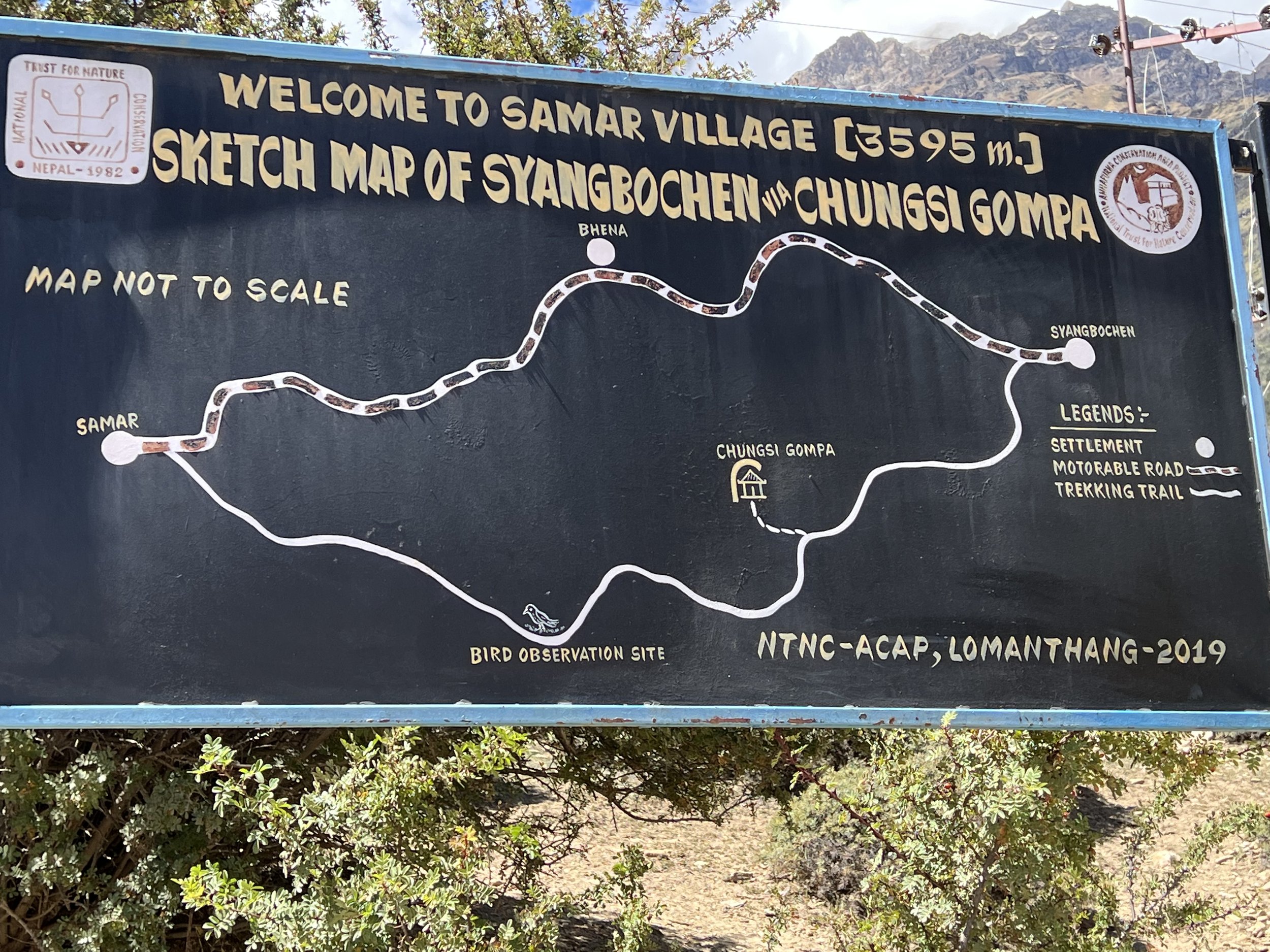
We stopped for lunch in the small village of Samar with the promise that the afternoon would be all off-road, with lots more up and down but with the promise of a “cave monastery” somewhere between us and our destination. A sign at the edge of town showed the trekking route to the monastery, Chungsi Gompa, as well as a place tantalizingly called “bird observation site.” So much to love here.
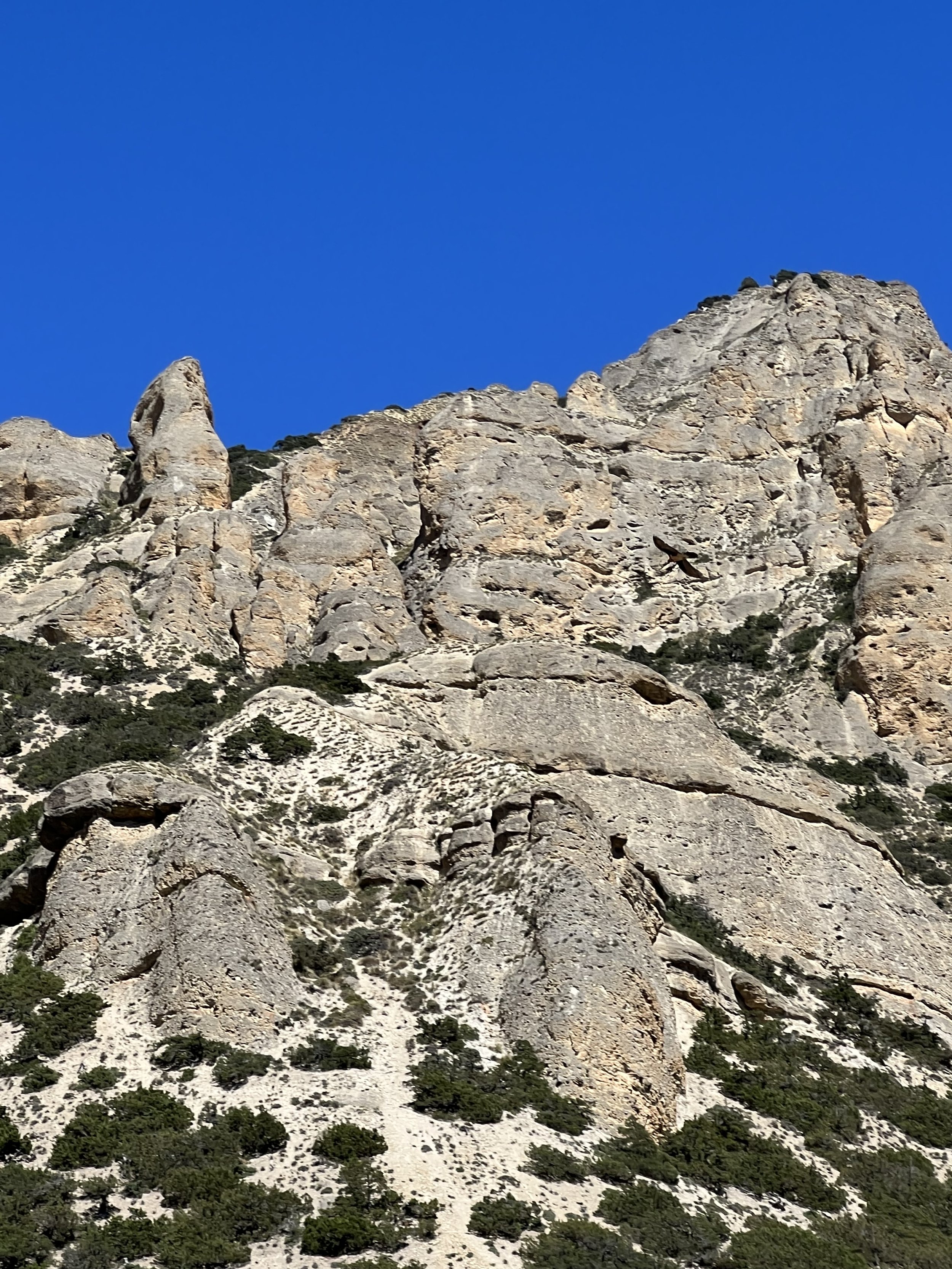
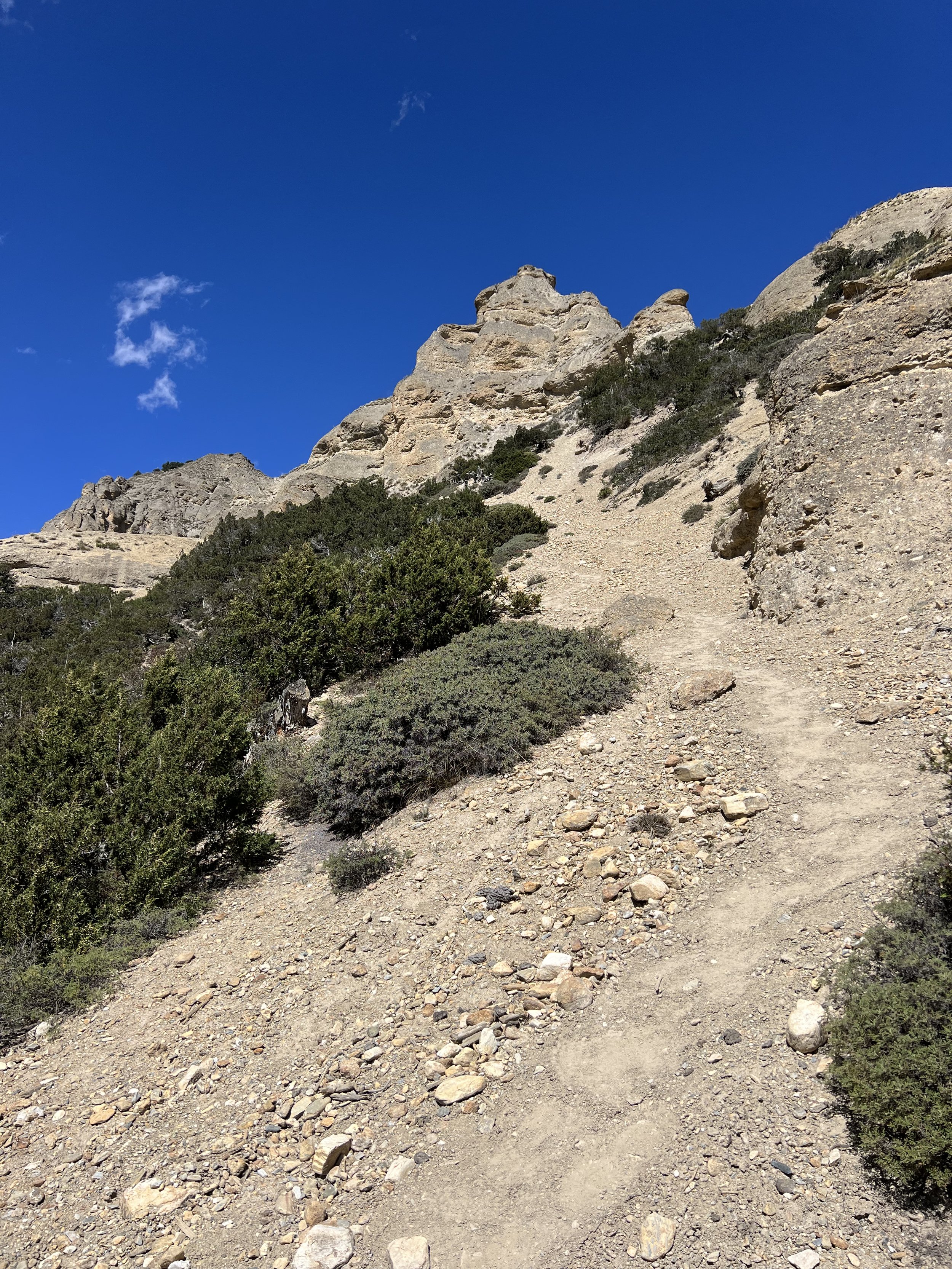
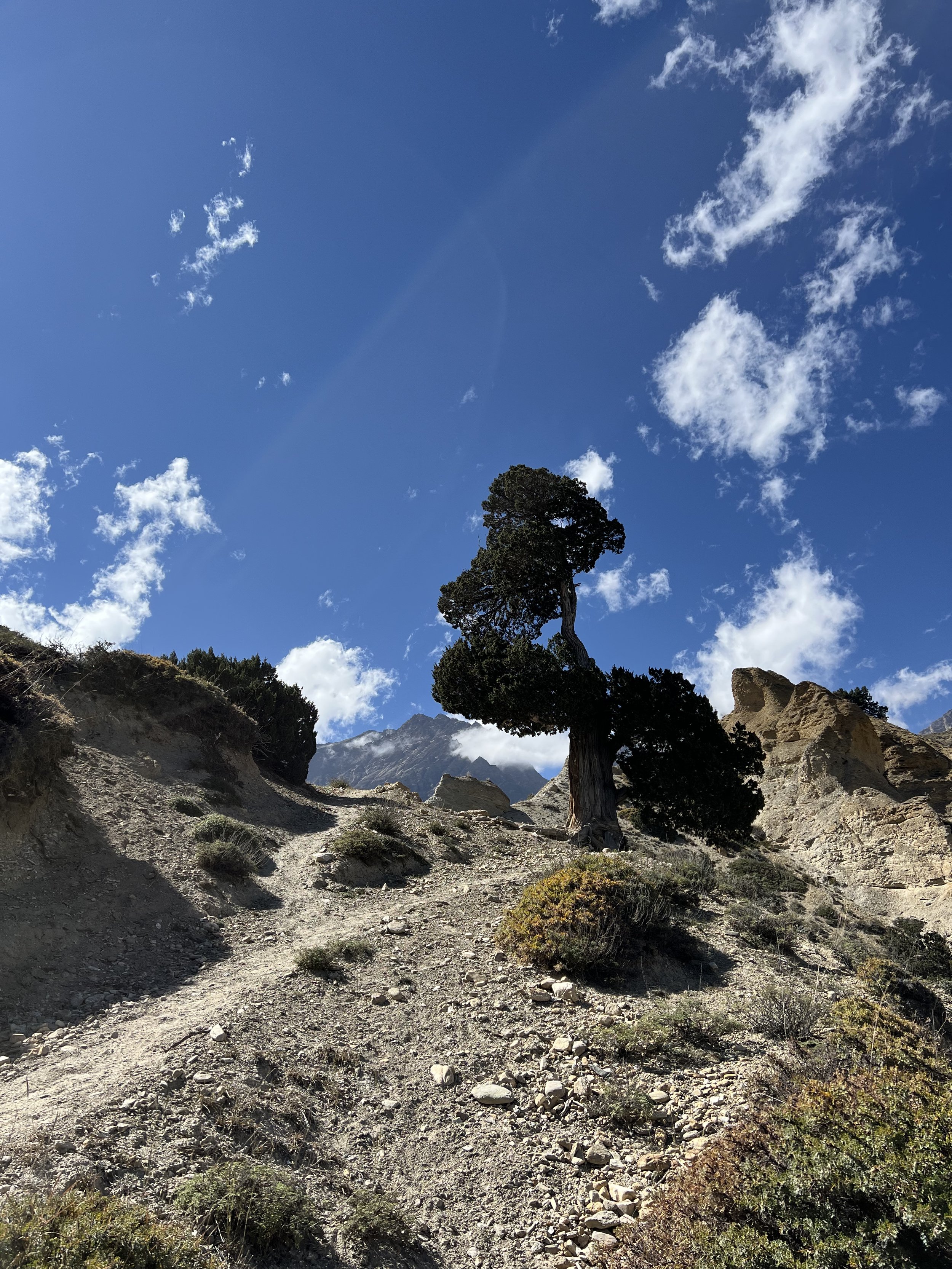
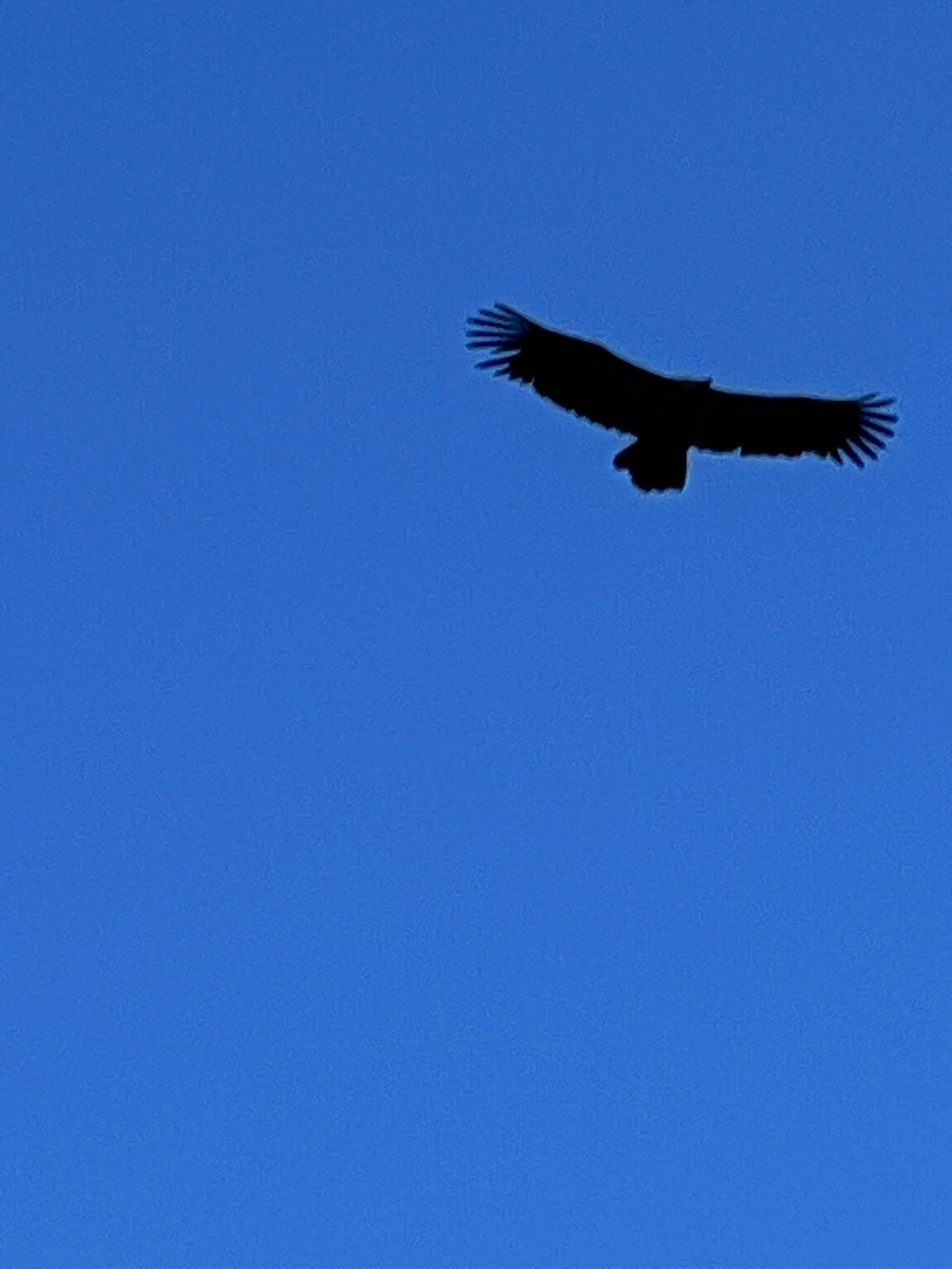
We started out of Samar on a thousand foot climb that looked, to me, uncannily familiar—Joshua Tree meets Pinnacles meets the rim of Zion canyon. I pulled ahead of the guide and porter—six weeks above 11000 feet pays off at these middling elevations—and soon realized I could walk alone for as long as the trail direction was clear. As i passed the sign marking the bird observation site, at just that exact moment, a flock of rooks appeared out of nowhere, black against the cloudless blue sky, dancing and swerving as if on cue. Moments later a vulture passed right over my head. These great beings, driven to near extinction by a variety of factors, are sacred to the Tibetans and the people of Mustang. They help the dead to transition from the bodies they are leaving behind and find ways to make use of the things the rest of us dismiss as unusable. Here, they are vast and stately, their underbody divided into snow white and jet black. Each time I see them, I cannot stop watching until they glide away over the next ridge. Sacred birds, who have been here since the time before time.
The climb to the pass was hard, but I felt a kind of energy flowing into me that kept me moving with that mysterious “lightness” Jigmet and I experienced in Zanskar. Once again, sky walking. I also felt a kind of pull from ahead of me that I have experienced before, almost like a quickening to arrive somewhere I have never been before—something close to a hailing or call. Over the years, I’ve just decided to follow that call, even as I can always feel some kvetchy questioning from the more skeptical side of my being: whatever, you’re making it up. Still, though, we’re walking this way anyway. What’s to lose in just seeing if that tug persists around the next corner or rise?
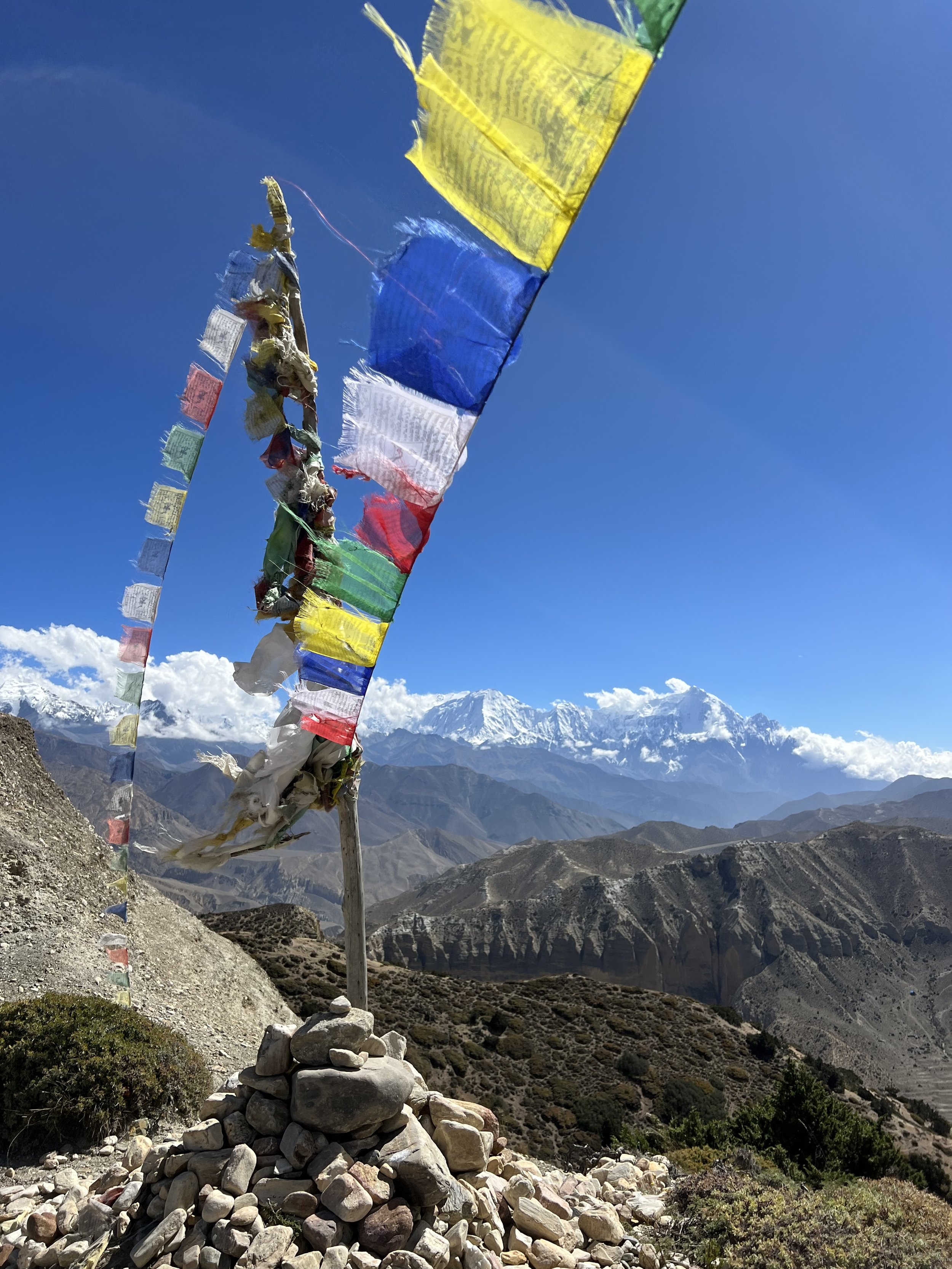
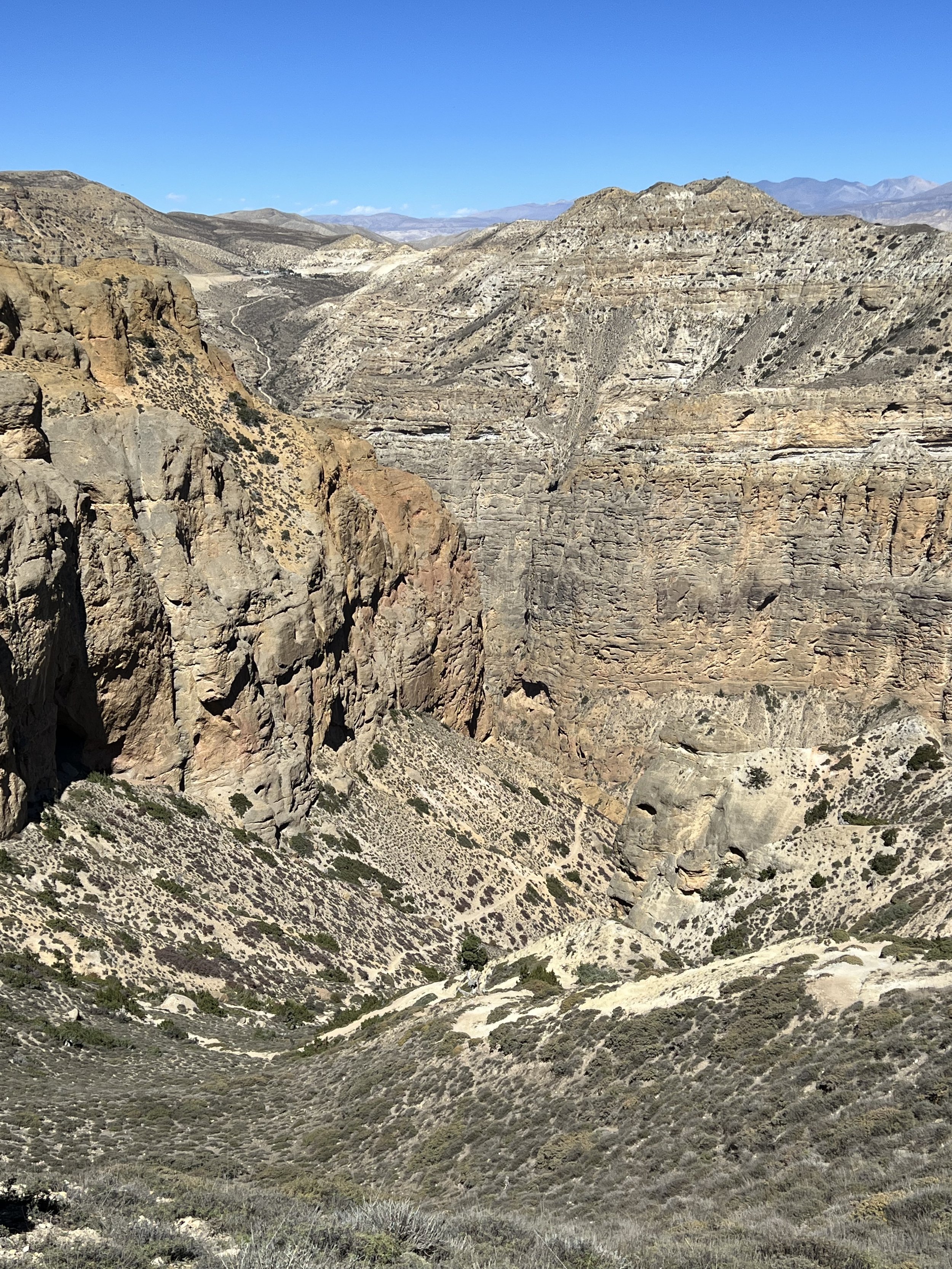
I crested the pass, happy to see the familiar mix of prayer flags, khatak or white scarves, a small stupa made of rocks. This was starting to feel like familiar territory, up to and including a howling cold wind on the pass. I thought about waiting for my traveling companions, but a combination of the wind and the fact that I still had no idea where the cave monastery was kept me moving. Ahead of me was an astonishing landscape—-a canyon so grand i could not believe i’d be descending to its bottom and climbing up the other side. But with no village—and no cave monastery—anywhere in sight, what to do but descend?
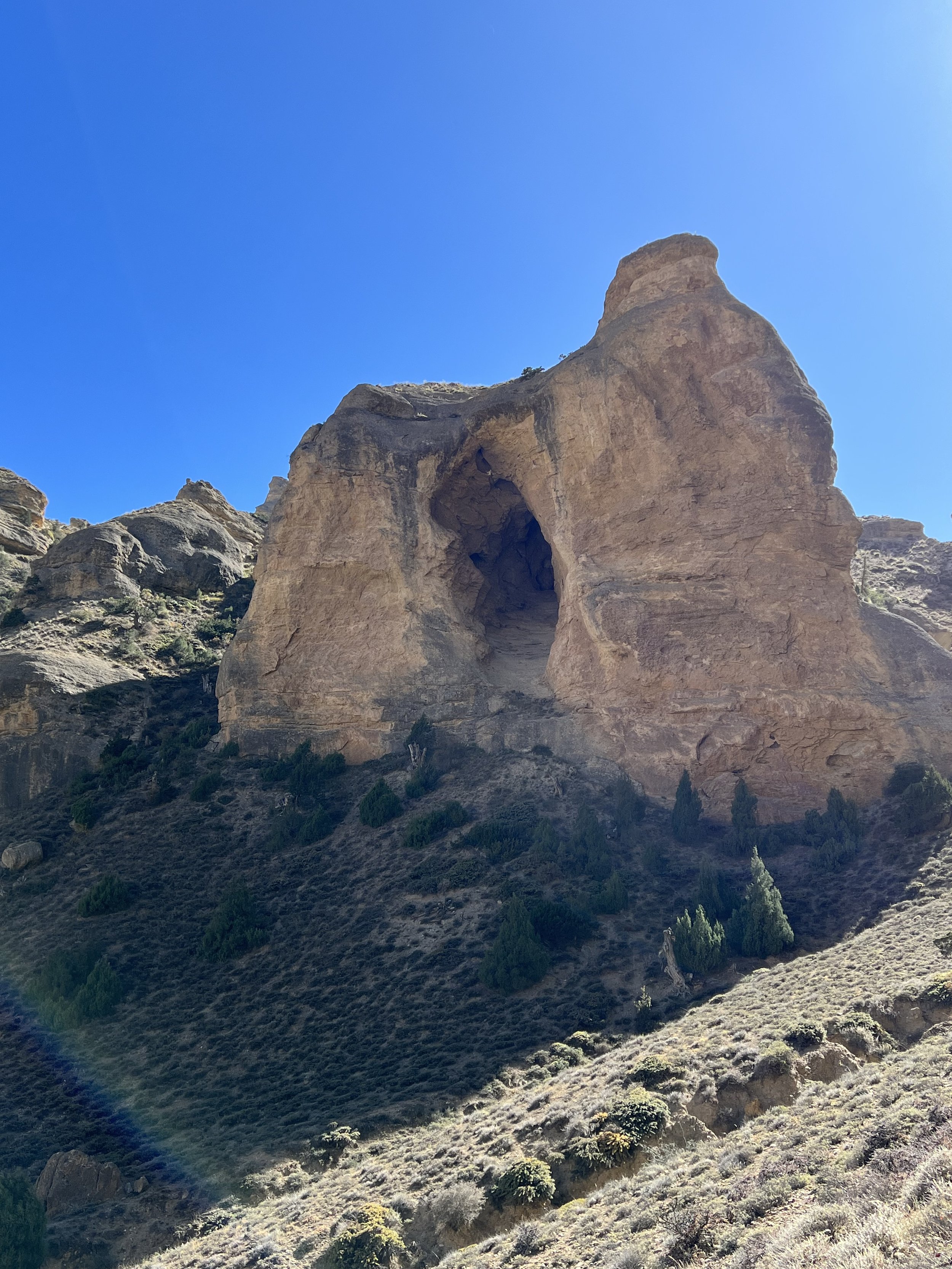
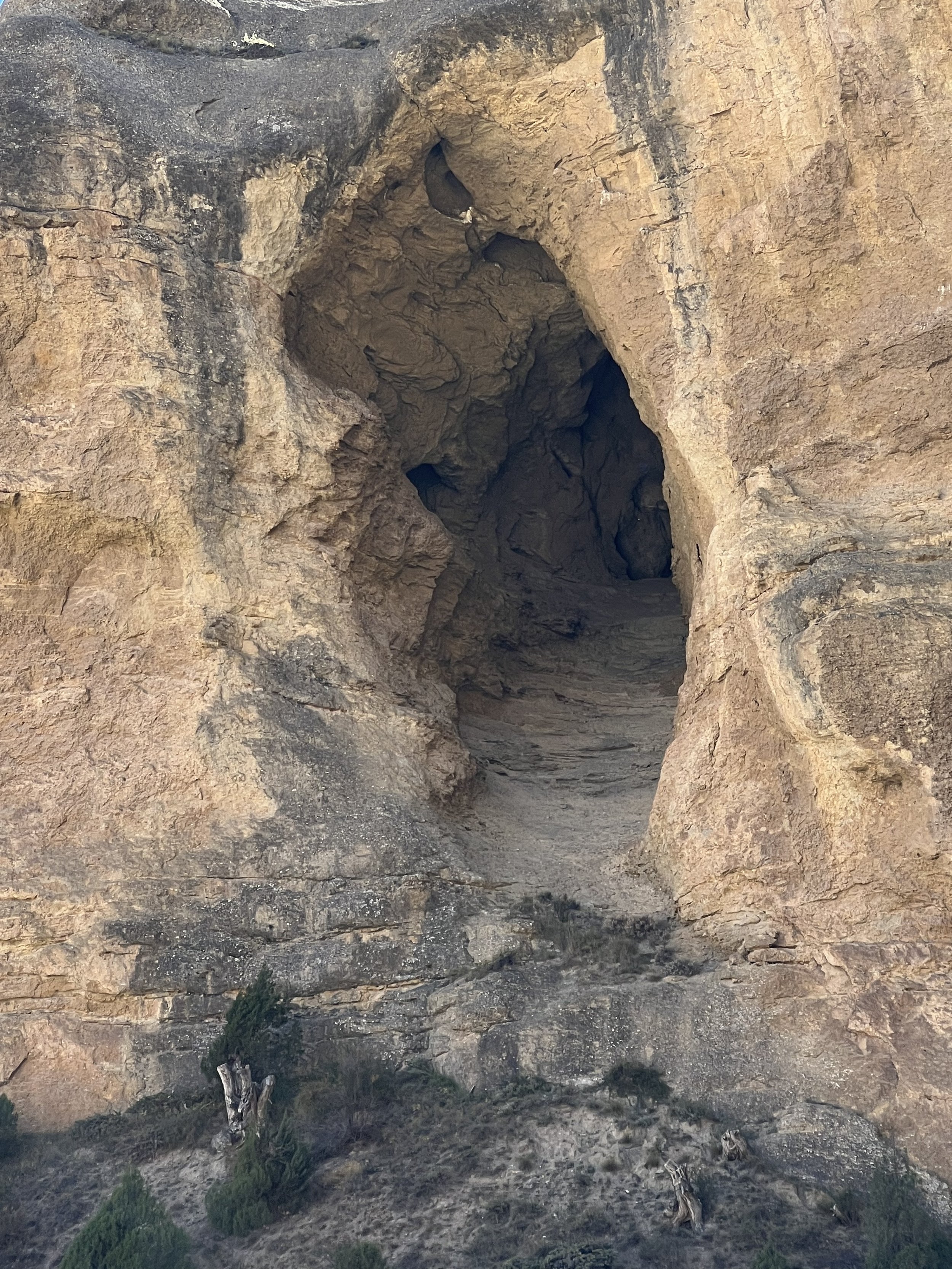
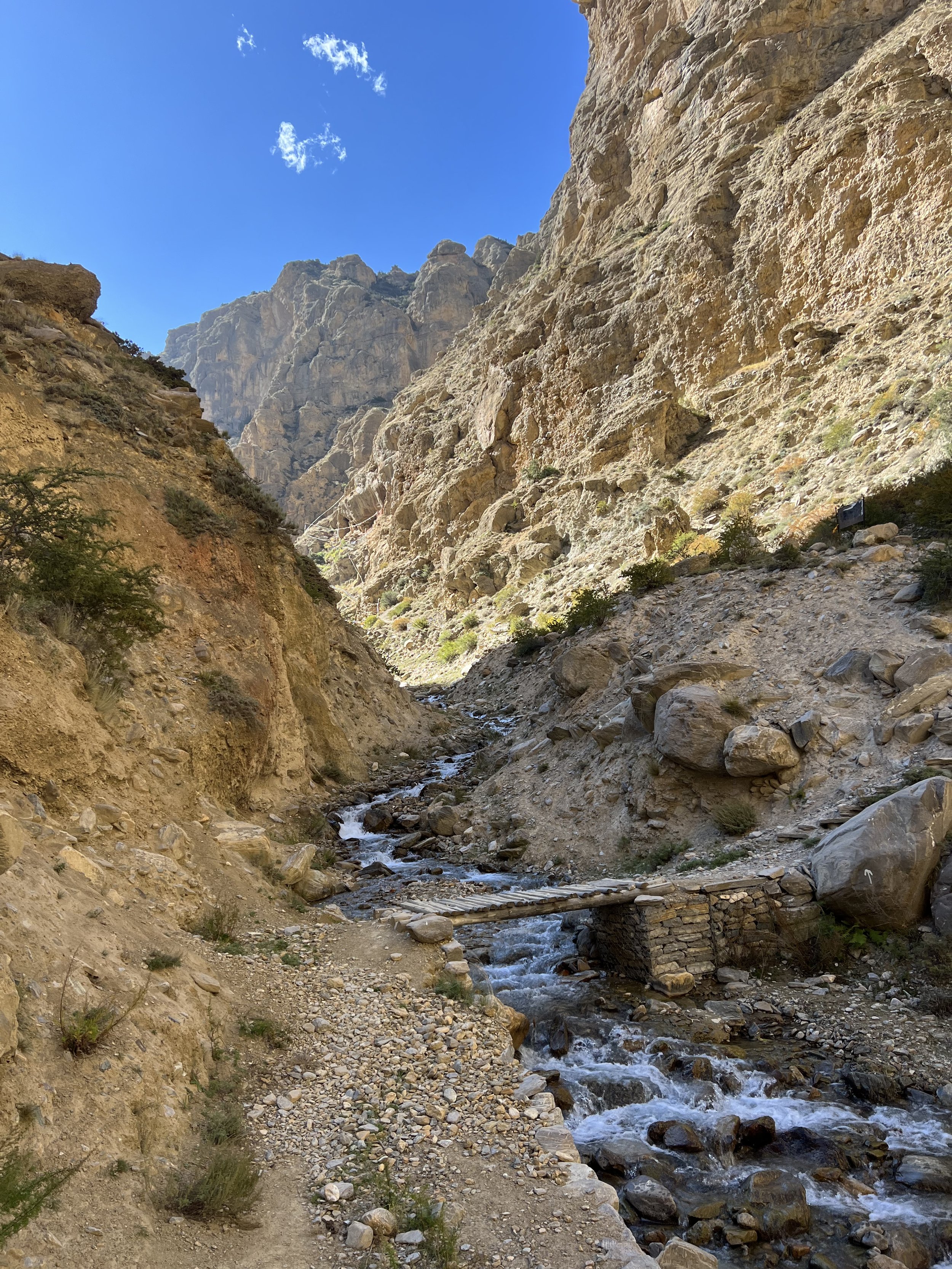
As I started down I realized two things: first, that feeling of being pulled forward was increasing steadily. And second, I was walking completely alone for the first time in almost two months. As grateful as I am for the guides and other helpers on whom I am completely dependent over this four-month period ofpilgrimage, I had no idea how much I ached for the feeling of walking alone, being alone, in a vast and beautiful landscape. I practically floated the two miles down into the canyon, filled with joy, awe, gratitude, hoping to stumble upon this mysterious cave I kept hoping to finally find, and perhaps sit there quietly to wait for the others. With no idea in my head of what I was looking for or what to expect, and once mistaking a beautiful freestanding cave for the monastery in question, I was able to just walk, look, and wonder. For the first time since coming to Nepal, I felt like a pilgrim.
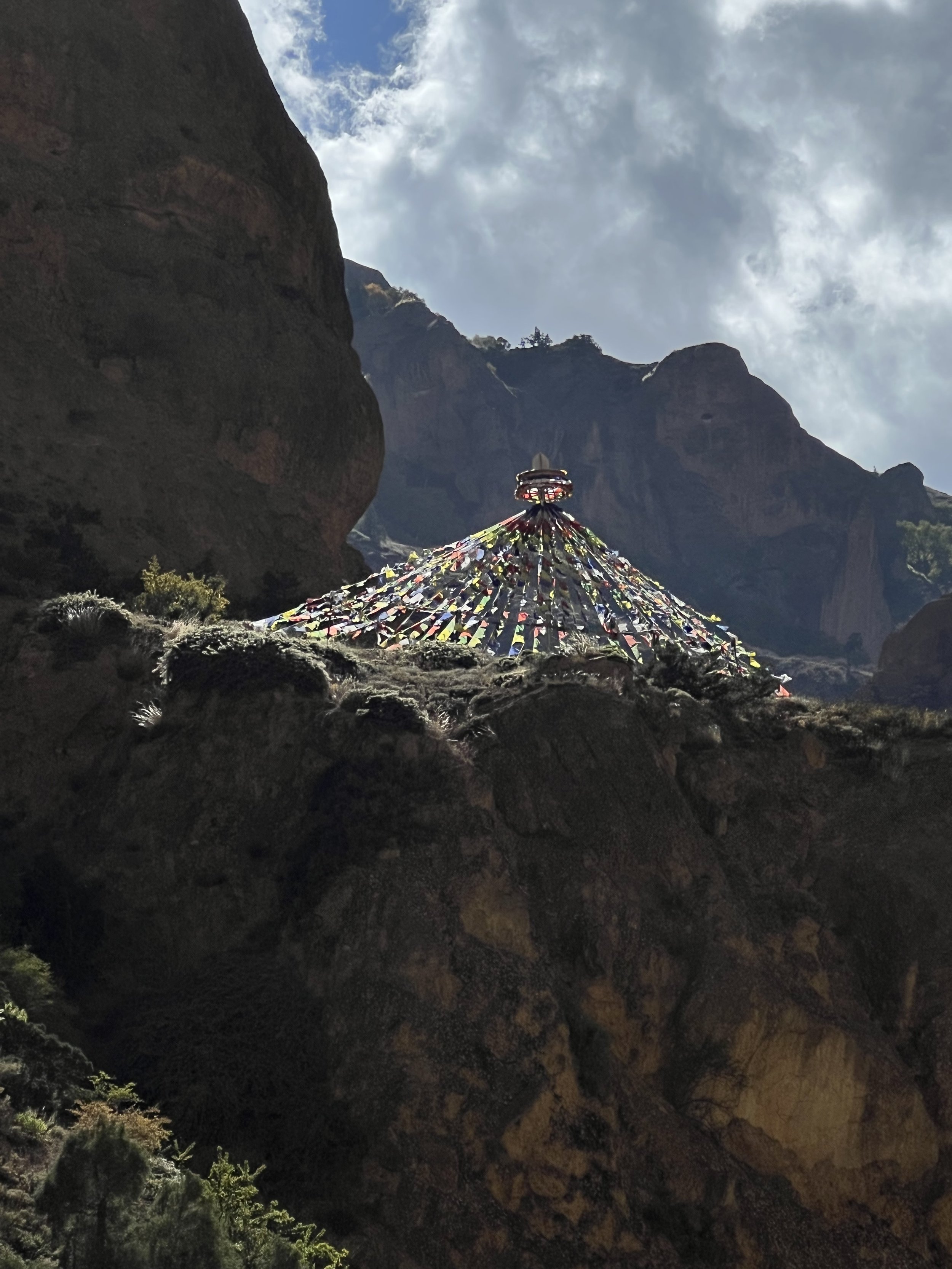
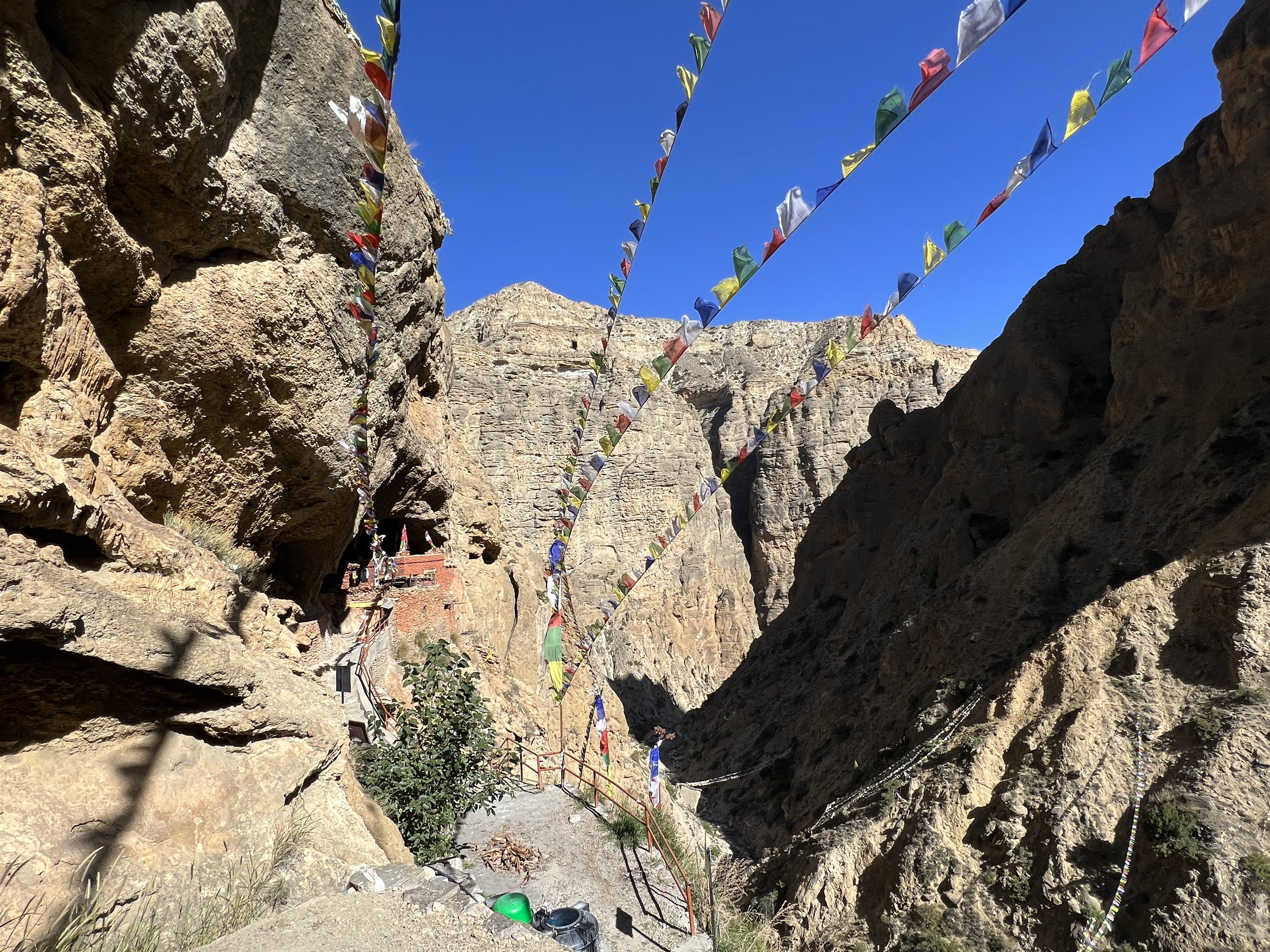
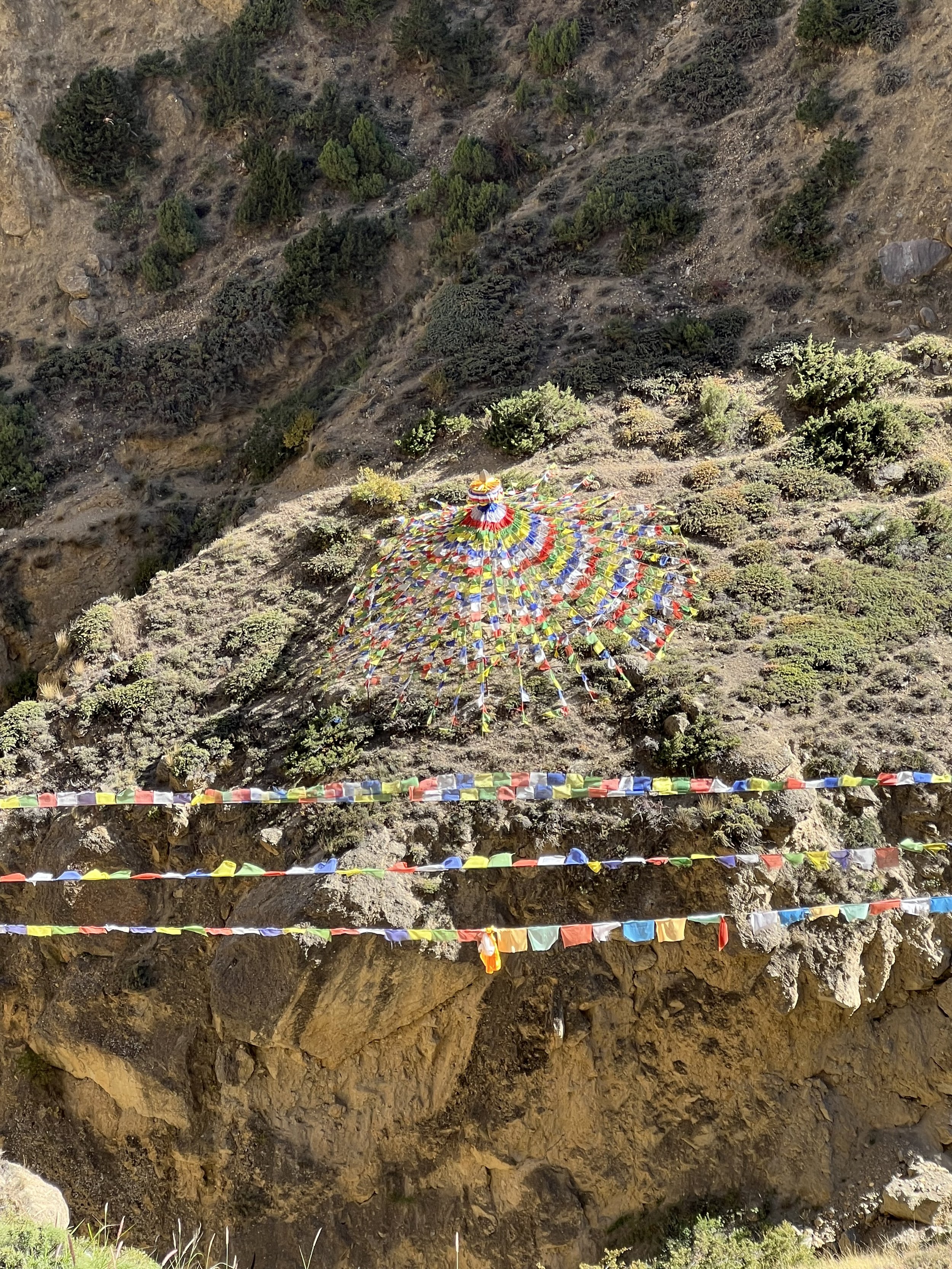
Nearly two hours later, far down near the base of the narrowing canyon, I heard the fluttering of prayer flags before I saw them. I mean, a lot of fluttering. I also saw a sign suggesting that perhaps I was about to come upon something more elaborate than an empty cave in the wild where some wandering yogis occasionally did practice. As I crossed the sidestream forming the base of canyon, energy building in my chest, the shadows of hundreds of prayer flags strung across the rock walls bordering the little stream were bouncing all over the huge rock faces all around me. I looked up to see flags everywhere, wall to wall, up and down, out of nowhere, and even a gorgeous stupa made entirely of prayer flags, all new and clearly regularly replaced. What IS this place? This had become the only question.
I took a left in the direction of the sign and underneath the rows of prayer flags and followed the little path along the stream and up the side canyon until I saw: stairs. Lots and lots of stairs. My legs were shot at this stage: five hours climbing and two of descent made stairs feel like an impossibility. I could see from the bottom of the descent that there was only one way to go to get to the night’s teahouse: up a sheer gorge with vertical rock walls back out of this vast canyon. I briefly considered waiting for Ram and Man, but I also knew already that, notwithstanding their different faiths, neither enters gompas or other sacred sites with me. Both remain outside and wait. I figured they might also appreciate being spared the stairs, and I never had a moment’s doubt they would know where I was when they caught up.
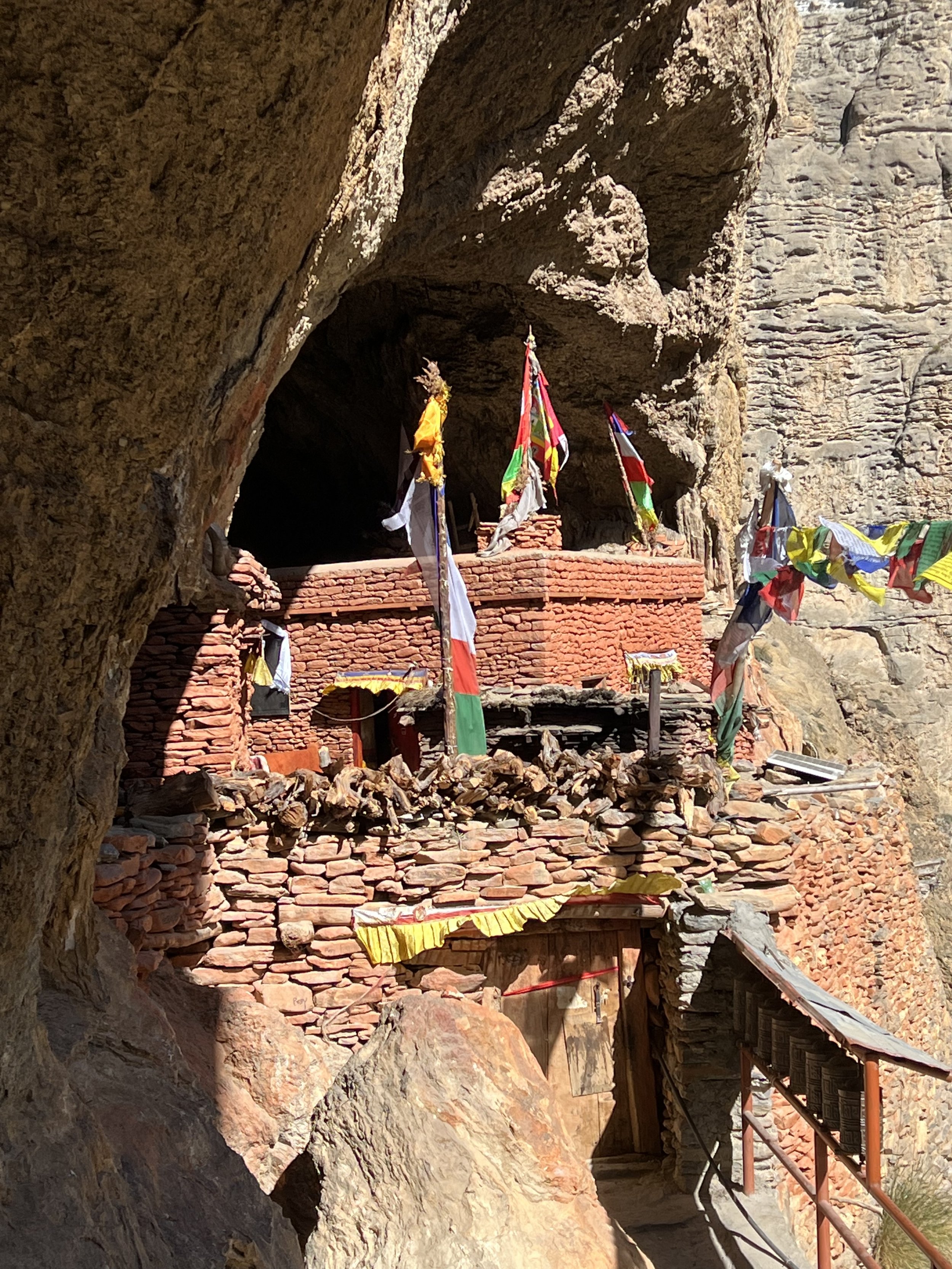
The stairs were a beast, but that pressure pulling me forward kept me moving. If not that, what? My legs were trembling and I had to use the handrail to climb. My ears were also full of a kind of rushing sound—pointless to try to describe it, but also something I have noticed before in places charged with long practice. I started to be able to see red walls built into the side of the canyon—bricks, small windows, more prayer flags. I finally came to a small wooden door clearly leading into the cave complex, which was mercifully unlocked. I pushed the door open and found myself in a beautiful little courtyard full of flowers opening out from—the cave monastery. I was so stunned to see a monk standing there quietly washing tea cups that I just mumbled something like “OK to go?” and pointed toward the buildings and started climbing, fast, into the cave into which the temple was built. I’m not sure who was more surprised, but by now I felt I just had to keep moving.
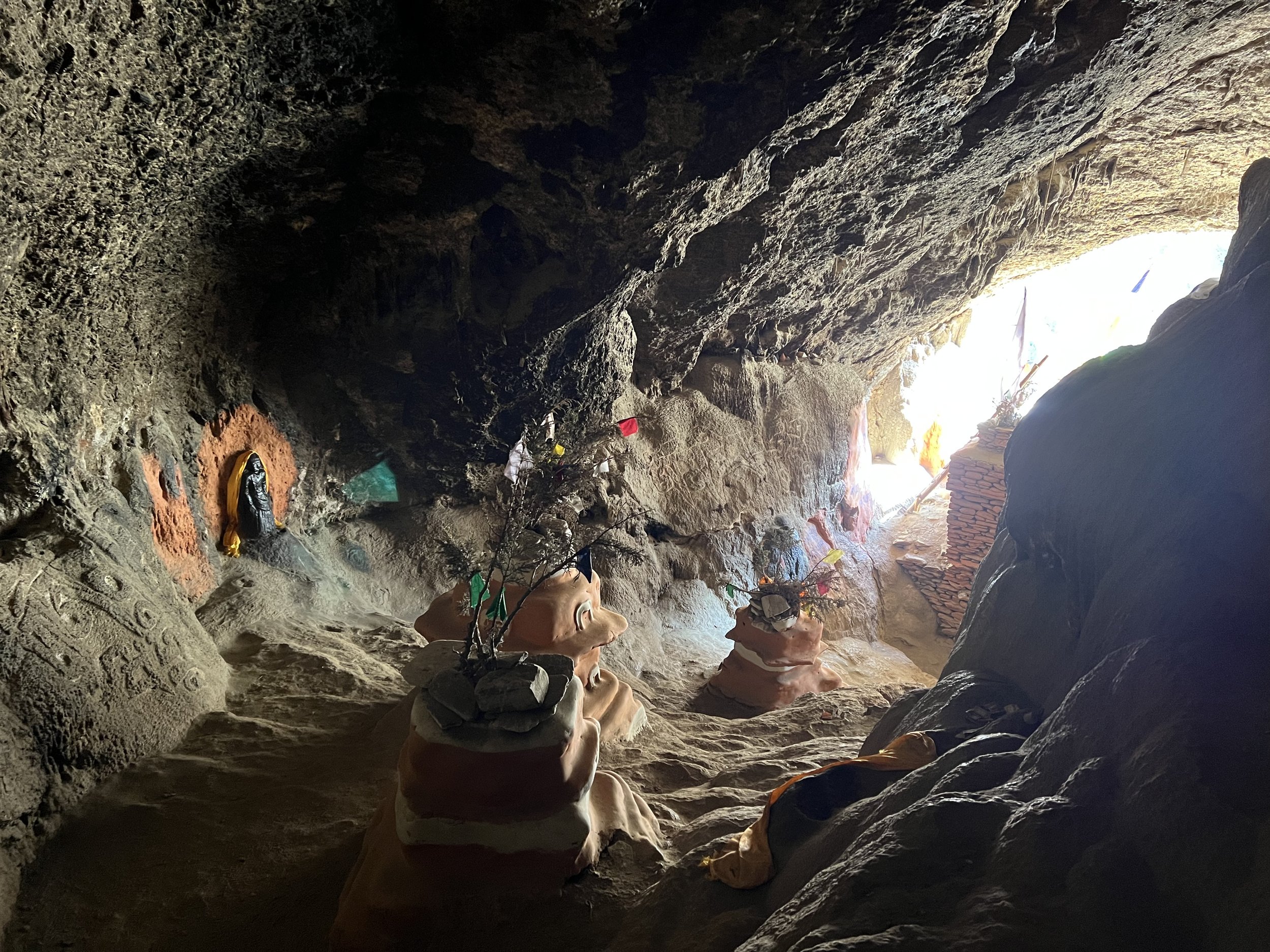
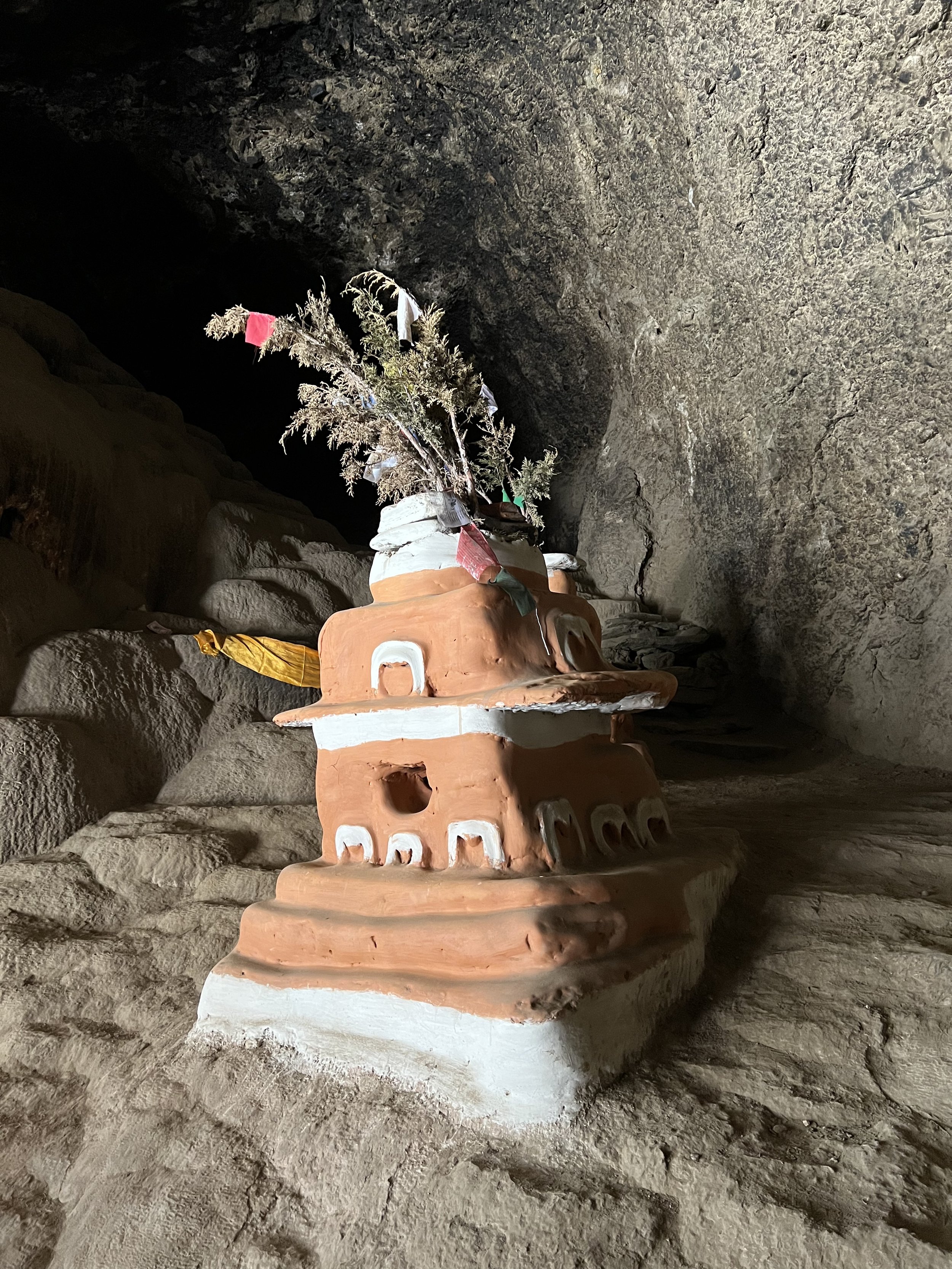
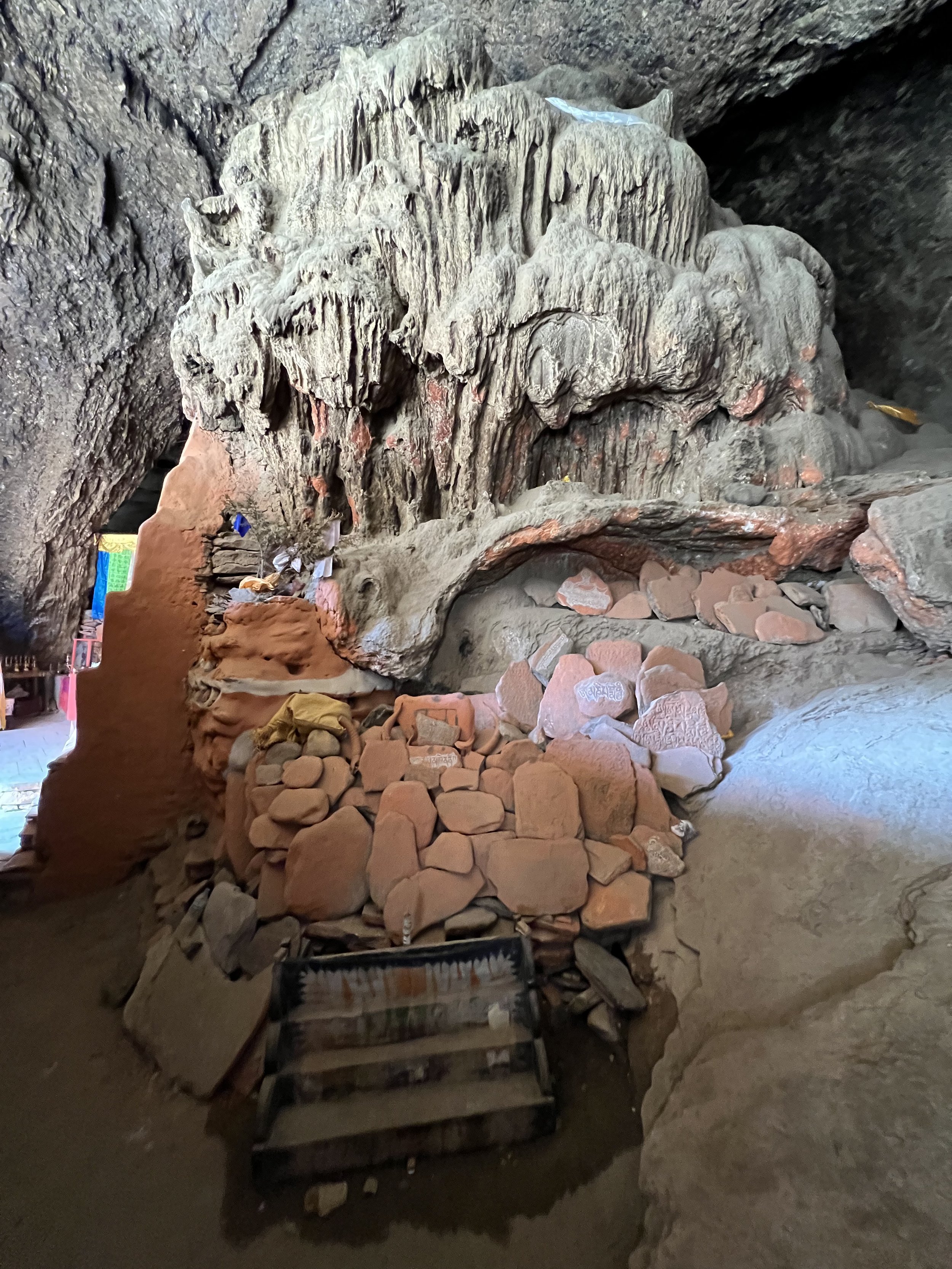
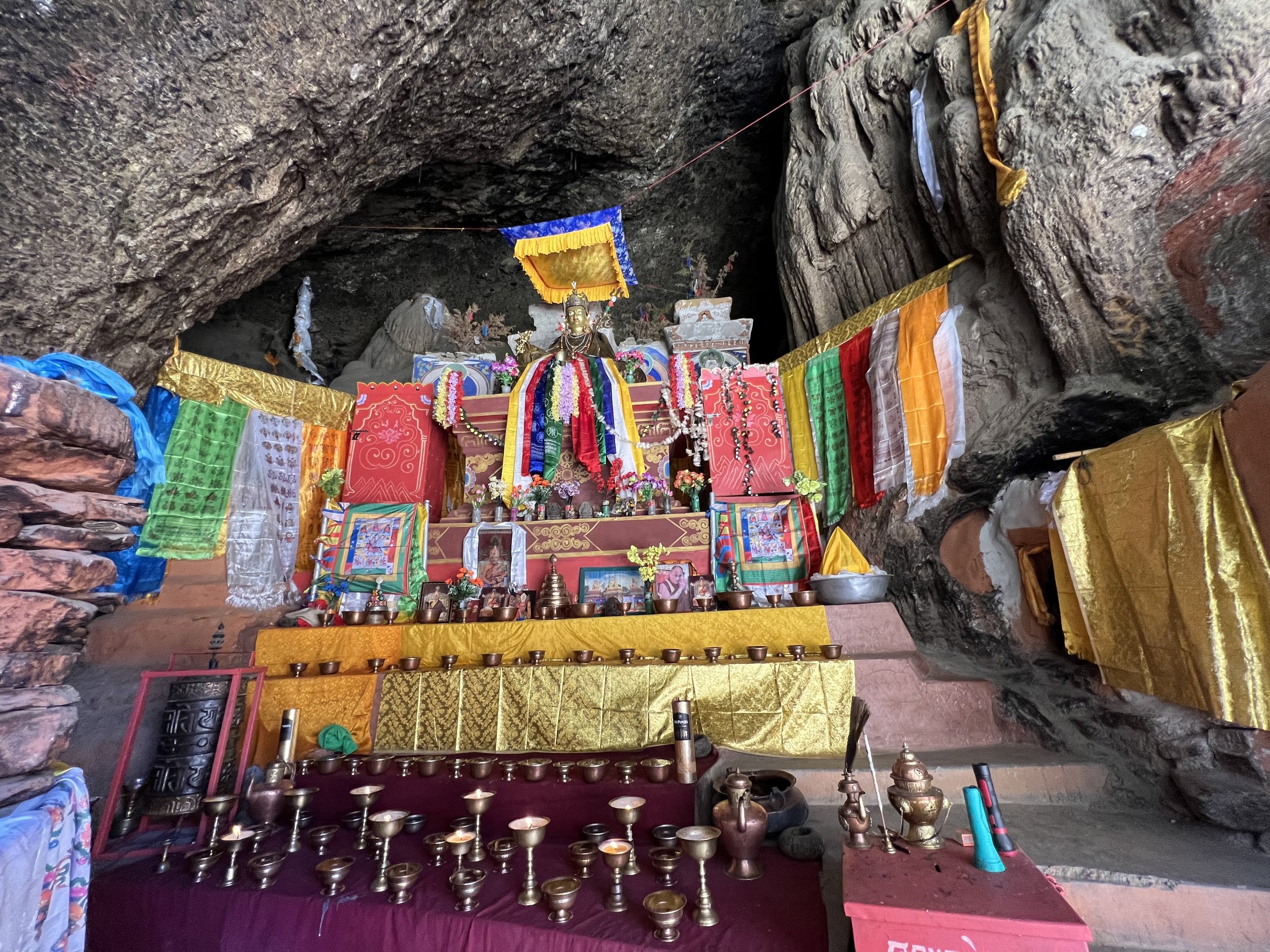
The cave complex itself defies description. I have been in such places before and have noticed that when I try to put them into words I only end up sounding incoherent. A house built around the front of a cave? A pathway up into and around the back wall of the cave behind a huge altar with a statue of Guru Rinpoche eight feet tall? A stupa that is actually a stalagmite? Smaller plaster stupas and crevices in the walls with butter lamps? A fifteen foot-high manmade wall with dozens of tiny figures of arhats carved into it? Impossible to describe, but some images below may do better than words at describing it all. I hope so, anyway.
After exploring the cave—though quickly, because for me the energy felt almost too strong to linger—i stayed and drank tea with the monk for a while, heart still pounding. Maybe it was the climb that left me breathless and dizzy—or maybe not. The weight and presence of devotion: that is the best I can do to put into words what I felt there. This is a holy place, that’s all I can say. Sacred and filled with the practice activity that has continued there, they say, for 1200 years. Some of what stunned me there was the freshness of it—the clean bright prayer flags flapping in the wind, the newly painted stupas and bricks, the khatak and the shining metal tea cups lined up for passing visitors, the monk in his spotless robes. This place is cared for, stewarded, guarded still on behalf of the great Beings whom we call to and whose presence I could feel, without question and without a doubt.
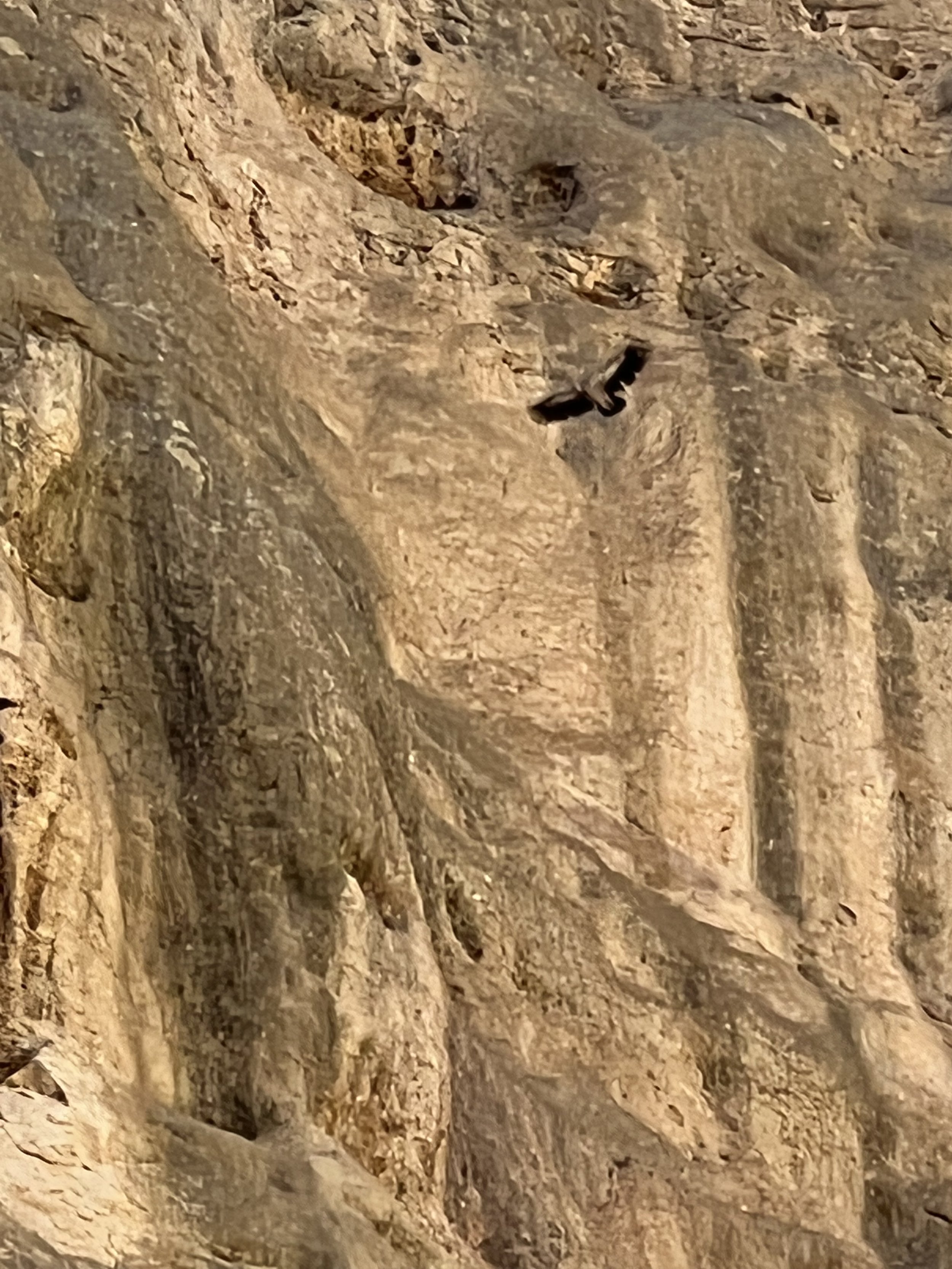
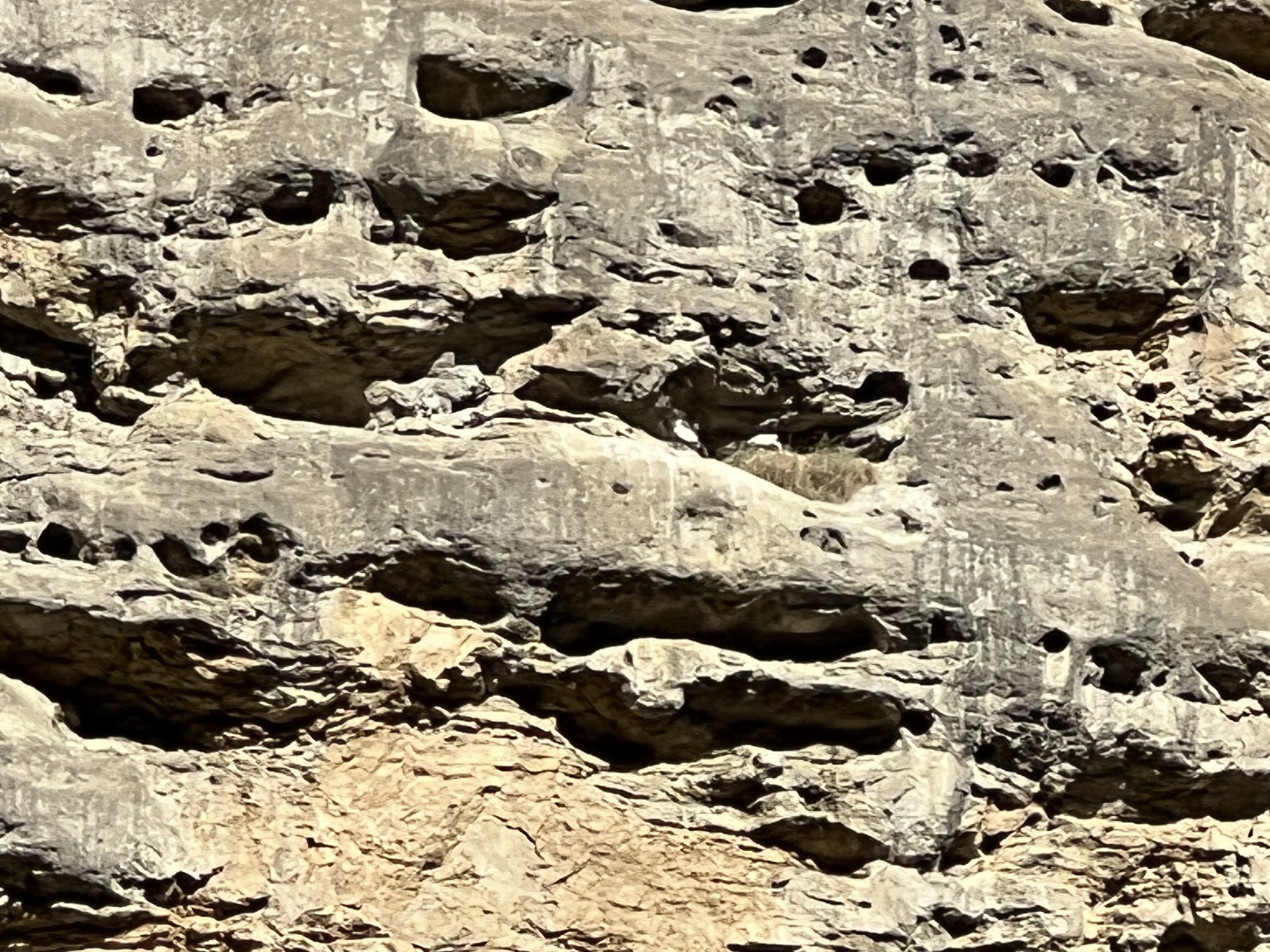
Eventually I wandered back down the stairs to find Ram and Man at the base, patiently waiting with apple and pomegranate to steel us for the long climb. Just as we were leaving, Ram pointed 60 feet up the cliff in front of us and said, is that a bird? The white one? I looked in absolute astonishment to see a small cave with a nest, a huge bird in the nest, and another on the ledge beside it. I grabbed binoculars to see a massive eagle, legs heavy with white feathers, standing tall in the nest, and another smaller one—a female? an adolescent?—standing nearby. A steppe eagle pair, nesting in view of the cave monastery. And really, where else?
I do not know if there are spiritually powerful places. There may be—or there may not. You’ll have to find out what if anything such a thing could mean for and to you. I do know that there are places, and Chungsi Gompa was surely one of them, that move my spirit powerfully, beckon to it, enliven it, push it around a little, inspire reverence. Places that feel full of the weight of accumulated practice. Places where, if I were an eagle from the steppes, I, too, would build my nest and raise the next generation of eagle ancestors.






 Walking and Praying
Leave a comment