Impermanence is a pretty lofty topic for one of my blog posts. I usually try to stick to the view from the ground, and steer away as much as possible from talking about concepts or things of which I have limited understanding.
Nonetheless, It’s hard to spend a couple of weeks walking on this island, as I already have, and not come face-to-face—at ground level, precisely—with the fact of impermanence and the question of death and birth. Indeed, it may be that one of the great lessons of this pilgrimage, at least at this time in history, is the deep understanding of the way human communities, let alone human individuals, come into being and pass away.
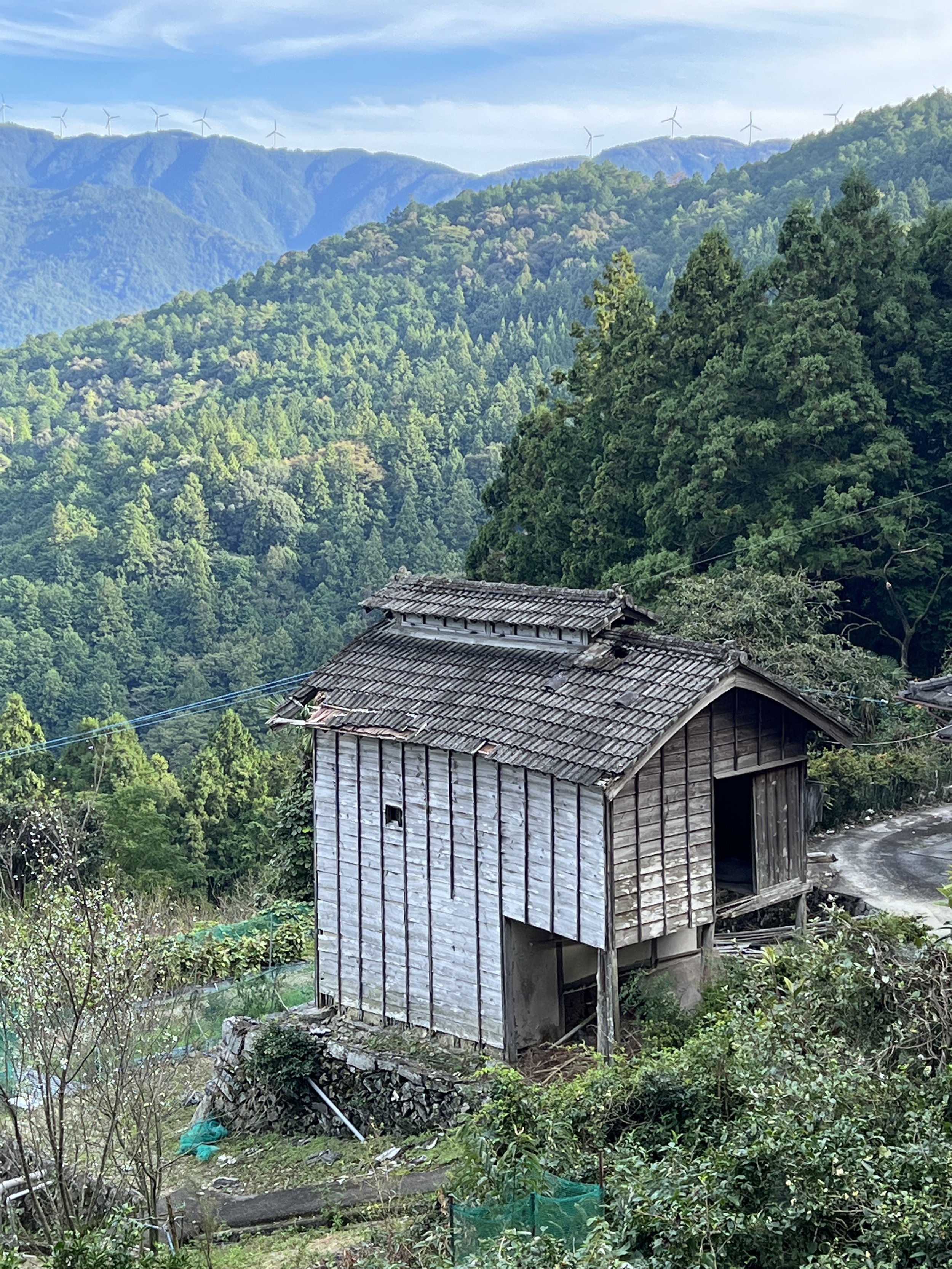
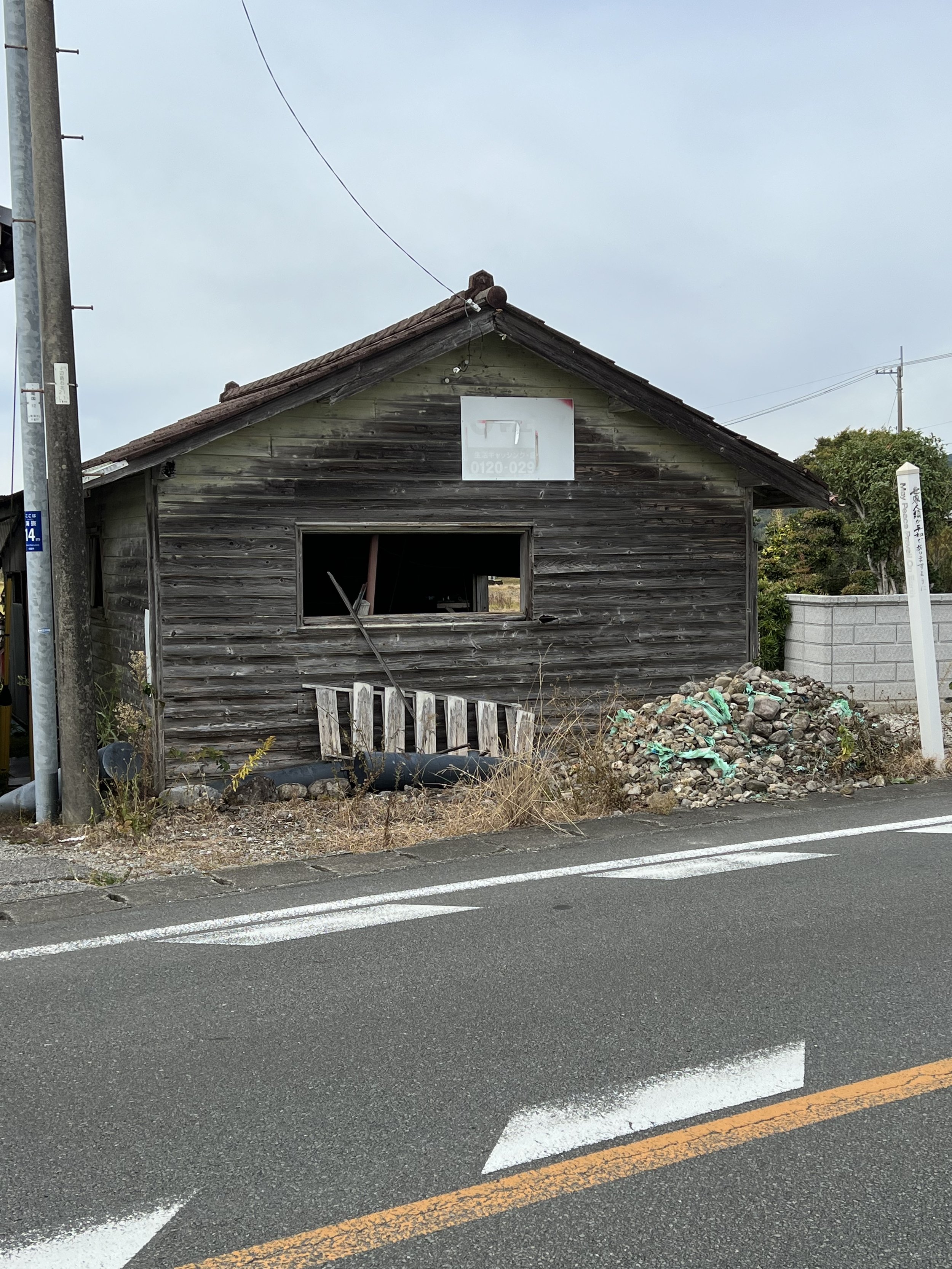
I expect most people reading this blog are aware that Japan has something of a population crisis going on. I have read that by the end of this decade, a third of Japan’s population will be over the age of 65. Perhaps more immediately for my current experience, it is also said that by 2030, a third of homes in rural Japan will be abandoned. I would not be at all surprised if a demographer told me that on Shikoku island, they have already reached this threshold.
The first eight days or so of the walk took us through Tokushima prefecture, a largely rural region of rice fields, persimmon orchards, and citrus farms. Within a day or two of leaving the main town of Tokushima, it was fairly obvious to me that I was walking through a landscape unlike any I have ever visited before, except perhaps the lost villages of the Tsarap Chu, about which I wrote a few lifetimes ago, back in early September. Still, those tiny settlements at their largest housed one or two families only. Here on Shikoku, I was walking through entire lost towns.
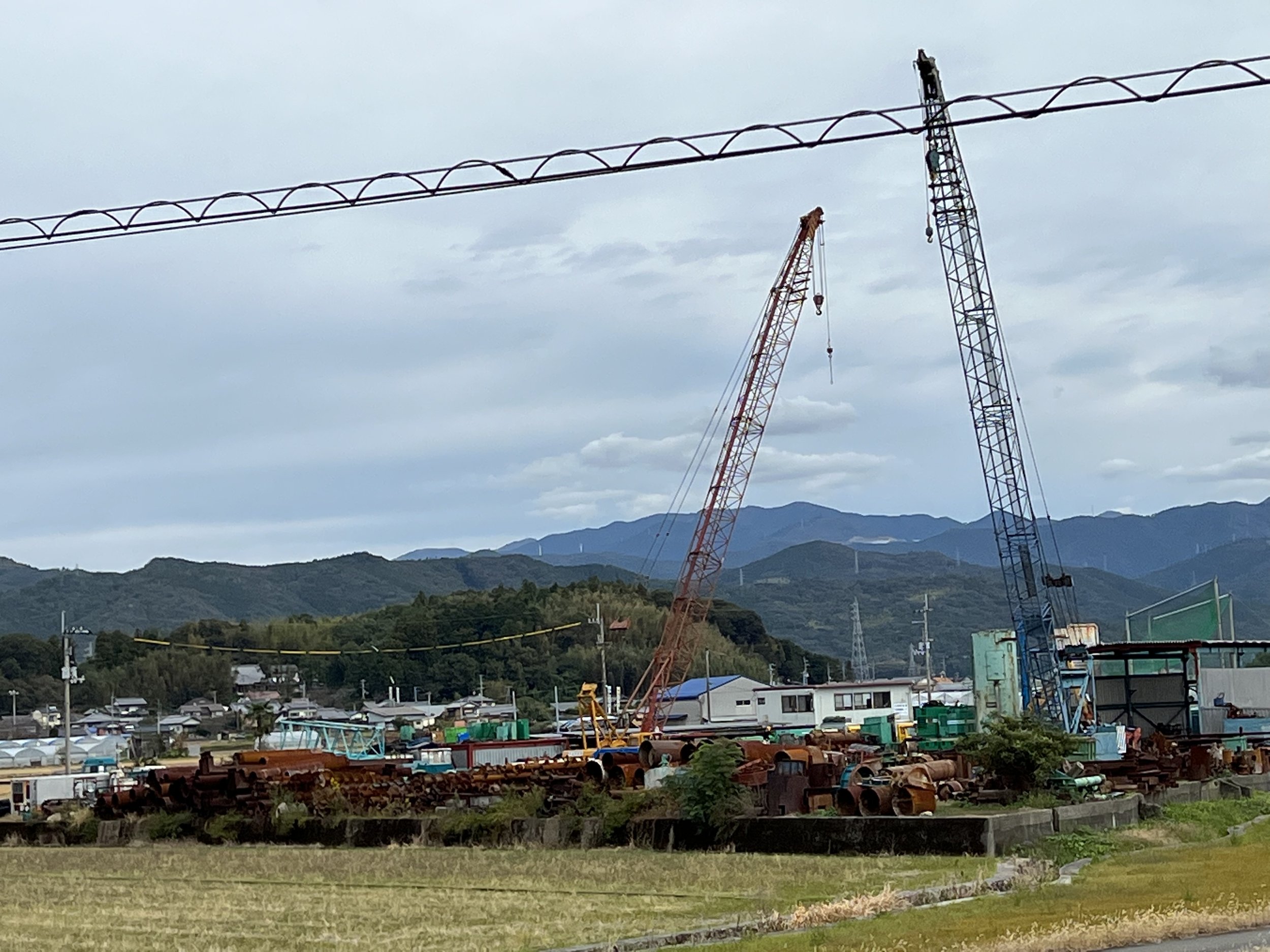
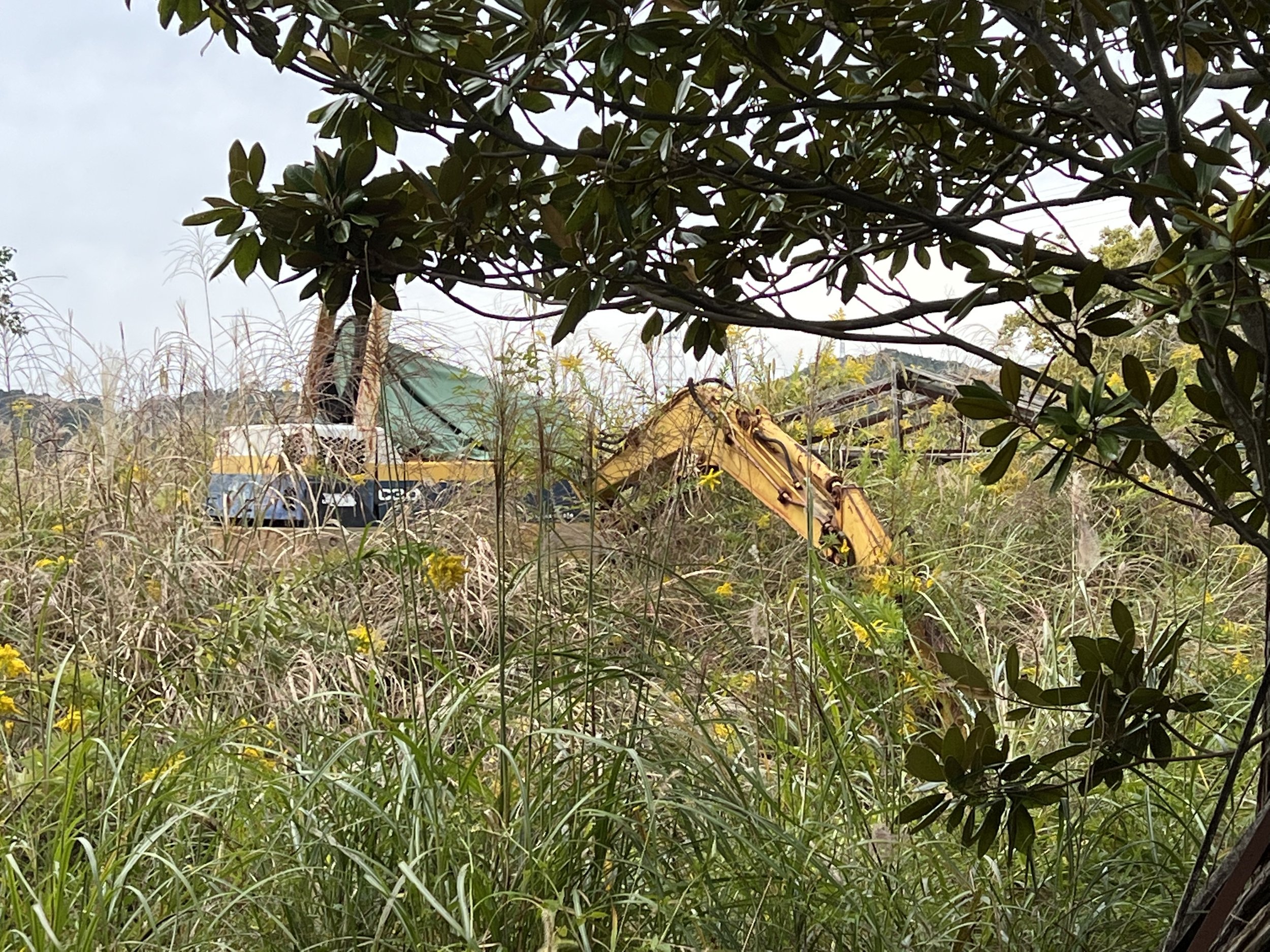
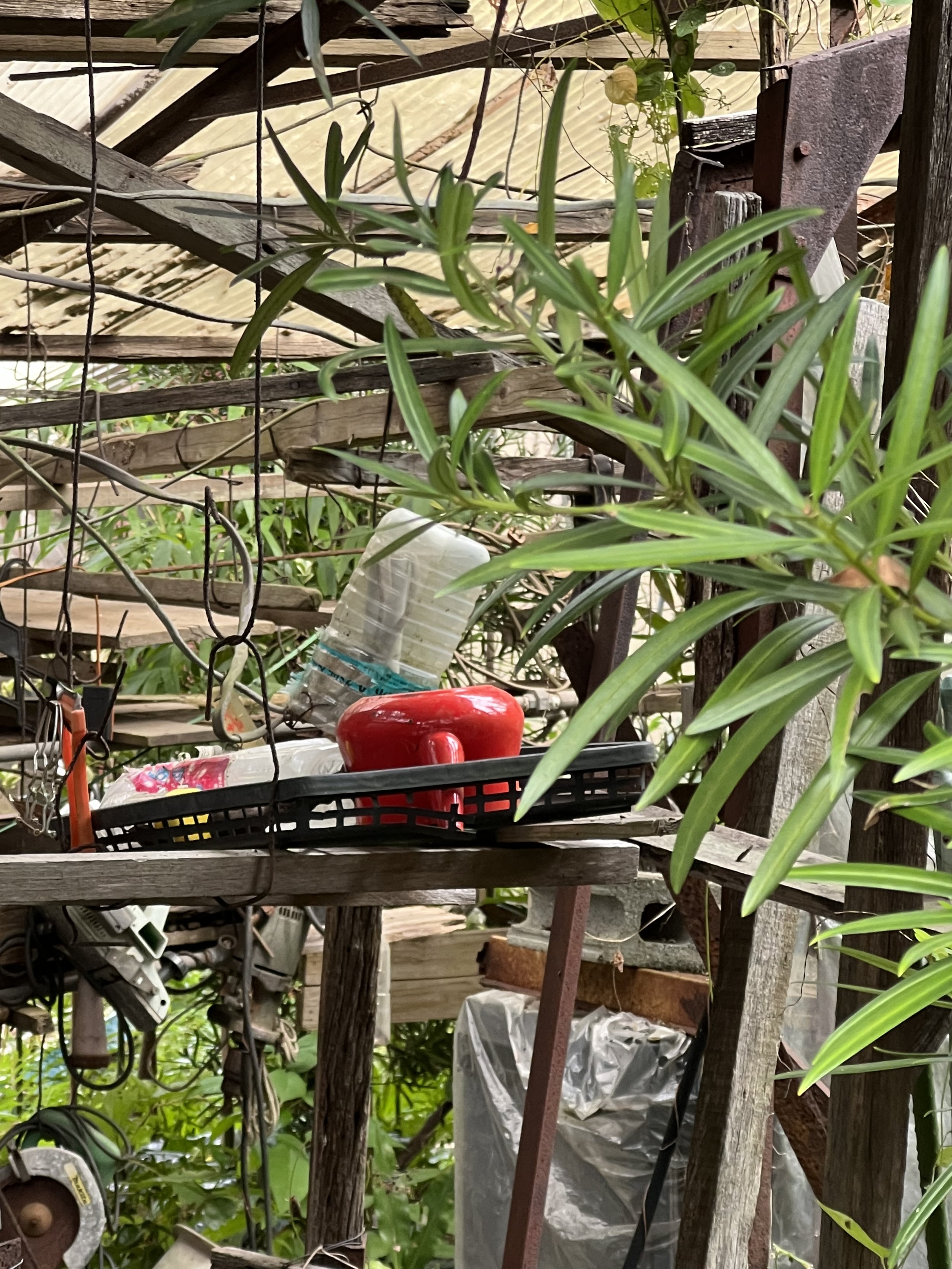
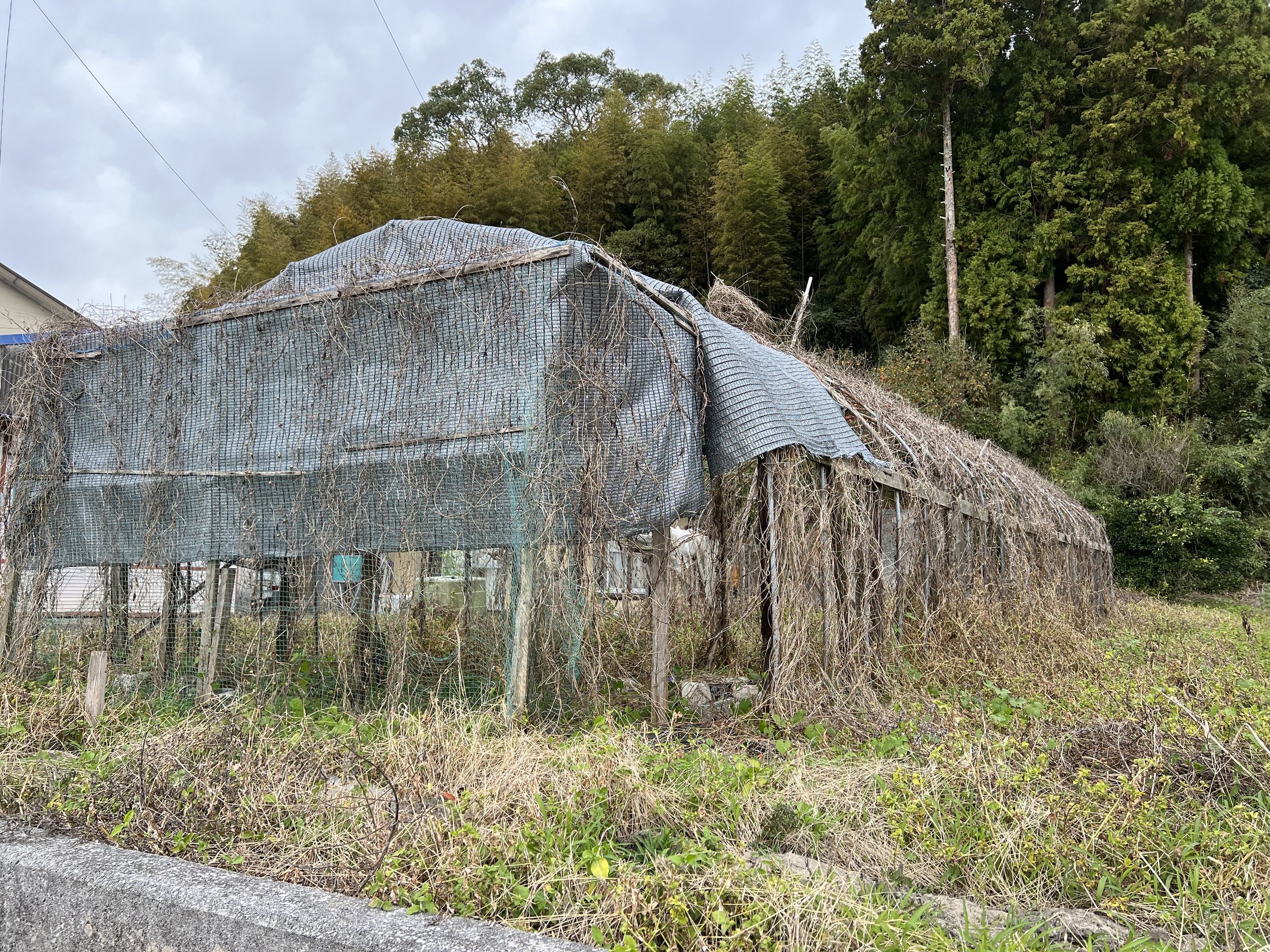
I had heard Dave and his friends repeatedly refer to a place called the “ghost town,” a town entirely abandoned by its prior residents, or rather, a town whose prior residents had died, and whose children had all moved elsewhere to find work and make lives. Because life in rural Shikoku does not offer a lot of opportunities, it is basically impossible for the children to sell the land or houses left behind by their parents. So they just kind of sit there. Certainly, the ghost town is remarkable, and even beautiful in its way, but it is not so remarkable, as I learned during our walk. We had days when we saw very few inhabited houses or farms. We saw entire orchards of persimmons that were clearly not being harvested. They were just continuing to grow without human tending. We saw greenhouses full of weeds and, occasionally, volunteer crops. We saw abandoned tractors, bulldozers, even a crane (no, the other kind of crane). We have sometimes walked a whole day without seeing a single open store. And there is a persistent problem of finding any lodging, given how many of the inns that once supported pilgrims have closed. Some of this of course is attributable to Covid, but not nearly as much as I thought in the first part of our walk.
One phenomenon that we saw in these villages, which I chose not to photograph because it freaks me out too much, is the practice of leaving stuffed dolls that look exactly like humans seated on corners, lounging in deck chairs, or appearing to buy something from a defunct vending machine. The first few that I saw I thought were whimsical but spooky. But then after we walked through town after empty or near-empty town with stuffed schoolchildren, crossing guards, and even Henro, I began to pay closer attention.
I’m sure somewhere much has been written about these stuffed people. I decided not to look it up, because I think it’s been important for me to just let the experience of walking past them permeate me. Are they supposed to draw attention to the fact of the absent population? Are they supposed to be comforting, as though at least someone has left behind evidence of human presence? Are they supposed to be funny, or tragic, or some kind of political commentary?
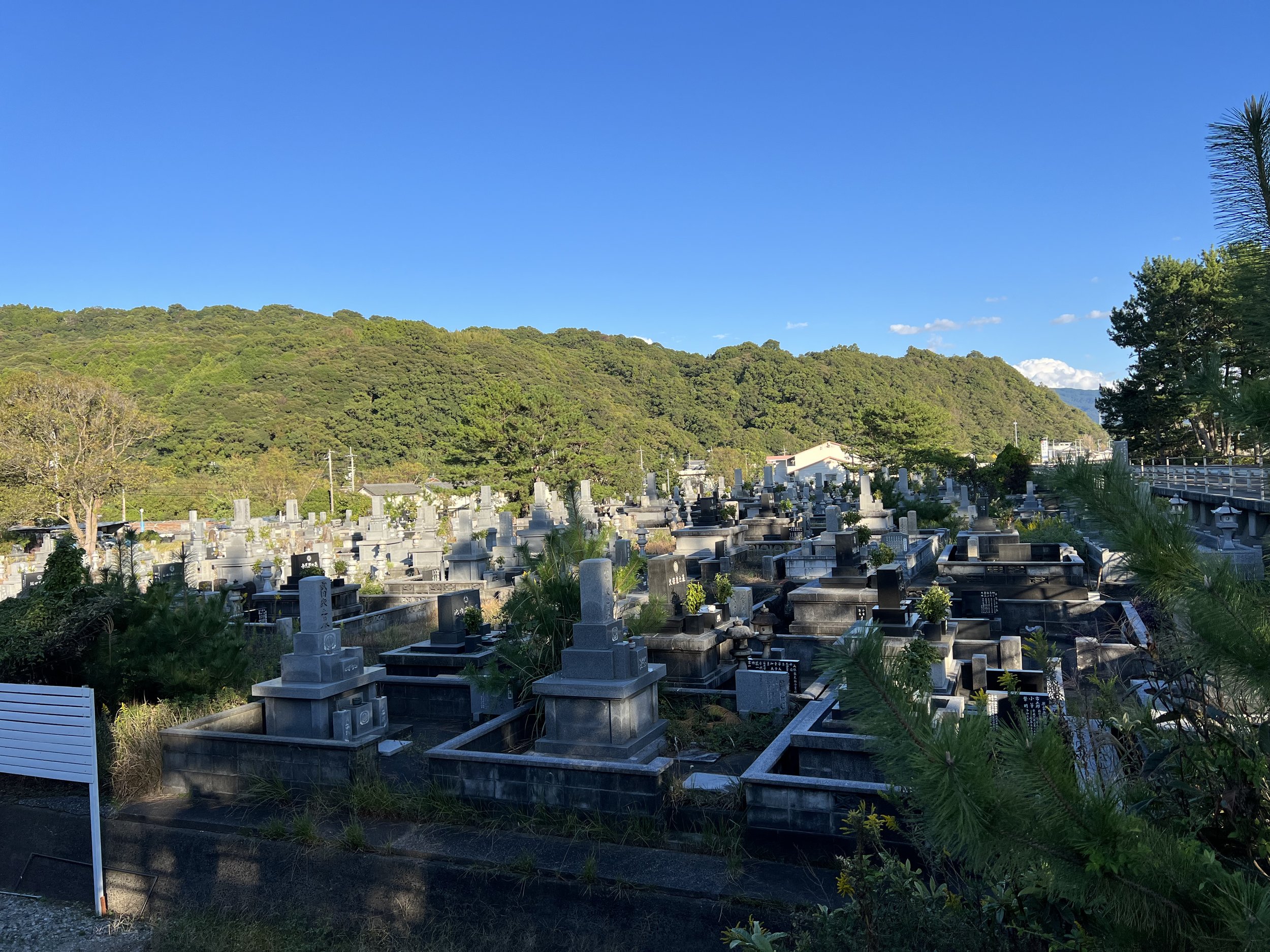
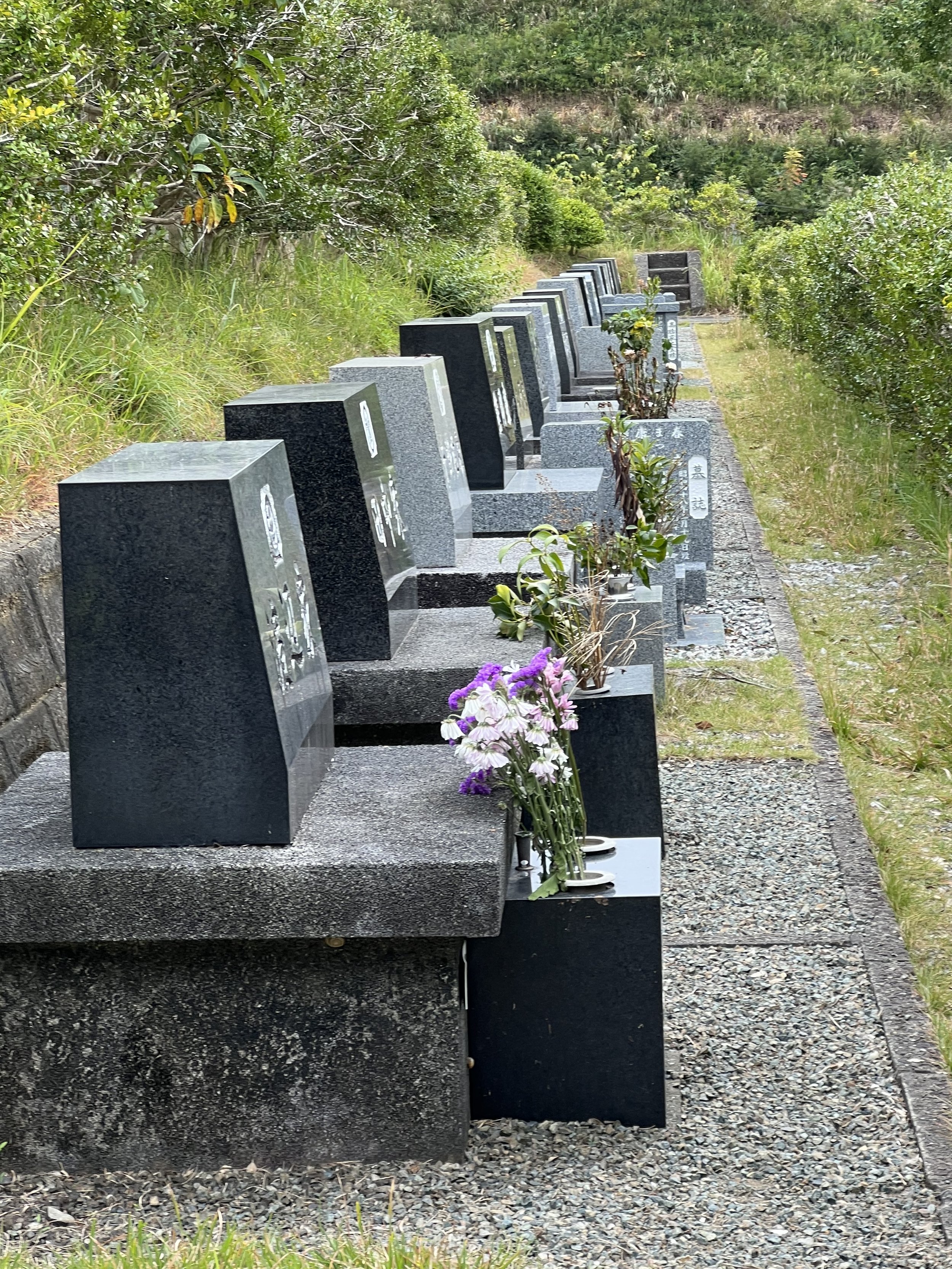
I never did figure out the intentions of the creators of these vestigial (and now, in many cases, rotting) human figures, which makes a kind of sense, given the inscrutability of intentions. But they certainly did bring my mind into intimacy with impermanence, death, and related Buddhist themes. This intimacy was redoubled by the fact that we have walked through countless graveyards, and without even doing hard math it seems obvious that there are far more burial markers than actual living humans in many of the villages here. From the massive ancient Okunoin on Mt. Koya to the huge modern cemeteries we’ve walked through in nearly every town, death is all around us here. What may be more surprising is how little birth there is, at least of the human kind.
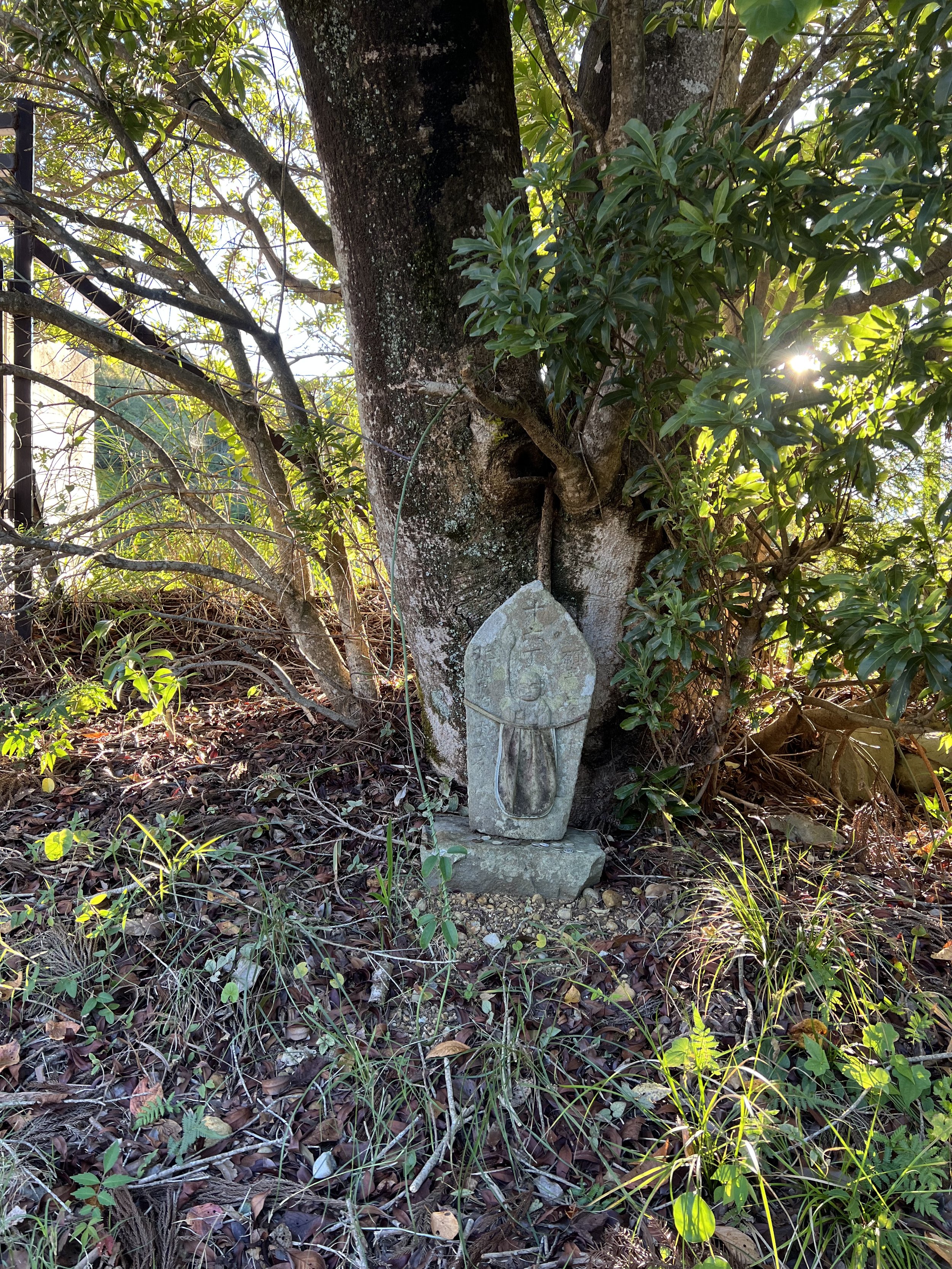
From the day we arrived, we started passing empty schools. Elementary schools, junior high schools, high schools. Dave never fails to point them out. Except in the larger towns, we have seen almost no children at all. We haven’t heard any, either. Sometimes these decommissioned schools have a bathroom specially for pilgrims. In order to get to the bathroom, you always seem to have to walk all the way through the old school buildings, rounding corners of abandoned classrooms and crossing empty playgrounds. Someone clearly tends the bathrooms, and that is a great offering. In fact, some of the other bathrooms in Henro rest stops have fresh flower gardens and little vases of beautiful flowers inside. Once or twice, we have run into an elderly woman carefully tending to this tender and powerful evidence of life. It’s an astonishing gift, for these aging island residents to make a little sanctuary for Henro to make a pit stop. I can’t help but wonder, when these retired residents are gone, what will happen to these little rest stations, let alone how pilgrims will take care of their basic needs. And who will sew fresh bibs for the little lions, or for Jizo Bodhisattva, or for Kōbō Daishi, as he waits at the edge of the trail?
I keep an eye out for flowers wherever I go on Shikoku. It seems to me that they are an essential reminder that, with or without the humans, Shikoku is still full of life. I watch herons and egrets fishing, and today I watched a dozen of them walking behind a tractor that was tilling a field, gobbling up whatever was uncovered by the machine. The black kites are always around us, and it brings me joy to hear them and to see them circle overhead. A couple of times, including today, we have seen the arresting sight of cherry trees in bloom in late October. These are of course the twice blooming cherries, and they never fail to lift my spirits. If they can push through with their winter blossoms, surely I can make it to the next 7-11.
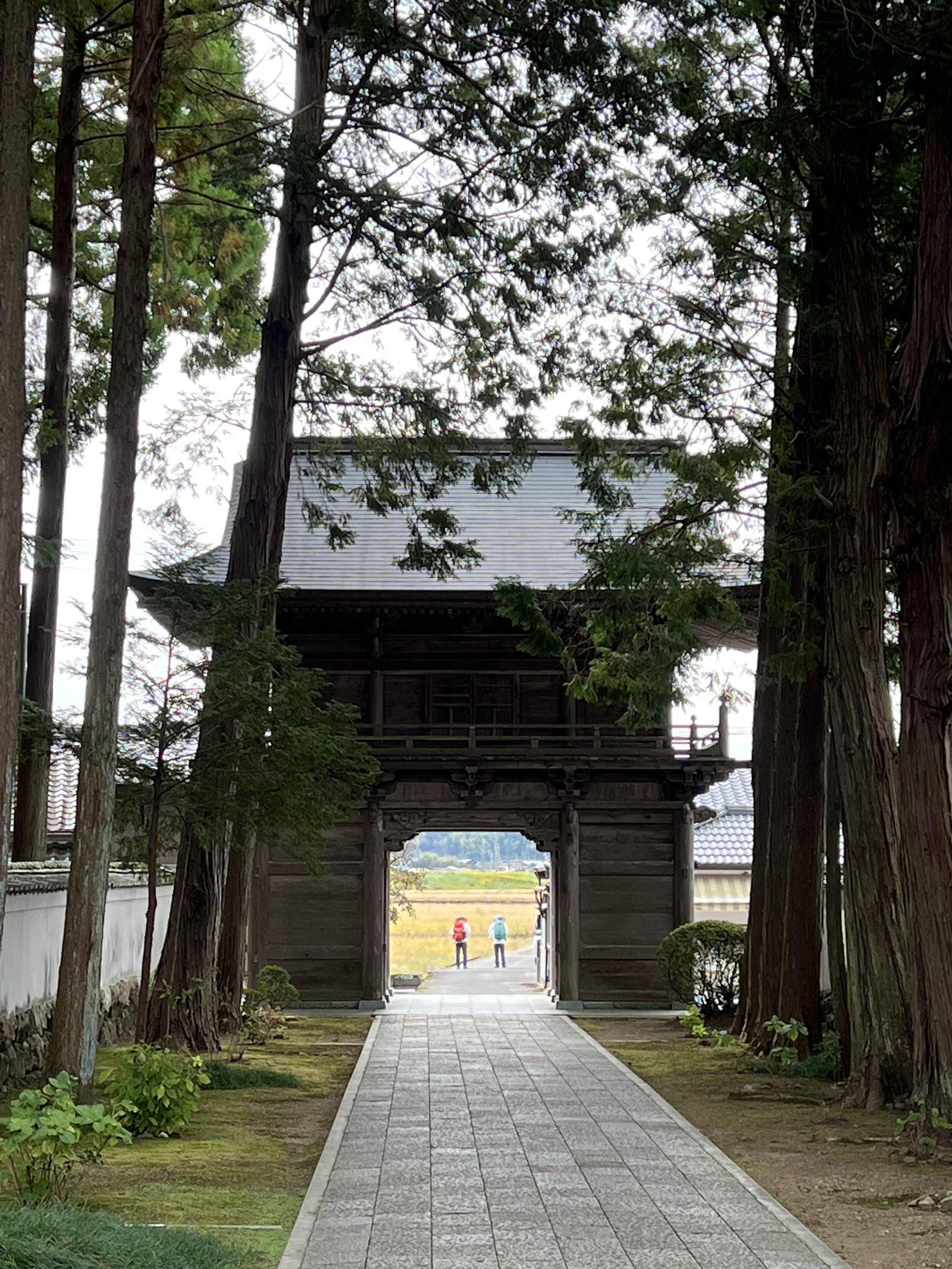
And just once, there was that little child Henro, dressed in her pilgrim best, who was clearly doing a car pilgrimage with her parents. The sight of her skipping through the massive gate and running between the temples brought me great joy, even as I knew that almost certainly the reason her family was undertaking the pilgrimage was that someone – a parent, another child-had died.
The Heart Sutra, which I have begun chanting half the time in English, to keep me awake to the great sutra’s meaning, reminds us that “there is neither old age and death nor extinction of old age and death.” As I try to receive the teachings of this place, it is this line that I repeat in my head, with every passing mile. And I follow the other Henro, who have been and perhaps always will be here, keeping faith and practice alive with every step.






 Walking and Praying
Leave a comment