In 2017, I had the opportunity to travel and do an extended trek in Ladakh with a beloved young friend of mine, who was 16 at the time. At one point in our trek, he asked Jigmet, our guide, what causes the mountains here to appear in such arresting shades of red, green, and purple. Of course, the answer was that they are full of minerals—copper, iron, and many others besides. With the slight cheekiness of a 16-year old boy, he asked Jigmet why the people of Ladakh don’t mine the mountains, given the potential stores of wealth waiting to be extracted there. Without missing a beat, Jigmet replied, “mining? It harms the sentiments of the mountain Gods.”
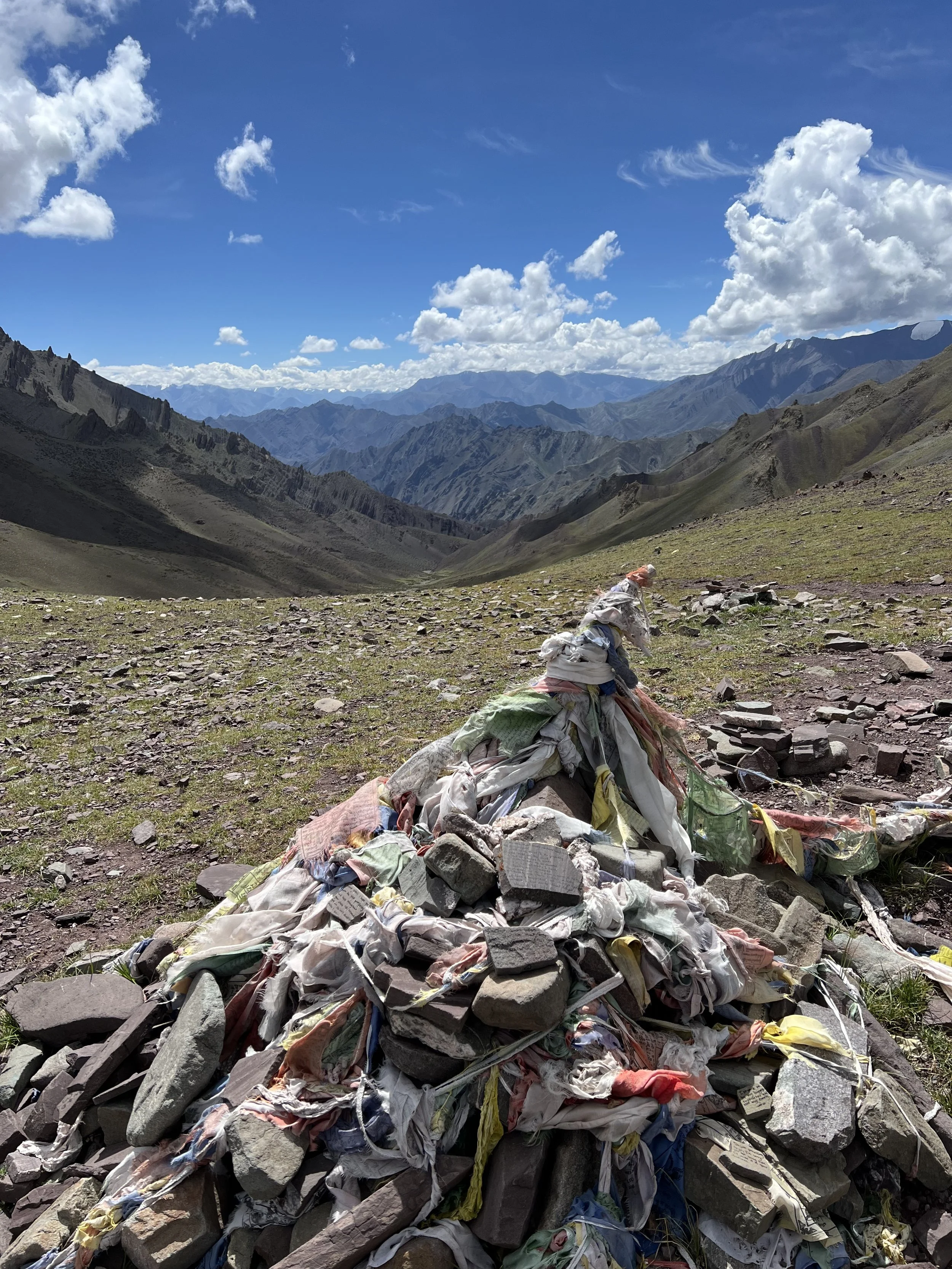
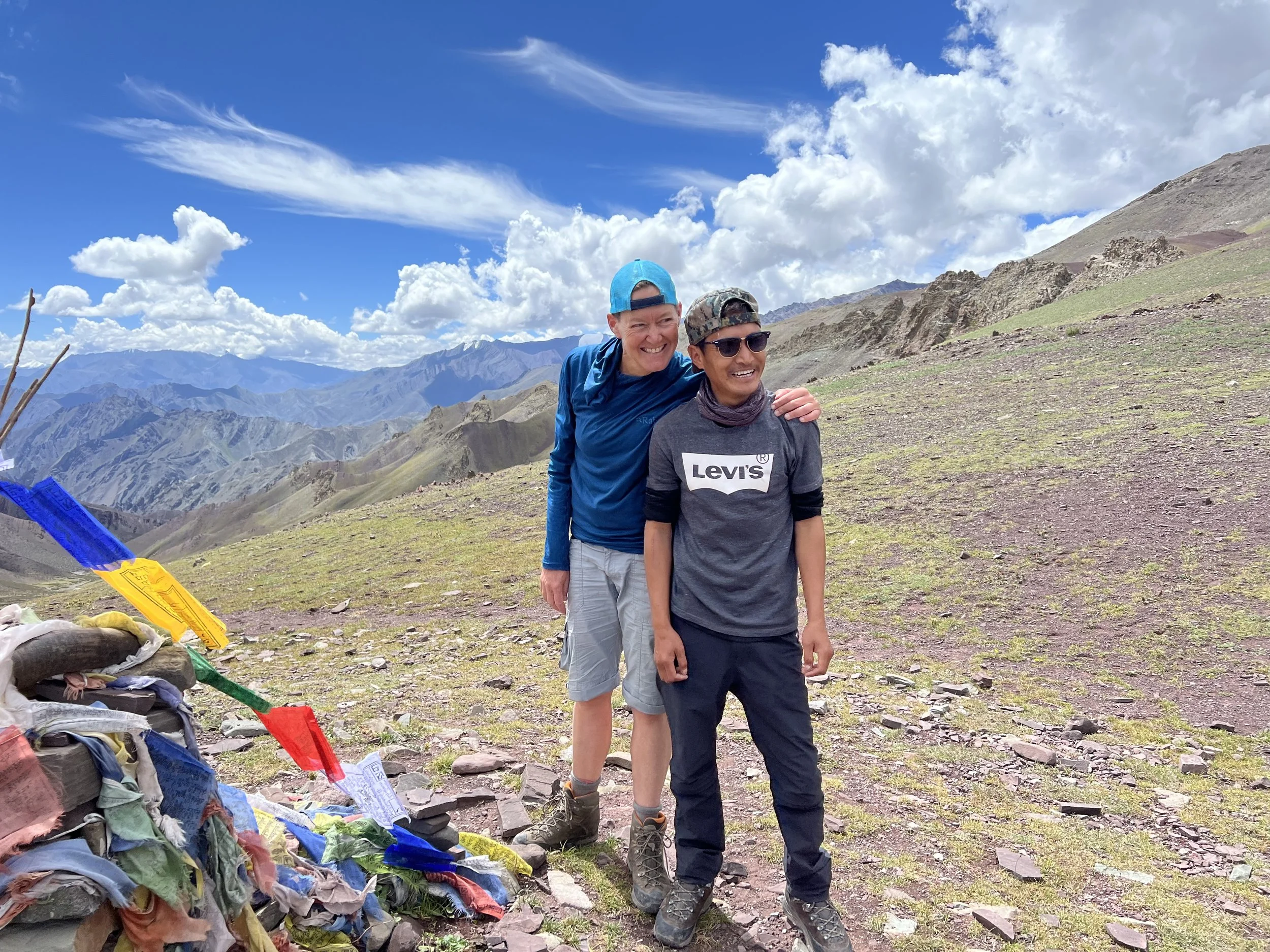
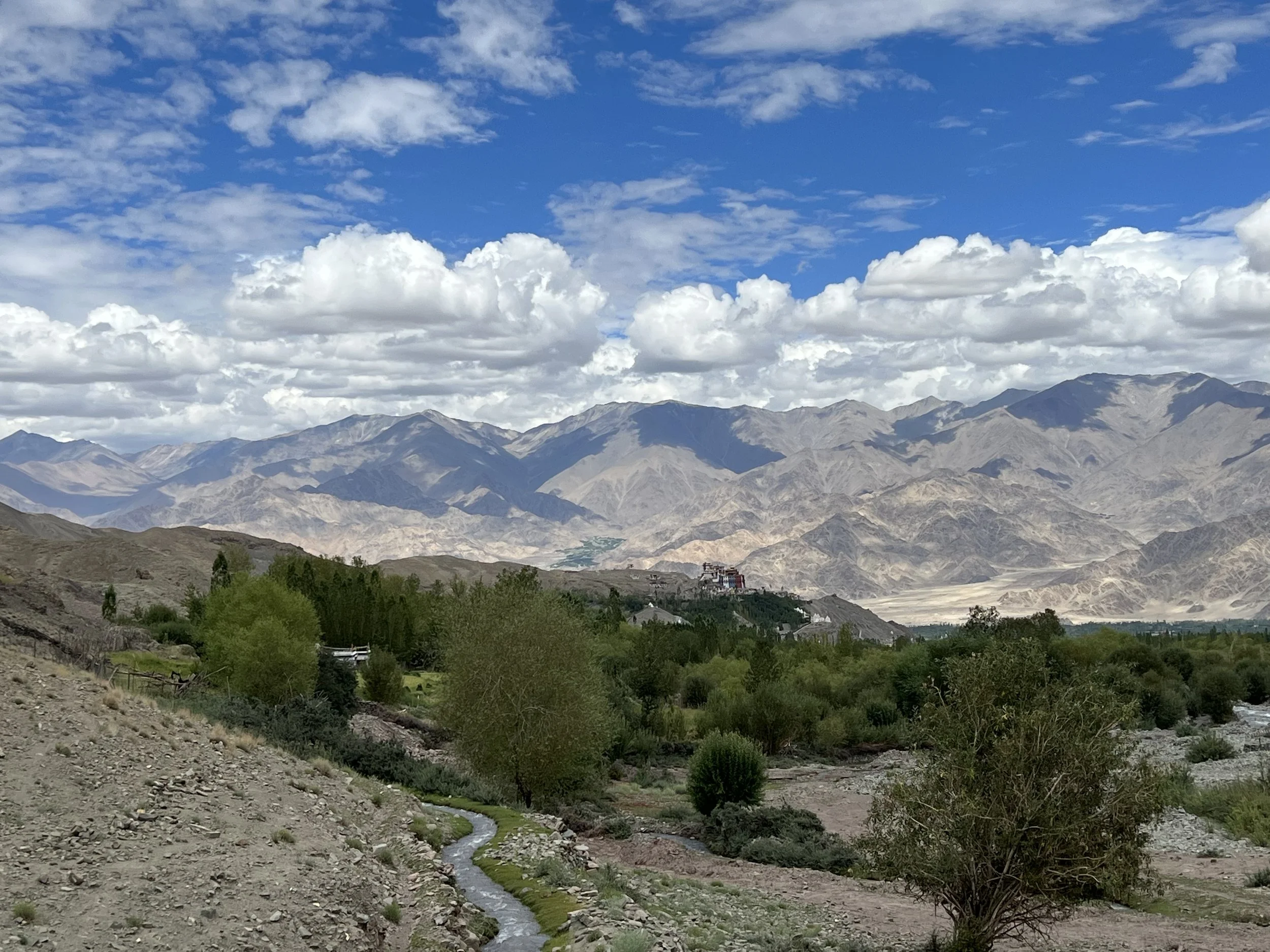
I’ve never forgotten Jigmet’s response, and in the years since, it’s not the only time I’ve heard him refer to these mountain Gods. Over the four-day trek I just completed in the Stok range near Leh, Ladakh’s main town, I had cause to consider these mountain Gods at some length. Given that I’m ostensibly on a pilgrimage, and given the relative absence of monasteries and temples in the area where we were hiking (though certainly there are many kinds of shrines, stupas, and sacred groves and passes hung with prayer flags), I got to wondering how this kind of trekking—of which I will be doing a lot more in the next month— “counts,” in my mind, as a pilgrimage.
As I said in my very first post here, what makes a pilgrimage a pilgrimage is defined first by the motivation of the pilgrim, rather than by the nature of the place visited. The pilgrim simply needs to display a “religious motive” in setting out on his, her, or their travels. Yet the specific places sought out by pilgrims are generally defined as those “sanctified by association with a divinity or other holy personage.” To the extent, then, that the mountains of Ladakh have become for me places associated with the “mountain Gods,” this portion of my journey certainly qualifies as a pilgrimage—albeit a less formal, more wild one than some other parts of this four-month undertaking.
In considering my time out trekking in the context of pilgrimage, I realized that over the years I have thought of the mountains of Ladakh less as Gods than as teachers—albeit divine ones. I come here to learn from the mountains, and I try to accord them the respect and humility I would offer any other established teacher in whose venerable presence I find myself. I often tell the people who come with me to this place that they are here to receive darshan from the mountains—literally, to be in the presence of these holy beings and to be transformed by that presence, in whatever way is most needed. Sometimes the transformation is gentle and awe-inspiring; other times, not so much—more like a cuff to the side of the head from the paw of the snow lion. Either way, these mountains are teaching us, training us, transforming us—to the degree that we are willing to be among them and receive their wisdom without picking a fight with them, trying to master them with our knowledge or expertise, or missing the experience entirely by spending most of our time projected out elsewhere in our thoughts..
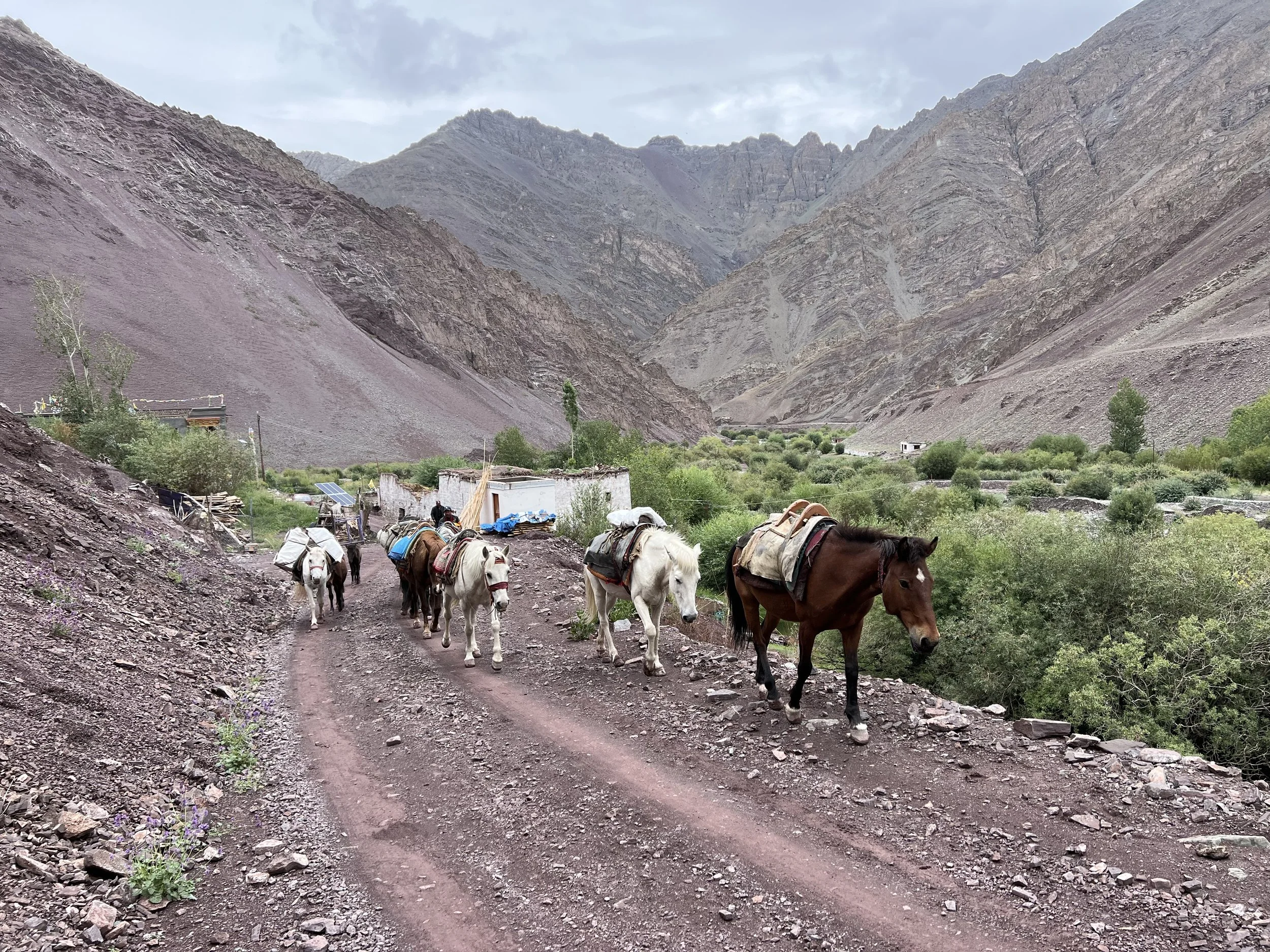
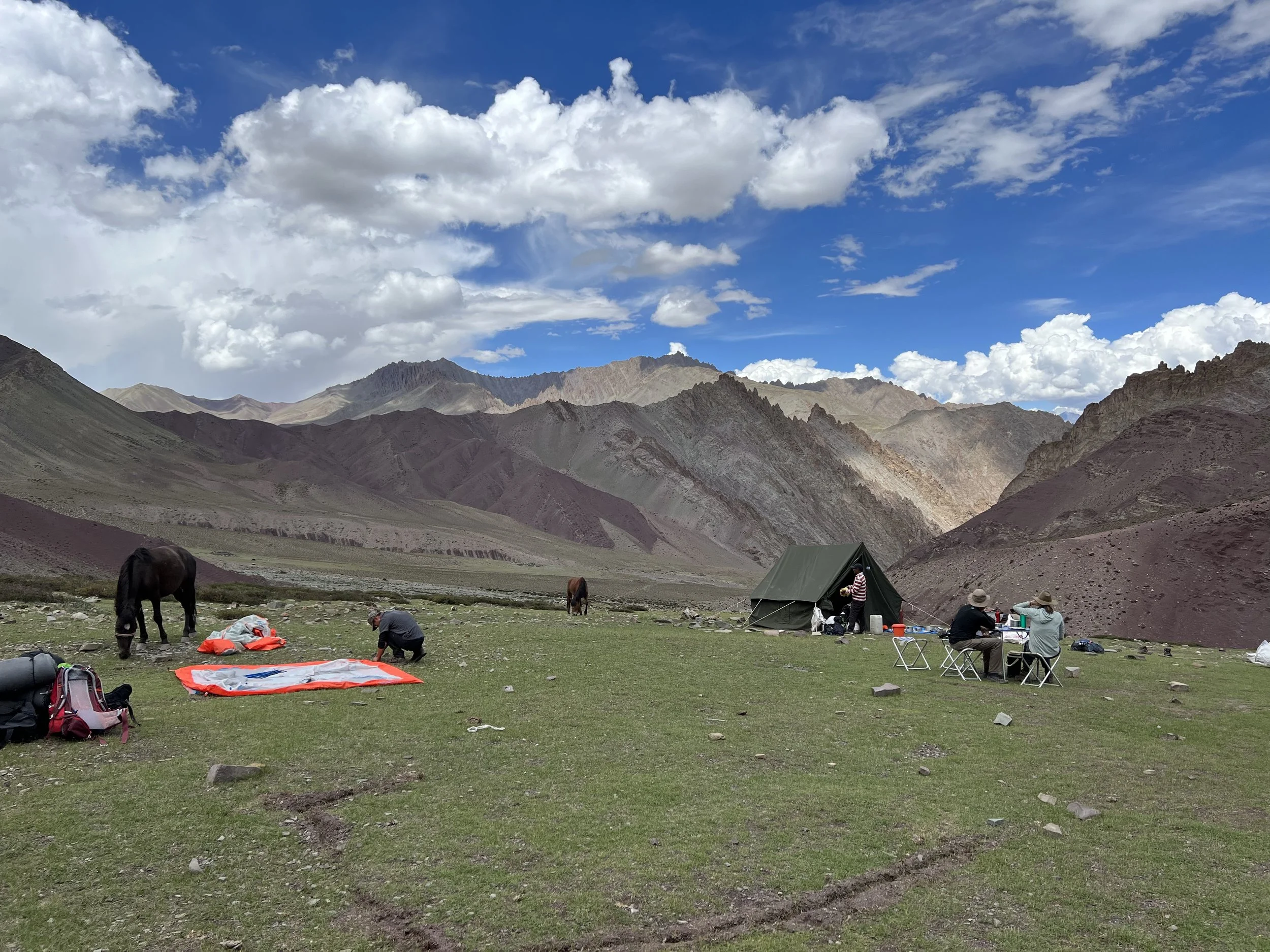
This trek was short, but it had its complications—and also its great joys and its opportunities for learning. The first day we arrived at the roadhead, only to find that there had been a small mudside just up the trail, making it impossible for the horses to cross safely. We would remain at the roadhead for a day and night—in a light but persistent rain—and hope that no more slides followed and that the original slide had a chance to “firm up” a little so the horses—and all our supplies—could get across. We would thus have to cut the trek short, from four days to just three, crossing only one rather than two 16.000 foot passes, and descending through a different drainage than that originally planned.
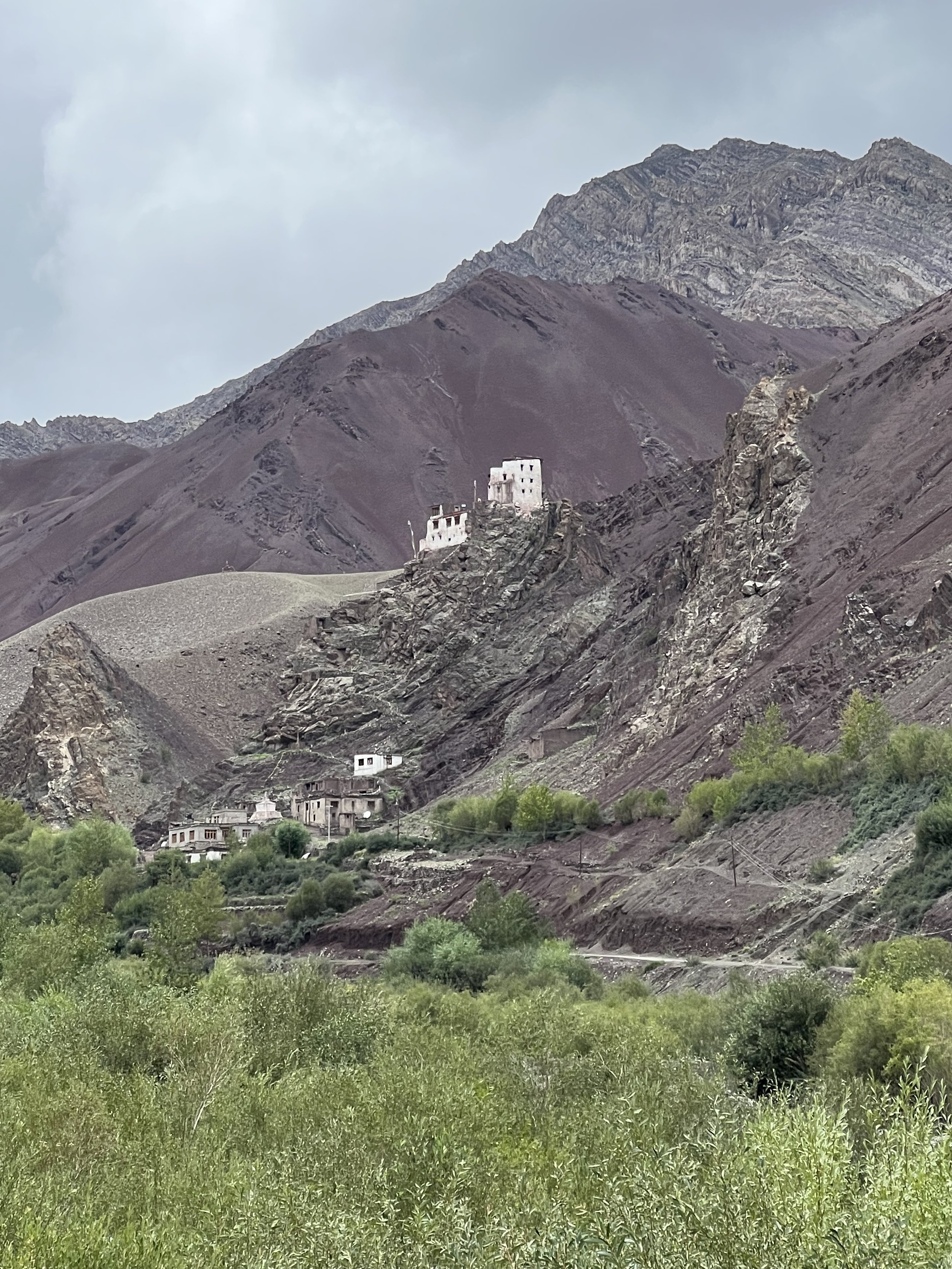
When the arrangements were made and camp set up by the comparatively unglamorous side of the road, we took a gentle walk up to a small branch monastery of the great monastery at Lamayuru that sits a mile or two from the roadhead. Just one monk tends the place, and he was busy doing other things and seemed disinclined to show us around. He tossed Jigmet the keys and we wandered through the few small rooms by ourselves, considering what it would be like to live here alone and keep the altars clean and tended for a year—the usual span of time a monk is sent to one of these outlier temples. I thought about the isolation of that monk’s life, and about the patience it would take to do the required tasks each day with no one watching. It made quick work of any small impatience I myself may have had brewing with the delay, the rain (not so common in this part of Ladakh), and the abbreviation of our planned trek. I also paid close attention when Jigmet showed us into the last, locked room, which he referred to as the “Rinpoche’s residence.” To us, it looked just like yet another small temple, but with a pallet on the floor for a visiting teacher to sleep on. The monk may be here alone, but one of the ways he is reminded of the larger context in which he is practicing is by needing to keep that room ready, just in case the Rinpoche, always welcome, should decide to make an unannounced visit.
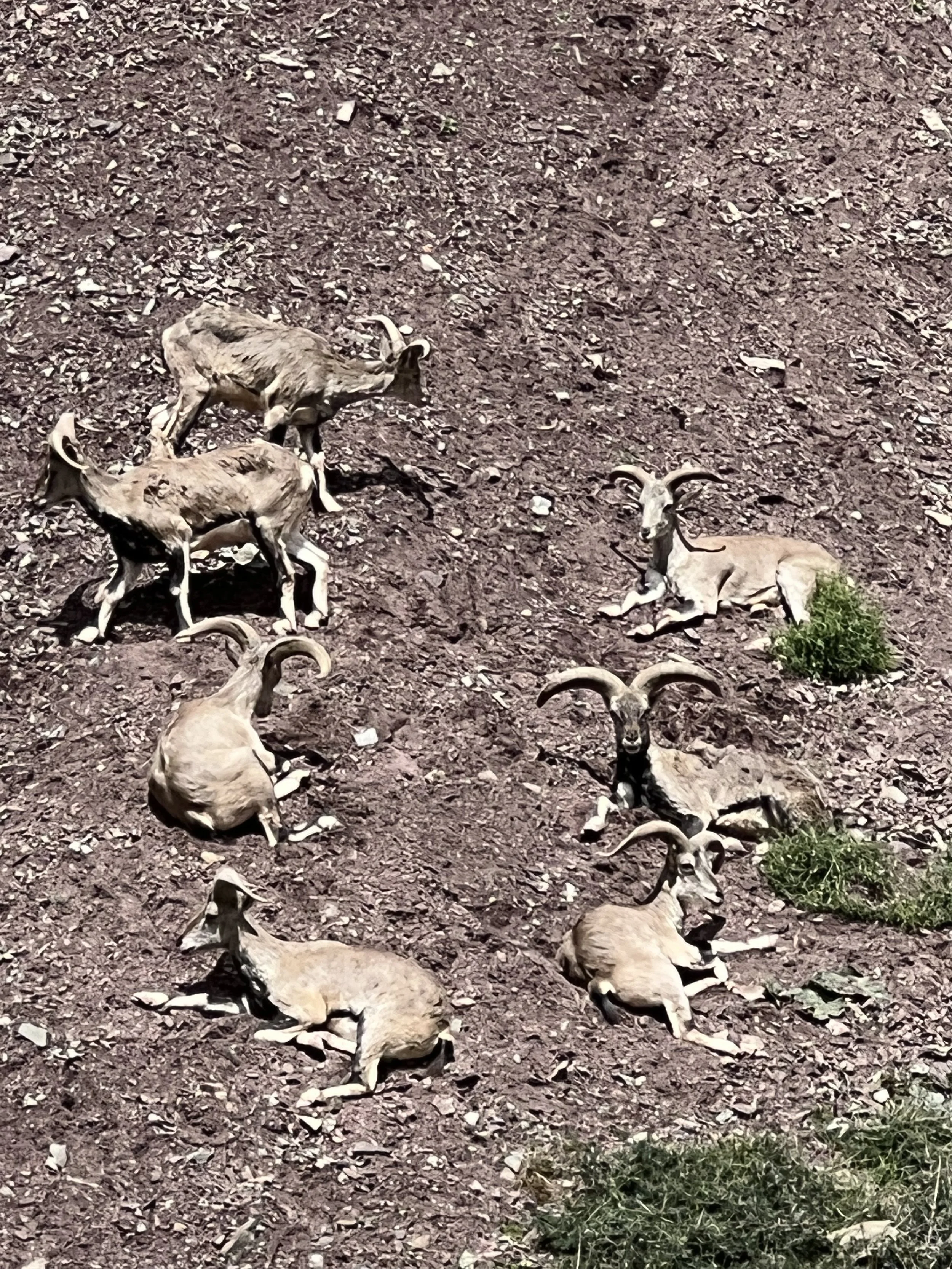
The second day saw some clearing, and we walked out of camp feeling ready, excited, and full of anticipation, though still under leaden skies. Not one hour out of camp, we came across a group of eight or nine Blue Sheep, one of the most beautiful animals to be found in this region—animals that seem like a cross between a mountain goat and a deer. We saw a group of full grown animals lying on one edge of the valley up which we were walking, some of them clearly of great age and with towering horns. They seemed utterly unfussed by our presence, and lay watching us as we trudged by. I have seen Blue Sheep many times in Ladakh, but usually up high and skittering over rock faces, looking small and even fragile. To be met by them in their stillness and commanding close presence was a pure blessing on the start of our walk.
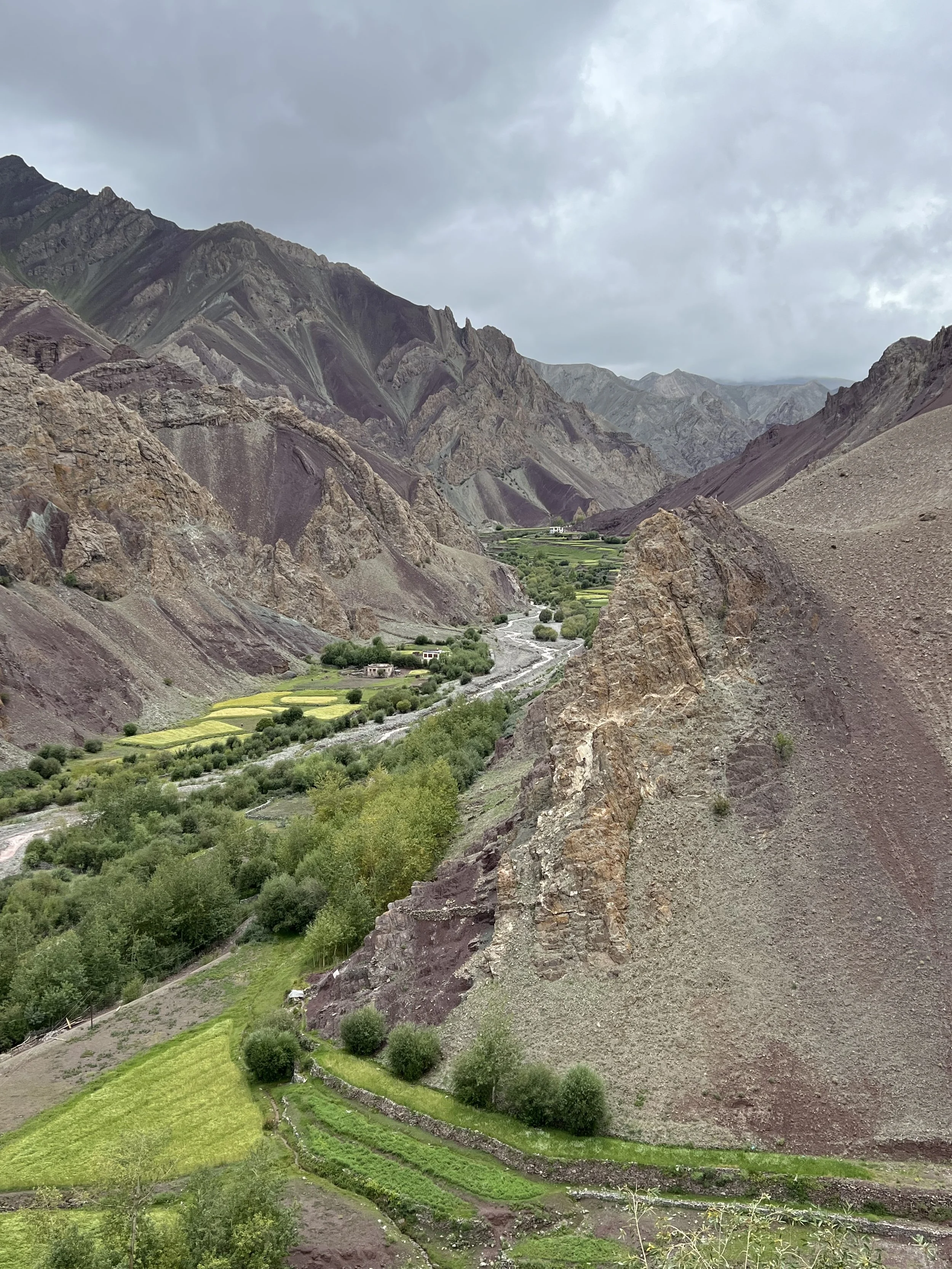
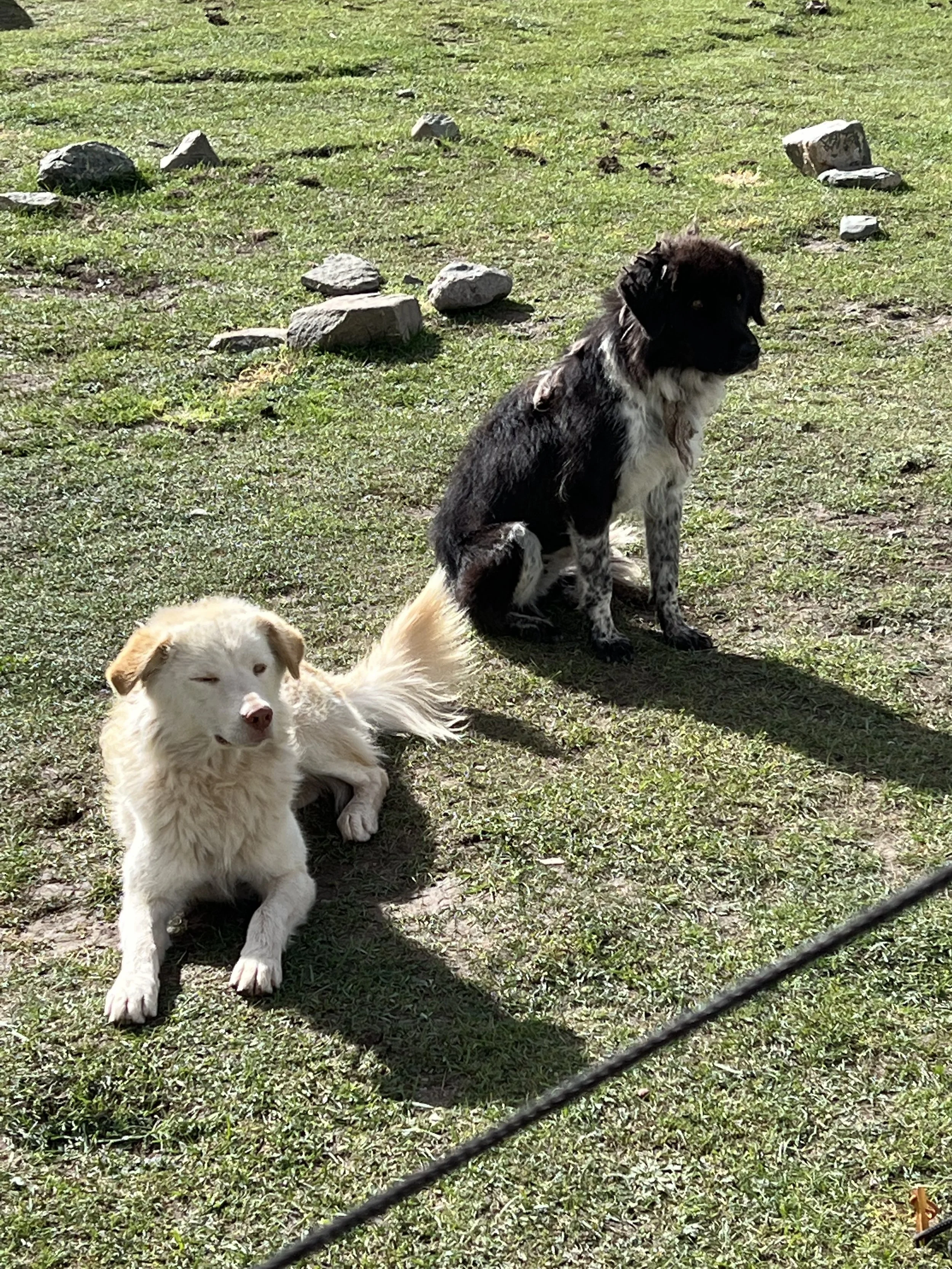
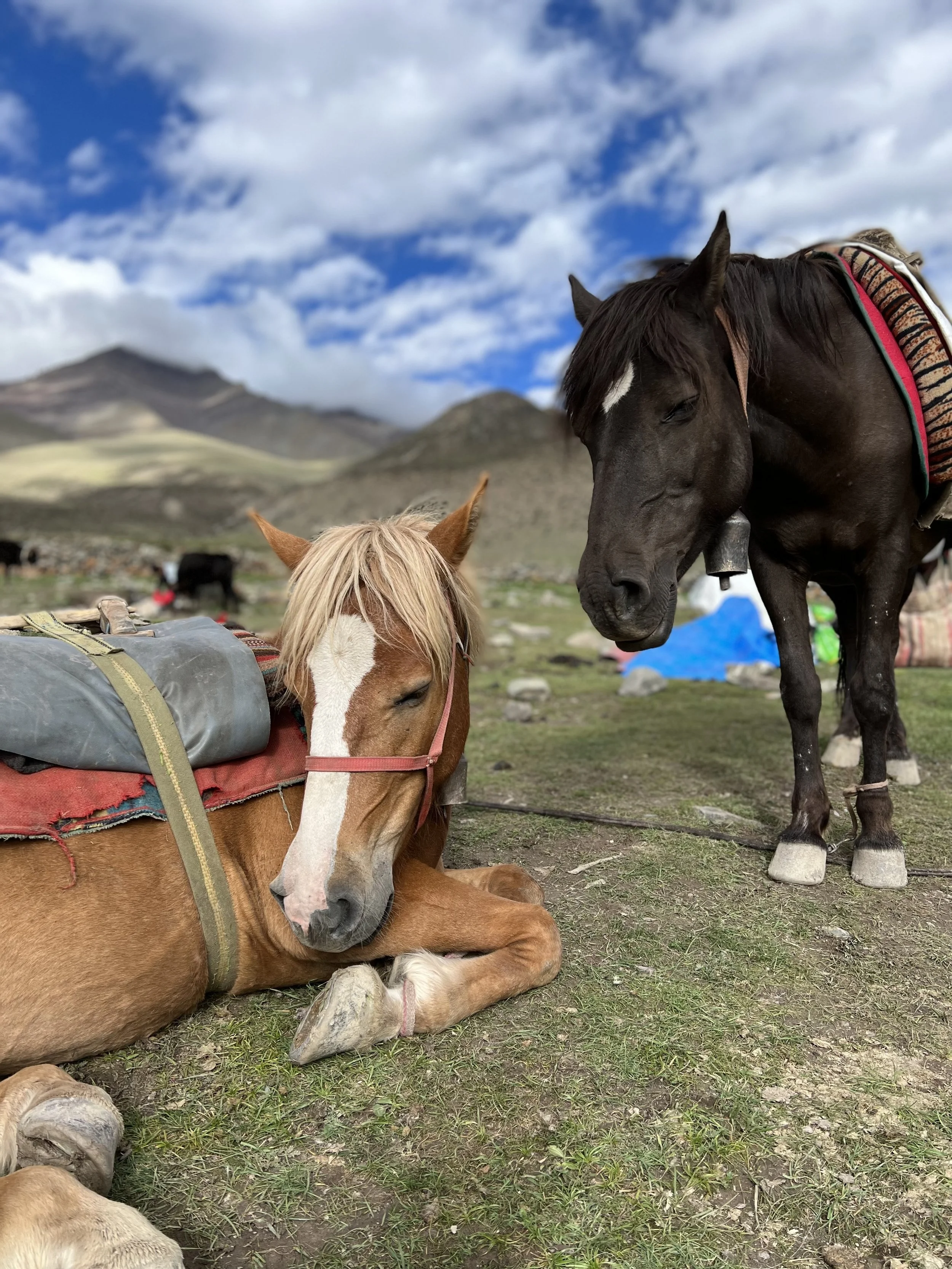
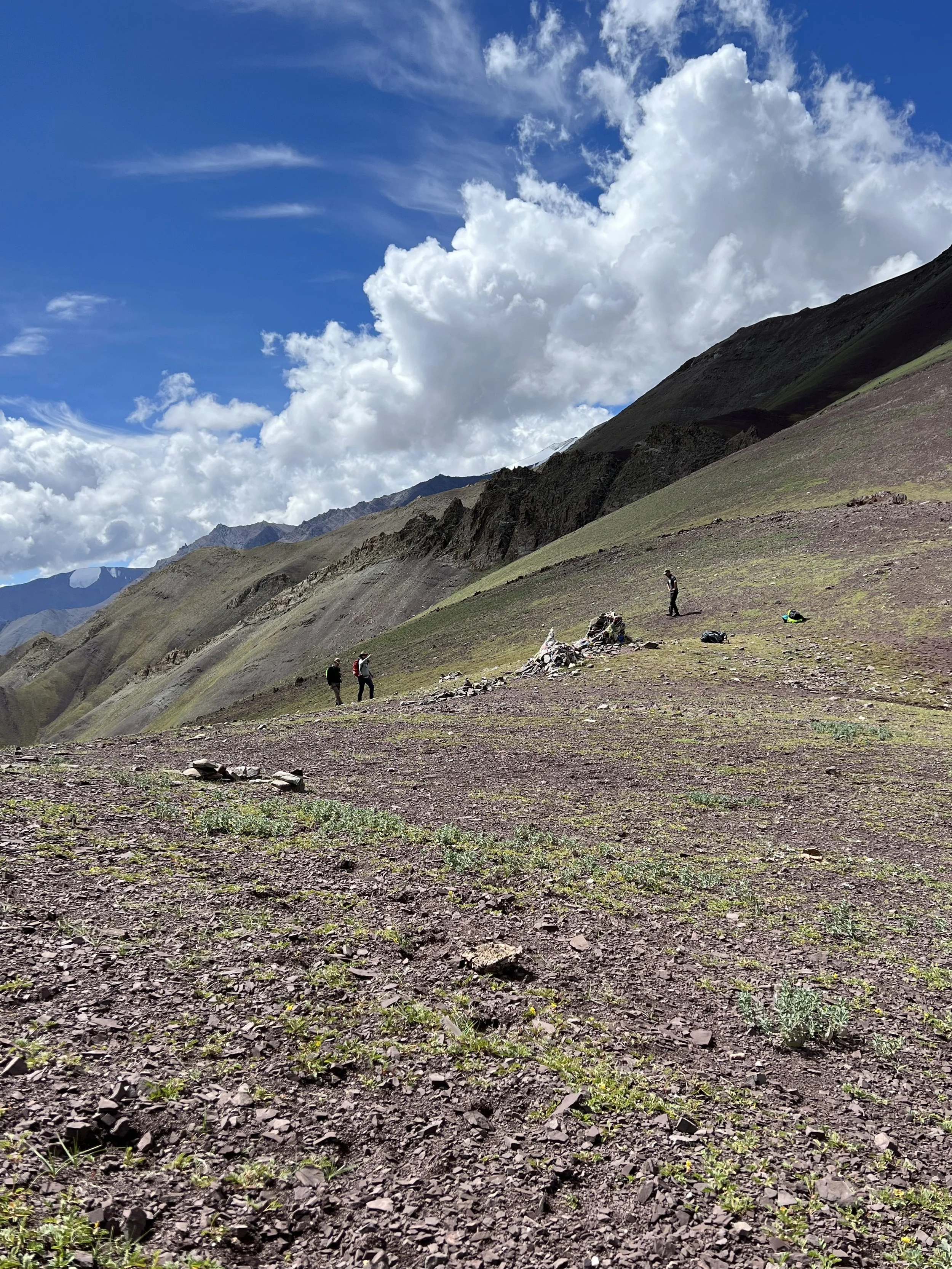
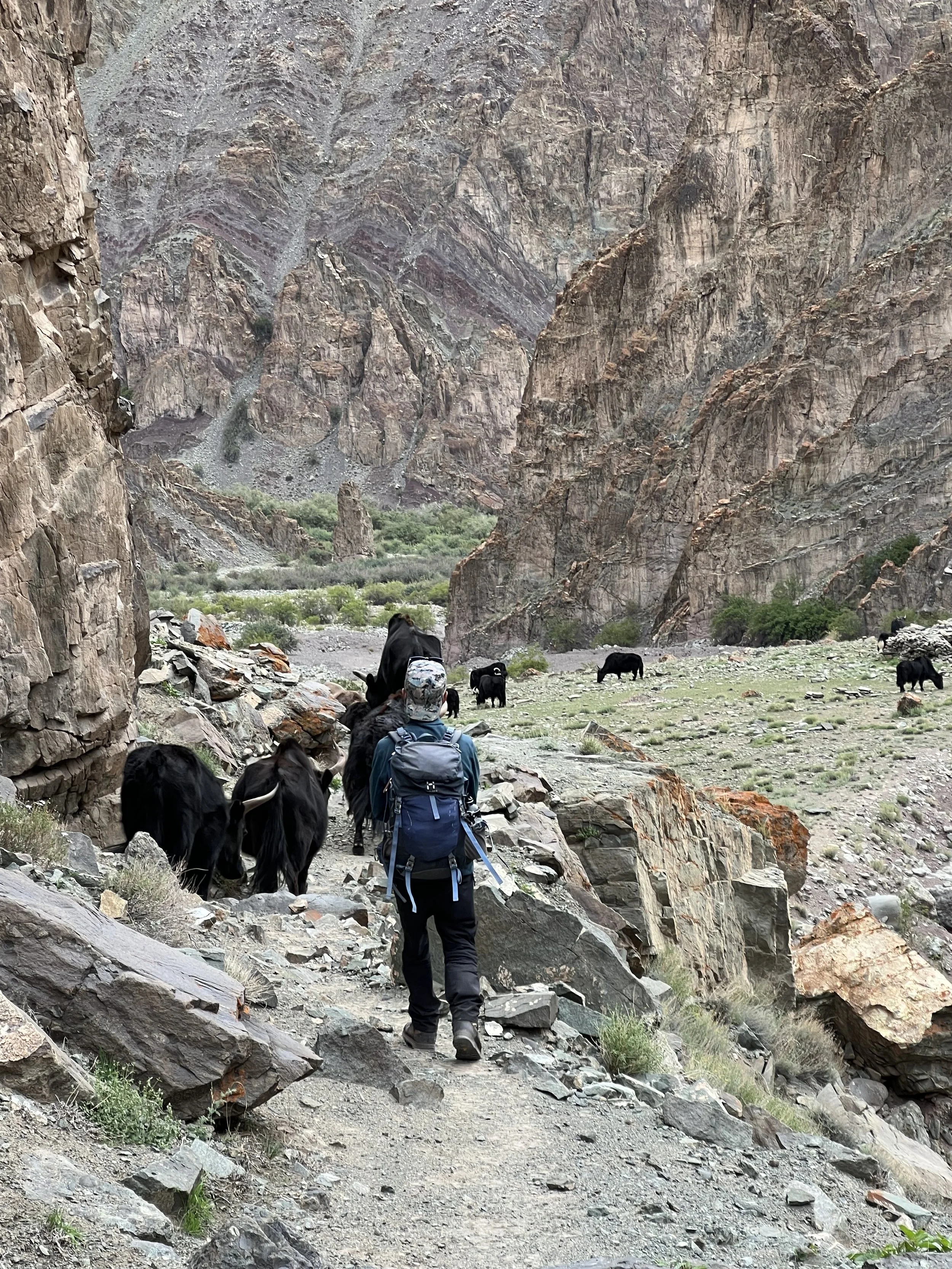
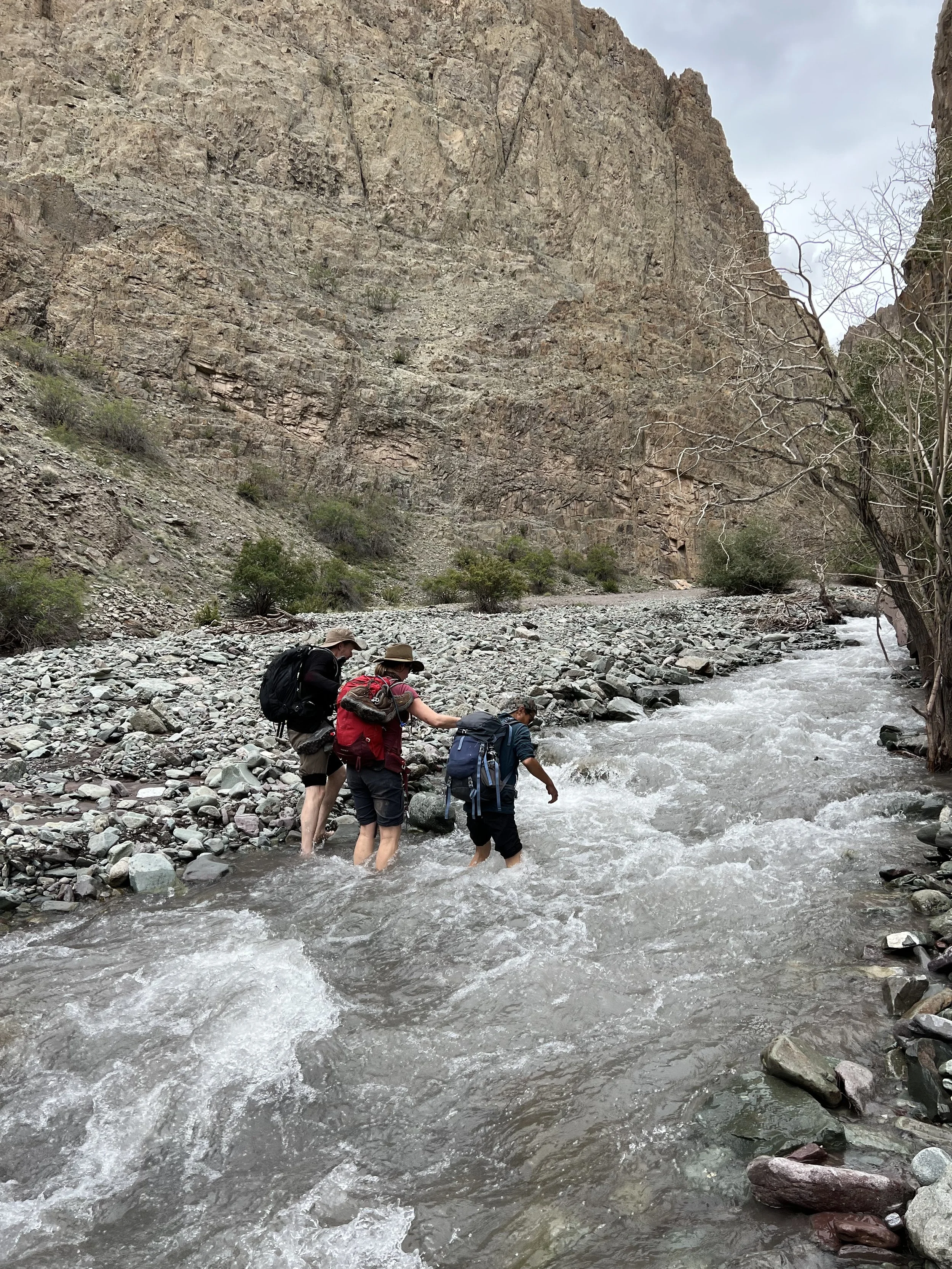
The next three days held their full share of gifts and challenges: gorgeous open meadows and green and purple striped rock faces cupped around us at all times; a not inconsequential pass to be navigated on the morning of the third day, at around 16,200 feet, challenging any overconfidence about our fitness preparations or our week of acclimatization; rain, hail, and occasional thunder; marmots and ravens, quail and lizards, and semi-feral dogs who visited us at each camp, vying for food and attention; the horses who traveled with us, and the goats, sheep, cows, and yaks who dotted the high pasturelands through which we moved; the ceaseless care for each of us by our crew; and finally, on the last day, a long walk down a drainage swelled with the recent and ongoing rains, with ten wet crossings to be navigated over a period of about four hours, slowing us down and requiring constant attention lest we fall into the fast moving stream.
Four days pass in a blink on a trek, and at the same time, it can feel like you’ve been out there forever. There’s little to do other than walk; rest; receive food, drink, and every form of care; and take little walks around camp and stare at the landscape, marvel at the colors and shapes, imagine what it would take to dissolve form and just blend into the rock and greenery. You (or I, really) can spend inordinate amounts of time watching the clouds form and dissolve—a powerful reminder, according to Tibetan Buddhism, of the workings of our own thoughts and minds. For me, after a decade, there is also the supreme privilege of long stints sitting on the floor of the warm cook tent, giggling with the cook, his helper, the horseman, and Jigmet, who range freely across four languages—Hindi, Ladakhi, Nepali, and English—only one of which I can have any real claim to understand, though I can piece together bits of each of the others. And somehow I generally get the joke, which is only sometimes at my expense, and even when it is—especially when it is—it’s another way of allowing myself to be taught.
There is something here—in all these heres—that goes beyond language in its usual forms. The mountain Gods, and the camp Gods, and the Blue Sheep Gods teach more with presence than with words—more Darshan than treatise or concept. I haven’t begun to metabolize the teachings of this trek, even as I set out on another, and then another, but I do hold close the knowledge that perhaps all I really need to do is to allow myself to be “sanctified by association” with these great Beings—the mountains, the mountain Gods, the mountain Creatures, the humans who make the mountains accessible to and comfortable for people like me, trying to be attentive students, devout pilgrims, and respectful guests. As I head into a couple of days camping up at the sacred lake, and then soon after into a 17 day trek—by far the longest I have ever undertaken here—those are the motivations I will carry with me: to be a worthy student, pilgrim, and guest.


 Walking and Praying
Leave a reply to kirsten Cancel reply