One of the things that distinguishes extended trekking in Ladakh from wilderness travel in the US is the degree to which one remains in a landscape everywhere marked by human activity and human-nonhuman interactions. Far from the pristine ideal of a landscape free of human presence, the whole enterprise of trekking in Ladakh is dependent on and interdependent with a centuries-long history of the ways this land has been dwelled in and used by its human and non-human inhabitants.
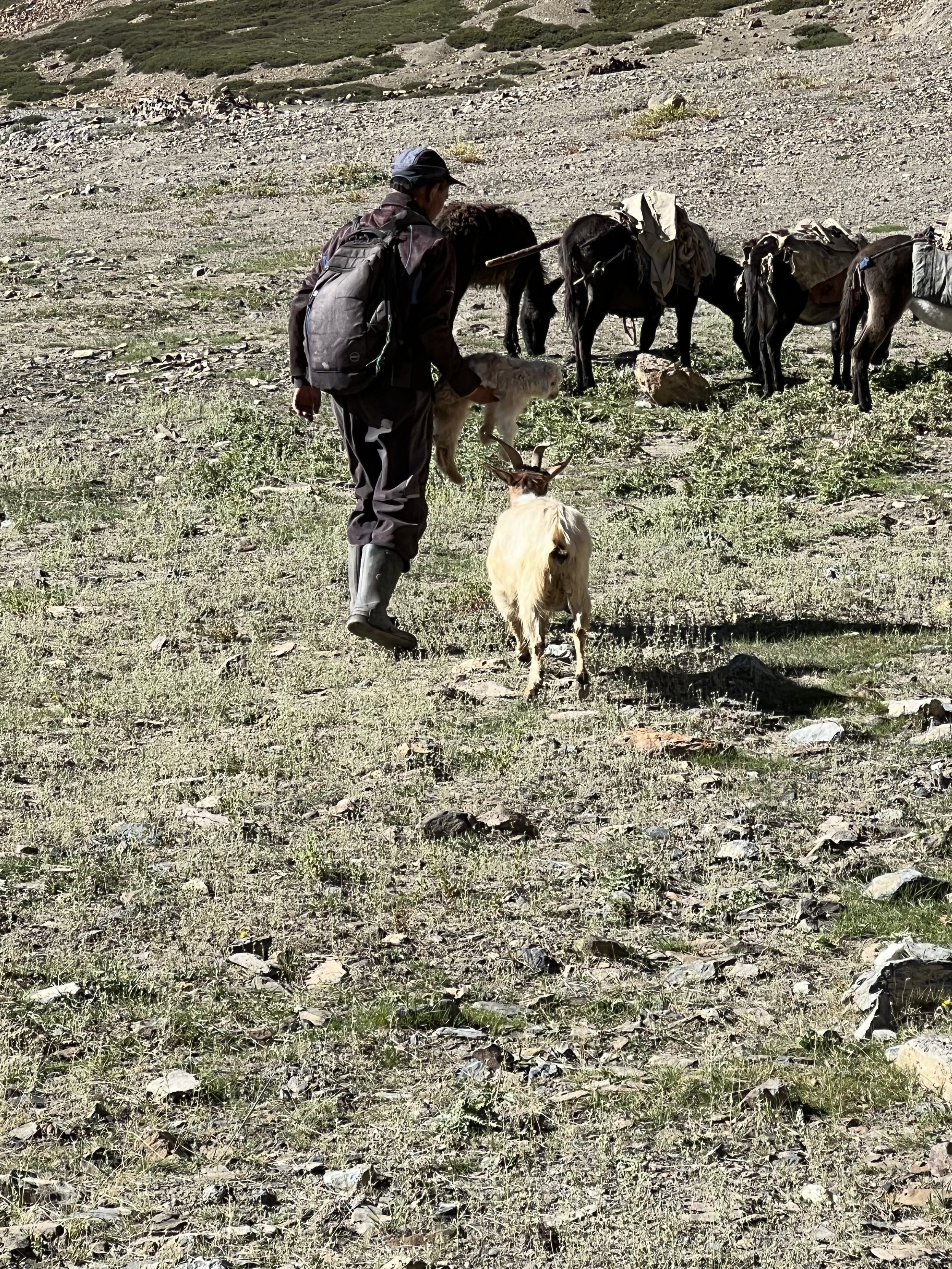
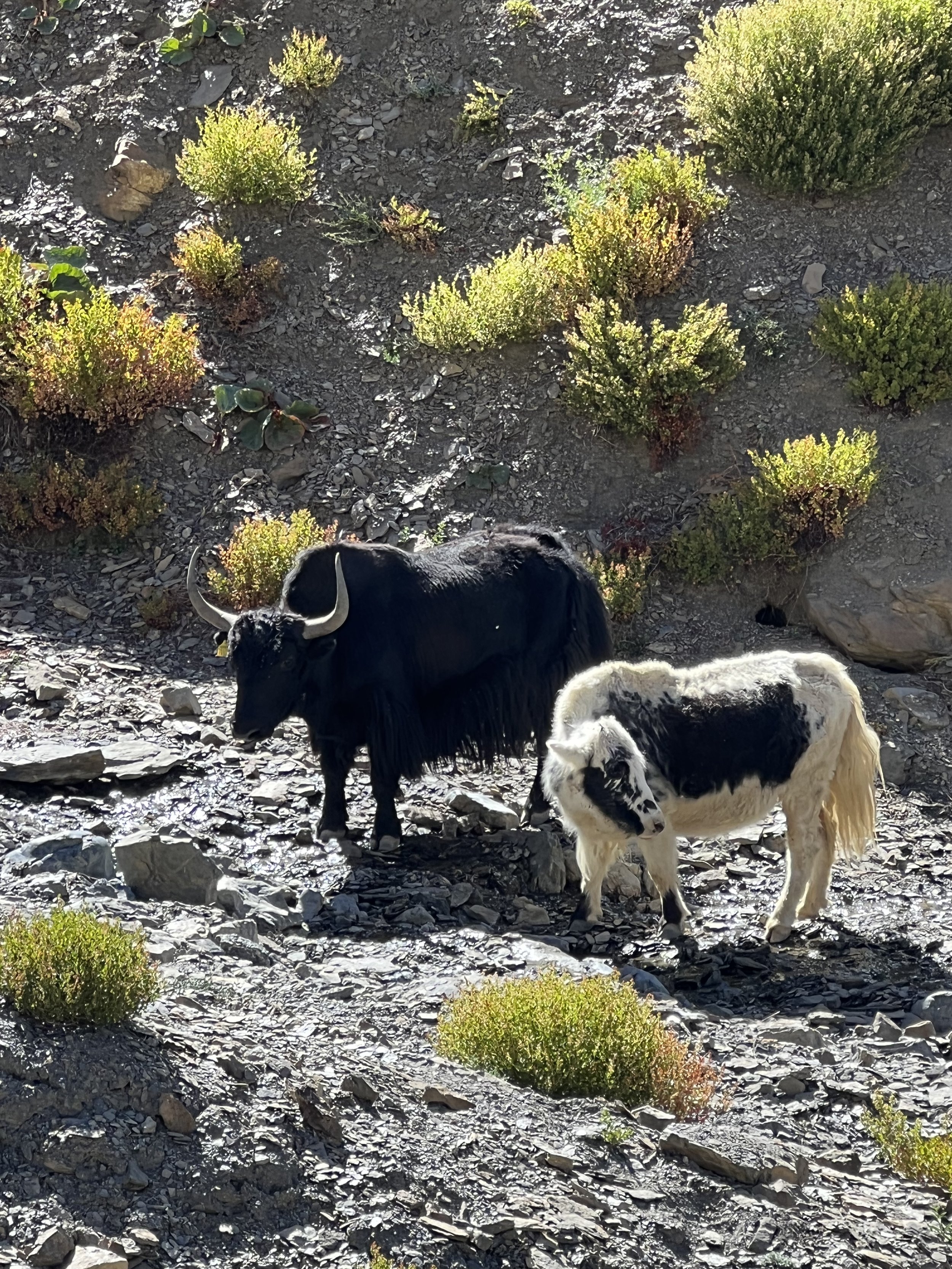
When you walk a trekking route, the trails and passes on which you walk are everywhere covered by tracks—horses, cows, yak, sheep, goats, donkeys, dogs; human herders, villagers, guides, and, at least until COVID, other trekkers. Alongside these tracks, you’re also liable to discover—if you attend closely— a surprising array of signs left by wild animals, especially those at the top of the food chain, who also use these paths.
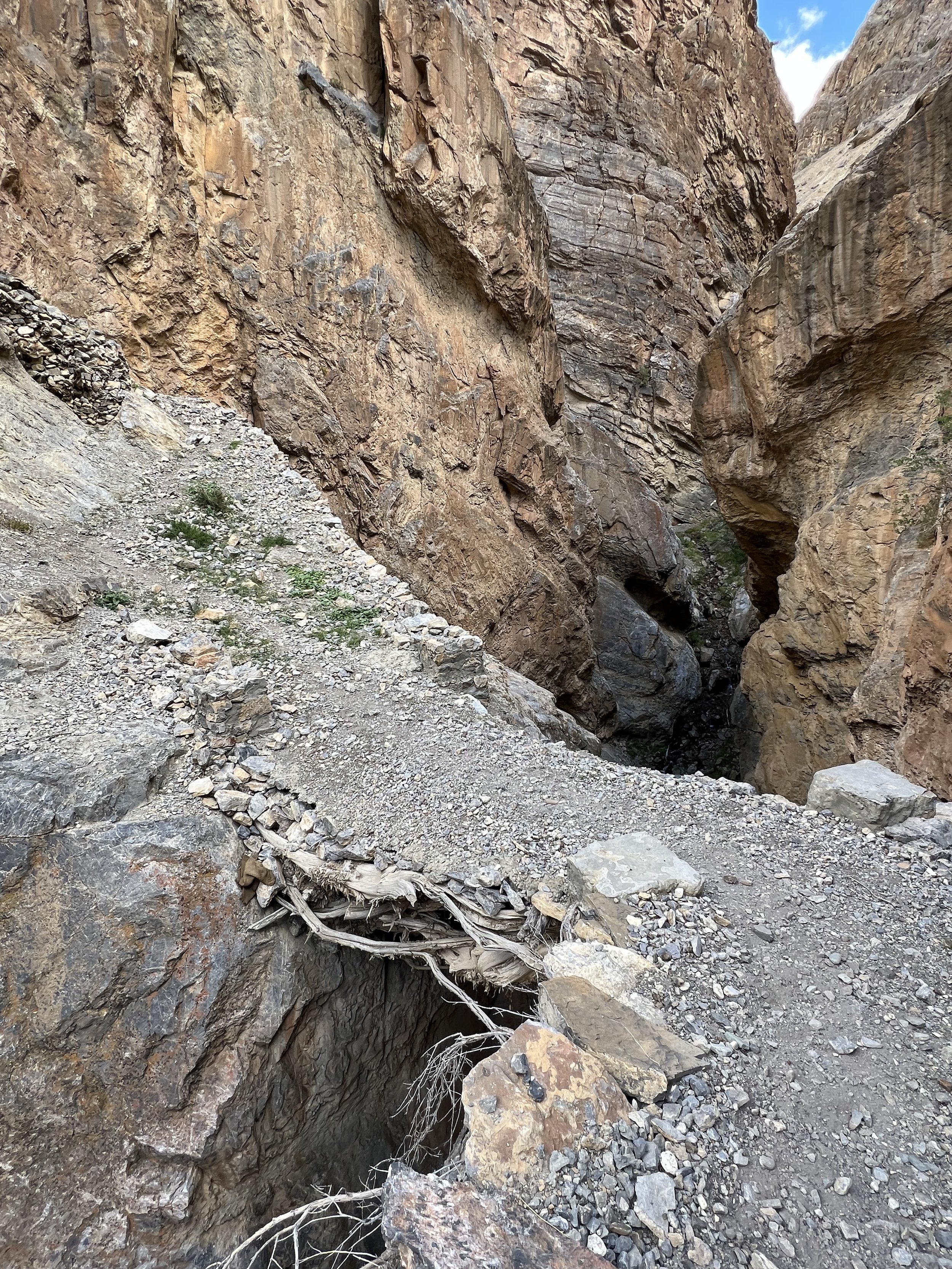
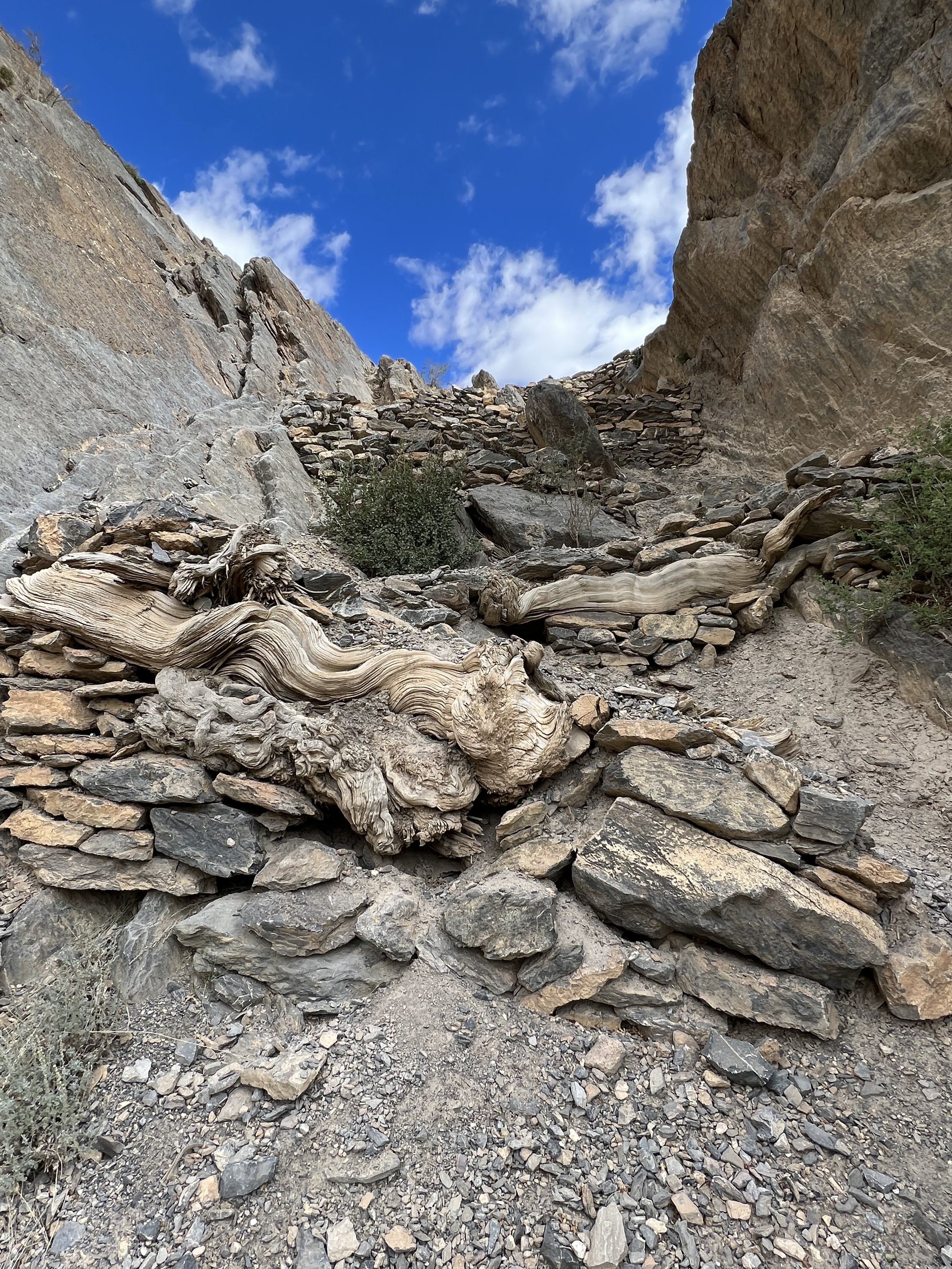
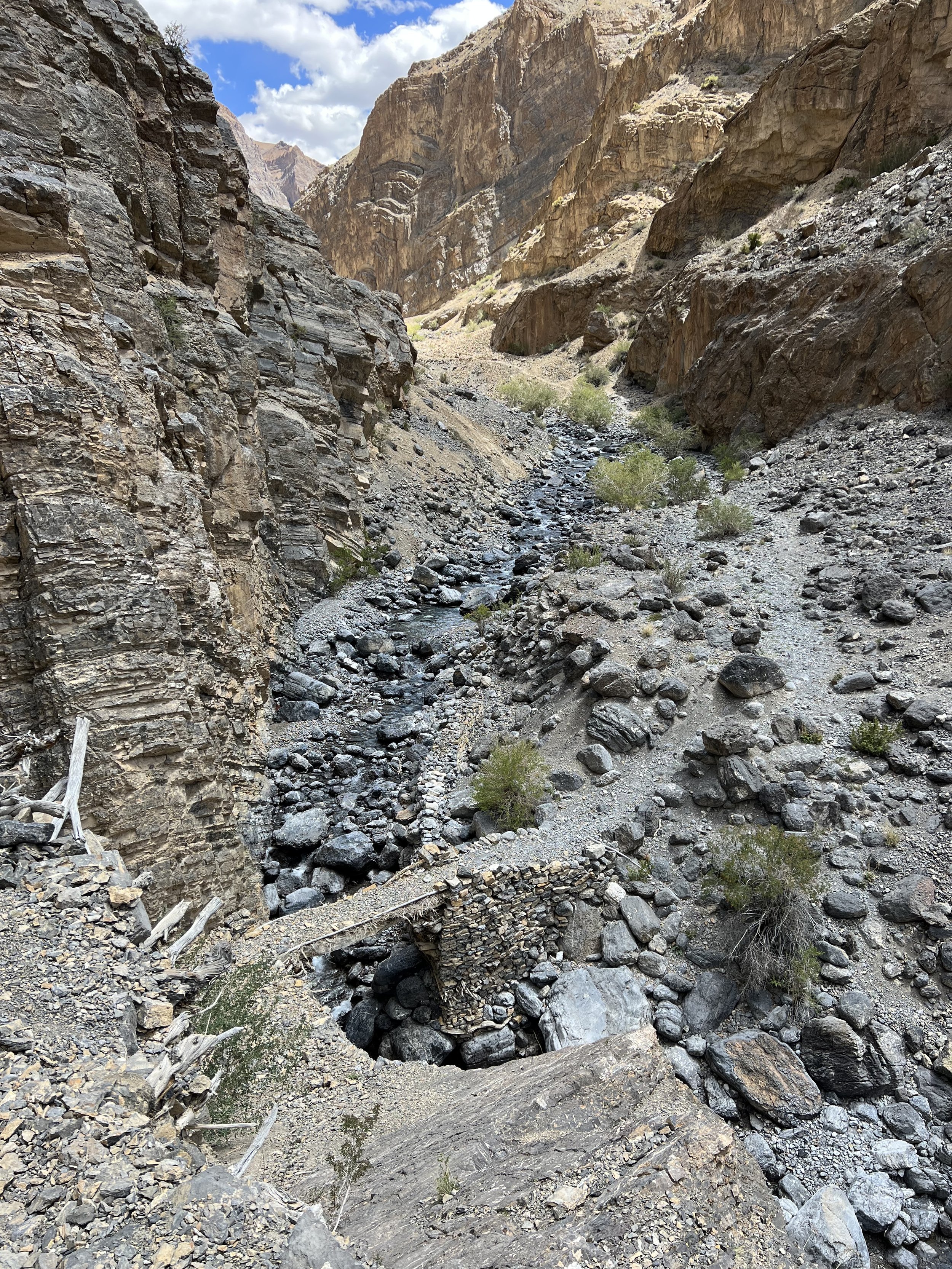
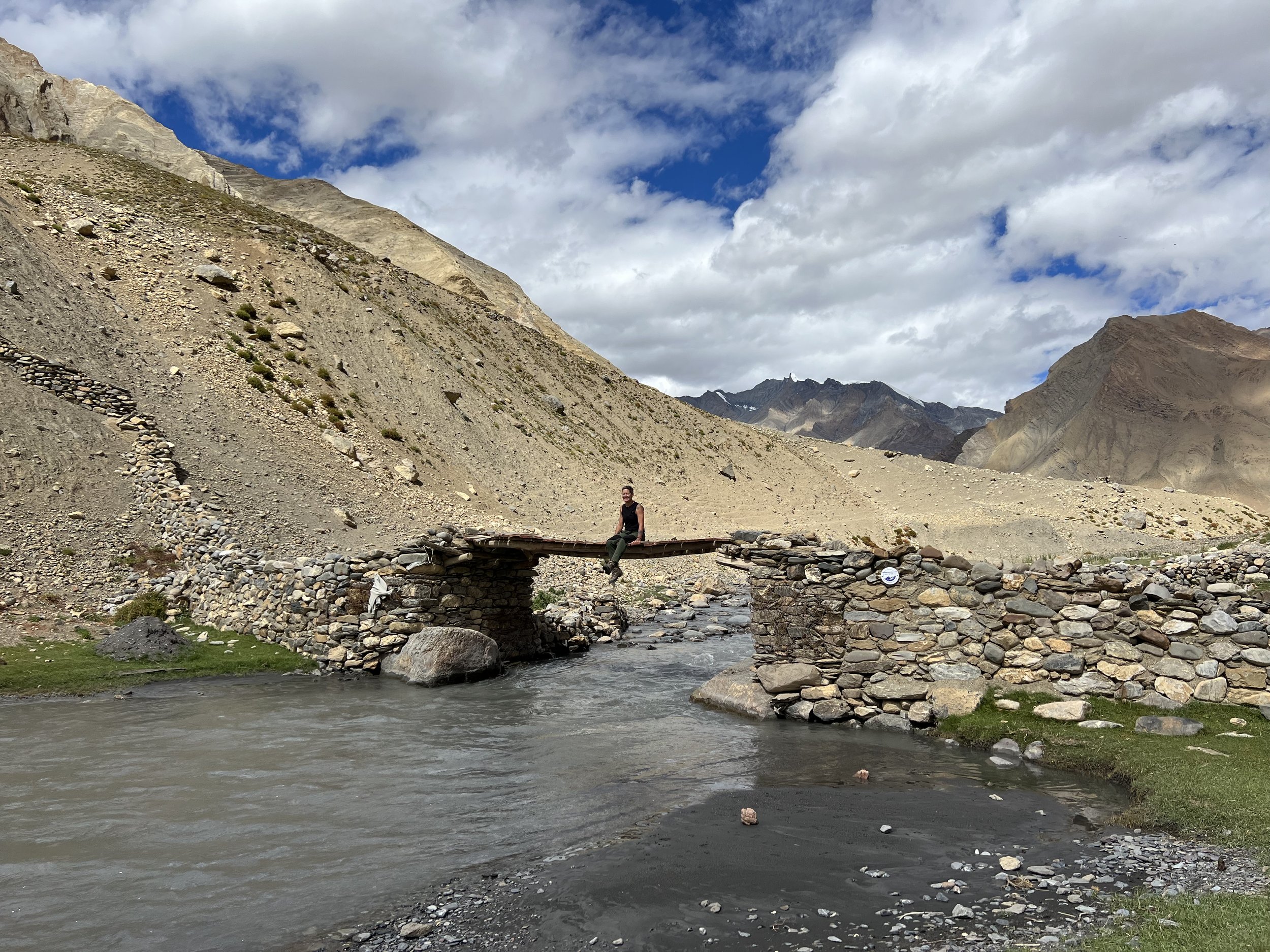
In Zanskar in particular, in part because of the gorges and steep river valleys that demand serious feats of ingenuity to create safely navigable routes, the trails may look like “natural” animal pathways but are actually maintained through painstaking feats of engineering—if engineering is really even the right word. Nearly all the trailwork is done by hand by herders and villagers, using stone and in very rare cases, where it’s available, wood from the willows and juniper that dot the stream beds. These materials are used to create reliable pathways that don’t constantly slide into the streams below. With the increased rain and other effects of climate change, these slides are more frequent and the need to rebuild the trails nearly constant. These pathways must be safe for the humans and especially livestock to cross, including horses, donkeys, and yaks carrying essential supplies or goods to or from the markets in the large towns.
While Ladakh is increasingly being criss-crossed by motorable roads, until a very short time ago, nearly all villages in Ladakh were connected exclusively by and entirely dependent upon the very same trails on which we trek. Some of these trails are now disappearing as they become absorbed into and demolished by the motorable roads. Finding ways to get animals to the high pastures to graze—as well as finding routes still available for trekking away from the roar of cars and motorcycles, though this is a comparatively minor concern—is becoming ever more challenging. Indeed, part of my desire to complete a long trek from the Indus river valley through Zanskar all the way to the Changtang, or Tibetan Plateau, this year had to do with a concern about whether finding routes like this one will soon become impossible.
While I’ve certainly been aware of and even awestruck over the years by the degree to which this landscape can be read as a map of human ingenuity and a record of what a sustainable herding and agrarian approach to land use looks like, I also know many Ladakhis who welcome the advent of the roads. While an older generation continues to pursue subsistence farming and herding, younger Ladakhis recognize a range of factors—from climate change to the evolving relationship between Ladakh and the rest of India to the geopolitics of India-China relations—that spell radical change for this tiny corner of the planet. While we certainly see some evidence of the passing of cows, goats, yaks, and donkeys on the trails, the number of animals grazing or roaming free seems much diminished, even in the nomadic villages of the Changtang.
One of the most delightful, striking, and unexpected elements of this journey in Zanskar has been the omnipresent signs on these very trails of the passage of other inhabitants of this landscape, ones I’m much less used to seeing. On the last day of the first half of the trek, for instance, we climbed a short, steep pass for an hour in the early morning following in reverse the steps of an adult fox and a kit who had clearly come over the pass toward our camp just before we hit the trail.
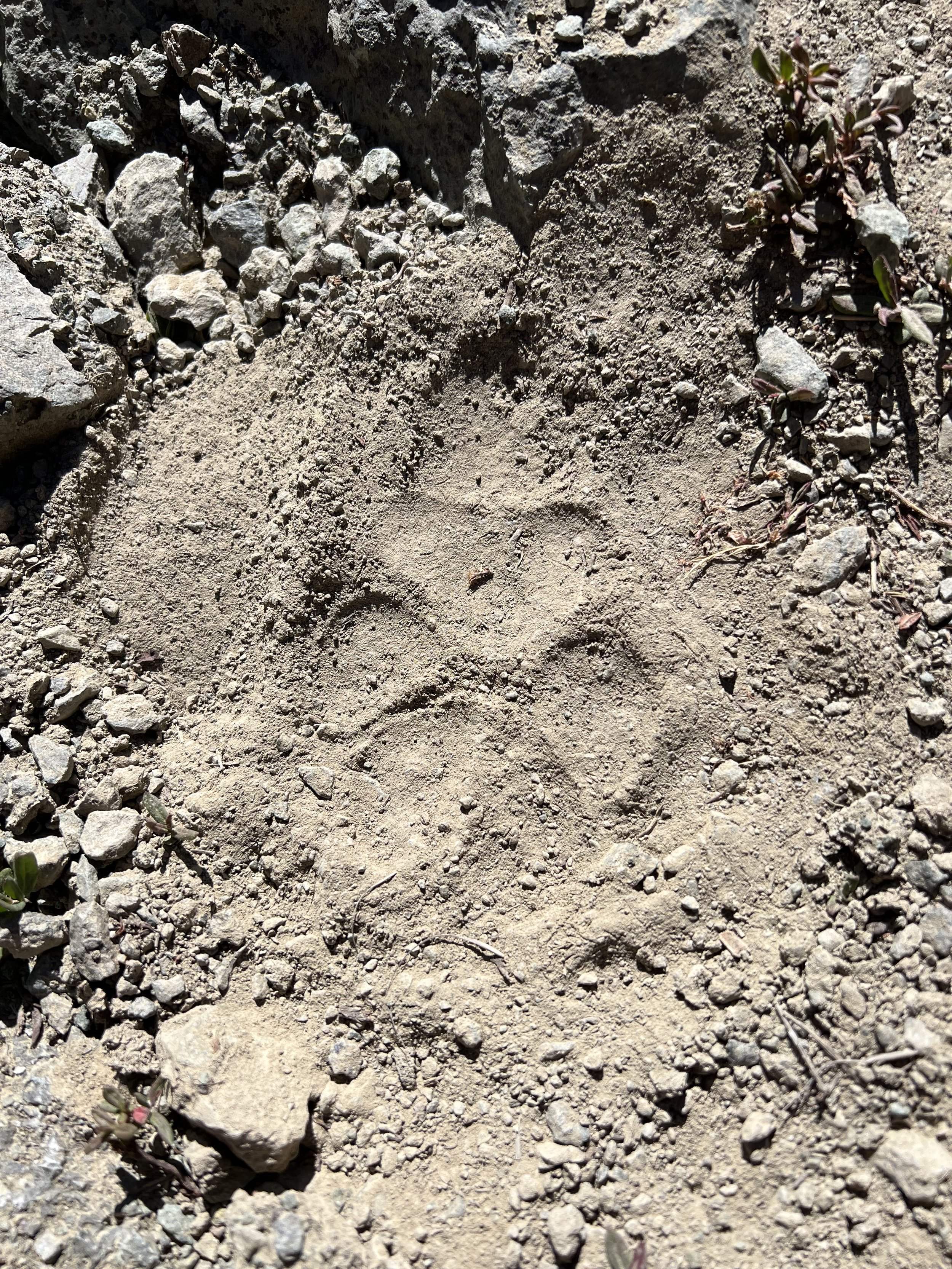
Just a couple of hours later we began to follow the giant valley of the Zanskar river, only to be met by the tracks of a mother bear and cub who were clearly walking ahead of us by not comfortably much distance. The wild rosebushes along the trail were stripped of rosehips only on the branches overhanging the trail, as though the bears were eating and moving in some hurry. Large piles of fresh scat suggested the bears were less than an hour in front of us, and we stopped and looked again and again to be sure we didn’t surprise them. While we had seen bears quite close to camp on a couple of occasions on the first half of the trip, this game of follow the bears felt exhilarating, intimate, and a little terrifying.
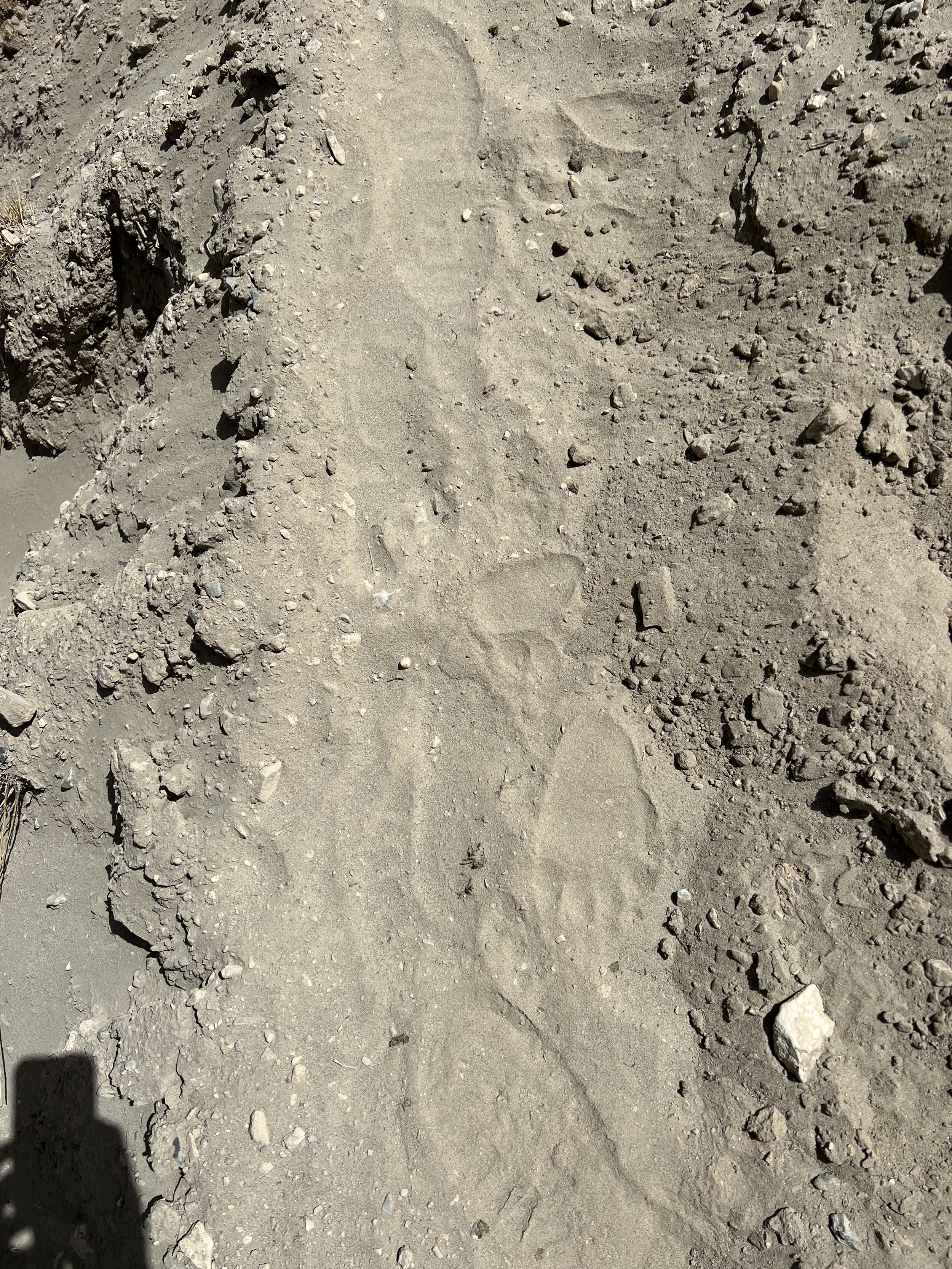
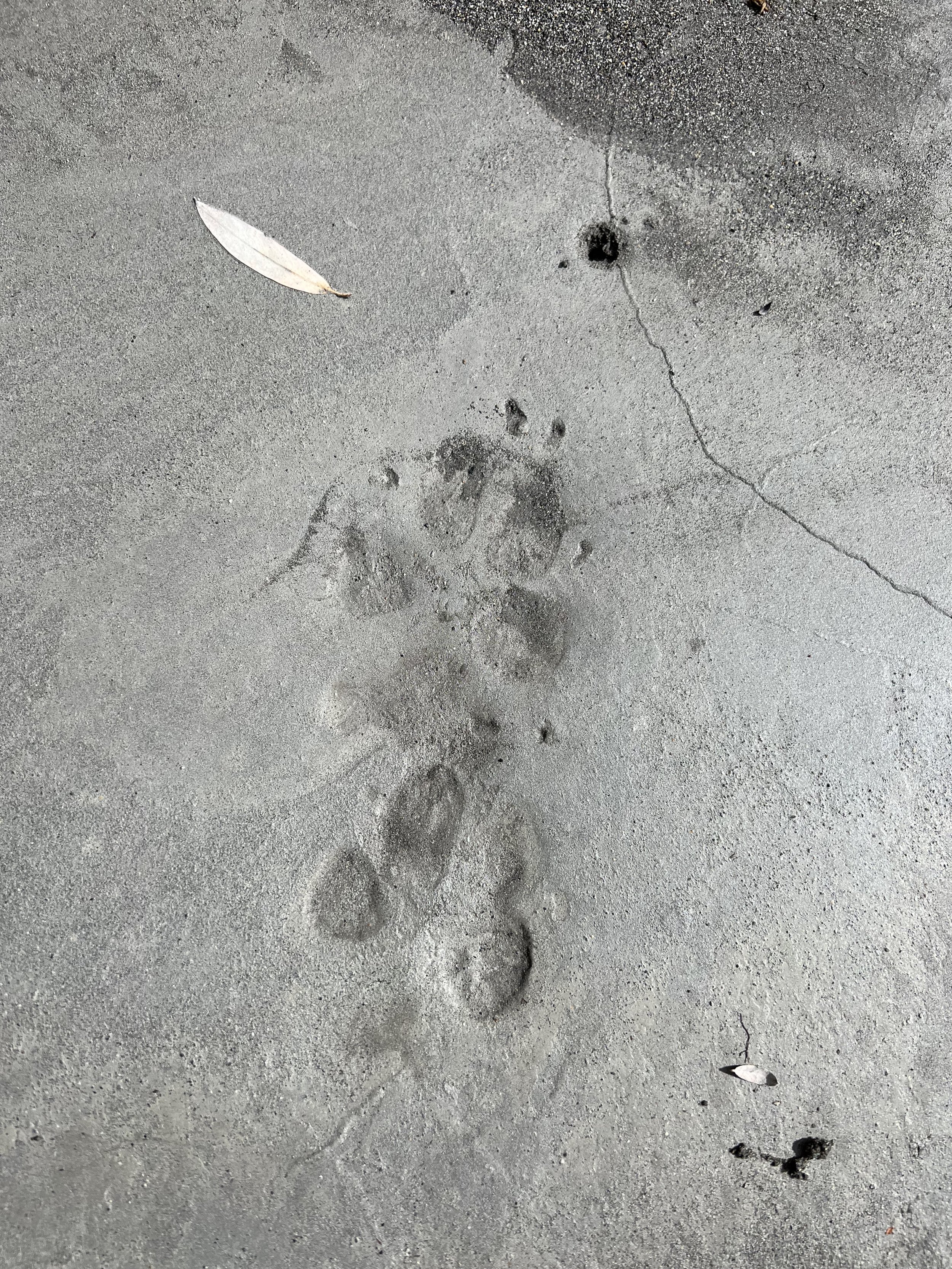
Most stunning for me after a decade of waiting for such an encounter were the clear wolfprints on the jeep road heading out of Stongde monastery on the first day of the second half of our trek. As we walked nearly 4000 feet up toward the pass on a road also used by trucks and bulldozers, the prints of numerous wolves were nonetheless clearly visible in the mud of the dirt road. We wondered if this was perhaps just a large pack of local dogs, until, about an hour before the pass, we heard the unmistakeable howling of a sizeable group of wolves on the hillside above us. Shortly after, we heard a few short barks and a howl from below us, and looked down the drainage to see a young, lithe, red and white wolf, probably a yearling, trotting up toward the area the more collective howling had come from. I wondered if maybe they had been calling her to rejoin her pack.
To see a wolf in the wild in Ladakh has been one of my greatest wishes, prayers, and hopes. To see one—and hear others—not on the Changtang but right here in Zanskar has been the most profound of gifts. As we walked for the next day up over the pass of StongdeLa and down into the deep river valley on the other side, the Shingri chu, we continued to see signs of multiple wolves mostly—though not all—heading in the direction of the pass. We saw very little scat or other sign, suggesting that the pack may have relocated from these comparatively low valleys to the higher ones above the pass where blue sheep, ibex, and abundant marmots can be found. Still, it looks as though the pack may have split, as still, many days later, we walk this river valley surrounded by the tracks of wolves running in both directions all across the path.
The wolves we saw one the other side of Stongde-La had to walk past a bulldozer at the top of the pass and down a jeep trail to find new territory. The bears and foxes, too, are using the old herding and trekking trails while also coming into ever closer proximity with vehicles and heavy machinery. I’m still not sure what to make of all of this, except to say that I feel enormously fortunate to have been here in a moment when the balance is undeniably shifting in Ladakh, but some of the old ways, including the old ways of interdependence, are still flourishing. We walk the trails developed and maintained by herders, frequented by both livestock and large predators, and used continuously for hundreds if not thousands of years by human and non-human animals who have found a way to cohabit more or less harmoniously, without throwing this ecosystem into crisis. Surely there is something to be learned here about how to share the planet and its resources in something like a balanced fashion.



Leave a Reply