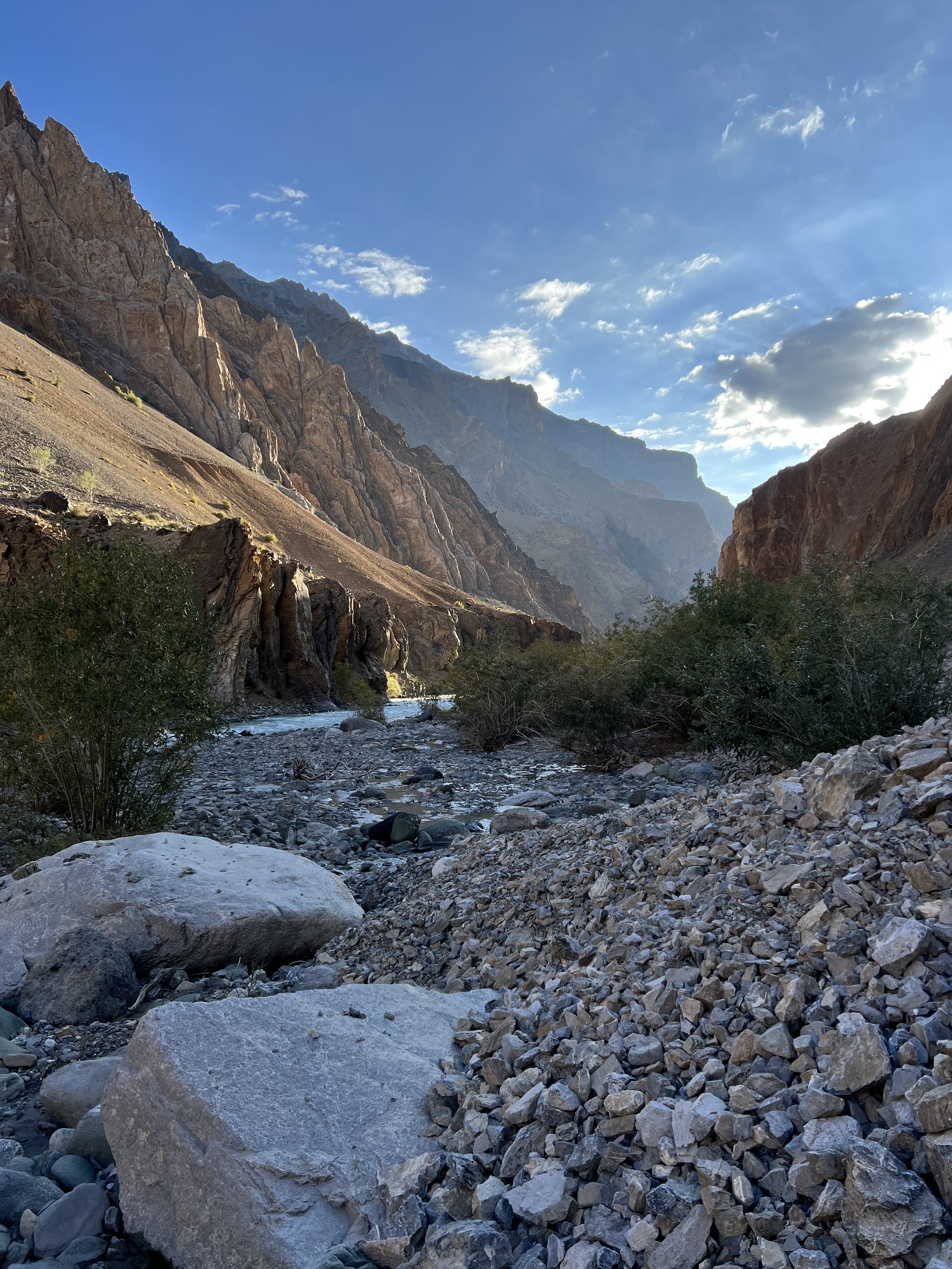
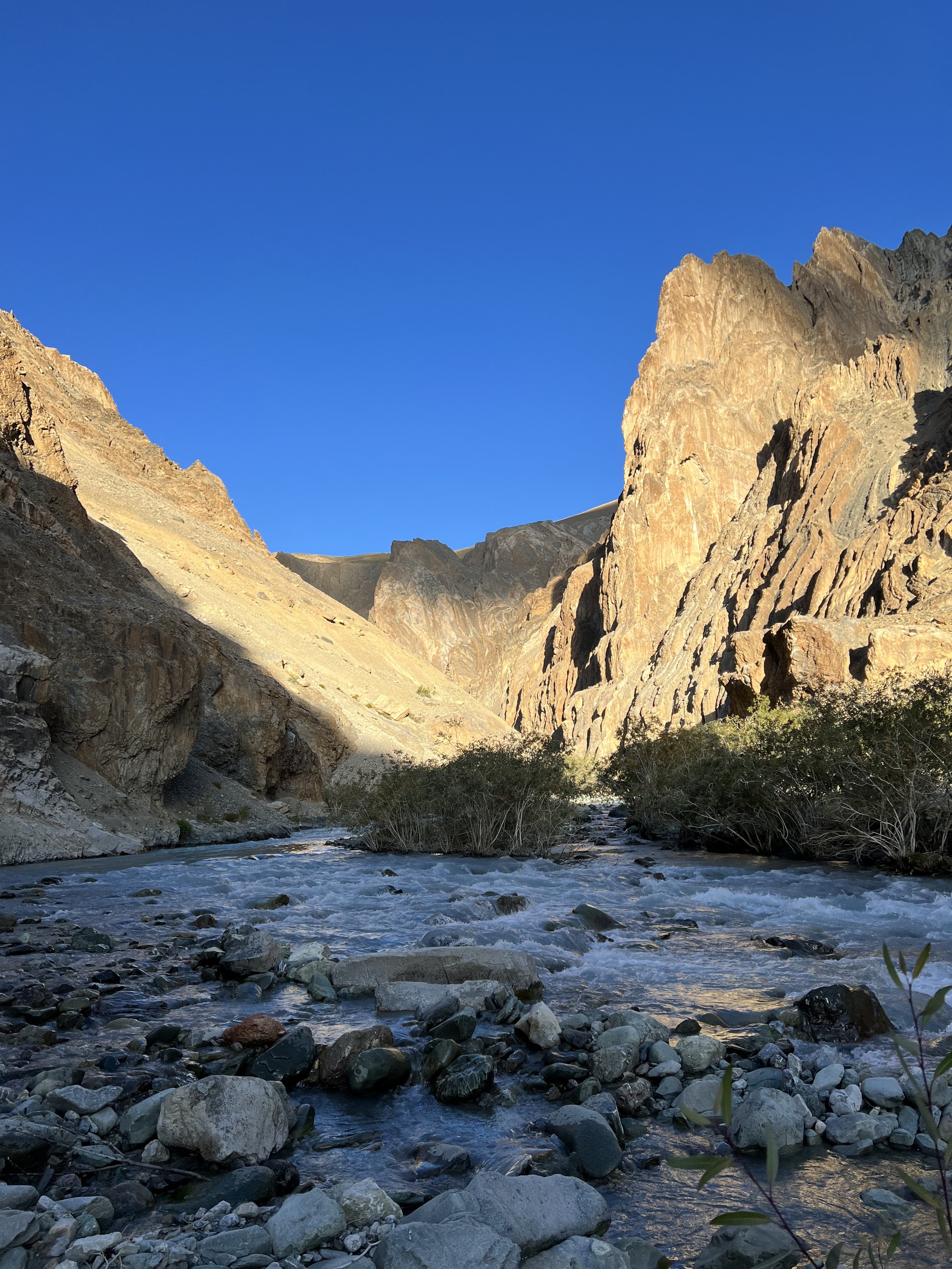
We’ve spent the last two and a half days descending from the pass at Stongde through what is known as the Shingri-chu valley, or Shingri river drainage. The valley starts out wide and gentle but after what must be a good 20 or more miles it narrows into a gorge with steep cliffs on both sides—a veritable ravine.
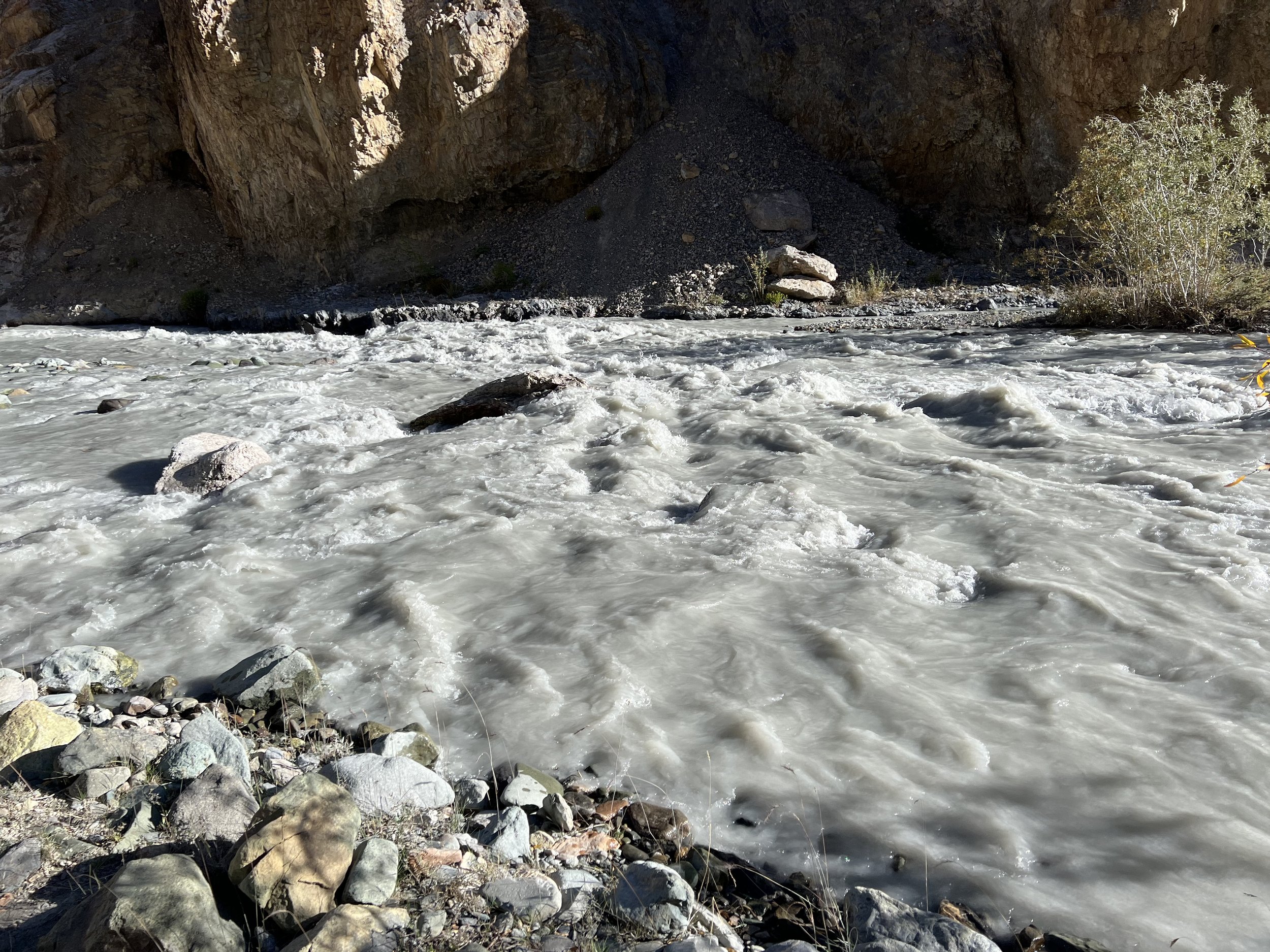
Navigating down this valley is really the only way to enter lower Zanskar, where we plan to complete our journey. When I covered some of this territory in 2018, the Shingri-chu was a substantial but not insuperable challenge. We did about a dozen stream crossings in a day, the deepest of which was approaching the top of my thighs. This year, passing through the same territory a week earlier after a winter of relatively heavy snow, we had been warned that the valley might not be passable. The only recent trekking group to try to go South from Strongde turned back. Granted, that was three weeks ago, and the group was larger, which introduces contingencies. Nonetheless, we knew our passage was not assured. And we were fairly sure we’d be the first people to make the journey this year.
Navigating the gorge requires alternate bouts of climbing high on existing small trails above the cliff bands on either side and, when that is not possible, repeatedly crossing back and forth across the river until another trail appears. An early start is mandatory, since the river rises and fills with silt from the glaciers as the day goes on. Mercifully, it also flattens out and slows a little, so the crossings are not necessarily more challenging as the day goes on. Nonetheless, time is of the essence if you’re going to make it out of the narrowest portion of the canyon before the water gets too high for you—or the horses—to cross. The biggest challenge is not to get stranded—unable to go upstream or downstream and forced to improvise a camp on whatever gravel bar you find yourself on when the river gets too high.
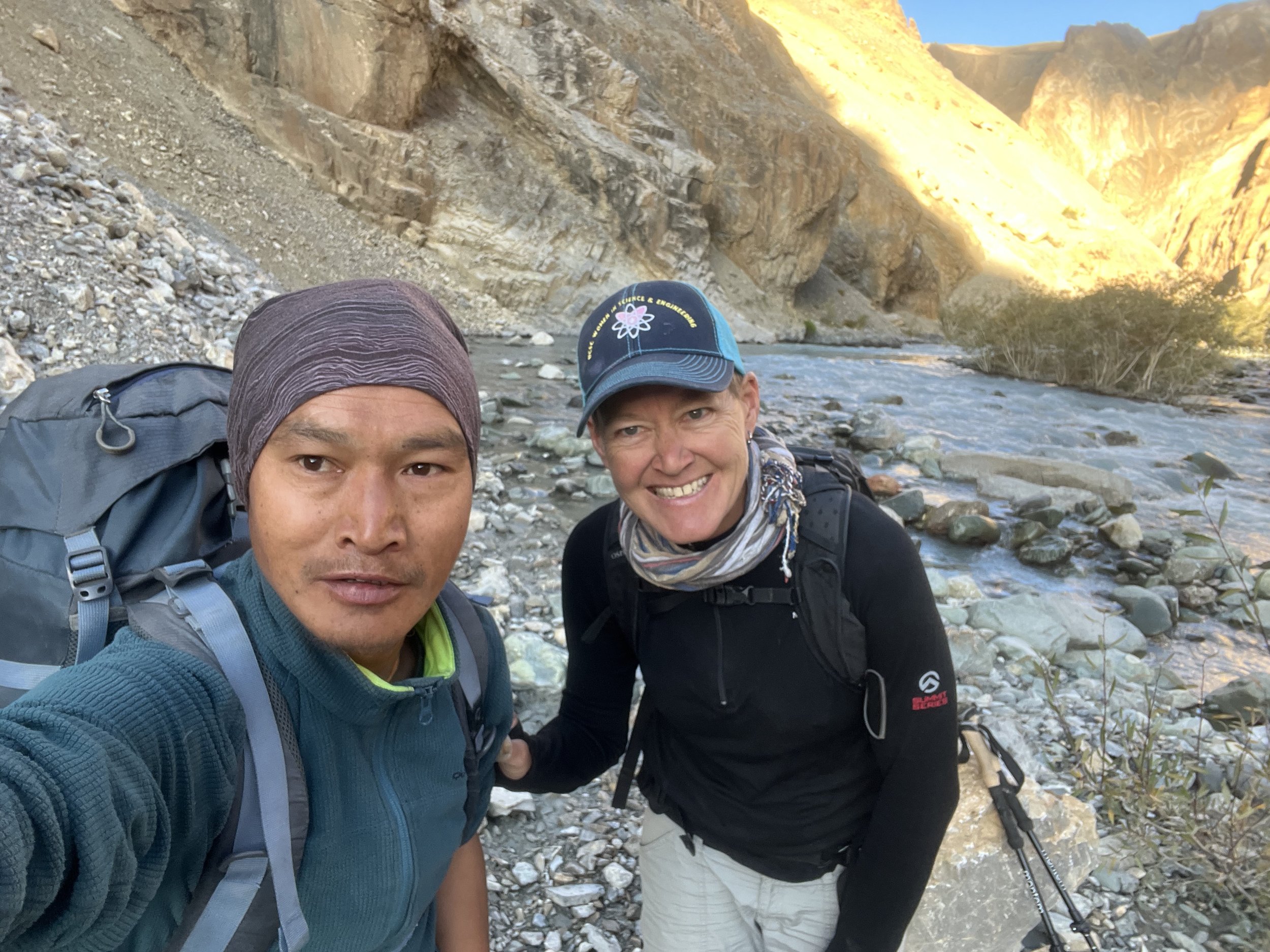
Jigmet and i set out at around 6:45, in shorts and sandals, in 50 degree weather. The very first crossing, right out of camp, was belt high. Shivering, we kept moving, only to hit a second, slightly deeper crossing, during which he got into enough fast water that he asked me to wade back in and grab his hand. After that, we crossed together, each with a stick, holding hands and facing upstream.
The first thing we both noticed as we tried to find our way from one suitable crossing place to another was the complete absence of tracks—no horse, cow, or wolf prints, and only very occasional donkey scat. It’s hard to express, after weeks of following the traces of other beings, how disorienting it was to find ourselves more or less the first two- or four-legged creatures to have passed that way in a while. More surprisingly, all the cairns were gone that indicate where to cross and where to climb out of the gorge—and the trails were gone too, as far as we could tell, either washed away by the river or obliterated by the constant rockslides. Our progress was slowed again and again by the need to cross and recross, try out what seemed like a trail up and out of the river bed, slide back down to the gorge when the trail didn’t go anywhere (or it went someplace we had no business being), and otherwise wayfind without the usual confidence granted by the recent passage of other beings.
After a few hours and a significant amount of backtracking, we did make our way out of the gorge, but I would say it was the first time I’ve felt real fear in all my years of trekking here, and also the first time I’ve wondered if we’d have to turn back. Of course, turning back is not so simple when you’re dealing with a river swollen by multiple channels of glacial melt, so part of the fear was just how we would situate ourselves if we could move neither forward nor back as the day went on and the river rose. I noticed the repeated practice of bringing my attention back to the immediate present: the next crossing, the next possible climb up and over a cliff band to avoid a crossing. I noticed how Jigmet and I looked to each other repeatedly (and somewhat unusually) to make decisions together, in mutual trust. And i felt the enormous upwelling of gratitude, grace even, when the later crossings consistently turned out to be less demanding than the earlier ones—less deep, with a slower current, and warm sun to dry our clothes as we walked.
As we emerged from the mouth of the canyon and climbed up the little pass that marks the end of the Shingri-chu gorge, we startled a herd of blue sheep grazing quietly on top of the pass. It almost seemed to take them a moment to decide to run, as though they couldn’t quite remember what it was like to have humans around. Also at the top of the pass, we found the half eaten body of a young yak, answering at least some part of the question of how the wolf pack had been nourishing itself.
As soon as we emerged from the drainage and entered the large river valley into which the Shingri-chu drains, the trail was clear again, prints and sign of cow, yak, horse, and wolf were everywhere, and we crossed some small reinforced areas in the trail that runs along the sides of this next vast valley that made life easier and safer for the horses as well as the humans. Those brief few hours fumbling around in the ravine did serve to remind me in a profound way of how supported we are on every stage of this trek, looked after and cared for by countless beings, known and unknown, in whose footsteps we walk.



Leave a Reply