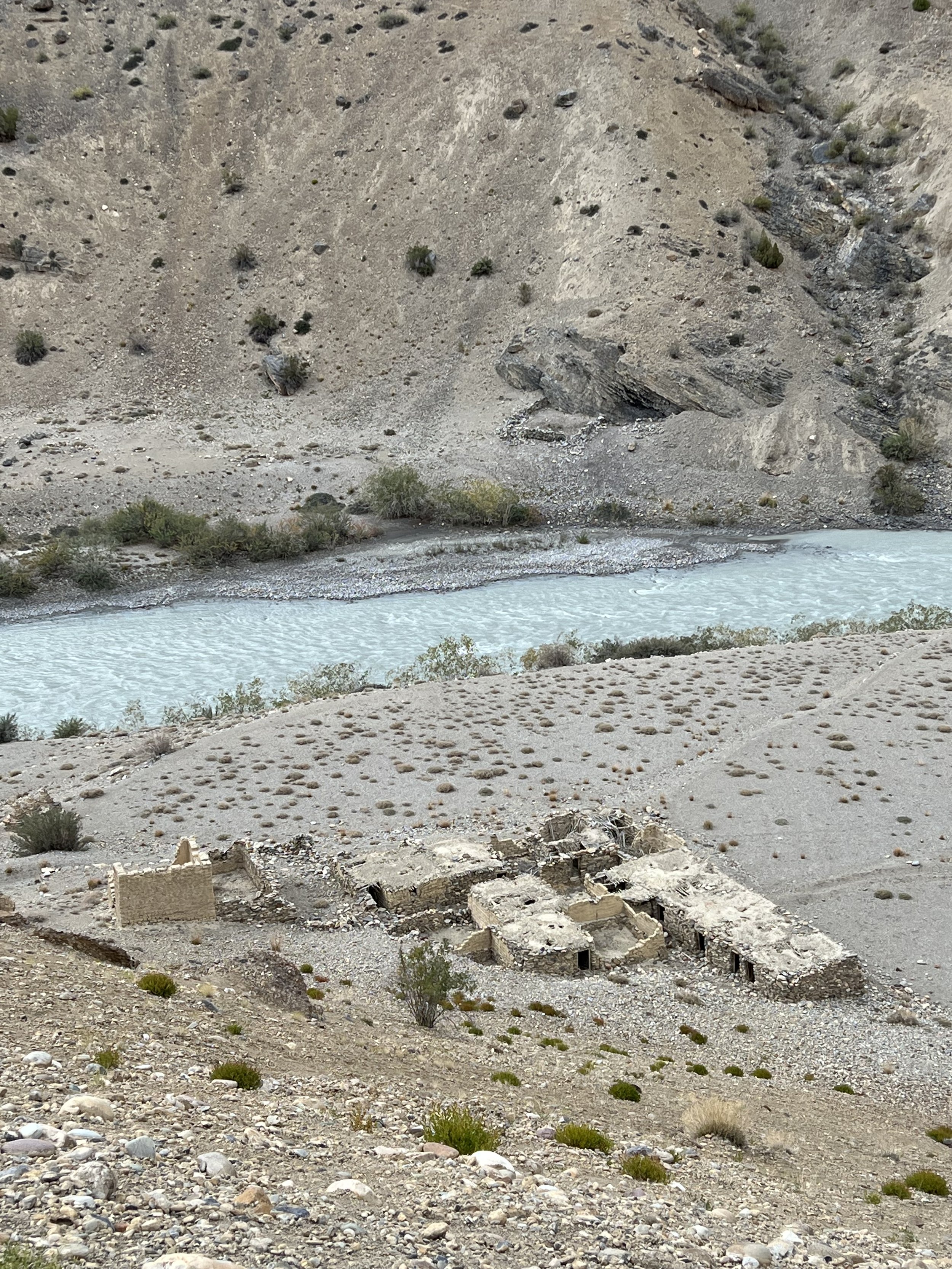
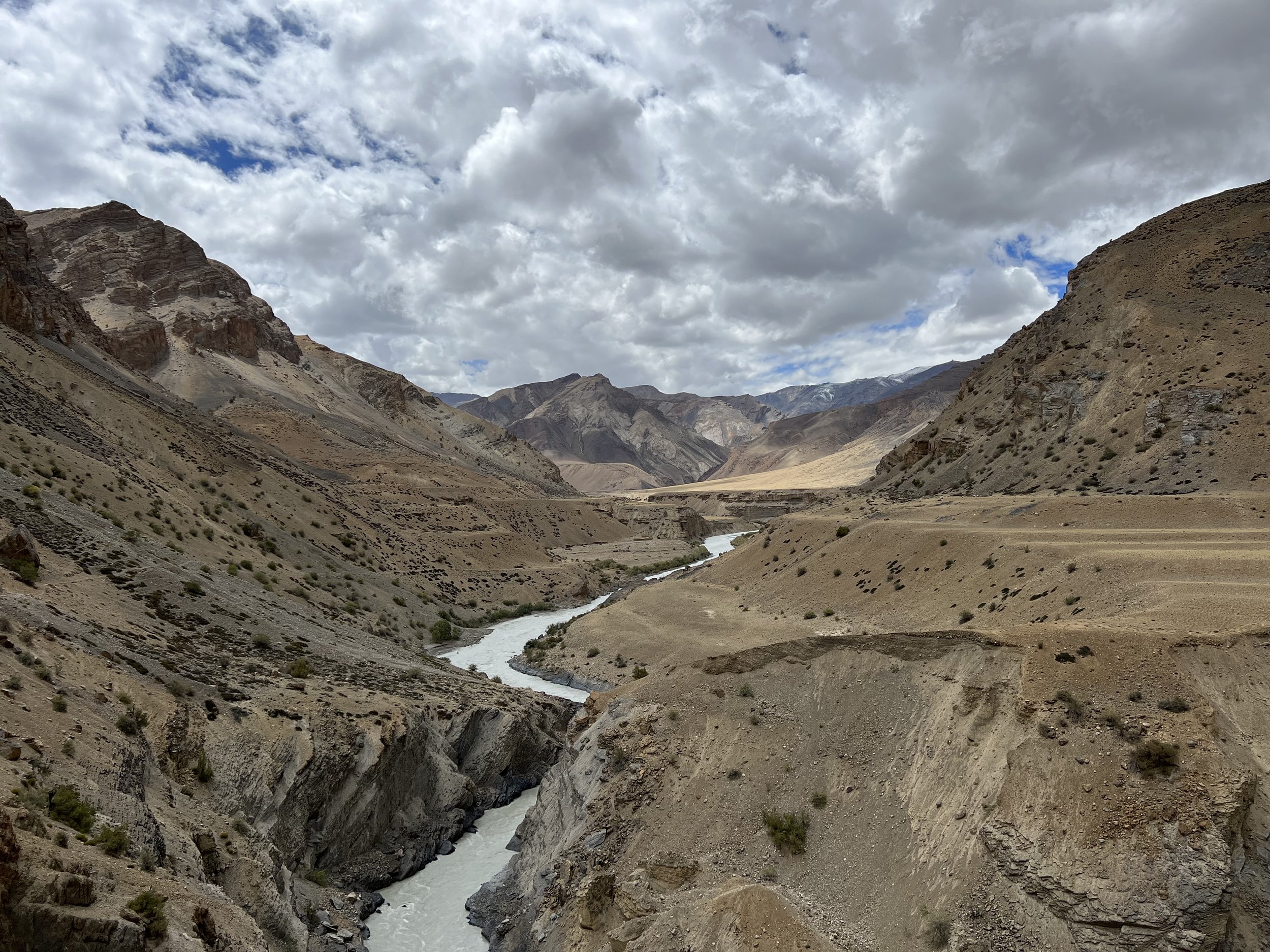
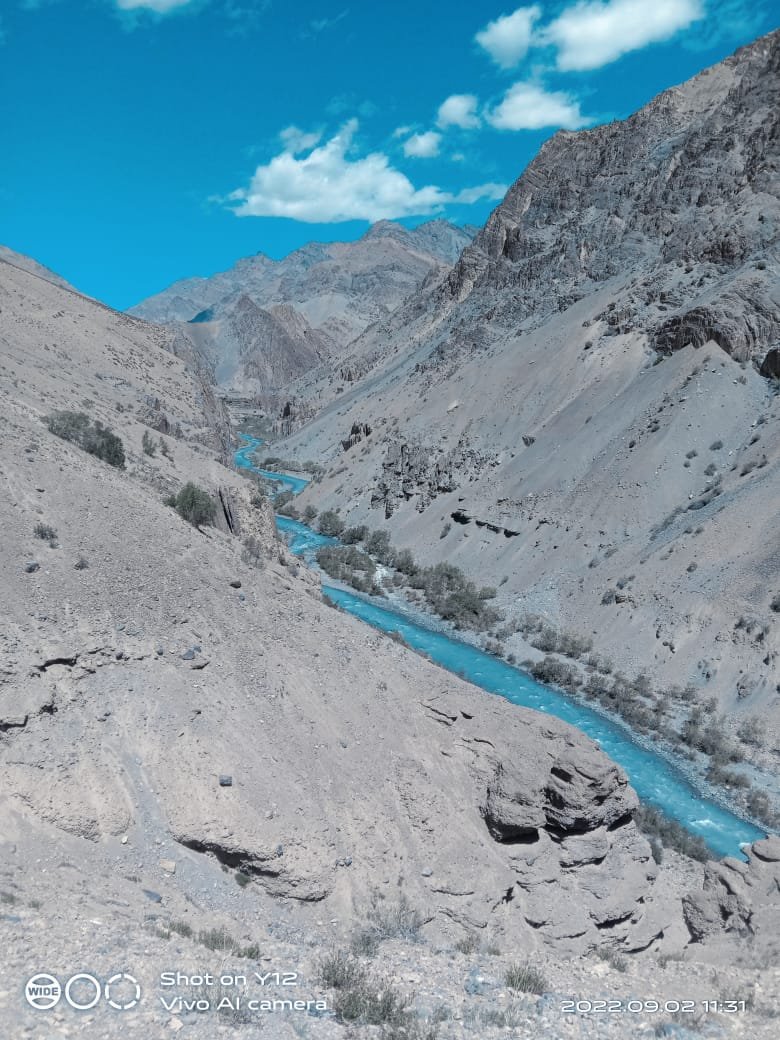
The last three days of our trek took us upstream along the banks of a beautiful river that runs from the Tibetan Plateau, draining the glaciers of the Changtang, all the way through the Zanskar region. The name of the river is the Tsarap Chu. In just a few weeks, the river will turn the most vivid shade of turquoise I have ever witnessed–indeed, in the early morning light, you can still catch a glimpse of this phenomenon, before the glacial melt that feeds the river turns it a silty grey. Even without the electric blue, however, this valley is one of the most beautiful and peaceful I have ever walked through–and in this place of so much beauty and peace, that’s saying something.
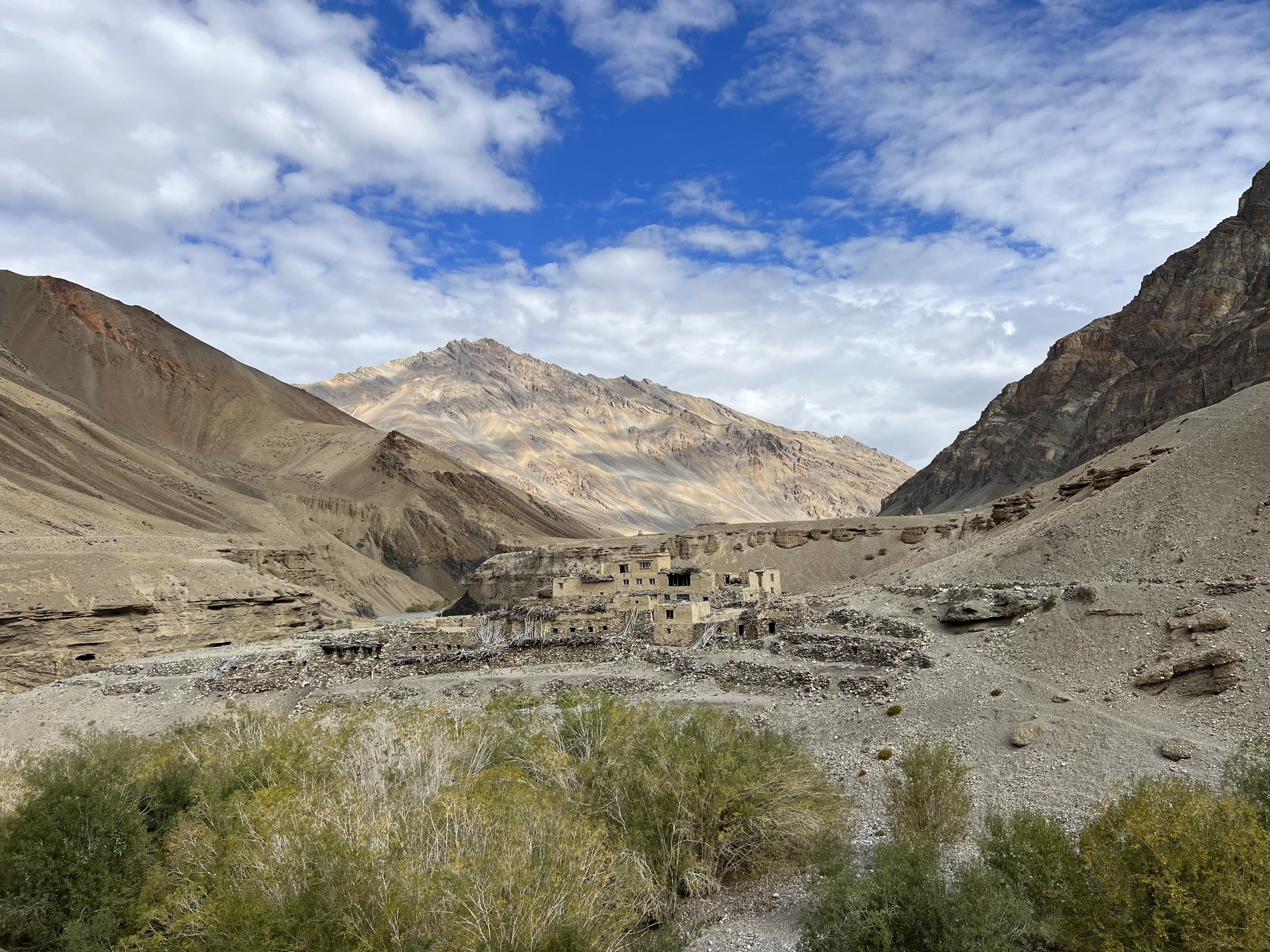
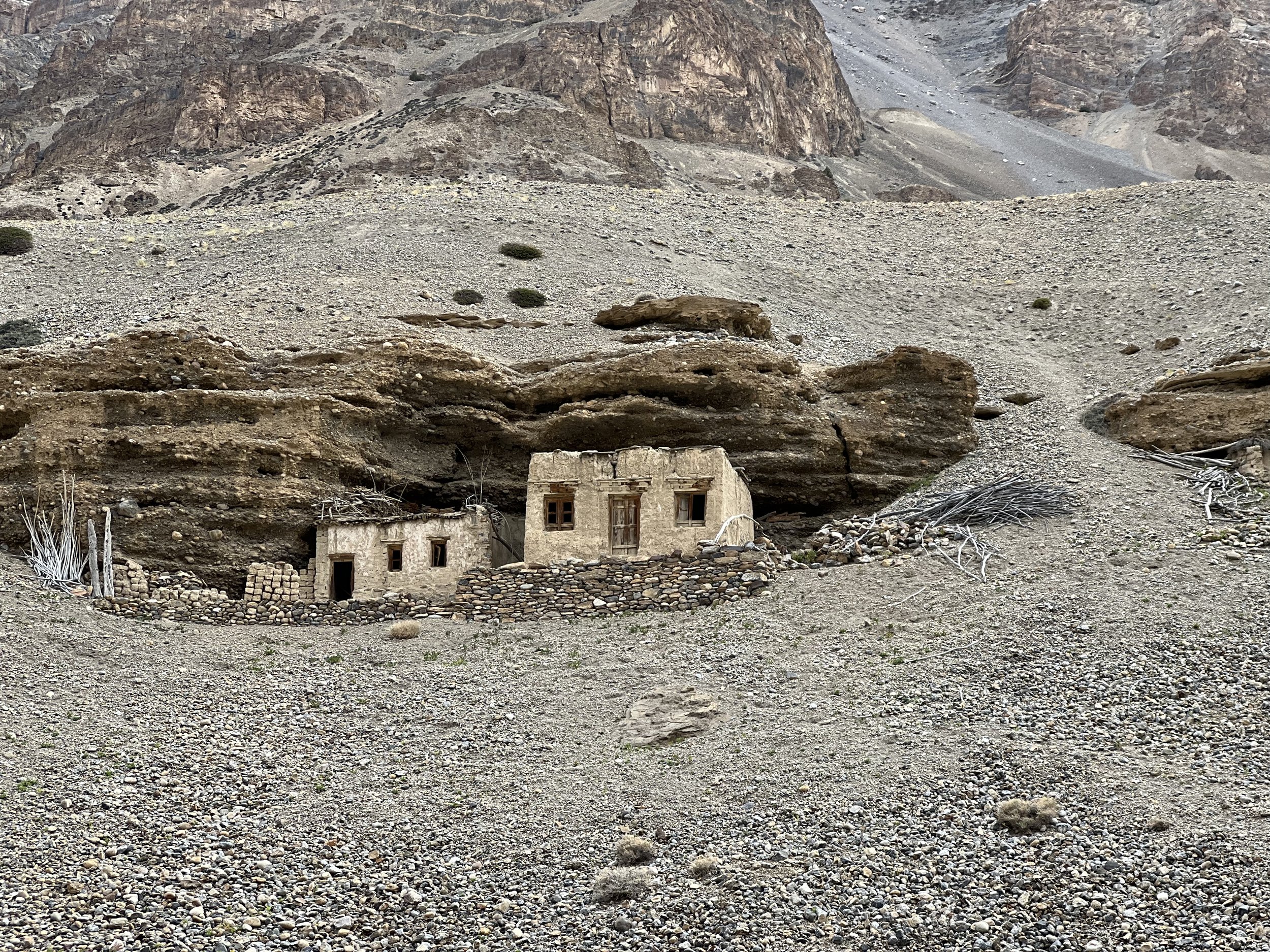
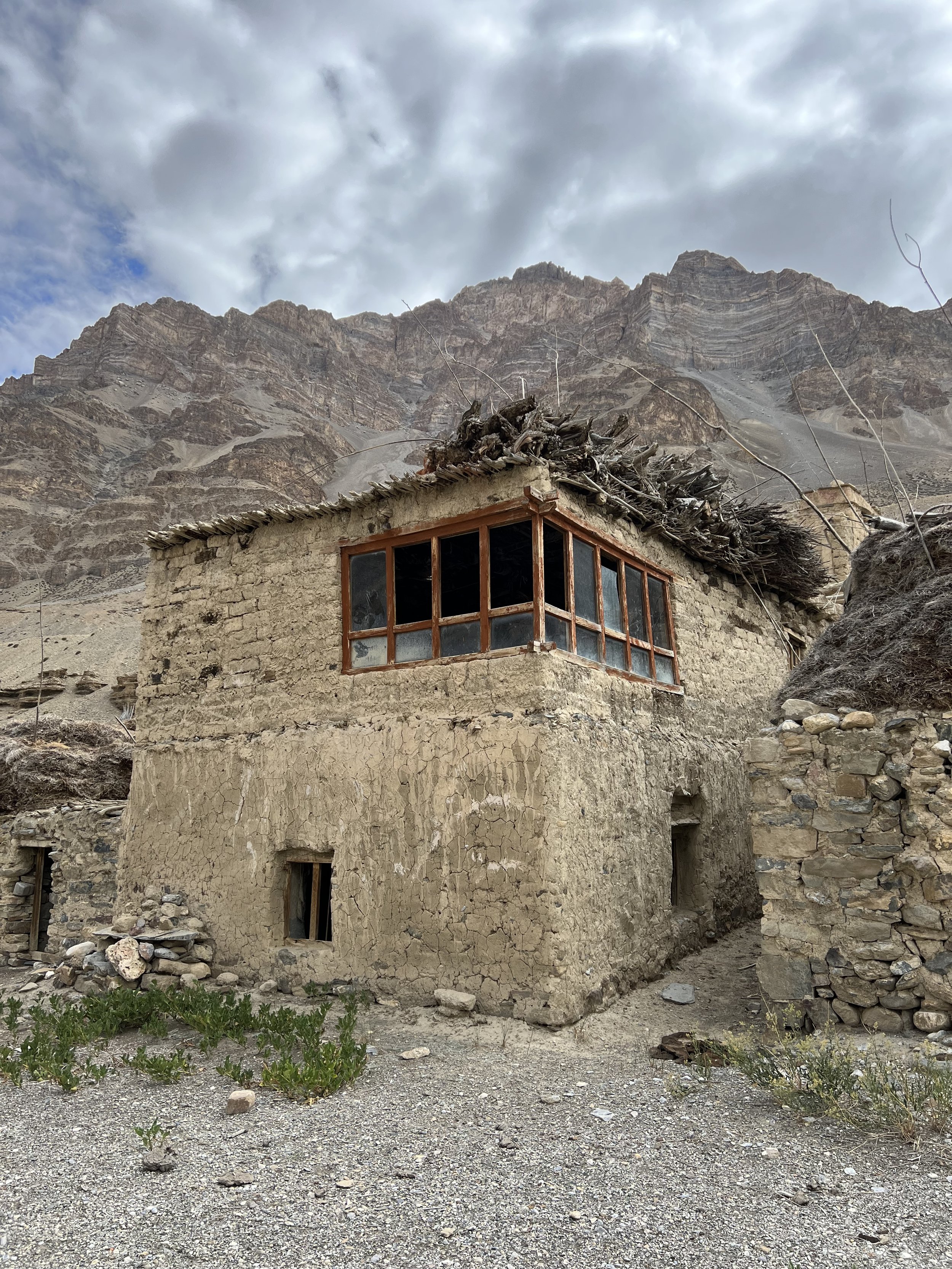
One thing we did not anticipate as we embarked on this trek was that we would be walking, in effect, through a valley entirely composed of abandoned settlements. As guide Jigmet put it, in some surprise, “I guess these are the haunted villages of the Tsarap Chu.” Some of these small settlements were clearly abandoned a couple of decades ago; others seem to have been inhabited until just a few years ago–maybe even up until the beginning of COVID. With the decline of trekking as well as the end of the villages, we had a distinct feeling of being some of only a very few people to pass this way for months or years. During our time in the valley, we saw exactly one other human–a horseman on his way to the more frequented trekking routes around the monastery at Phugtal. We also saw a number of horses that had been “turned loose” to live in the valley, given that there are almost no trekkers left to use the services of the horsemen.
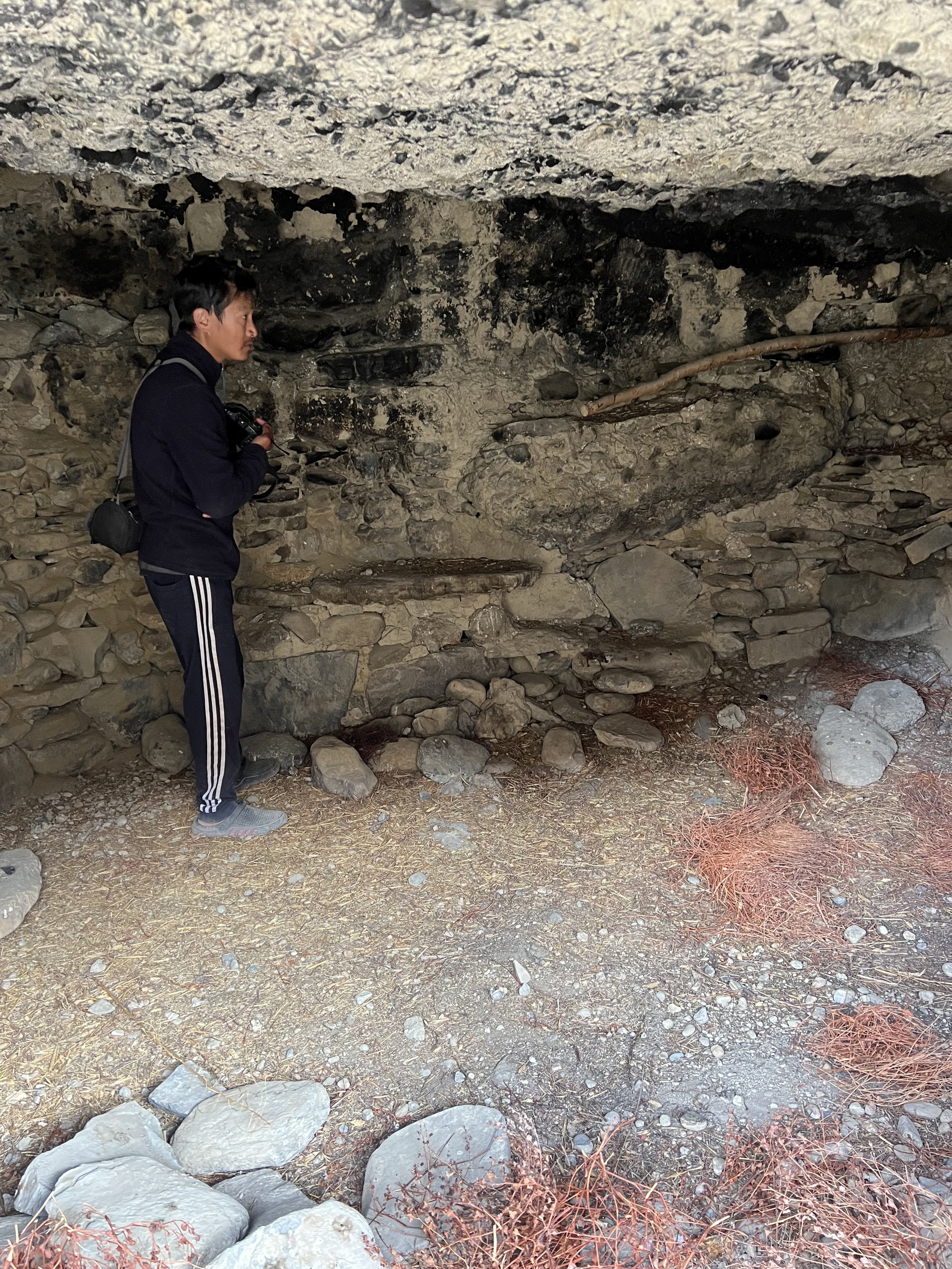
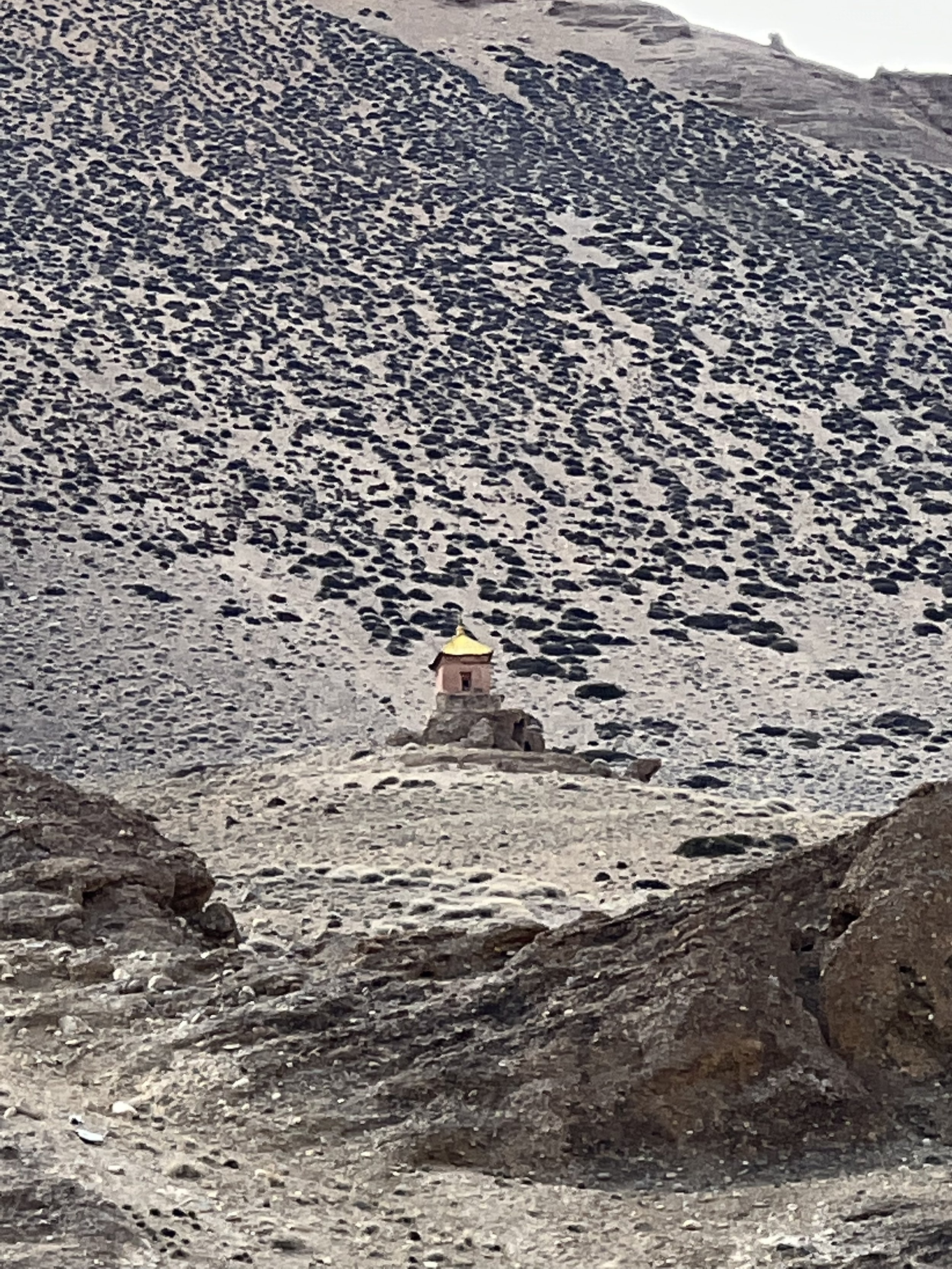
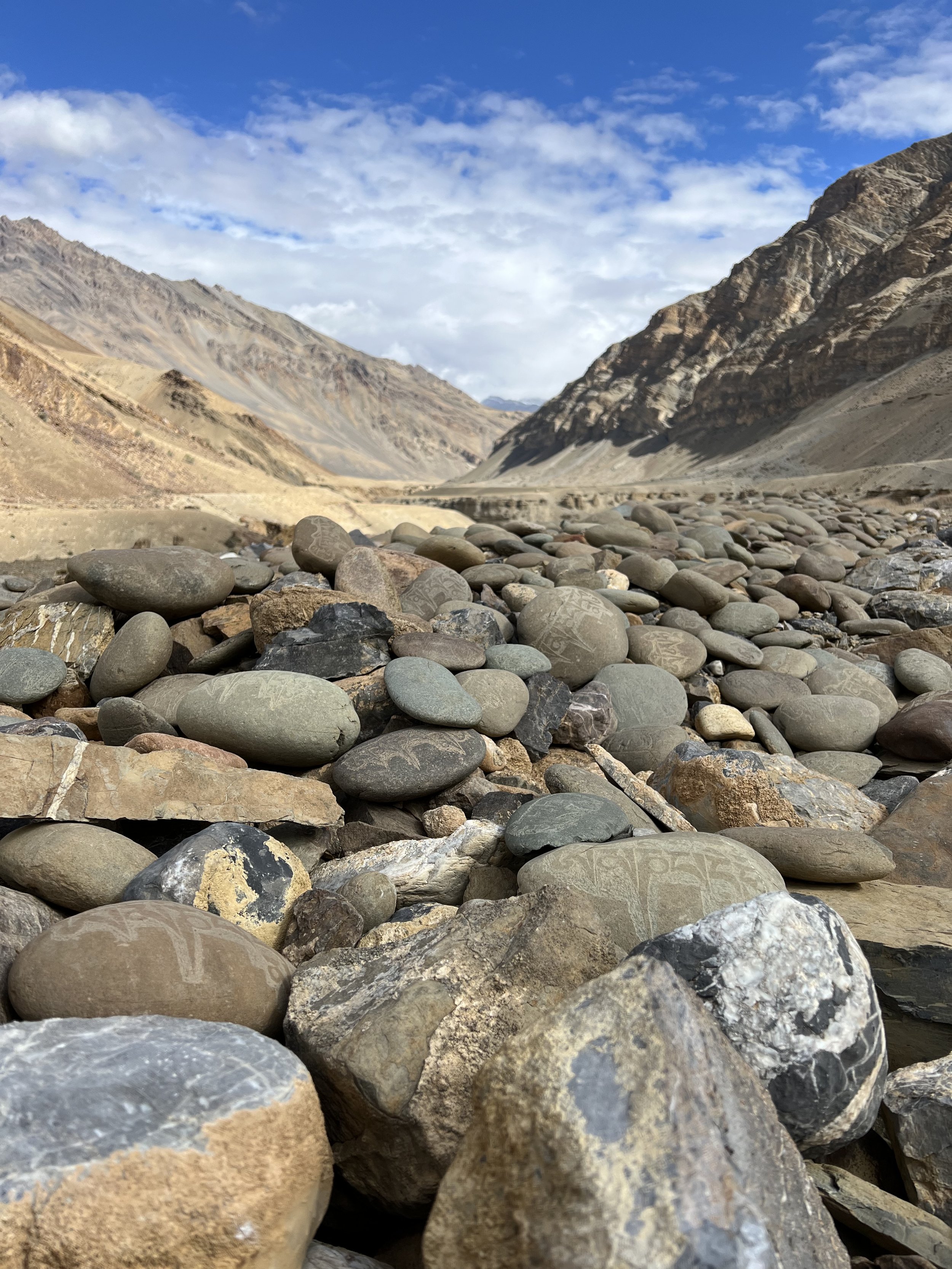
Camping in and walking through these former villages–and in this part of the world a “village” may just be the settlement of a single extended family–it’s easy to see the signs of long habitation. Stones mark the edges of where barley fields, now nothing but dust, used to provide the majority of the sustenance for the families who lived here. We find the grinding stones that were used to make tsampa, the roasted barley flour that is the staple of a Ladakhi winter diet. We find caves that were used to house sheep and goats at night, as well as small lodgings tucked into the rock walls of the river. We find the remains not only of houses but of the small temples that were maintained in each village. In these temples, the inhabitants kept the altars lit and tended, and sometimes monks from the greater Zanskar region would visit to perform ceremonies or pujas. We find chortens or stupas to mark the entry and exit to each little settlement, mani walls covered in stones carved with om mani padme hum, and even, in the most recently vacated settlement, a small golden-roofed shrine that looks practically new.
We are particularly startled by this largest and least “disturbed” of the places, which almost looks as though people left quickly and not long ago. We find a child’s rubber boot, a copper cooking pot, a tea kettle just like the one we use to heat water and make tea for ourselves on the trek. The tea kettle itself is a reminder that these valleys were never really isolated from the outside world. They have known trade for hundreds if not thousands of years. The salt and butter tea so closely associated with the communities of the Himalayan region–and which is mixed with tsampa to make the main stuff of Ladakhi winter meals– relies on tea that comes from far south of here. There has–or had–been exchange in and out of these valleys for generations.
Generations: that is the meaning of the word “Tsarap.” This is the river of generations. Jigmet suggests that most of the people who once lived here have now moved to the towns along the nearest motorable road, which borders a river called the Sarchu, the “golden” river. They likely run tea stalls and small guesthouses, he tells me, since the traffic along these roads is steady, both domestic tourists and truck drivers. When I ask him what caused people to leave the valley, he doesn’t even hesitate before answering, “climate change. The melting of the glaciers. The scarcity of water.” I have noticed in each of the abandoned settlements there is pipe lying around, as though people tried or are still trying to divert water from the ever diminishing supply that comes in small side streams from the high mountain plateaus and their glaciers. To us, as trekkers, it seems as though there is enough water here, but there is not enough to maintain barley fields and grind tsampa in a mill run by the energy of the stream. The move from a subsistence lifeway to a cash economy—from the generations river to the golden river— is driven not by opportunity but by necessity.
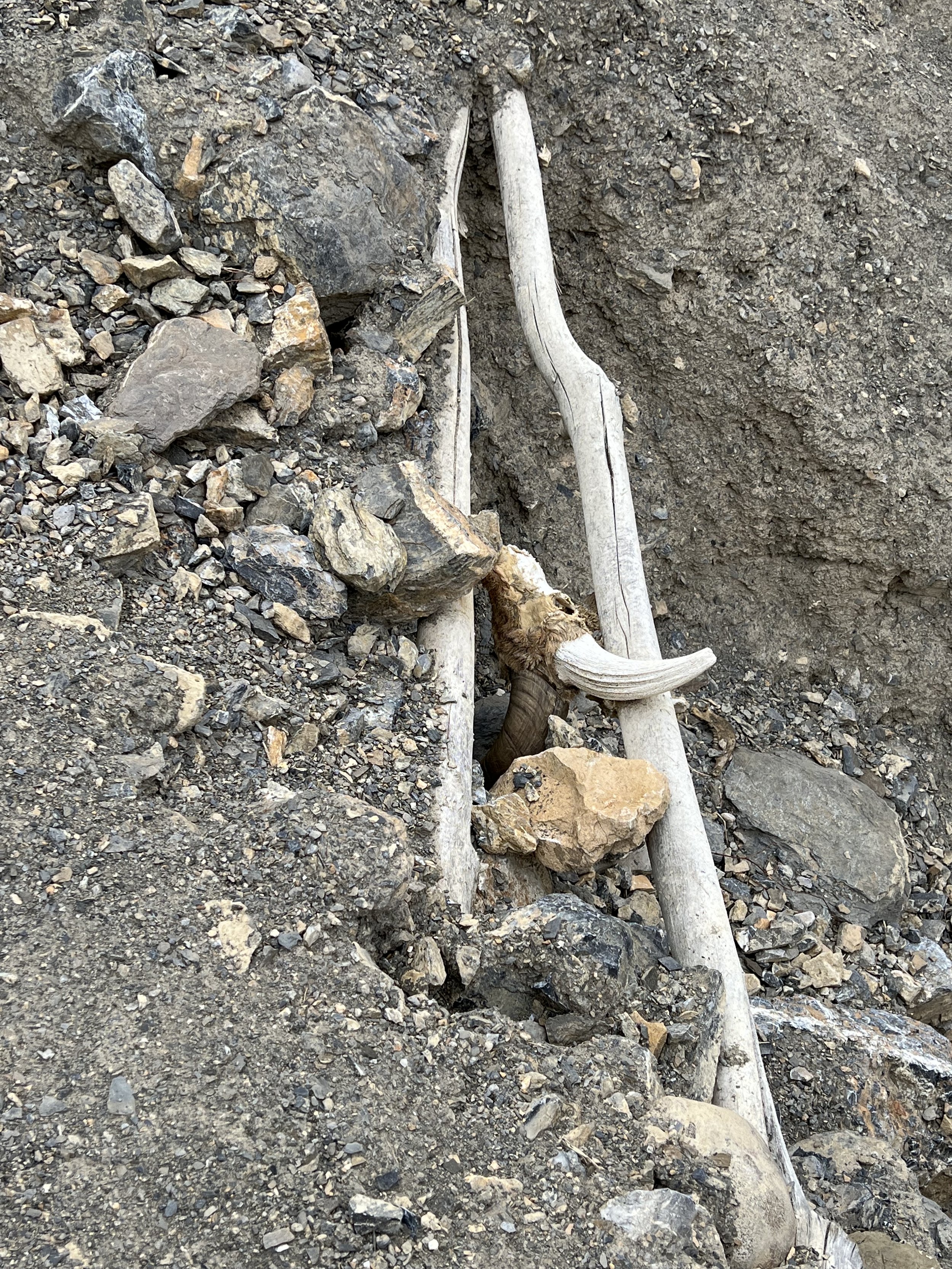
I am reminded not for the first time on this trek that without the generations who have lived here, there would be or would have been no trek for us. The people who lived here have left behind trails, good places to camp, and bridges of stone, roots, and even the skull and horns of a blue sheep that we use to cross otherwise impassable gaps in the trail. They have also left a lot of accumulated mantras, blessings, prayers, and ceremony, all of which I do feel supporting us as we walk here. Soon, though, if—or when—the side streams dry up, there will be no trekking here either, and the valley will belong again to the blue sheep, the wolves, the marmots, and the river itself. And then, eventually, the river will go too. The lessons of impermanence are everywhere in Ladakh at this time, but so, too, are the lessons of our responsibility for climate change–change that falls hardest on those who contributed least to the planet’s transformation and the disintegration of its habitability.
In a recent and profoundly moving New York Times piece, “What Antarctica’s Disintegration Asks of Us,” Elizabeth Rush writes of the melting of Antarctic ice sheets: “to move at a glacial pace once signified a kind of mind-numbing slowness. But now the world has fallen out of sync with the metaphor. How do we go on living when the very things we once depended upon have become undependable?”
This is the question, nearly exactly, that I walked with in my days on the Tsarap Chu, and that I suspect I will continue to walk with in the weeks and months to come. Where I will do that walking is less clear now—my plans to make a pilgrimage in Japan disintegrated while I was out trekking, due to the ongoing effects of a global pandemic itself related intimately to the changes about which Rush writes. And yes: it really is all connected.
I’m still thinking about those hastily abandoned villages, about that child’s rubber boot, and about Jigmet’s certainty that the changes in that landscape are all traceable to the decline of the glaciers and the loss of the carefully tended water that has made this wild high desert at the top of the world habitable and fruitful. “It will happen in Ang, too,” he told me on the last morning of our trek, naming his own home village, which I know well. “One day we will have to move from there too.”
I keep thinking about the Tsarap Chu and the generations who lived along its banks and who have now moved on. I wonder, too, about all the river has witnessed and will witness. And I think again about Rush’s conclusion, after visiting the Thwaites glacier in Antarctica: “If we can begin to recognize the agency of this faraway glacier, we will be one step closer to embracing the profound humility that climate change demands.” What would it mean to recognize the agency of the Tsarap Chu? And really, more urgently now, what would it mean not to?


Leave a Reply