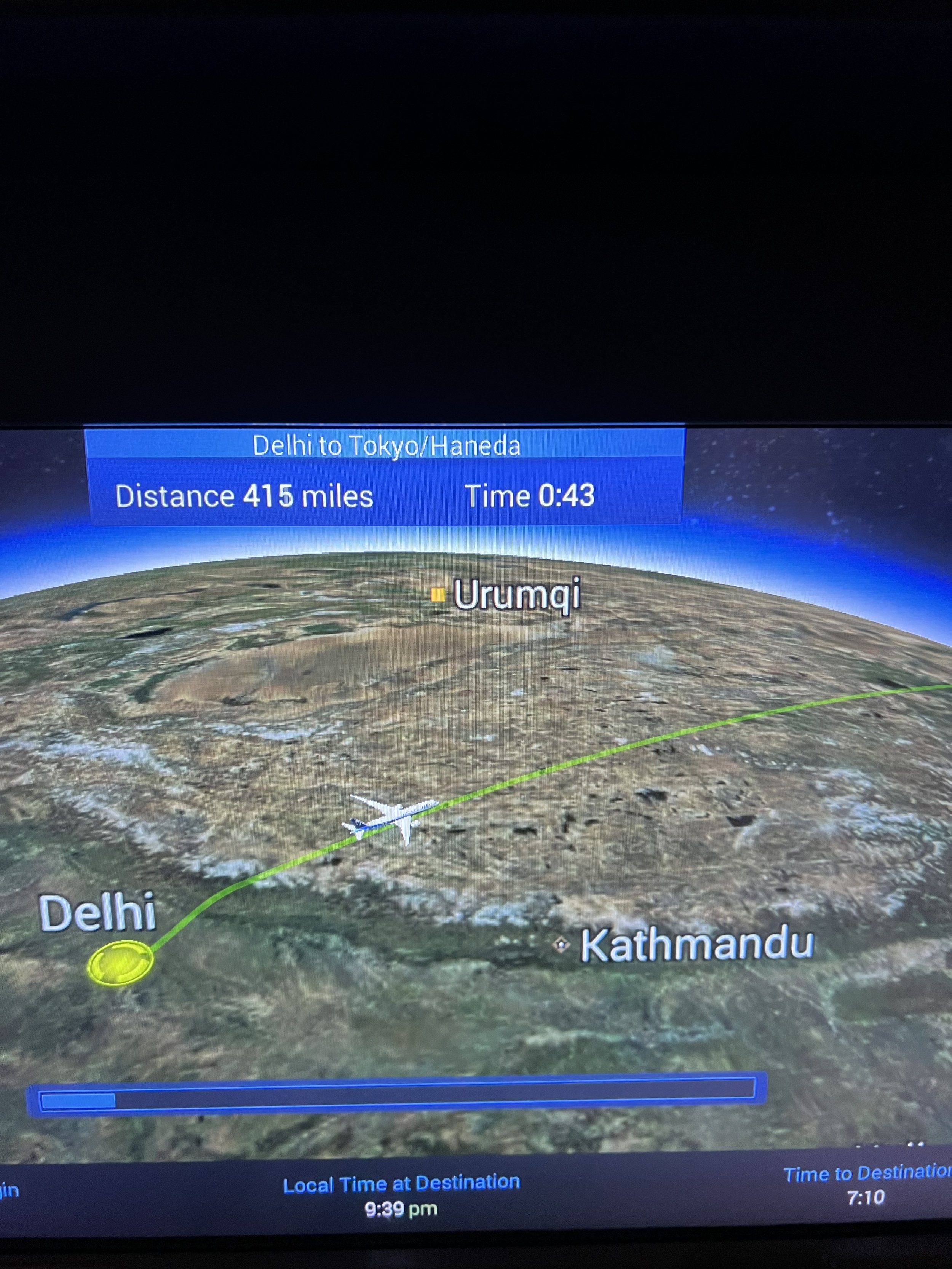
After ten weeks in India and Nepal, nearly all of it in relatively remote places, boarding a flight to Tokyo on a Japanese airline is certainly something of a transition. Add to this the fact that this will be one of the first international flights to land in the country on the day COVID travel restrictions are lifted—arriving right at sunrise—and the fact that it’s my first trip to Japan, and it’s hard not to feel like there is a pretty big transition underway here.
I’m not going to try to generalize about the shift—it’s way too early for that—but I do recognize that, in a profound way, uncharted territory begins now. Sure, Nepal was new to me, but then in so many ways I felt like I was in familiar-enough territory that I could find my ground. Nepal is India-adjacent and Mustang is Ladakh-analogous, though with a thousand million essential differences it will take lifetimes to explore (i trust). Nepali is just enough like Hindi that I can bumble along. Tibetan Buddhist worship takes a recognizable-enough-to-me form in each place that I can enter and pay my respects at a Gompa without disgracing myself. And trekking to sacred and wild places, notwithstanding camping vs. teahouses and ponies vs. porters, is more or less … trekking. I know the rules and I feel something close to (if not actually) fluent.
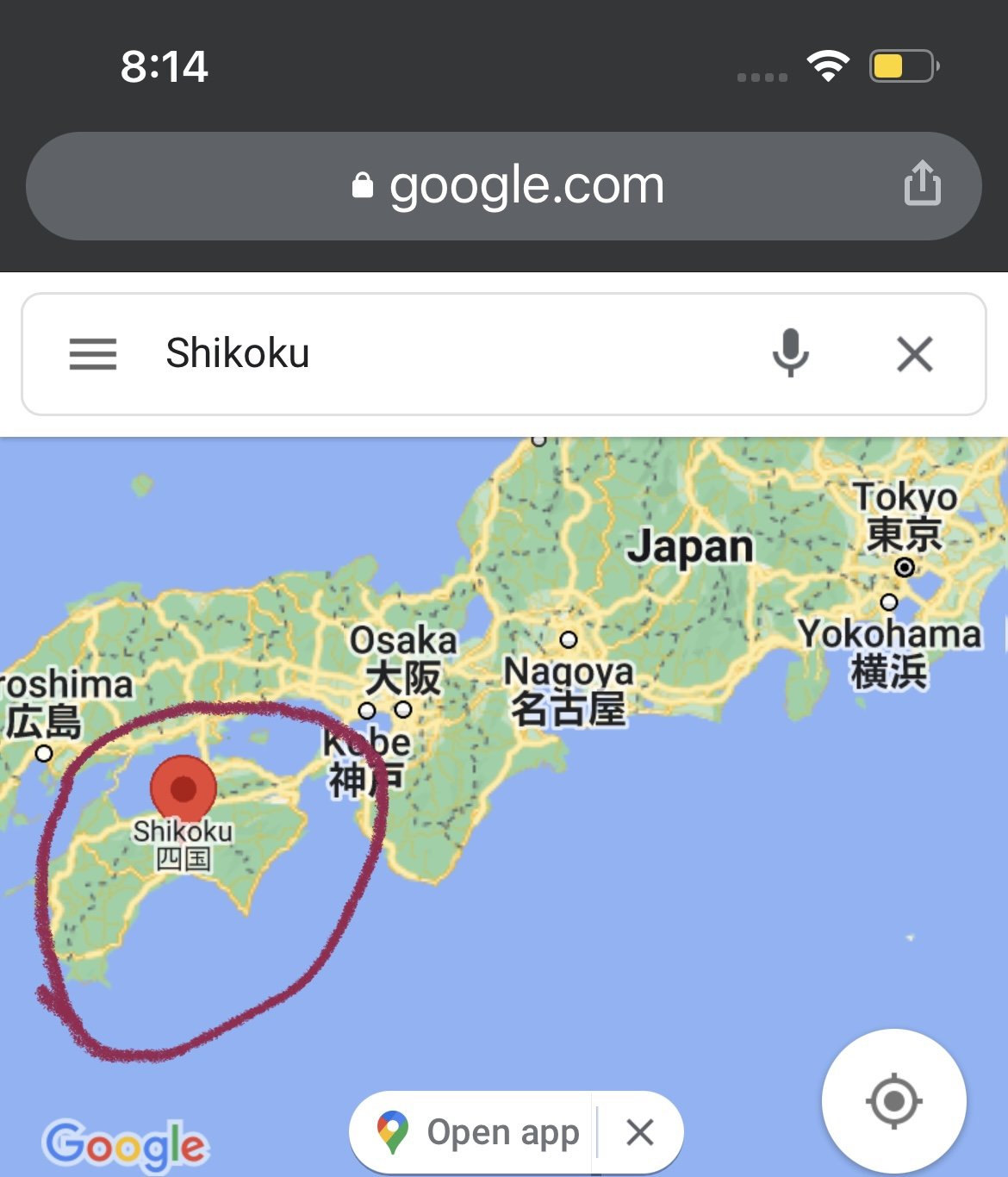
Japan will be a new beginning, in almost every way, even as it returns me to the closest I have to a home practice in Japanese Buddhism. Still, though, the Shikoku Henro, or pilgrimage, is not a Zen pilgrimage, but a Shingon one. I hope to come to understand both how that distinction matters, in the days and weeks to come, and also how it doesn’t. For now, it’s just a piece of information. It’s something I hope to learn more about from my guide, and, perhaps even more so, after 20 years as a student of Zen, feel, as we walk.
Speaking of walking: on this revered 1500-year old pilgrimage route, we’ll walk an average of 25-30 km a day for 45 days for a total of around 1100 km or 670 miles. We’ll visit and perform certain ceremonial acts—including chanting the Heart Sutra in Japanese, twice—at 88 temples along the route. We’ll walk with and request help of all kinds from Kobo Daishi, or Kukai, the Buddhist teacher/saint/icon (we’ll get into this later) in whose name the Henro is undertaken and alongside whom it is walked.
After the various challenges of the past few days, from mudslides to bouncing boulders, streams in spate to traffic gridlock, midnight plane delays to a minor case of whiplash from all the bumping around in jeeps, and a hilarious ongoing dearth of both hot water and wifi, I’m entering this next and last phase of the journey a little depleted and definitely out of my comfort zone.
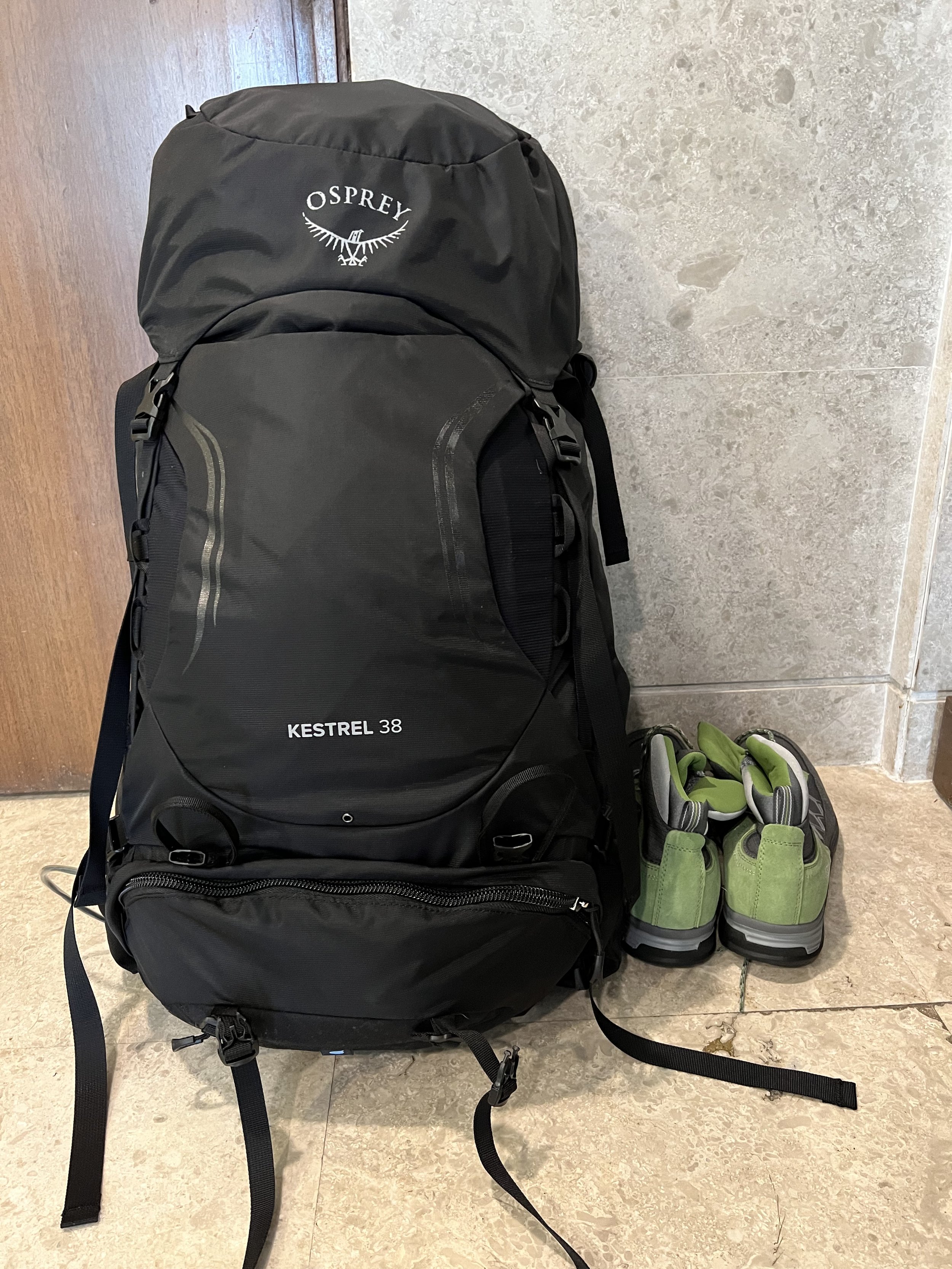
And maybe that’s not such a bad thing. I feel utterly tenderized, put back in touch with the Great Matter of life and death and the question of what matters most and what to do with the time left to me. I recognize and feel deeply, thoroughly, the ways I remain a beginner at both life and practice. My load is significantly and providentially lightened by my guide’s insistence that we carry 38L packs—and no more—for the coming seven weeks. For context, that’s not much bigger than my daypack in Ladakh. And I arrive to Japan blessed by a visitation of cranes; left {…} by the relentless beauty and clear light of the Himalaya and her devoted, devoted peoples; reminded forcefully of my vows, loves, and commitments; and washed clean—sometimes gently, sometimes violently—by the monsoon.


 Walking and Praying
Leave a reply to Jody Cancel reply