I spent my first night in Japan (not counting one at an airport hotel) at a Shingon temple on Mt. Kōya. Staying at what is in effect a training temple for the night was truly a boon for this transition. As strange as I have found much about the past couple of days, still arriving from 10 weeks in the Himalaya, being at this temple had elements that sweetly reminded me of my own home temple of Tassajara. At the same time, and somewhat uncannily. Shingon ceremonies and practice have one foot in Japanese Buddhism and the other firmly in Tibetan Vajrayana rituals. With my limited experience of any form of Japanese Buddhism other than Zen, to see a temple prominently featuring two large and complex mandalas over the altar and to attend a fire ceremony at sunrise seemed (once again) to provide me a kind of much-needed bridge from my time in Tibetan Buddhist territory to this time in Japan, even as it thoroughly reminded me of just how much of a beginner I am when it comes to the entire array of Buddhist practices and practice traditions here in Japan. Just because I have spent some time in Zen practice doesn’t mean I have the slightest knowledge or understanding of what’s going on here.
Let me be clear: there’s nothing wrong with a little not knowing or even with profound disorientation. Spending a day wandering the halls and atria of Kansai airport in Osaka waiting for my guide may have turned me into a seriously cranky Buddha, but it had the salutary effect of making completely and irrevocably clear that I’m in a new place, with new norms, new ways of being, new expectations of me. I was told I should do my best to forget who I am and have been when beginning this pilgrimage. I think my 24 hours at Kansai airport may have given me a serious leg up here. For one thing, while I more or less blended in in Nepal, I look like a superfreak wandering Osaka in outdoor gear and bright green boots with a backpack on my back—especially in the first days after Japan’s reopening. For another—and I’m not saying this is a bad thing—everyone, everywhere, all the time has a mask attached to their face. Even in restaurants, there are plastic shields between you and the person you are dining with. Let’s be honest—I have barely seen a mask in ten weeks, and certainly have had no cause to use one. And then there’s the question of the food. I’m not eating mountains of dal bhat with my hand at every meal. Indeed, because I don’t know how to be able to complete this pilgrimage otherwise, I’m eating little dishes of close kin, sentient beings of all kinds, after many years of not consuming animal friends. All of this to say, we’re having to make some adjustments, me and the other mes.
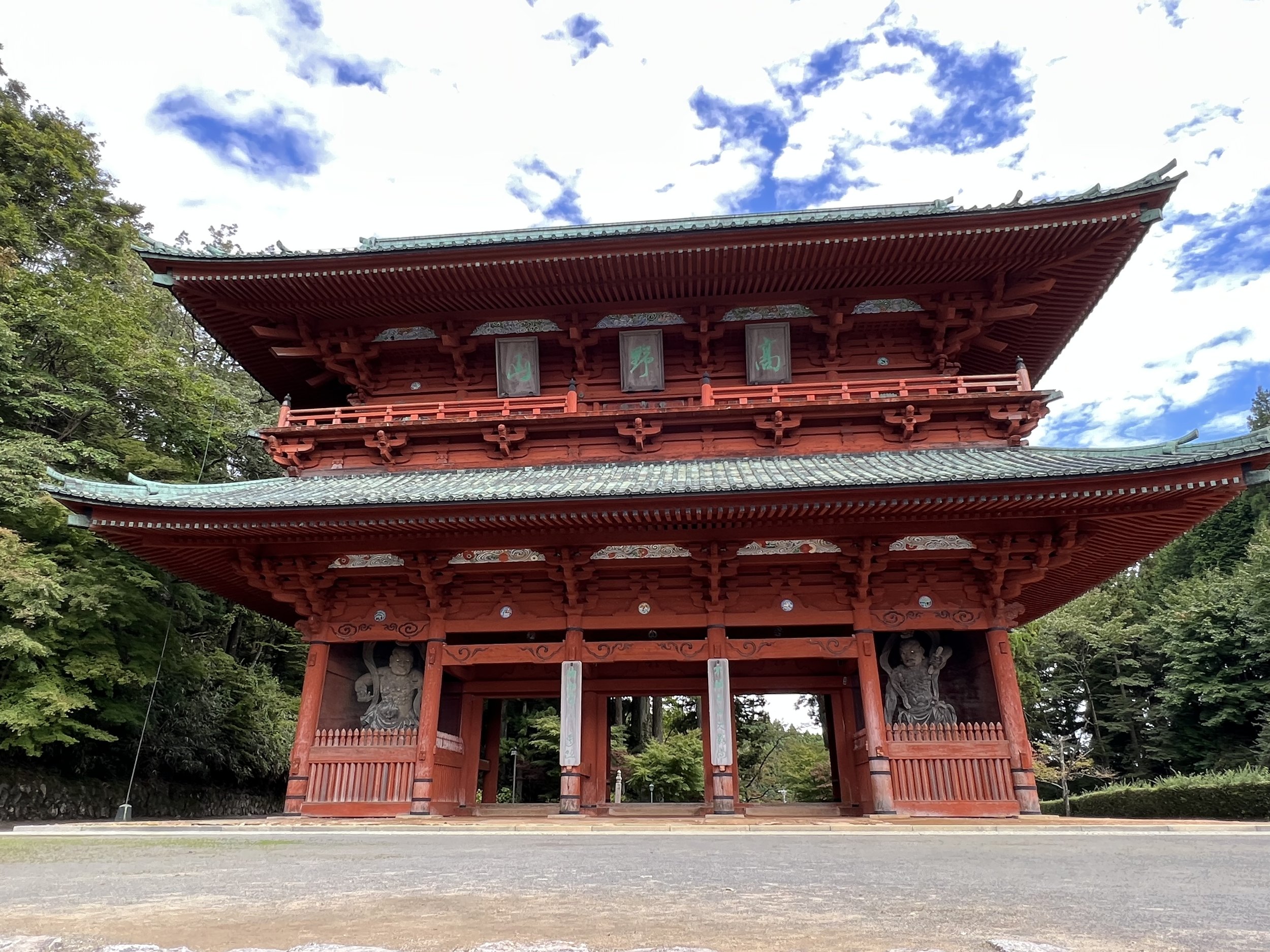
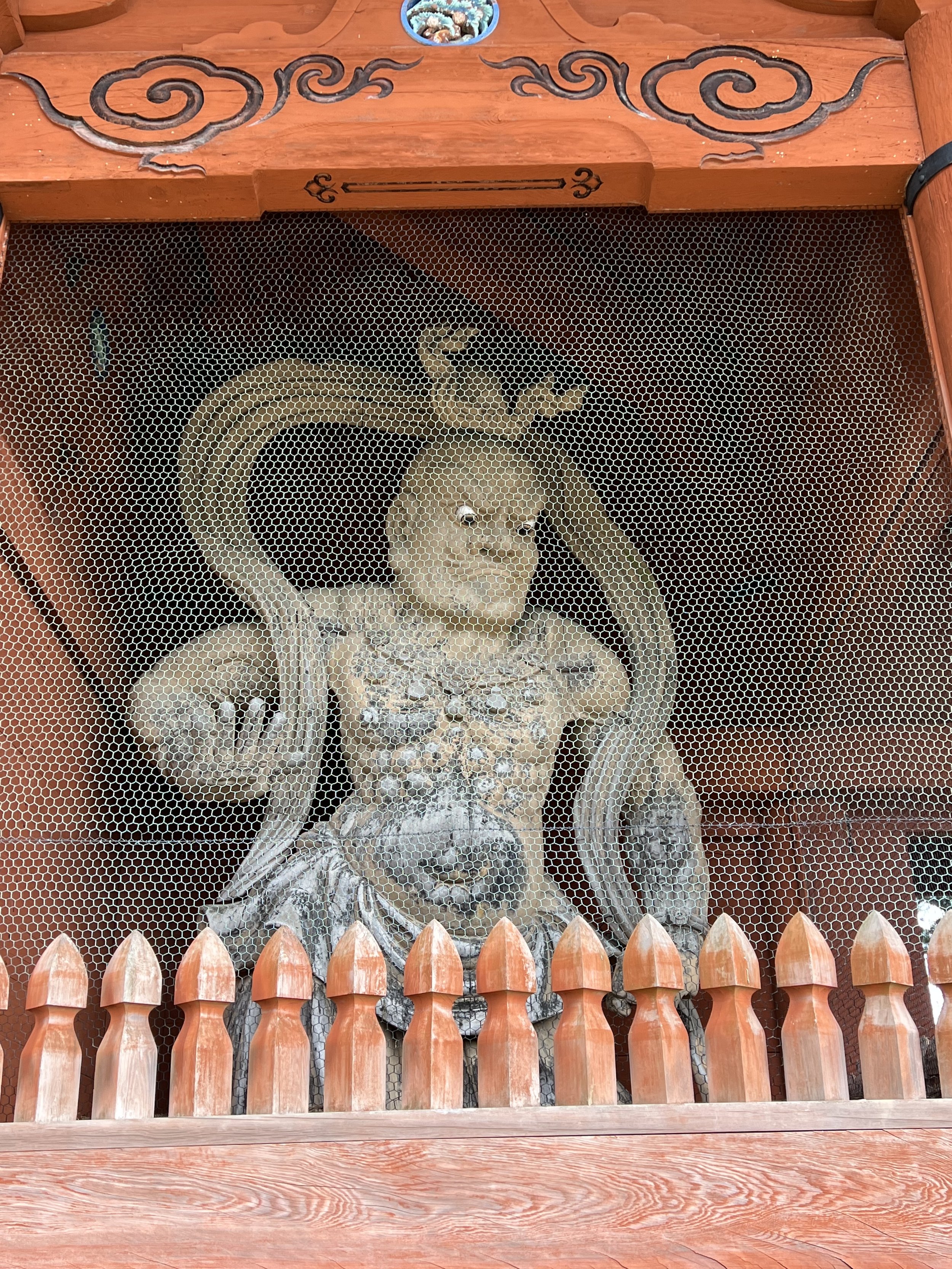
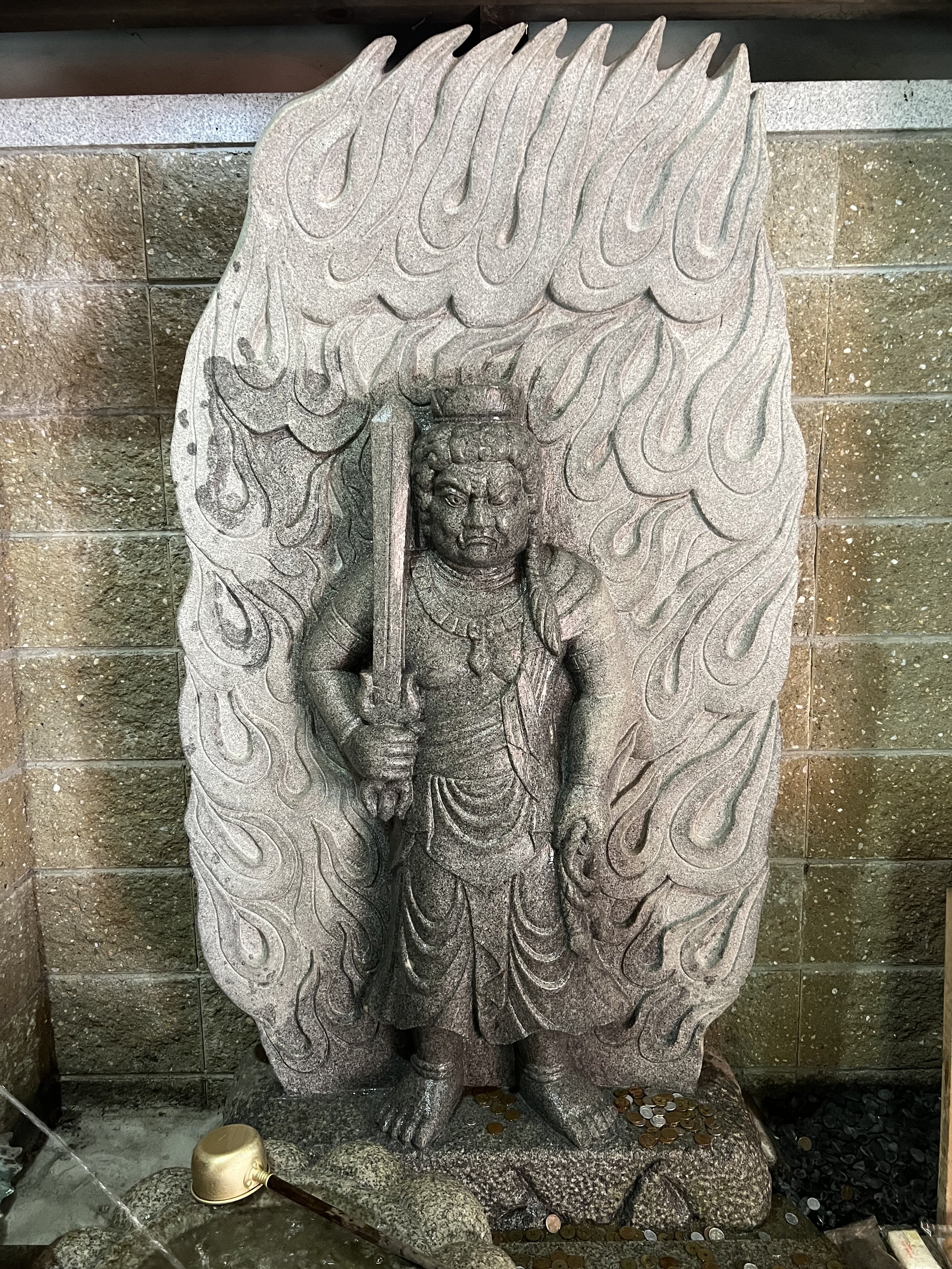
Finally escaping from the no-place of the airport, the guide, Dave, and I headed to Mt. Kōya, the World Heritage site sacred to the Shingon sect and dedicated to the veneration of Kōbō Daishi. Kōbō Daishi secured the mountain for the founding of temples and monasteries in the 9th century, and the great monk is said to remain there in perpetual Samadhi in his mausoleum. After reaching Mt. Kōya by bus, we climbed a set of steps and entered through the enormous gate, the Daimon or Niōmon, that marks the entrance to the mountain’s sacred space—and hence, in a sense, to the entire pilgrmage. The gate is guarded by two protector deities, known as Niō, who are much like (and related to) the four Dharma Kings who guard the front of every Tibetan Buddhist Gompa. For me, a gate that was also yet another bridge. I made full bows in front of the Daimon and asked for this journey to teach me whatever I need to learn. And with that tiny ceremony behind me, our pilgrimage was underway.
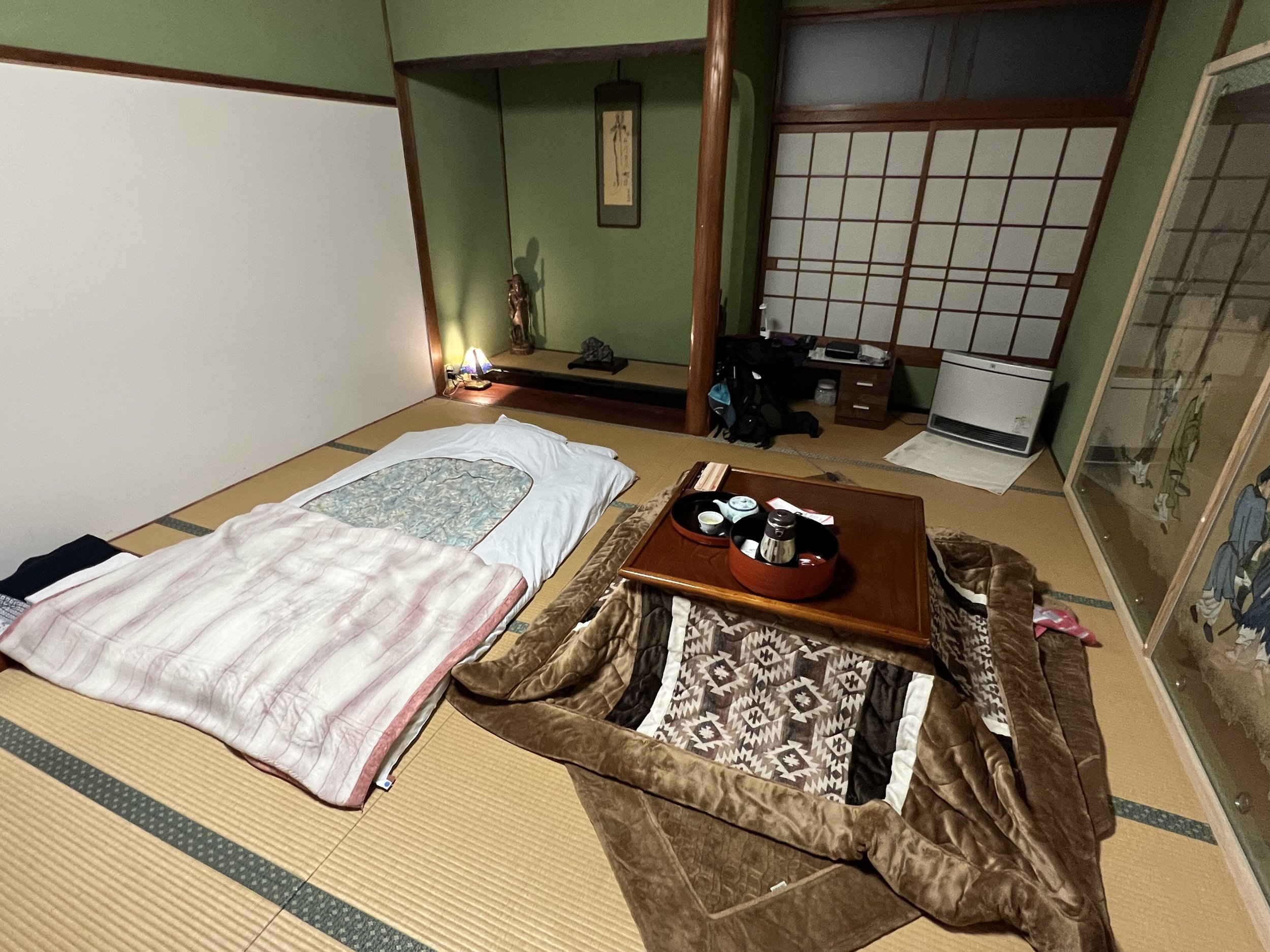
We dropped our packs at the temple where we would be spending the night, Muryōkōin. The name, a sign told us, means “no limit to the light (temple.)” Dave pointed out that this is a reference to Amitābha Buddha, but honestly, as soon as I saw the translation, it felt more like a message than a moniker. While on Kōyasan and throughout my time on Shikoku, I thought, whenever things seem strange or chilly or a little uncomfortable, remember that there is no limit to the light of the Buddhas and ancestors, and keep an eye open for that light. The fact that our next place of ceremony was a giant—I mean, massive—cemetery, a veritable necropolis, did not strike me as contradicting the instruction in the slightest.
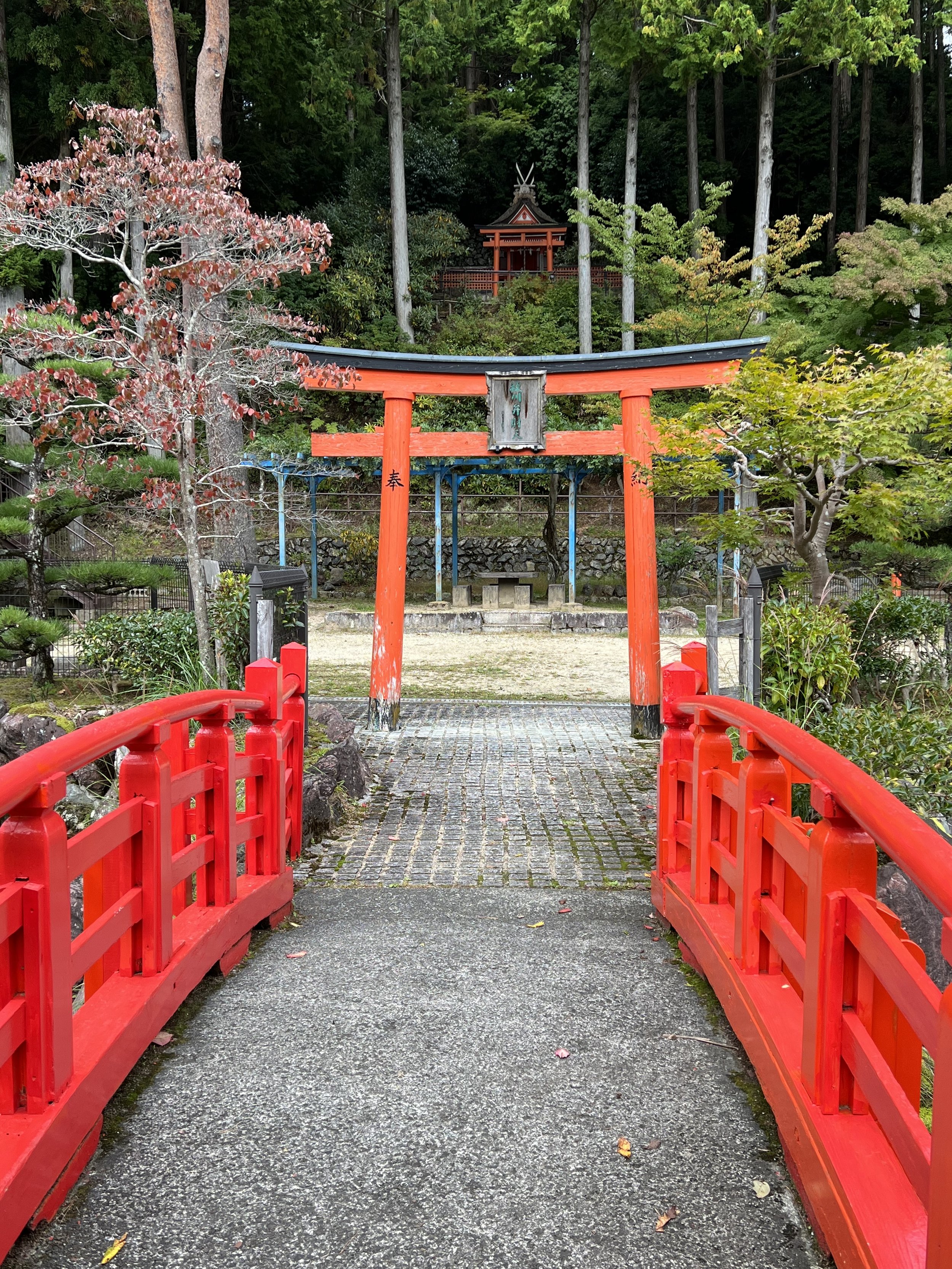
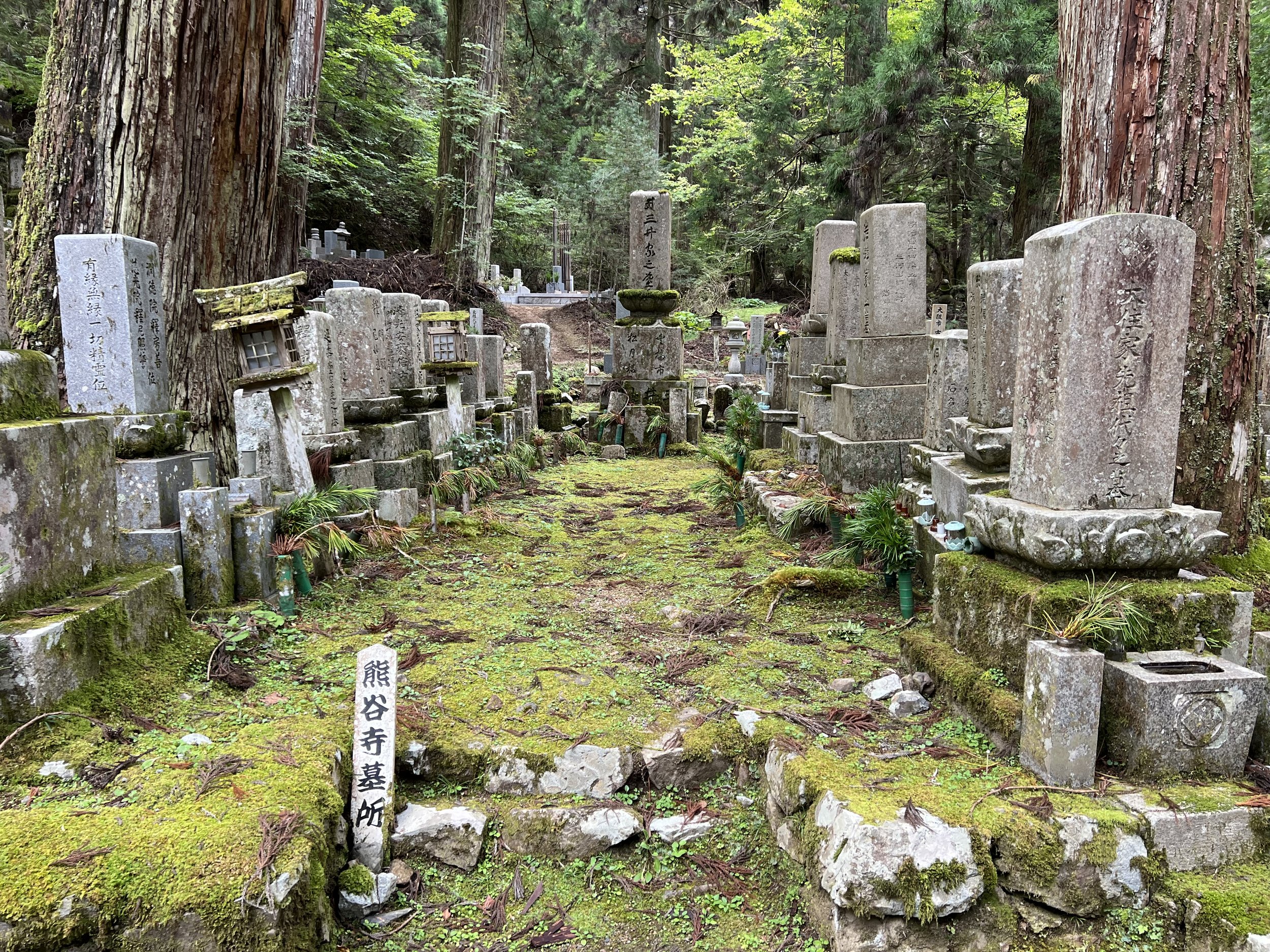
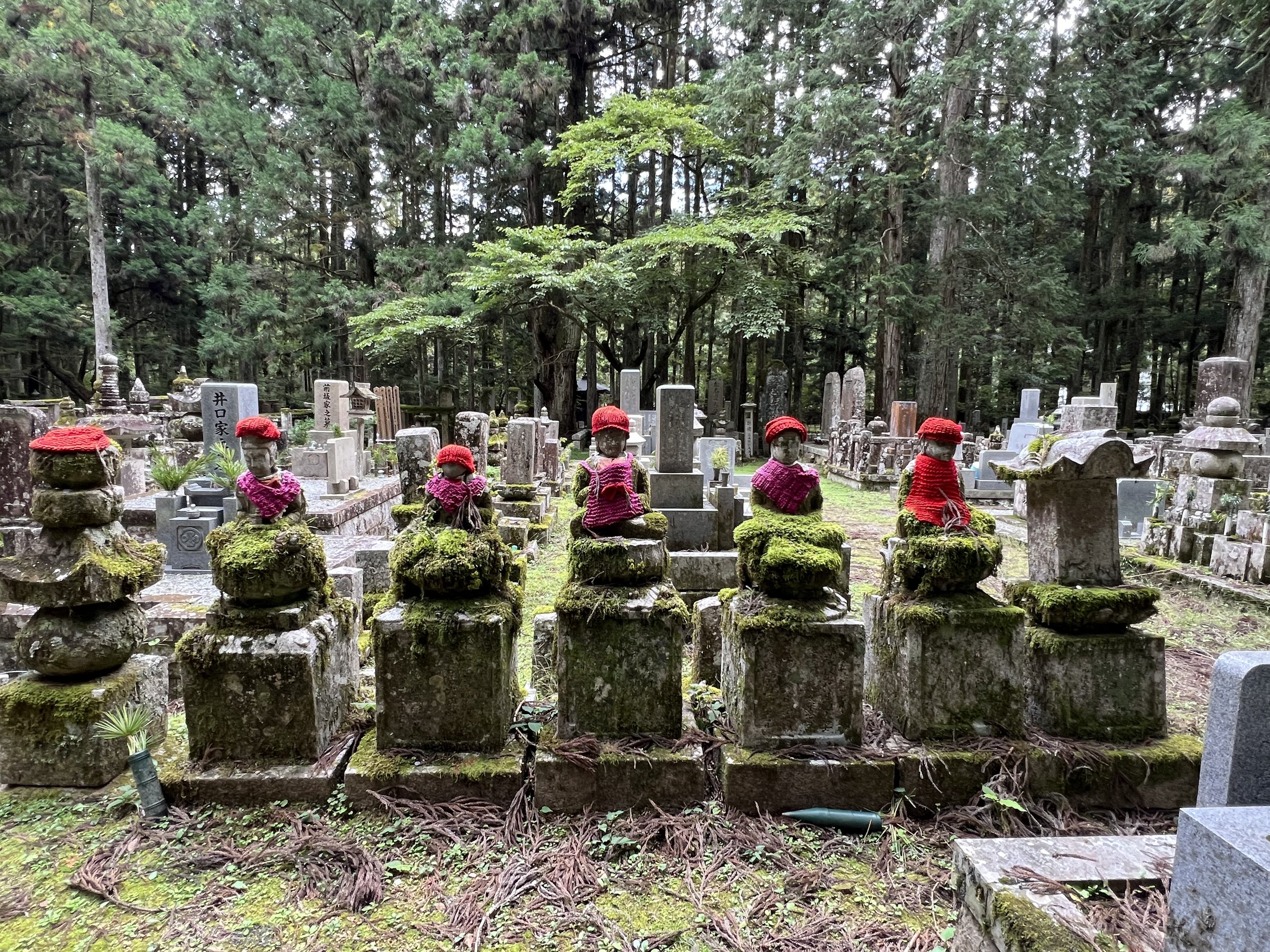
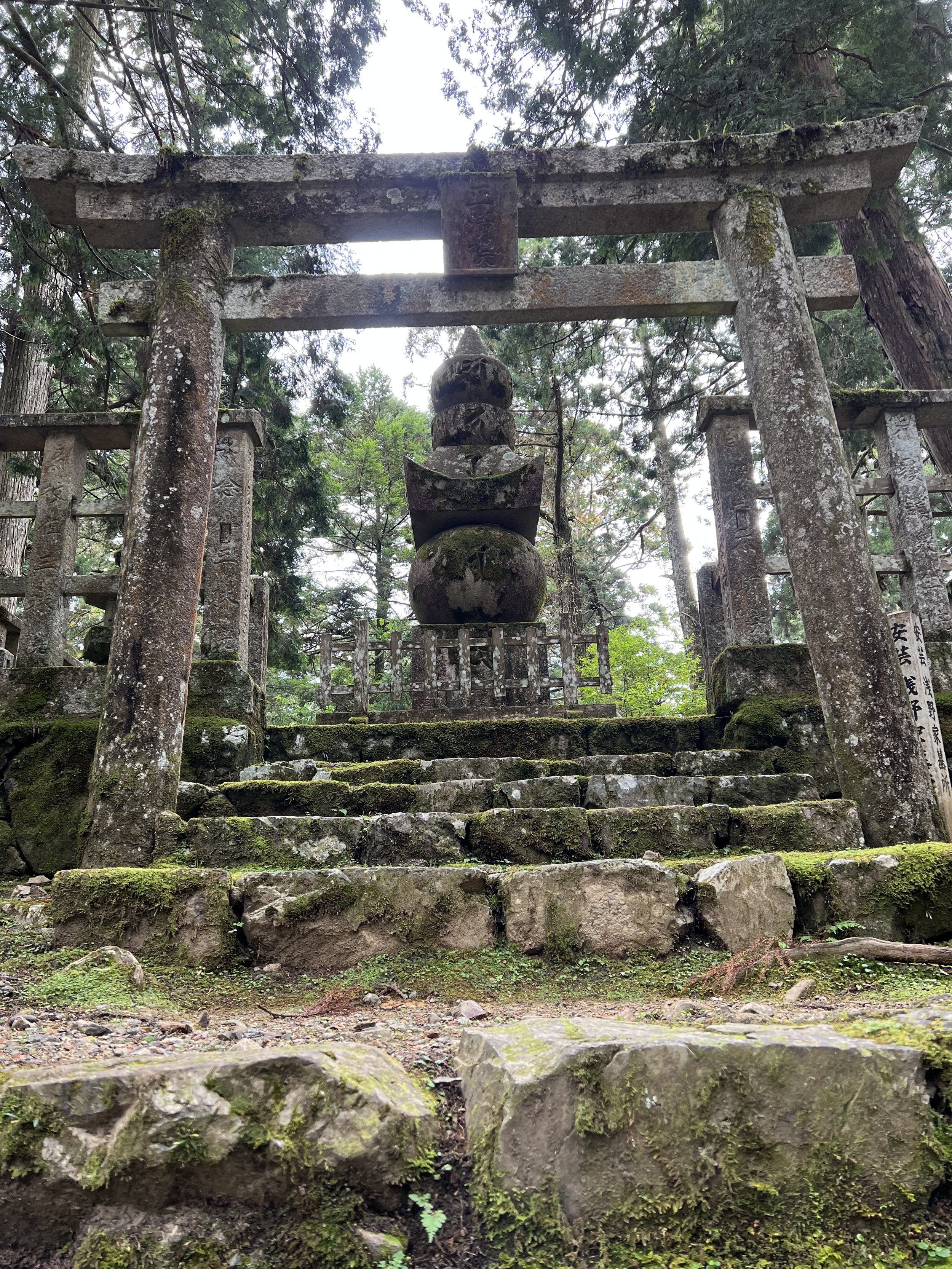
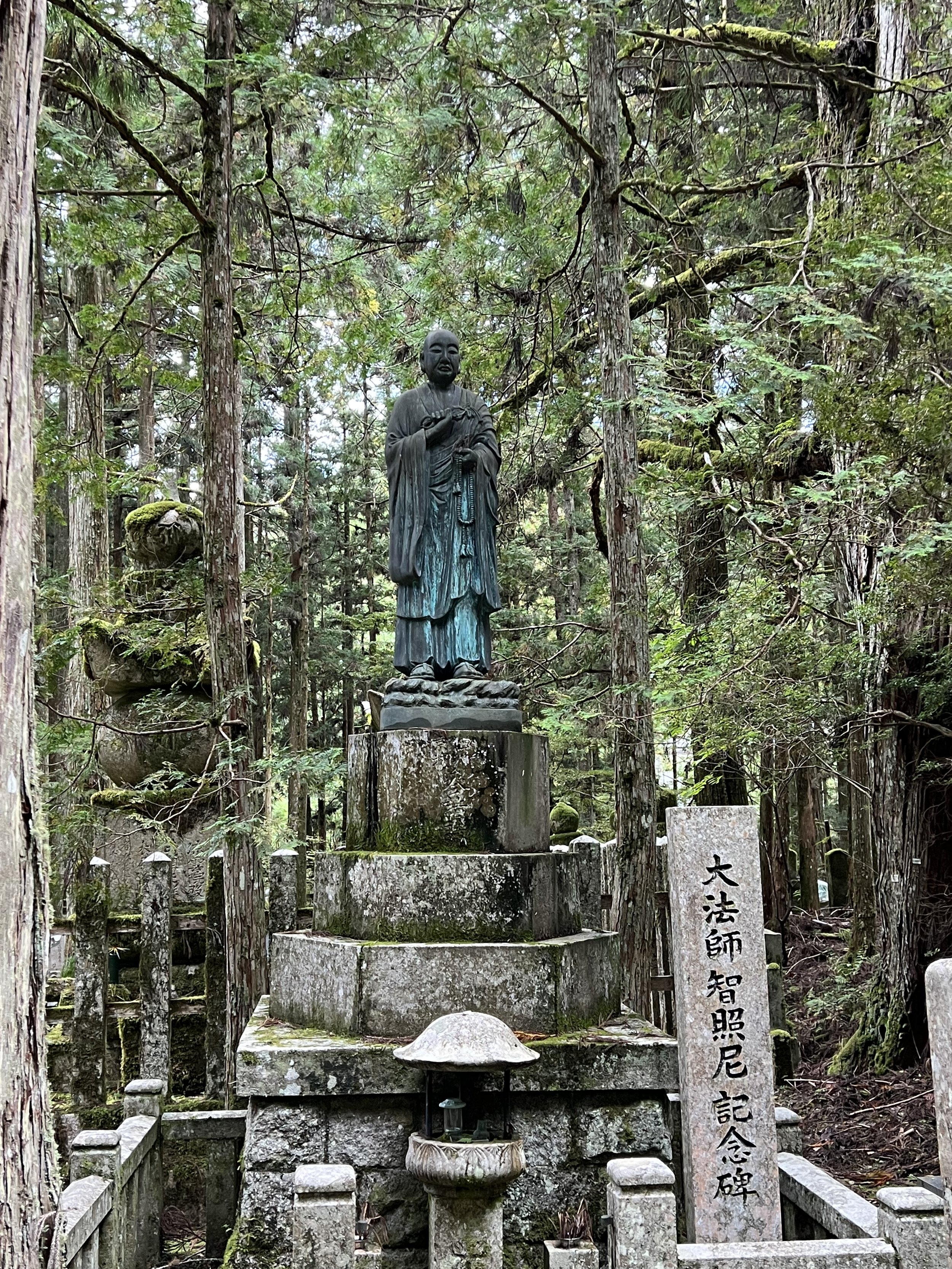
We walked through streets lined with dozens of Shingon temples and Shinto shrines until we reached Okunoin cemetery, which houses Kōbō Daishi’s mausoleum. Around the vast building are more than 200,000 memorials to the dead, including Gorin-tō (a kind of stone stupa) and other memorial markers, stones, statues, and so on. Monks and feudal lords, emperors and corporate executives—all mingle side by side in a thousand-year old cedar grove. You cross three bridges and a few km. as you approach the mausoleum, and there is an unmistakeable sense of crossing into repeatedly more sacred space. Before crossing the last bridge and approaching the mausoleum itself, you are asked to keep silence, put away cell phones and cameras, and generally adopt an appropriate attitude of reverence and devotion. The mausoleum is surrounded by thousands of lanterns—nearby is another entire building full of nothing but lanterns. The limitless light of the dharma and the Buddhas—if not for me, yet, of Kōbō Daishi—is everywhere celebrated. While we could not approach close to the mausoleum itself, I was able to make bows at three different levels of the building. What this ceremony means to other, more orthodox visitors, I’m not sure, but I felt moved to pay my respects to the great monk’s body, speech, and mind, all of which I will relate to and rely on when we begin our walk tomorrow.
We returned slowly to Muryōkōin as the light of the day started to fade. We passed by many temples, but all were closed and locked, and I struggled to feel, let alone to connect with, the 1500 years of practice that has continued unbroken in this place. I do know that this is where many or most of Japan’s continuing generations of Shingon clergy of the Kōya sect come to be trained, and I was moved to think that I was at the site of this kind of lineage protection. In fact, only when I entered to check in did I discover that Muryōkōin has been in existence here (in different physical buildings) since the 12th century—a long time indeed keeping the dharma flame lit. Yet for me more importantly, it immediately became clear that the young monks—of all genders—tending to us were themselves in training. Their eagerness, awkwardness, solemnity, and deep care for us immediately and totally unexpectedly transported me to … Tassajara. I have been this monk, I thought, as someone grabbed my backpack and struggled to lift it. I recognize this one, I thought, as someone slipped by and noiselessly gathered Dave’s shoes and turned them to face away from his room, ready for his next exit.
I decided to take a chance based on what felt like this flickering kinship. I had received warnings from all directions that temple baths would be off limits to me with tattoos. Even Dave had gently recommended that I skip bathing tonight and whenever we stayed at a temple. But somehow, at least at this temple, which boasts a Swiss abbot and a nice new coffee room with a fancy espresso maker, I thought this might be … old news. As the monk who carried in my bag was leaving, I pulled up my sleeve, pointed to the flames on my arm, and asked, “Ok to bathe with tattoo?” The monk look confused and then something slightly short of amazed. “Noooo problem,” he said. “No one care.” On the contrary, I thought of saying, you all seem to care very much about us. But I kept my mouth shut other than to thank him.
As we were taken to our rooms, we were shown the door to the temple. We were invited to attend the morning fire ceremony, which would last from 6-7:30. I was excited, having seen some pictures around Kōyasan of these fire ceremonies. I had never heard of this in Japan—as I said, I really only have experience with one school of Japanese Buddhism—but rather than using the temple wifi to do research, I opted to just show up and see how this Japanese Puja felt. I arrived shortly before 6 as requested, dressed in Samue and my new rakusu—its first wearing since my lay reordination ceremony before departing (I wrote about this in the initiation post above). I’ll be wearing this rakusu from now on throughout our pilgrimage. It felt wonderful to connect with the robe I sewed at Tasaajara in the first winter of COVID, and to try begin to fashion some sort of bridge between that place and this, that practice and this one
I was excited to attend my first Buddhist ceremony in Japan. The monks were lined up in robes and okesas similar to those worn at Tassajara. We were positioned on the other side of a divider from the temple itself, and seated in chairs, but even the smell of the incense was utterly familiar. It felt strange to be just a spectator at this beautiful ceremony of light, fragrance, fire, bells, and vigorous, extended chanting. It also felt wholly appropriate. I had a deep felt sense that this odd combination of belonging and non-belonging is going to be an ongoing experience for me here, in ceremonial spaces and outside of them. Indeed, later, at tea, the young trainee serving us pointed to my rakusu and asked, “why are you wearing that? It’s a Japanese thing.” I tried to explain, through Dave, that I was a longtime student of Zen, to which she apparently responded, not inappropriately, “then why don’t you speak any Japanese?” Well, you can’t argue with the logic of that.
Still, for the first time during the fire ceremony (which took place largely out of our line of sight, so I won’t attempt to describe the ceremony itself, though I could just see the flames), I felt something, a faint connection to the heart of practice and to what brought me here. The chanting, the candles, the invitation to approach the altar and offer incense—they stirred something as yet faintly recognizable but there, nonetheless. For now, it’s just an inkling, and that’s fine. Starting tomorrow, it’s my whole job to walk and pray—and mostly, just to walk. We’ll see what happens during the short ceremonies we will perform at each of the 88 temples. Maybe some spark will ignite—and maybe not. My mother wisely said, reflecting on her own visit to Japan a few years ago, “it may open itself to you in time.” I appreciated both the tentativeness and the temporality of the reminder. At the same time, I thought, what would it mean for me to open myself to Japan? Maybe, at least for now, that’s the more important question.







Leave a Reply