At Tassajara, as at all Zen monasteries, new aspirants hoping to enter monastic training sit a period of Tangaryo. My understanding has always been that Tangaryo means something along the lines of, waiting at the gate. Technically, it means “sitting all day” in a room designated precisely for this activity by monk aspirants. Once upon a time, aspirants sat all day, or days, outside the gate—ostensibly, on the ground, in the elements, in the snow. The point, at least in part, is to give one enough of a taste of monastic training that one could change one’s mind or decide that the practice is, at least in its basic parameters, doable or not doable. Beyond this, and in its more profound form, the practice is designed to strip away one’s basic comforts, preferences, and markers of identity. As it was explained to me, Tangaryo can be thought of as a process of ego-death and rebirth.
To enter a 90-day Tassajara practice period for the first time, one sits a five-day Tangaryo. The practice is rigorous. The standard 40-minute periods are not observed. One simply sits until the next service or meal, sometimes up to three hours at a time. No one addresses the Tangaryo students, and they are not supposed to speak or make eye contact with anyone. They do not wash for the five-day period. In the short rest periods after meals or at night, the expectation is that Tangaryo students return to their cabins, speak to no one, refrain from reading or writing, and do not bathe. Finally, at the end of the fifth and beginning of the sixth day, for those who complete Tangaryo, one goes through a series of rituals that include bathing (washing clean whatever has bubbled up and made itself evident during those intense days) and being welcomed into the community as an entering monk.
The experience of sitting Tangaryo is different for everyone. Some people go through a great deal of physical pain. Others struggle with loneliness and doubt. Still others are bored out of their minds—not necessarily a terrible thing. One gets to explore the nature of one’s own mind in the absence of all distractions and also of all mirrors—no teachers, friends, or loved ones to reflect one back to oneself, no comforts into which one can disappear. Even one’s name ceases to matter. The stories and feelings have their way with you. And then, in most cases, even they exhaust themselves. At least for me, it was a profound way to both know the self and forget the self—and also, only seemingly paradoxically—to encounter intimately the truth that at the end of the day, we can only enter and walk the path by and as ourselves. No one else can do it for us—though of course we practice supported by all beings, always.
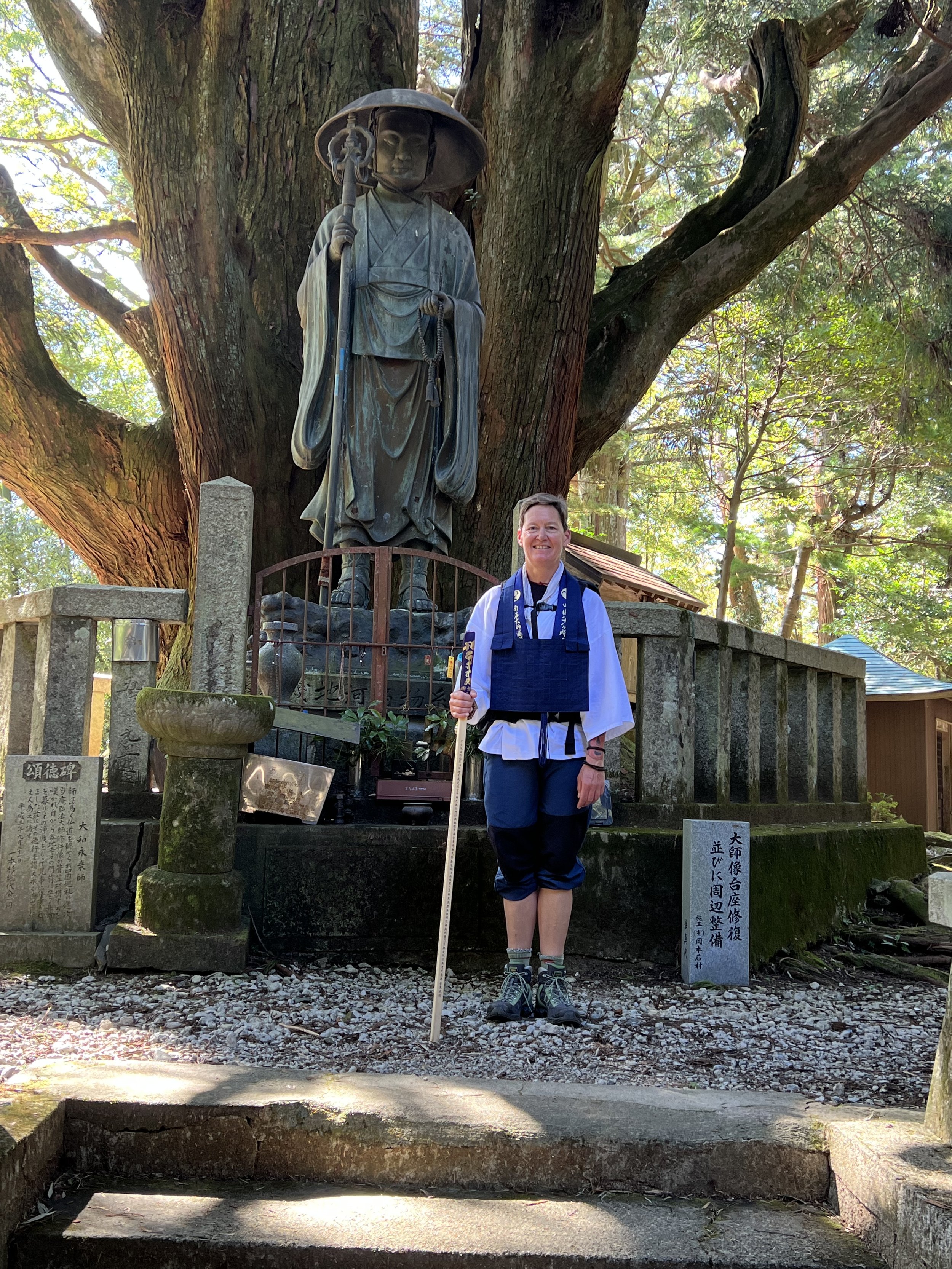
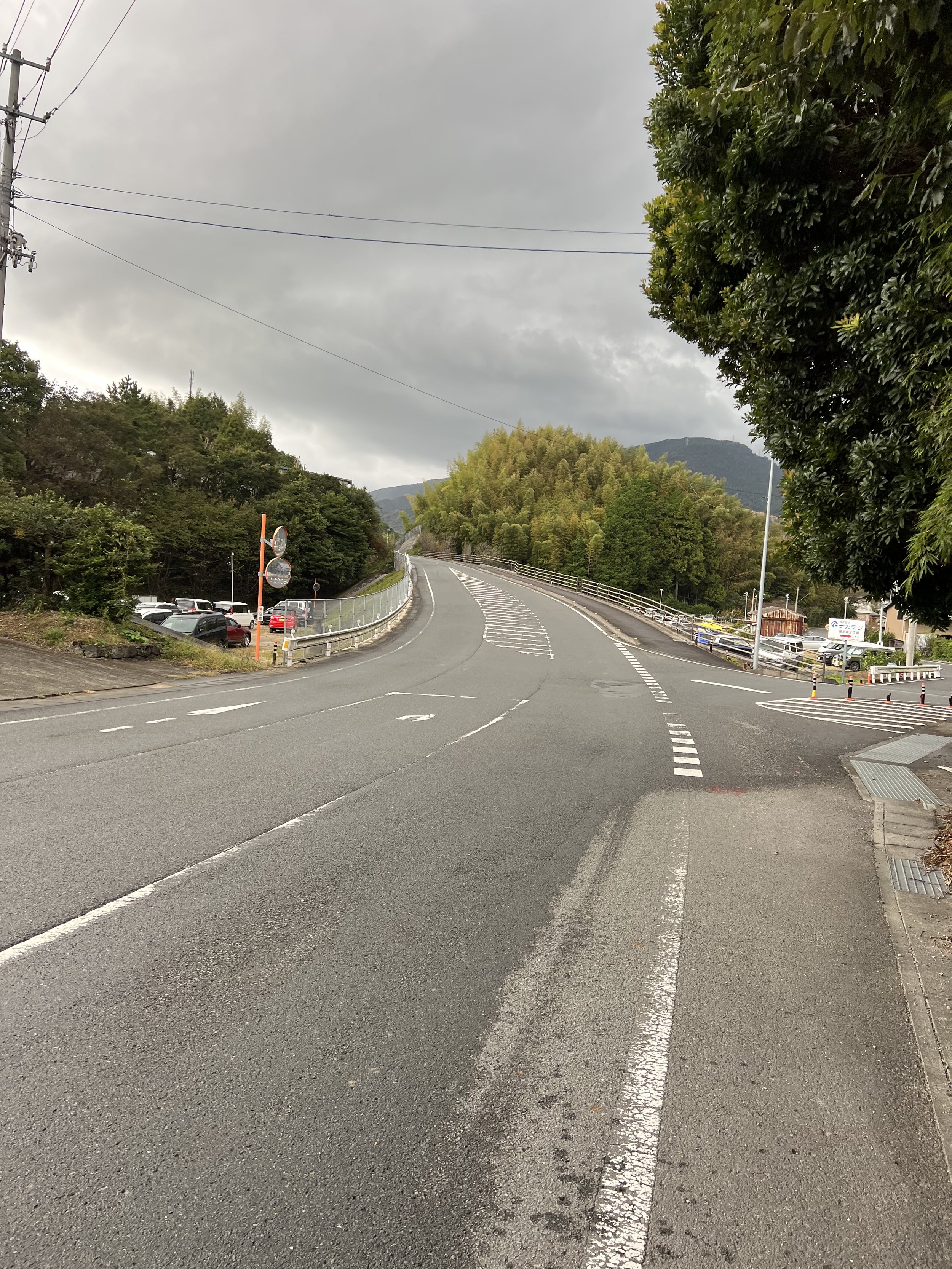
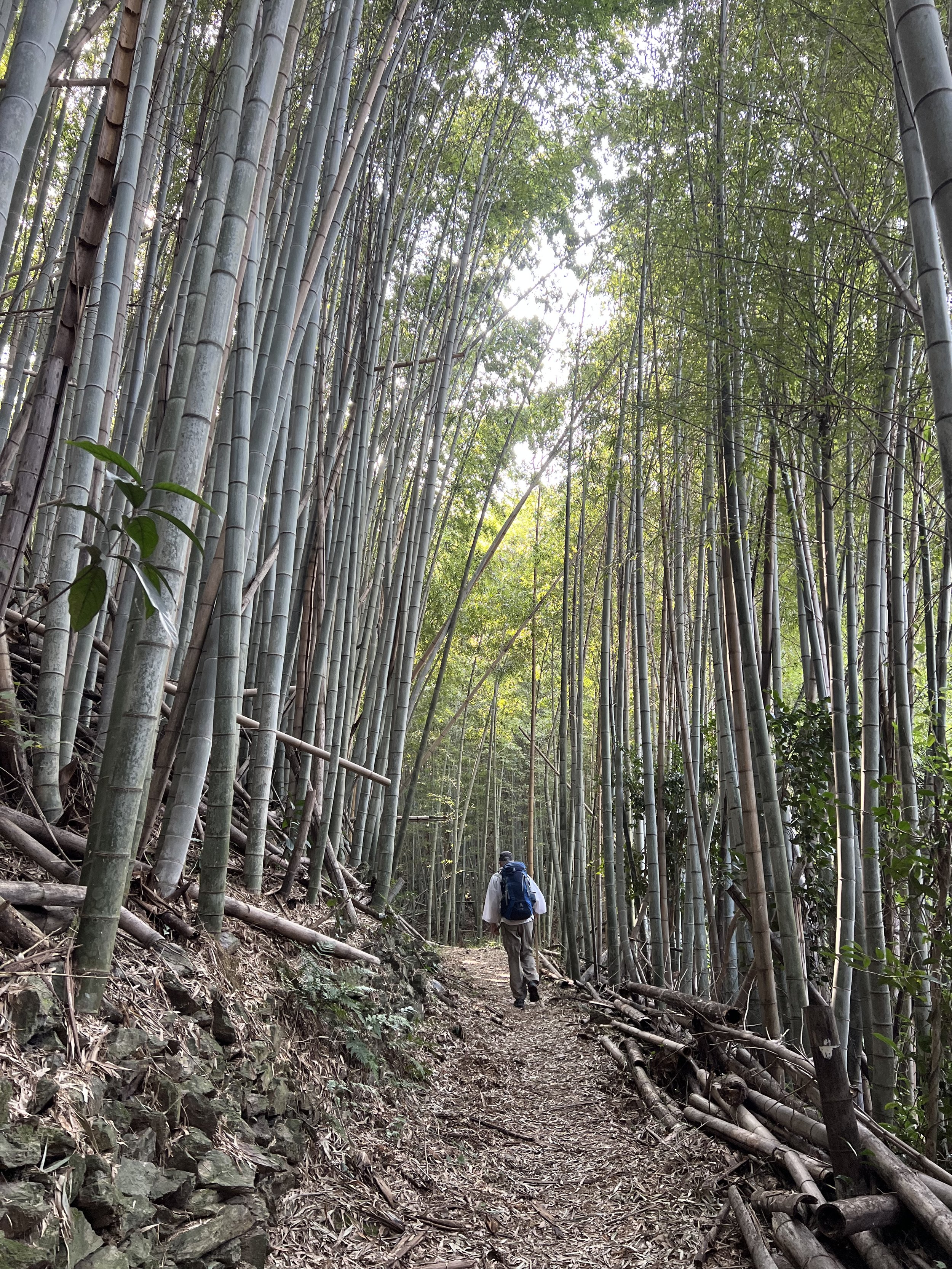
While walking for hours on the narrow edge of a ridiculously busy highway out of Tokushima city this morning, day 5 of this walk, and still frankly baffled by this entire experience to this point, I suddenly heard the word Tangaryo in my head. I understood immediately that this might be a helpful framing for my first days here. Maybe, I thought, it would be helpful to imagine that these first days are not unlike the experience of waiting at the gate to be admitted to monastic practice. Notwithstanding ten weeks of Himalayan trekking, my body aches in a thousand unfamiliar and only sometimes worrying ways from the long miles, wet heat, and endless flat pavement. Because I speak not a word of Japanese, and because my guide is a white man who speaks Japanese, I have rarely been addressed on the first five days of the walk. Inn owners and other Henros engage Dave, and I stand by wrapped in a kind of invisibility cloak, neither present nor absent. Now, I don’t necessarily mind an invisibility cloak—I had worried I would stand out too much in Japan, with my white skin, tattoos, height, and so on. But I’ve been amused to feel something close to ghost-like here, watching a world unfold all around me of which I am not quite a part and to which I do not quite belong, notwithstanding my Henro outfit, my walking staff, my careful observation of the ceremonies at each temple, and my equally careful observation of the forms for being a good guest at a minshuku or ryokan.
Part of what fascinates me about thinking about this period as Tangaryo is that I do not know how long this Shikoku Tangaryo lasts. Seven days? Twelve? Forty-five? As long as it takes? What would I have to “do” to be admitted to this experience? I know that the white Henro outfit signifies a kind of spiritual death—the white Hakui or jacket we wear is literally a death-shroud. So the request is not so different from that at Tassajara and other Zen monasteries: that we drop the selves that brought us here and locate us in the world we have known and relinquish all that keeps us separate from this experience. Yet “trying” to do that dropping off is not going to get me anywhere. I just kind of have to wait, not try to figure anything out, and see what happens.
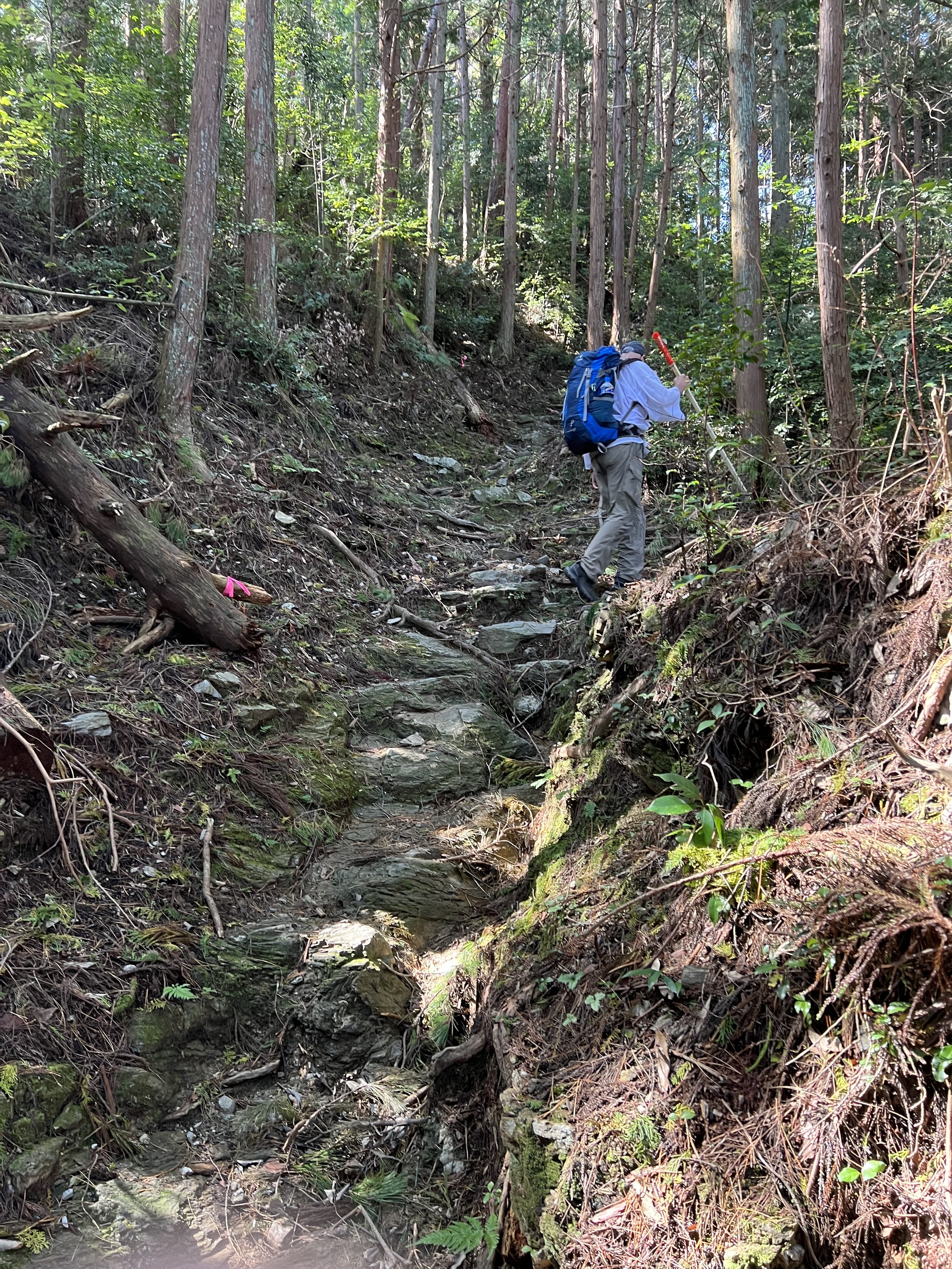
These first five days have been hard, harder than any physical experience I’ve had in my life. Day 3 is reputed to be the most difficult climbing day of the entire Henro, and it did not disappoint. Tomorrow we start a series of long days that will gradually take us up over the 30km a day mark. And we’re still at the very beginning of this thing, 19 temples in.
Shikoku Island is divided into four prefectures: Tokushima, Kochi, Ehime, and Kagawa. Over the course of the 45 days, we’ll walk clockwise through all four, more or less around the perimeter of the island, and each section of the walk is associated with a different kind of spiritual practice or discipline. We will be in Tokushima from temple 1 to temple 23, days 1 through 7 or 8, and the Tokushima section is associated with Hosshin, Awakening Bodhi Mind. I like to think—or hope—that Bodhi Mind is awakening in me here in some new way I don’t understand, and that it is doing so largely without significant input from me. My job is to put on boots each morning, carry my pack, complete the ceremonies at each temple, be kind to everyone I meet, and take care of my Henro garb, staff, and sacred objects. Anything beyond that, reaching for any particular kind of experience or meaning or even basic understanding, is superfluous. It’s a weight I don’t need to be carrying.
We’ll see how long this Tangaryo lasts.








 Walking and Praying
Leave a reply to Judy Joy Cancel reply