There’s all kinds of lore associated with eclipses, but, regardless of whether you believe any of it, one thing they can do is remind us that we’re part of a larger system than the little planet-world we ride around on. They can also be a great reminder that even when things feel pitched suddenly into darkness, the natural cycle will eventually pull us back into the light. The source of the light never actually went anywhere at all. Finally, there’s beauty in the darkness, and the stars shine brighter when the full light of the moon is temporarily dimmed.
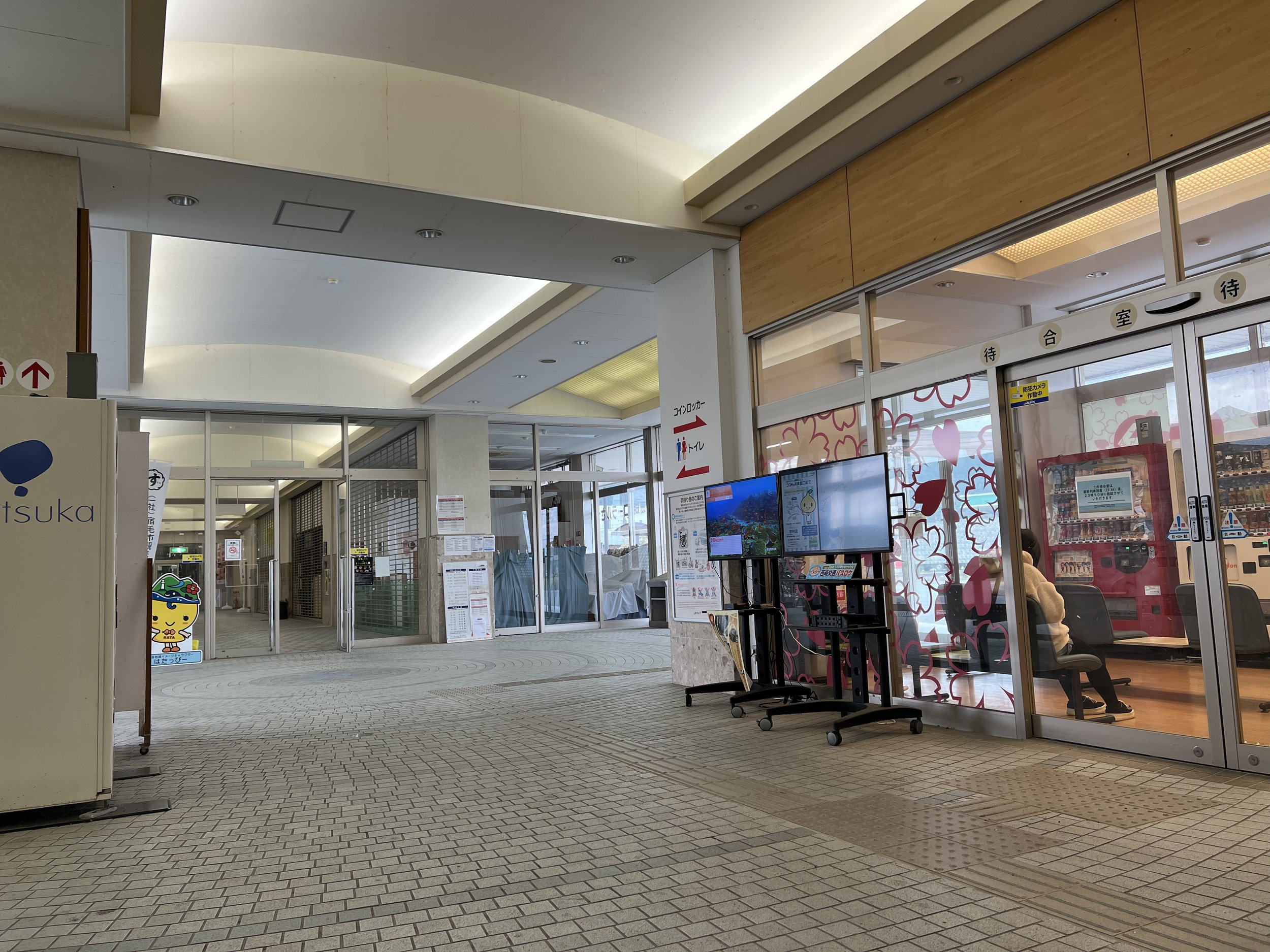
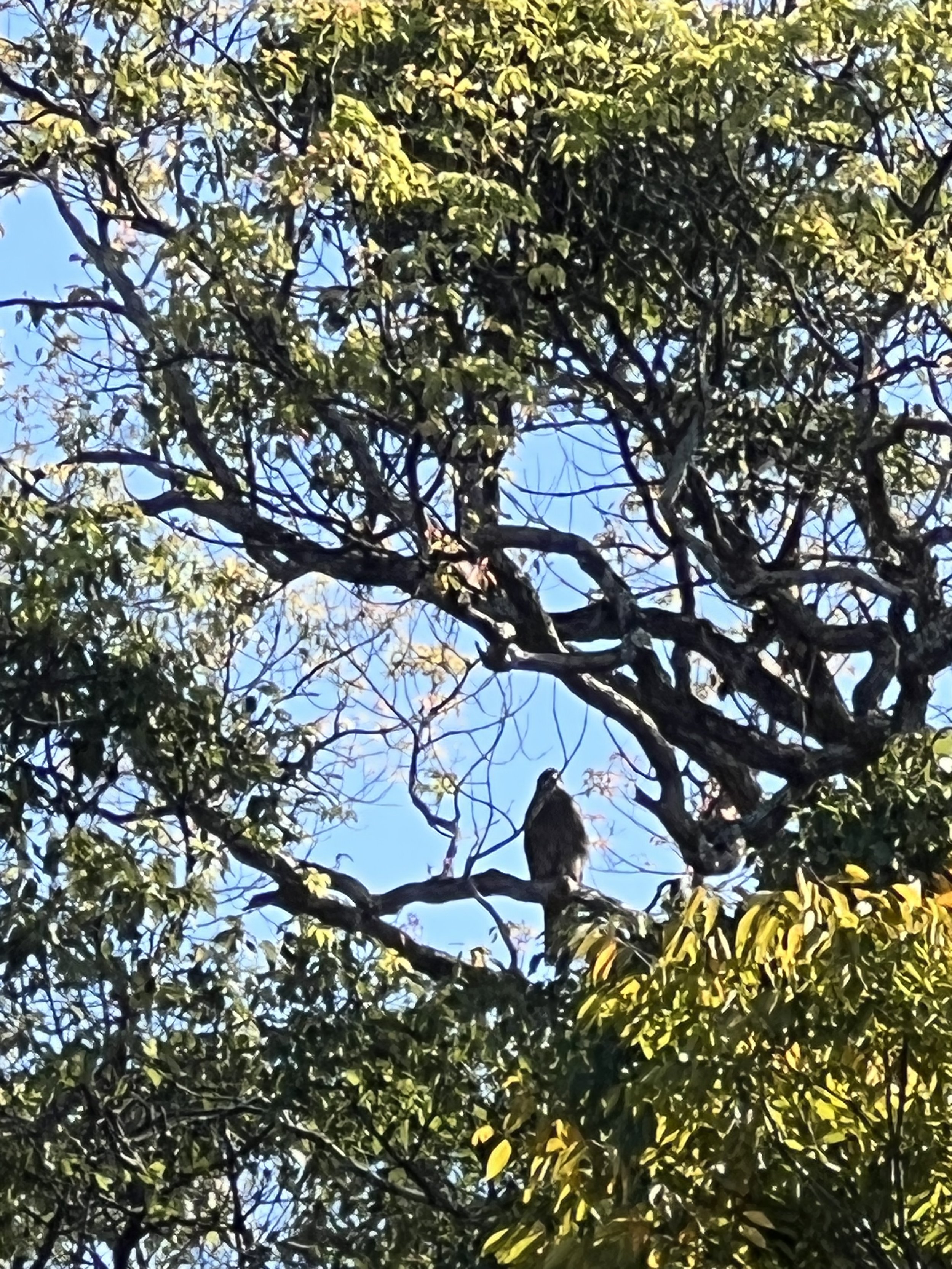
Yesterday was a strange one, and certainly felt pulled around by the larger forces at work. We started the day with a more comprehensive conversation than we’ve had to date about options for ending the pilgrimage if my leg isn’t better after five days of rest—or if it flares again. Riding the bus has been fine and the rest welcome, but we spend hours every day after the last inn check-out and before the next inn check-in in bus terminals, highway rest stops, and other less than glorious settings. We’re between temples right now, the distances between them being long and our accommodations already booked, so there is a bit of a feeling of being in a dead zone—the light of pilgrimage temporarily obscured. I do my best to find meaning in the mundane sites where we sit around, but I’m only sometimes able to turn toward the light. Mostly I just try to stay present and notice. And the black kites are everywhere and always good company.
We finally boarded the bus yesterday around 11. We had only a half hour to our destination, so I was looking out the window engaged in this practice of noticing. I saw a Henro at the next bus stop—not unusual—in conical hat and white outfit. As we pulled up, I saw it was a gaejin, and suddenly both Dave and I realized that it was someone we knew. We had been aware that Dave’s friend Don was in our general vicinity, but had finally concluded that we would ultimately not cross paths—a disappointment to me. We met way back at the start of the pilgrimage and instantly discovered we shared origin stories in New York and, more surprisingly, that he had been part of the founding class of UC Santa Cruz. I had been looking forward to reconnecting and to the comfort of shared history. And suddenly, there he was, climbing onto a bus in the middle of nowhere. These banana slugs just keep showing up at the strangest, darkest moments.
We rode into the nearest city together—Dave and I would later backtrack to our lodging—and spent three hours eating lunch and talking. He gave me medicated patches for my leg and expressed concern that I was “awfully quiet.” It’s hard to know what to say at the moment, in all honesty, as the clock of staying or going ticks away relentlessly. I don’t have a lot of insights, so I just try to stick to asking questions, as I’ve done throughout my time in Japan. Still, it was wonderful to see a familiar face and to hear about the month he is spending out exploring old Henro routes and visiting temples, shrines, and even a small Zen community along the way. The hours passed quickly for the first time in days.
We parted ways around three and got on the bus back down the highway. Getting off the bus is always complex, as I need to find or get exact change from the driver and his change machine for both me and Dave without slowing down the bus. I invariably feel like a fumbling idiot, juggling tiny tickets, change and change purse, walking stick, and backpack. As we got out, I had the distinct feeling I’d left something on the bus, but I’d felt around in the top of my backpack and was sure everything that comes out had gone back in.
Chigao. Wrong. Not long after we walked to the little business hotel and got settled, I went to look at the time and … no phone. I remembered the feeling as I touched the ground—the clear voice saying, you forgot something—and wondered yet again why I ignore these indications when they arrive.
Now, I’m not a big forgetter or loser of things. I’m not sure I’ve ever left a phone anywhere. And here in Japan, my phone is a lifeline to my friends and loved ones, a vital source of connection to the things that feed me, even if I’m only connected for a few minutes or hours a day. Since the injury situation got really bad, it’s also been a place for bouncing ideas, working through, and just plain expressing confusion. For being seen in my uncertainty. The other day, a dear friend said, in passing, “i’ve never felt so lost as when I was in Japan,” and my heart relaxed, as I realized it might not just be my limitations holding me back from this experience. Still, I felt in this moment as I looked at my increasingly tiny pile of possessions, sans phone: I’m shredding. I don’t even know who I am anymore. I realize that is part of pilgrimage—but I didn’t think they meant, like this.
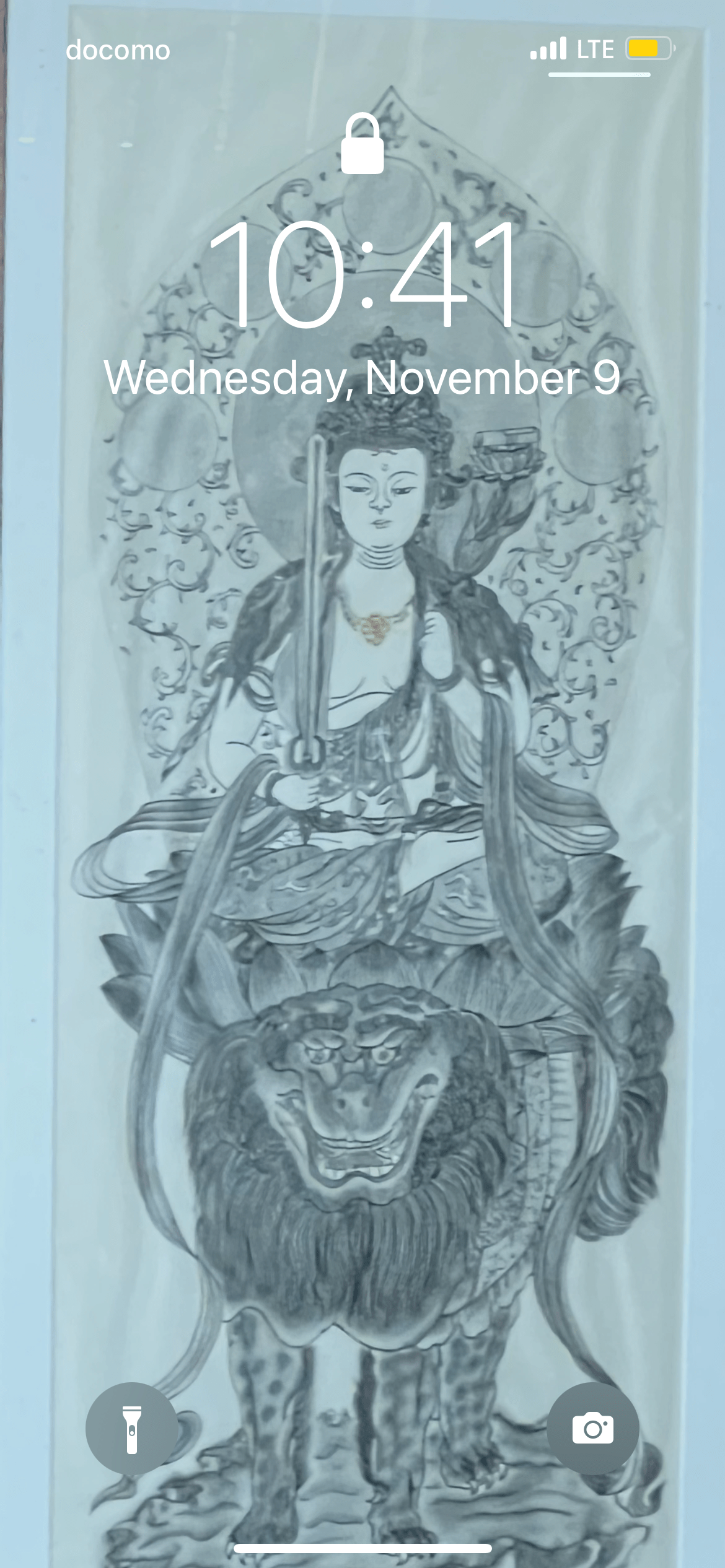
Through Dave’s powerful language skills and the miraculous precision of the Japanese bus system, my phone was located, passed off between bus drivers, and returned to me within 90 minutes. In my favorite moment, the administrator at the bus station confirmed that it was blue. “Does it have some kind of Buddha on the homescreen?” Dave relayed. “Yes,” I responded. “Tell him it’s Monju Bossatsu.” Manjushri, the Bodhisattva of wisdom. About a week ago, I replaced a Tibetan Manjushri image from Ladakh with one from a temple we had passed through here, trying to be present to this place. Still, it’s the same old friend, riding his lion, sword held high. He goes everywhere with me—as he has since 2019–to remind me that there is wisdom to be found in every circumstance. I love that he played some part in reuniting me with my phone, though I had to laugh again at the relation to Buddhism here—“some kind of Buddha” is right, I guess
We walked back to the bus station where we’d gotten off, waited for the 6:11, and saw the bus driver hand over what looked like a little interoffice mail envelope. I felt immense gratitude to all the beings who had been involved in this sequence of handoffs, Dave very much included. And still, I wondered, who am I when I can’t walk, speak the language, order coffee, or keep track of my own phone? There is wisdom to be found in total dependence, but damn, it’s uncomfortable.
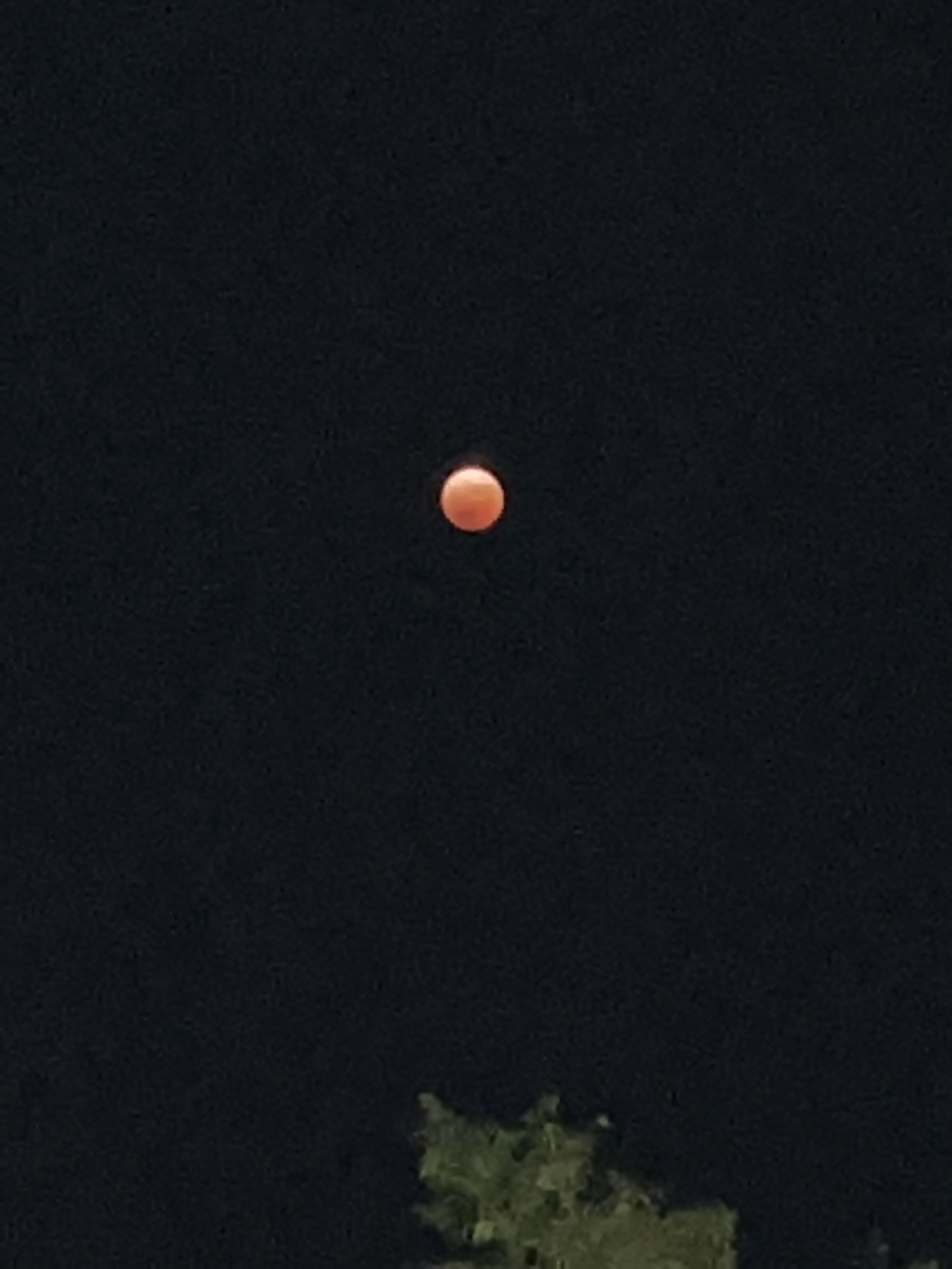
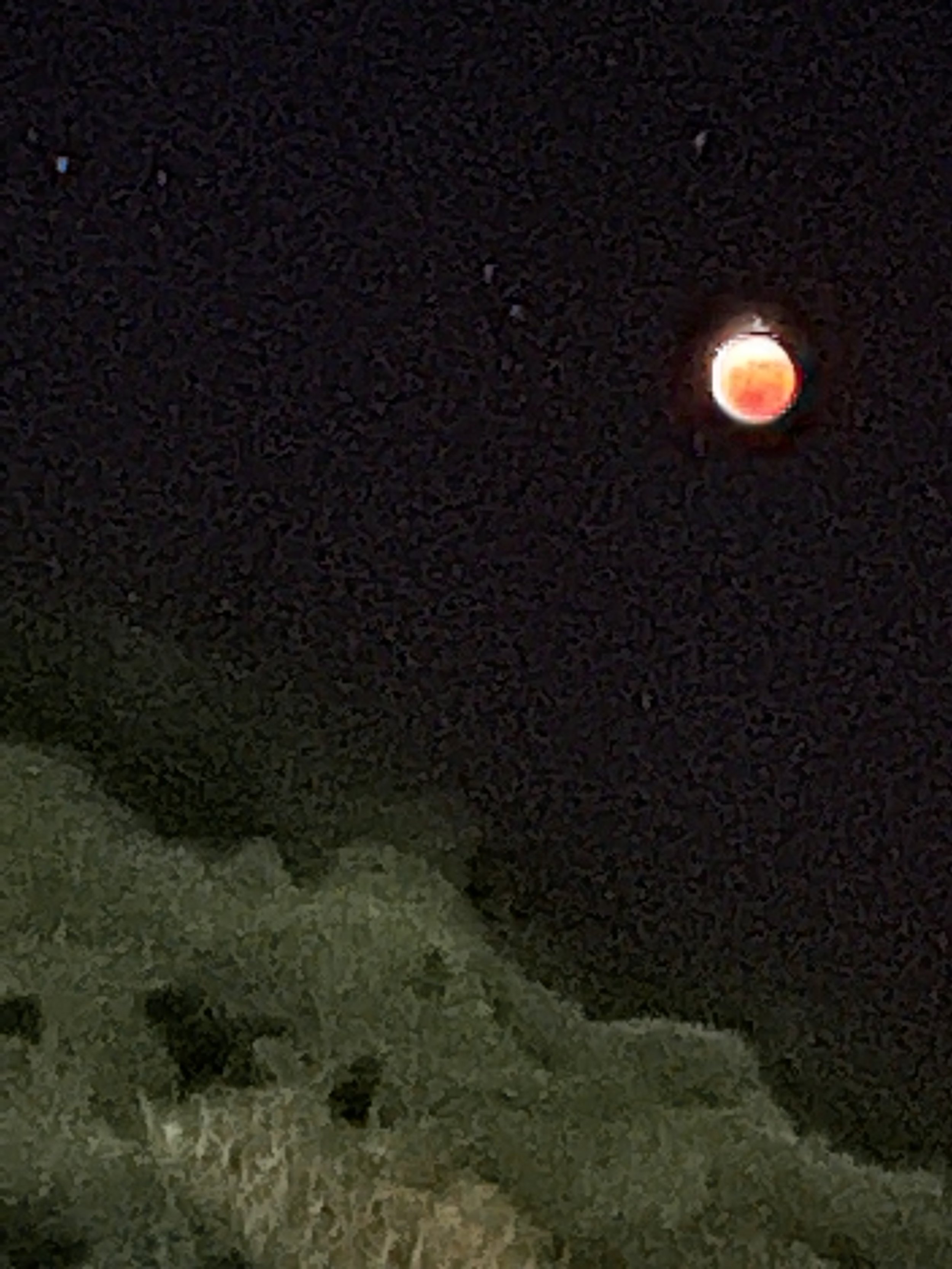
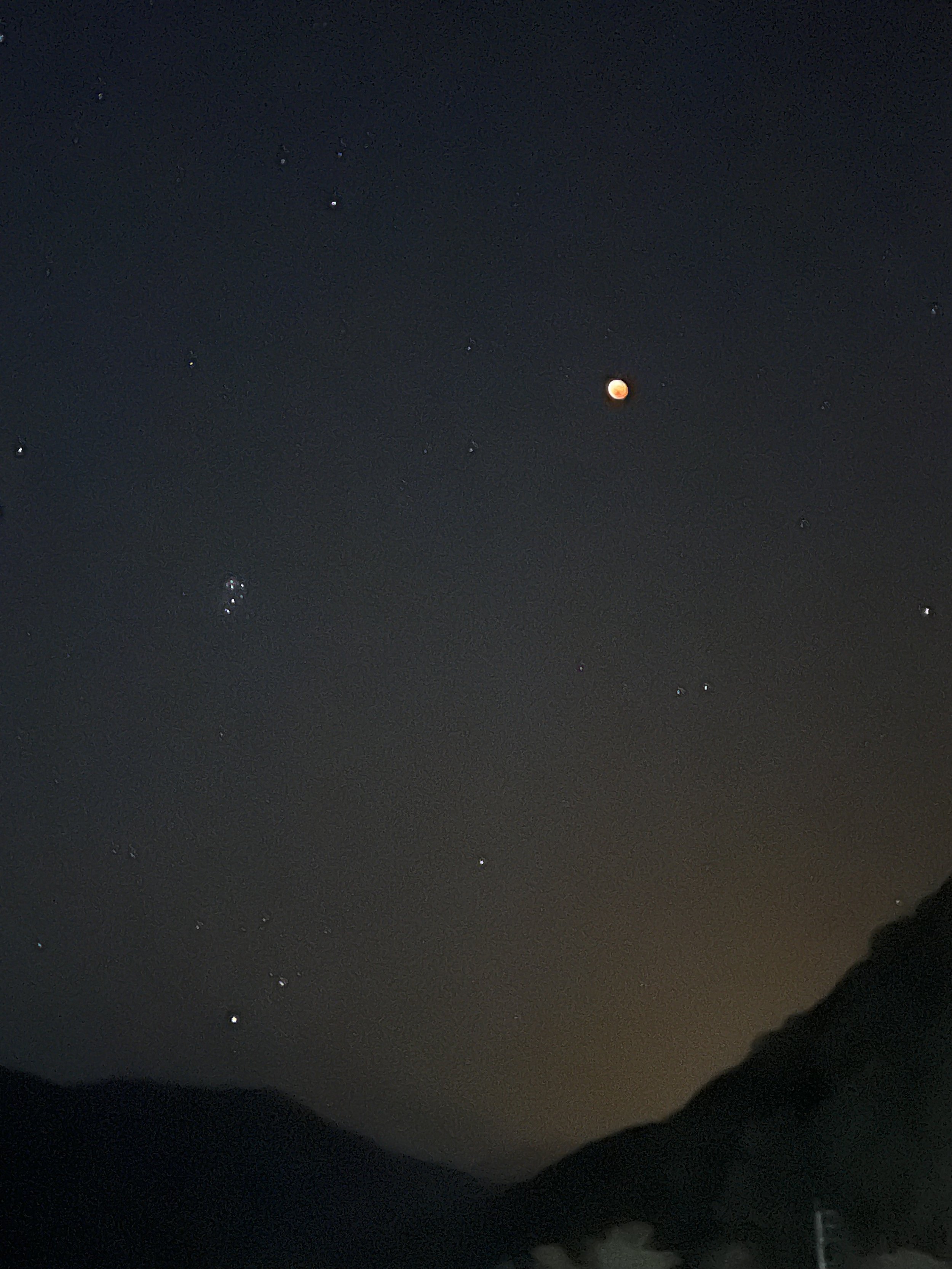
I had been excited all day for the eclipse, which I knew should be visible in the clear evening sky where we are. Still, I was amazed as we walked out of the hotel to the bus station to see a completely unimpeded view of the moon in an open sky above the mountains outside town. We found a small restaurant for dinner and I ran out to look as the eclipse began. I couldn’t believe no one was around, but I thought maybe they were waiting for totality? I watched from a nearby bridge for a good 20 minutes, amazed, before feeling like I had to go back in to eat the food I’d ordered (don’t ask). Dave and the inn owners were inside watching the eclipse … on TV. Now, I know these things don’t matter to some folks, but the TV said it had been 442 years since the last total lunar eclipse was visible in this part of Japan. 442 years!
I shoveled in my food and went back out to the bridge—still no one. People jogged by or hurried past. Sometimes I thought they were running out for a better look at the reddening moon, and even embarrassed myself once or twice by pointing as though people were looking for what I was looking at. Every person just looked up quickly and kept moving. Zero interest. I was alone in the darkness and the light, the beauty and the shadow, and clearly out of step with the culture and life all around me, yet again.
It’s easy to overread or fabulate in moments like this, and I’ll try to keep that to a minimum. Let’s just say we have ongoing themes of clarity and obscurity, being lost and being found, and asking for help when you need it. I’m not sure what to make of it all, but for a few hours there, it sure was beautiful up there in the sky—and I wasn’t about to miss a moment. I mean, that moment might not happen again for another 442 years—or, come to think of it, ever. And of course, like the moon, the light of wisdom is never extinguished—only momentarily hidden from our limited view. Compassion, likewise. It’s pretty dark around here right now. Who am I when I temporarily can’t find or don’t notice the light?






 Walking and Praying
Leave a reply to Carla F Cancel reply