A couple of days ago, the decision was made to leave the pilgrimage early. I use the passive voice, because I can’t say the decision was really mine. But I also can’t say it’s the wrong decision. My shins benefited from a few days of near total rest, and no longer swell alarmingly when we walk more than a couple of kms. Still, those were not the only strains and stresses bordering on fractures that have emerged over the course of the past month, and the first precept would encourage doing whatever it takes to minimize harm and reduce unnecessary suffering. As my teacher reminded me, there is no inherent value to completing a pilgrimage. “Finishing is when you are finished.” The measure of its “success” is the devotion expressed along the way.
Our route suggested that the best way to exit would be to make our way through another 10 temples using a combination of trains, buses, and shorter walks. We already had inn reservations, which the guide was hesitant to cancel lest it reflect poorly on other gaejin, and by the 15th we’ll be near the city of Matsuyama, from where it’s easy to make an exit to Osaka. Our last temple, to my mild amusement, will likely be number 49, the one called Jōdoji, the temple of the pure land, on November 15th.
I arrived in Japan exactly a month ago. It’s far too early to make sense of this time, or of some of the challenges and learnings that have emerged. As my teacher also said , “what the fruit of this will be I don’t know, but fruit there will be.” If past experience is anything to go by, my friends, teachers, and loved ones will know the nature and measure of that fruit long before I do, and, through their love and reflection, they will help me understand something about how I have been shaped, remade, softened, and strengthened by my time here.
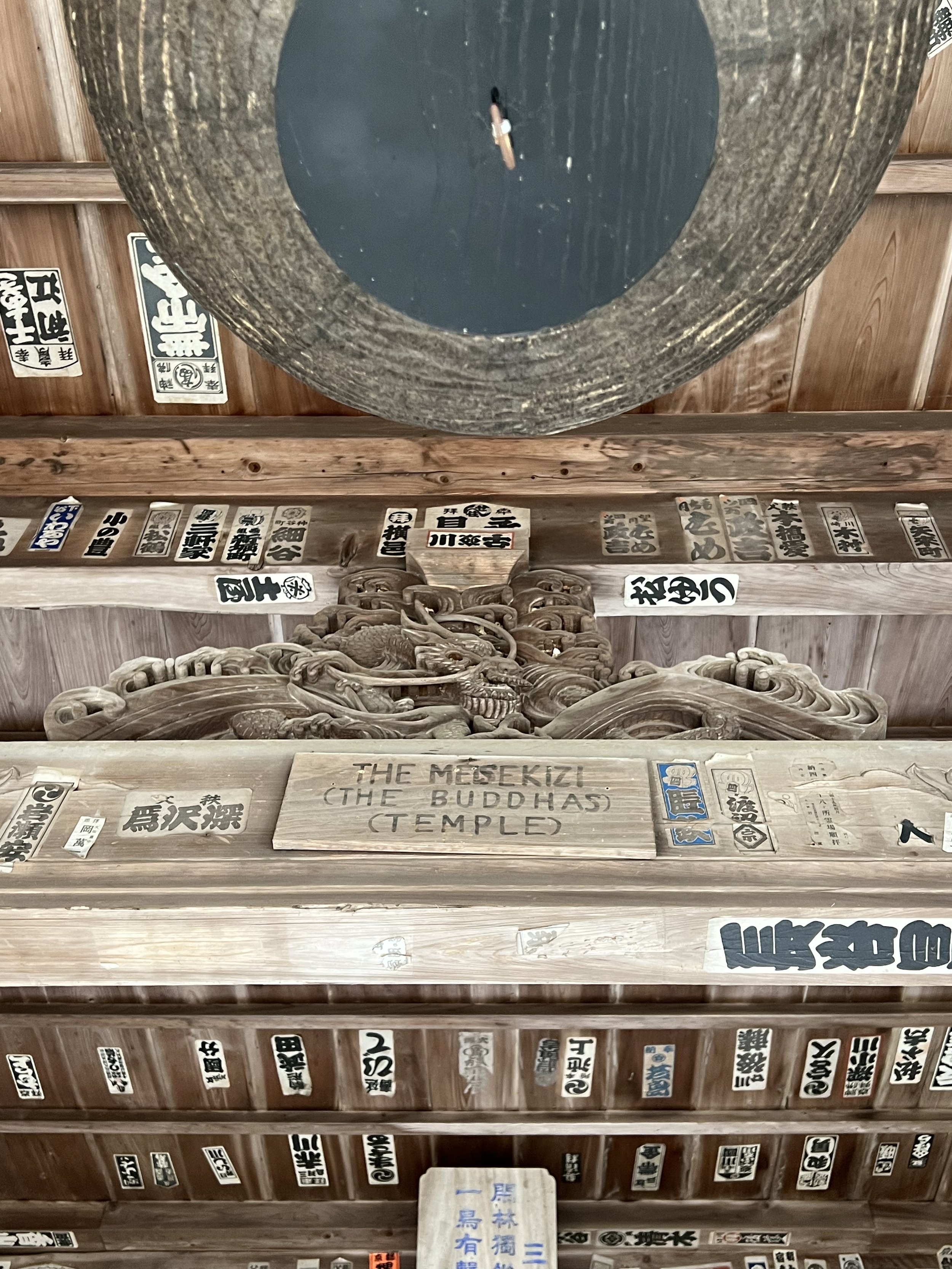
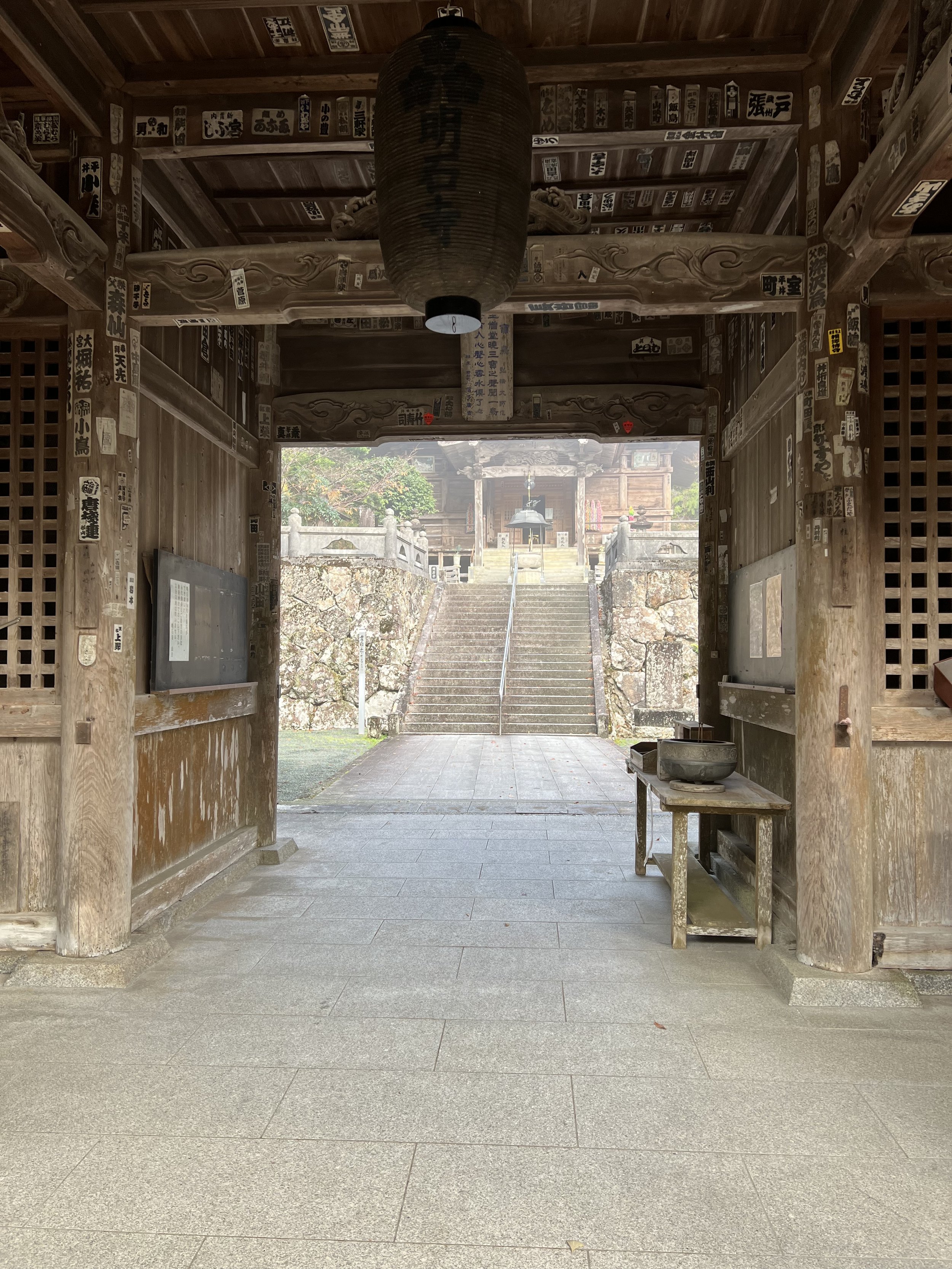
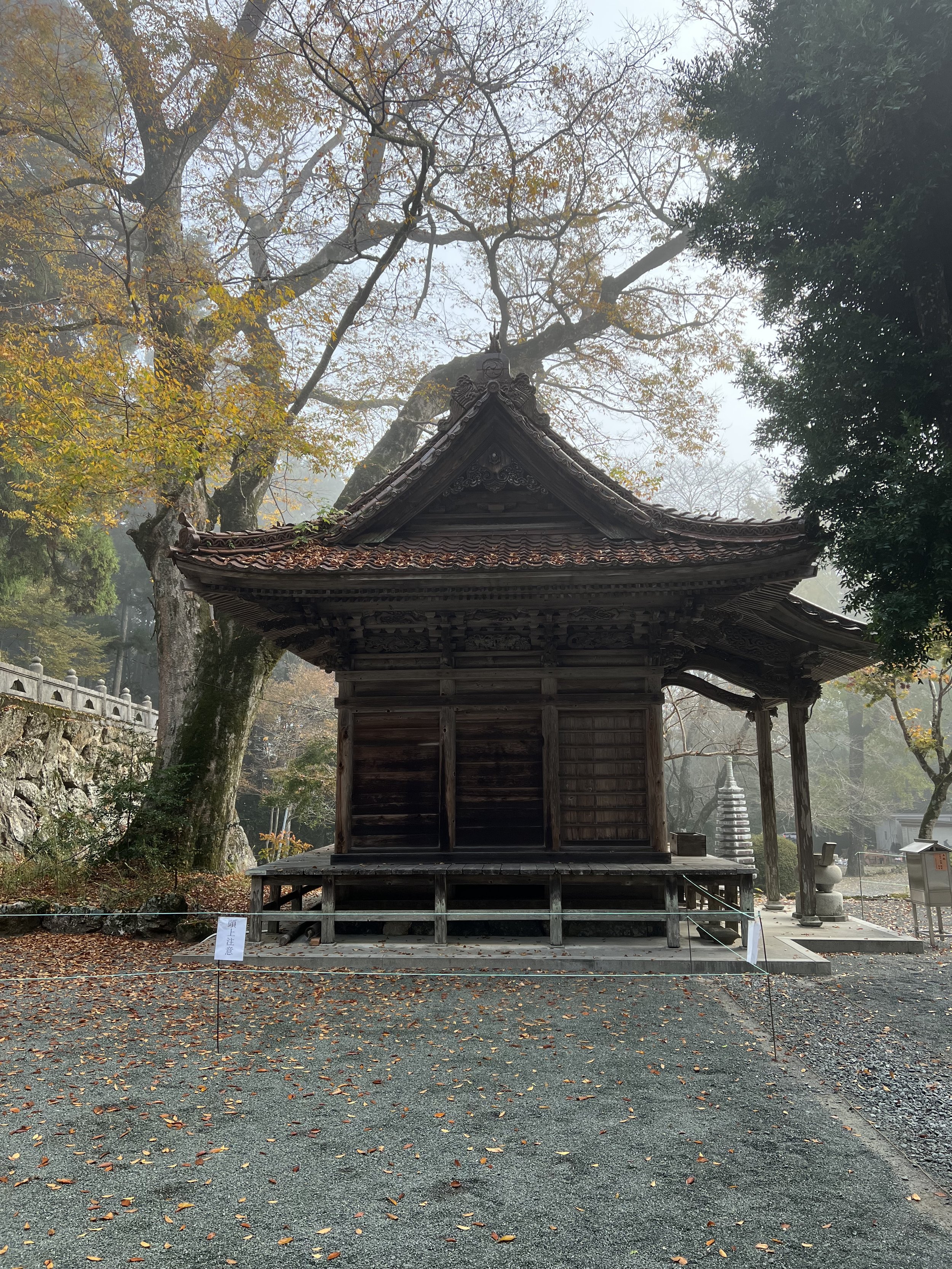
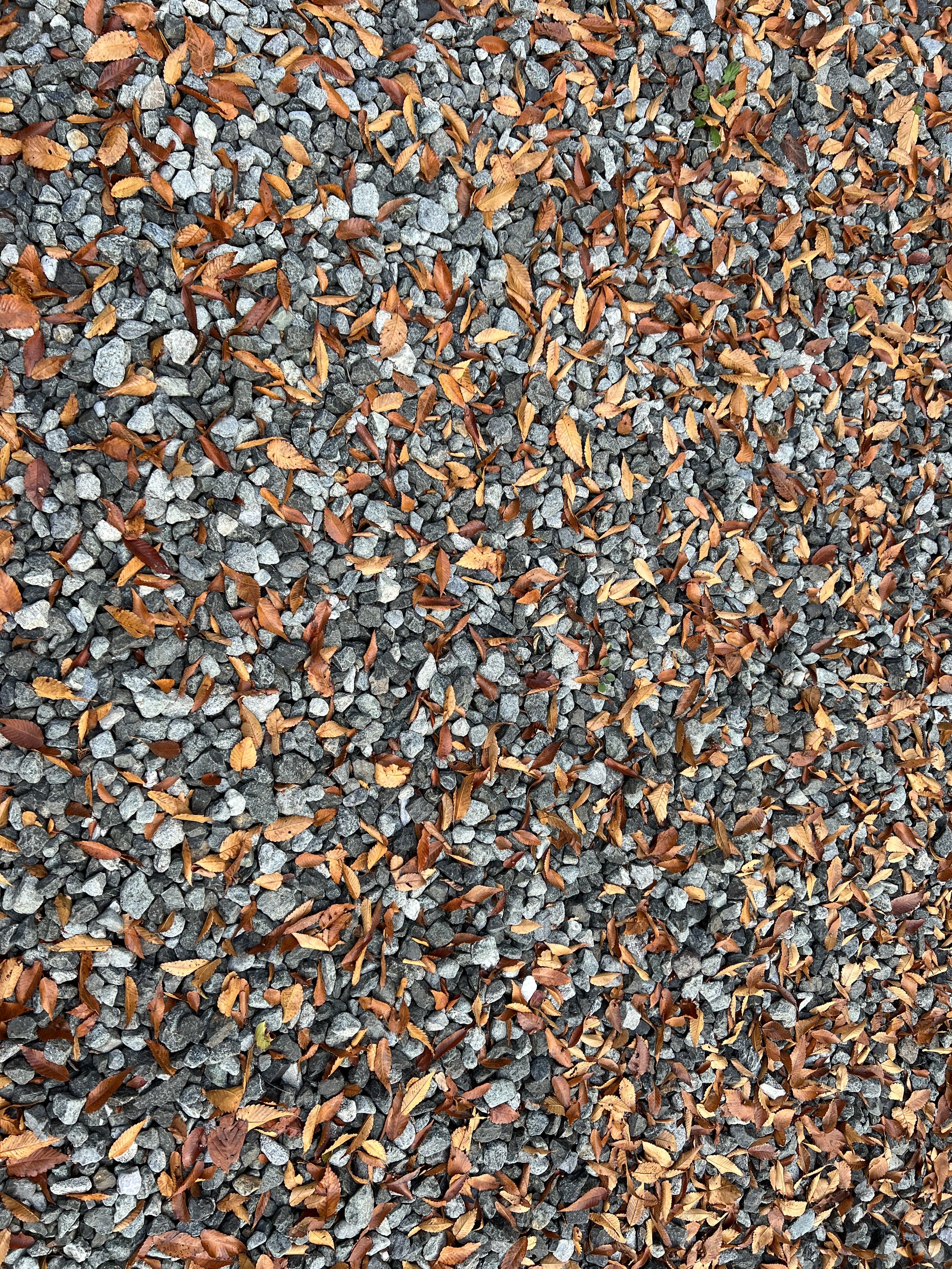
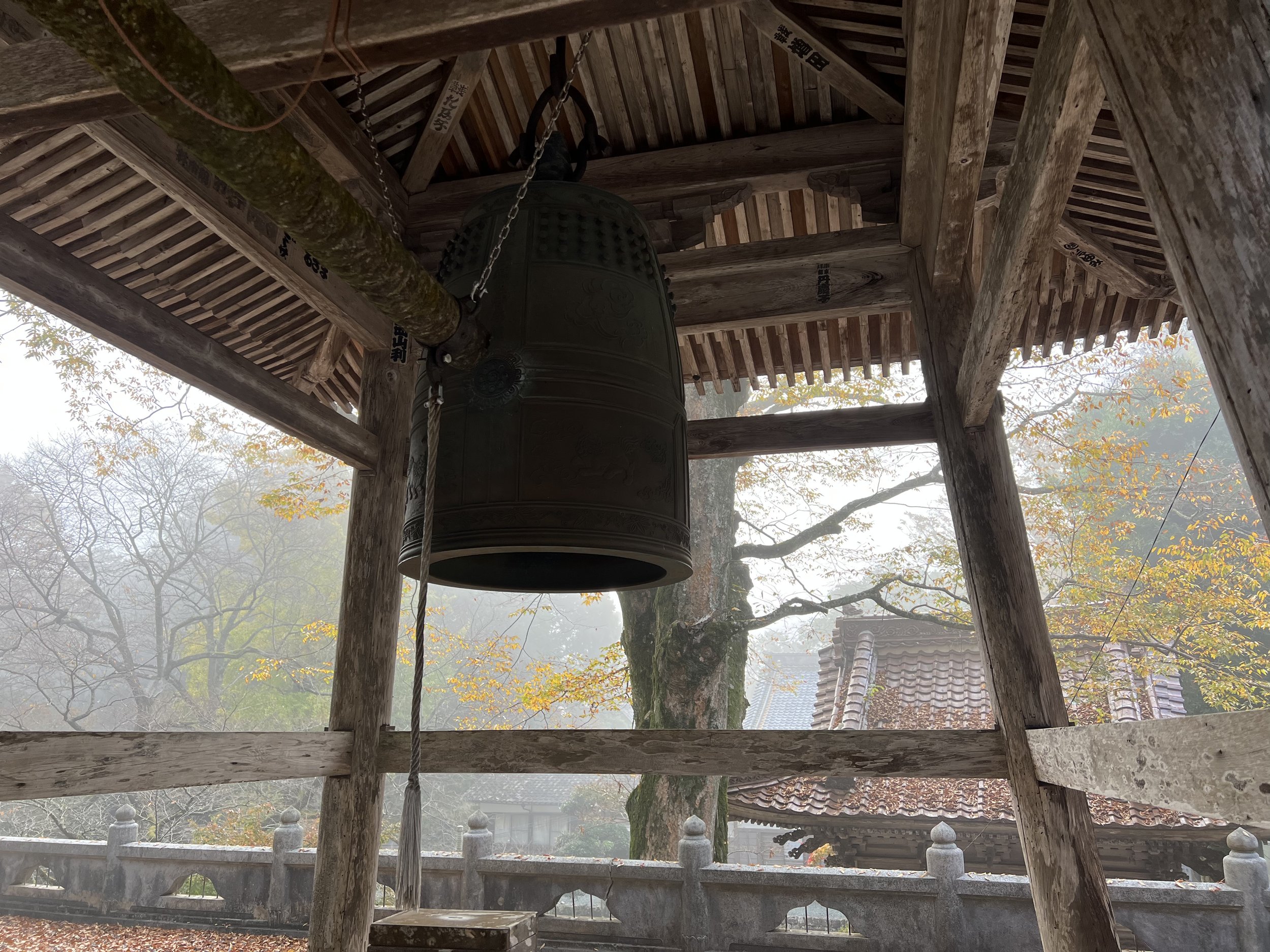
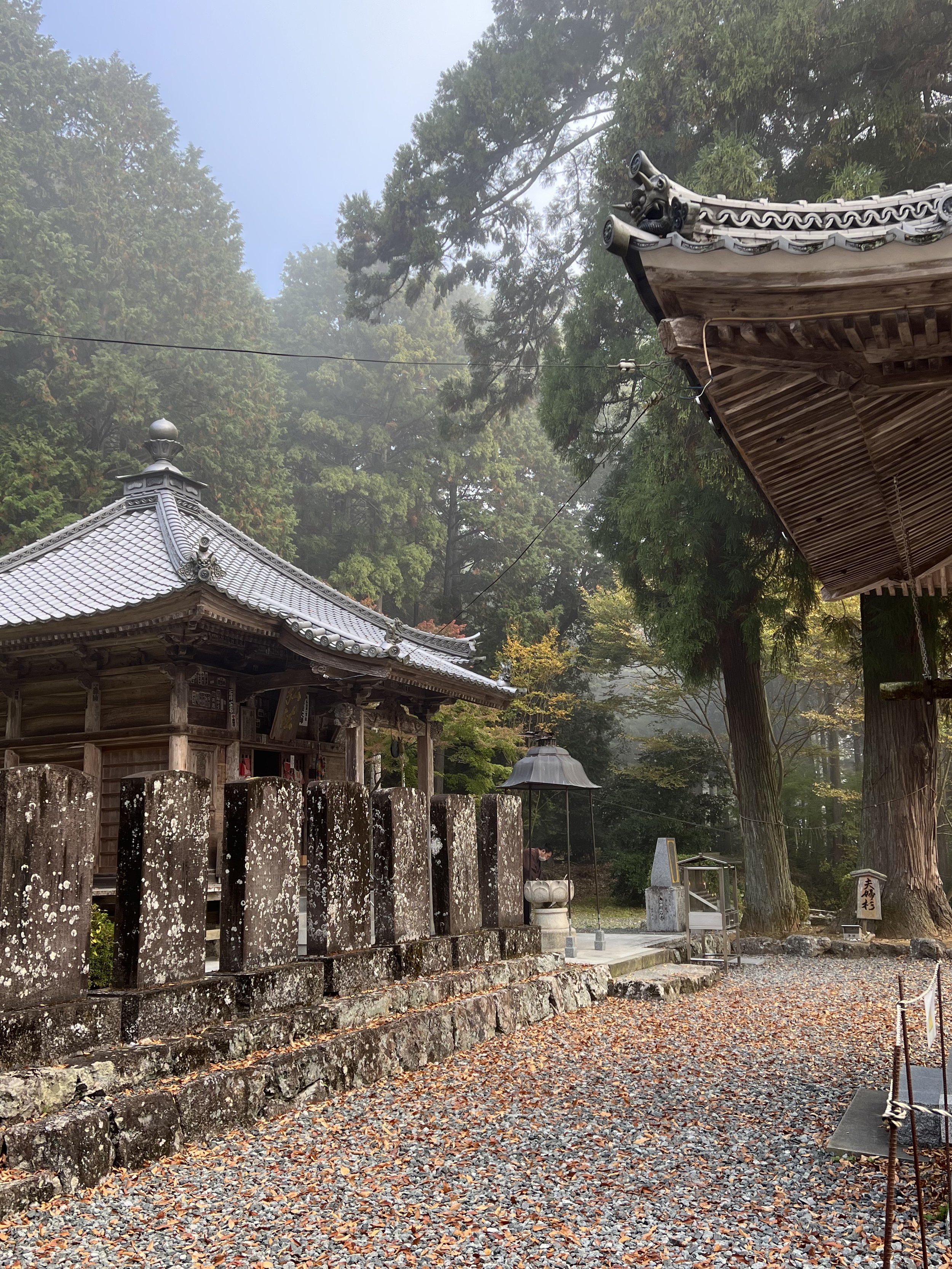
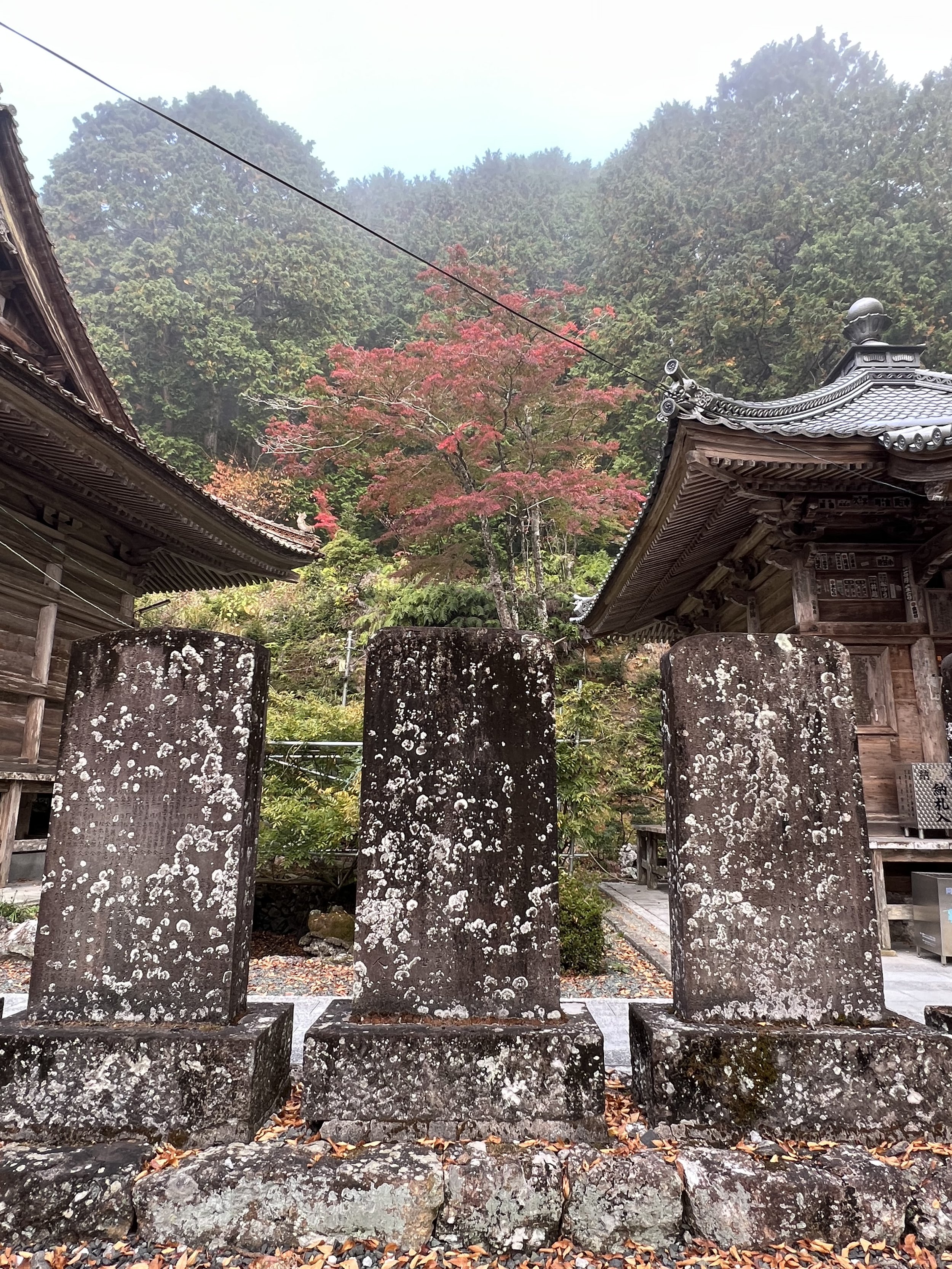
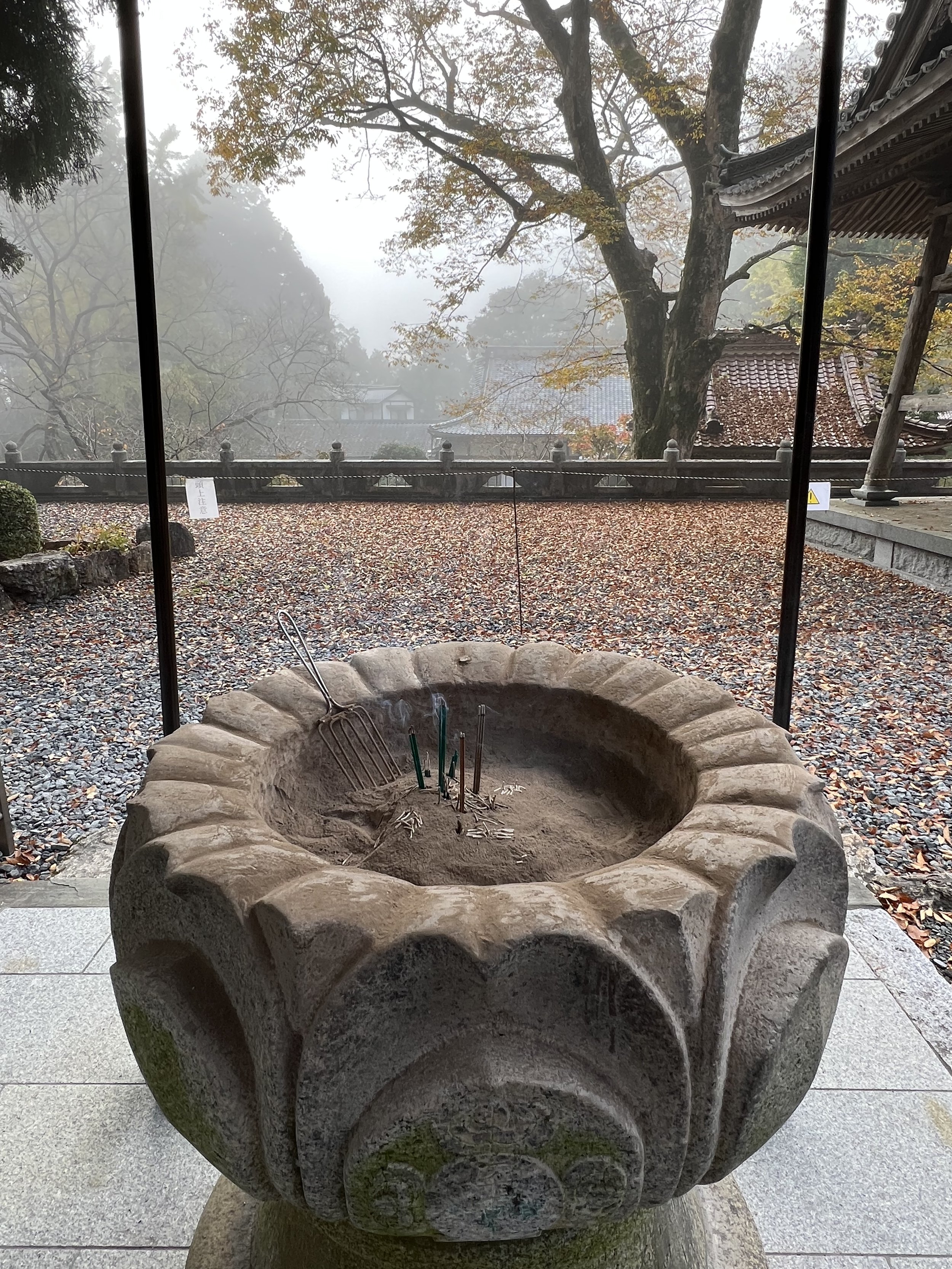
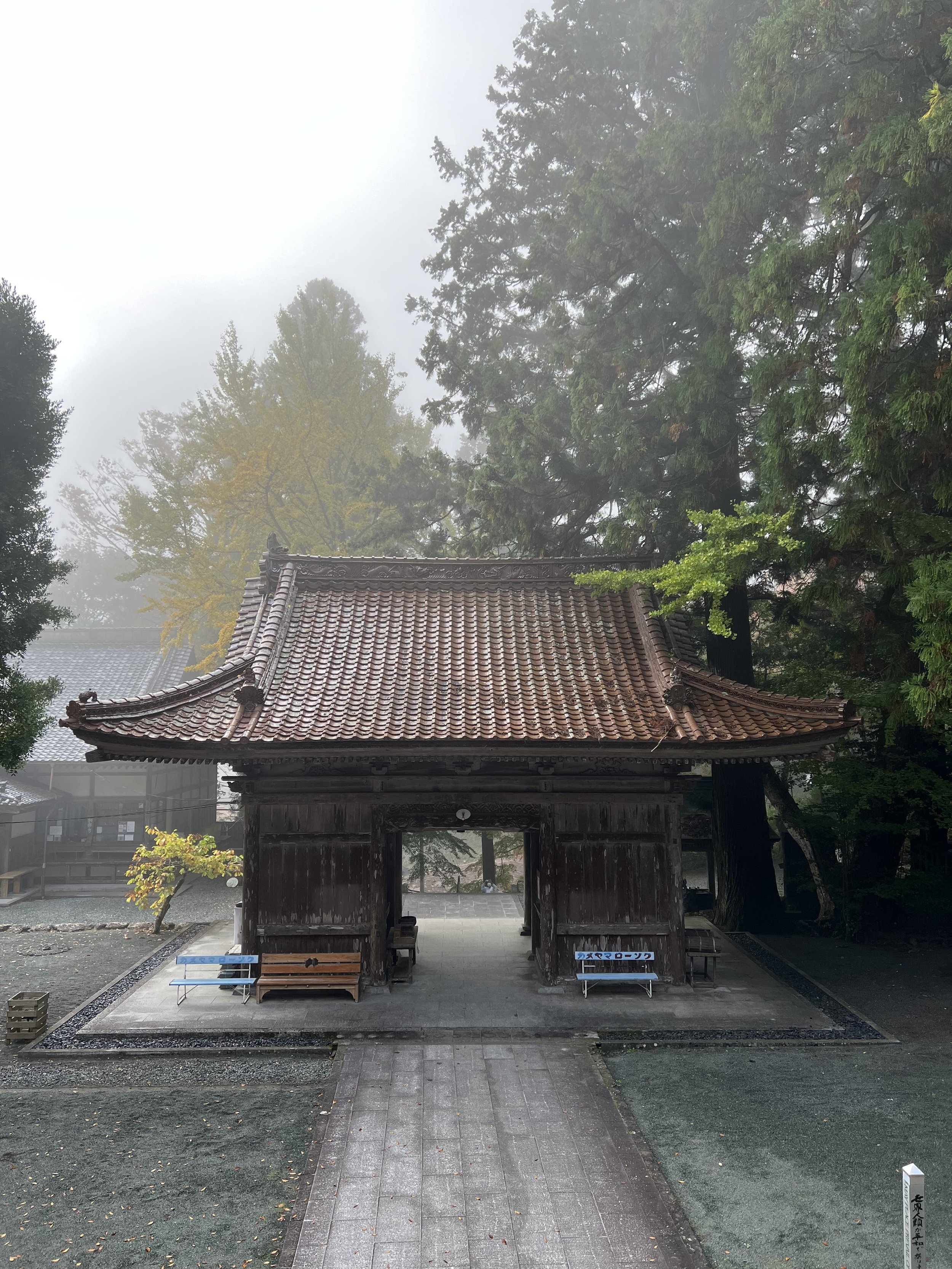
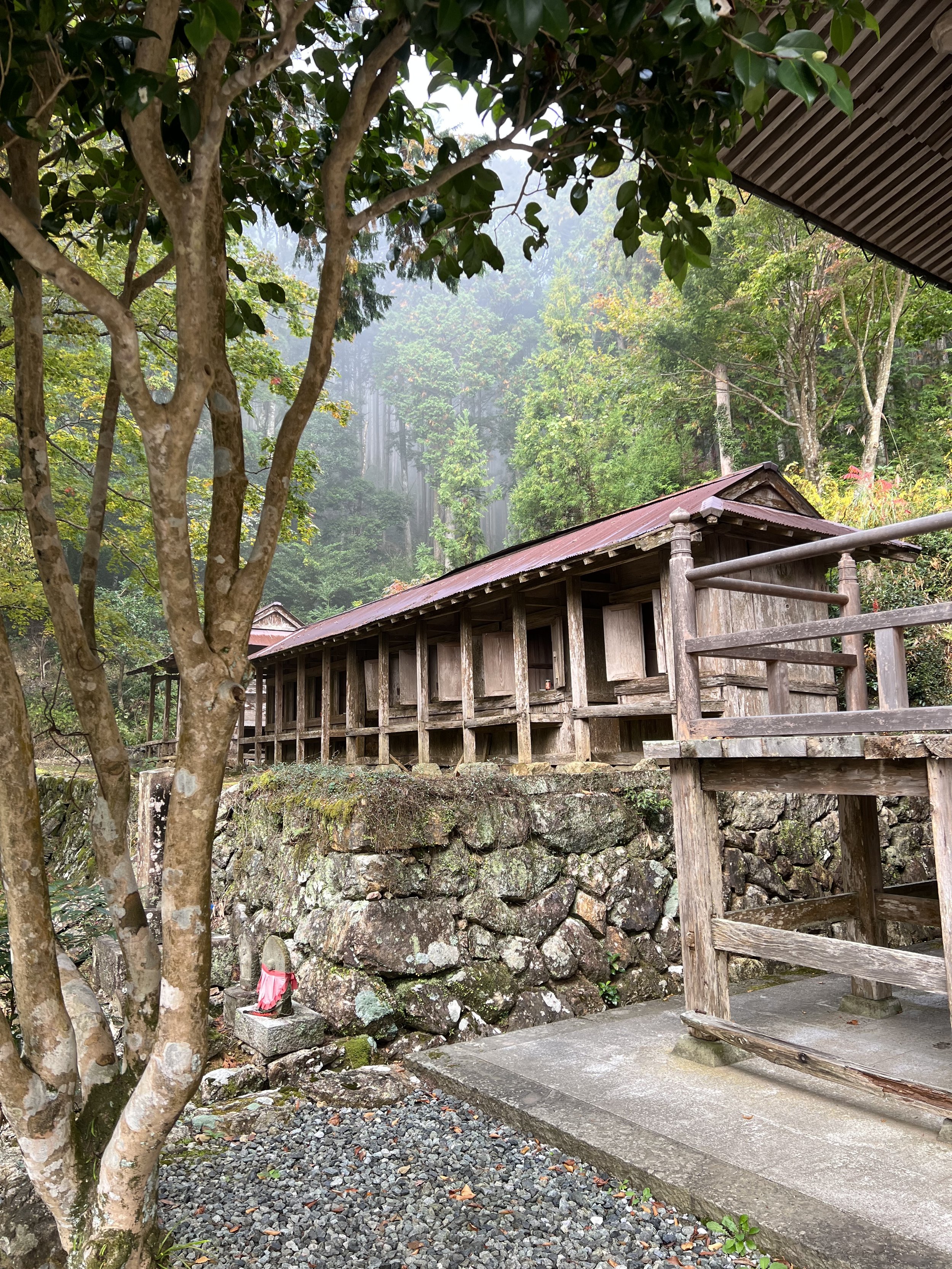
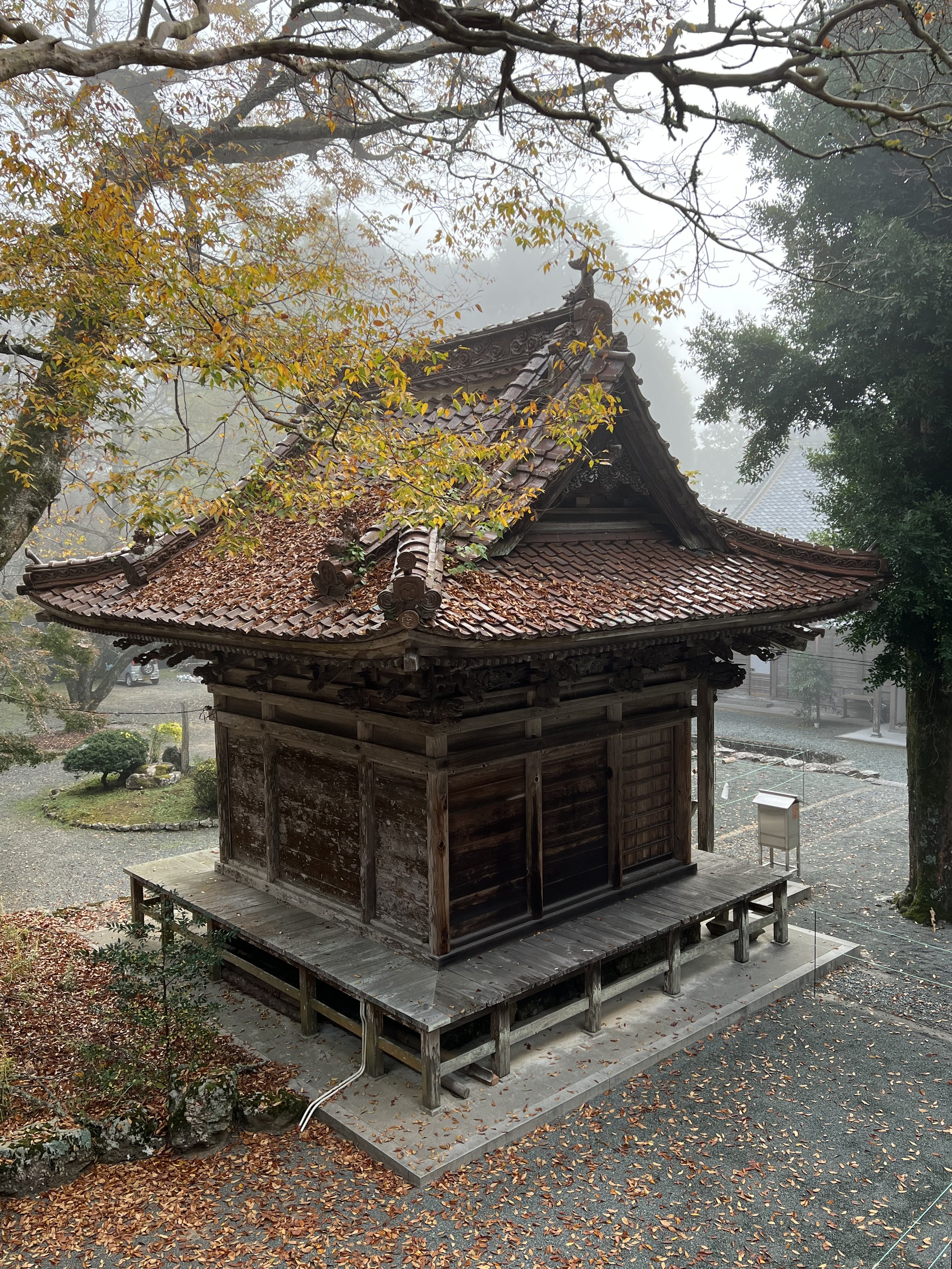
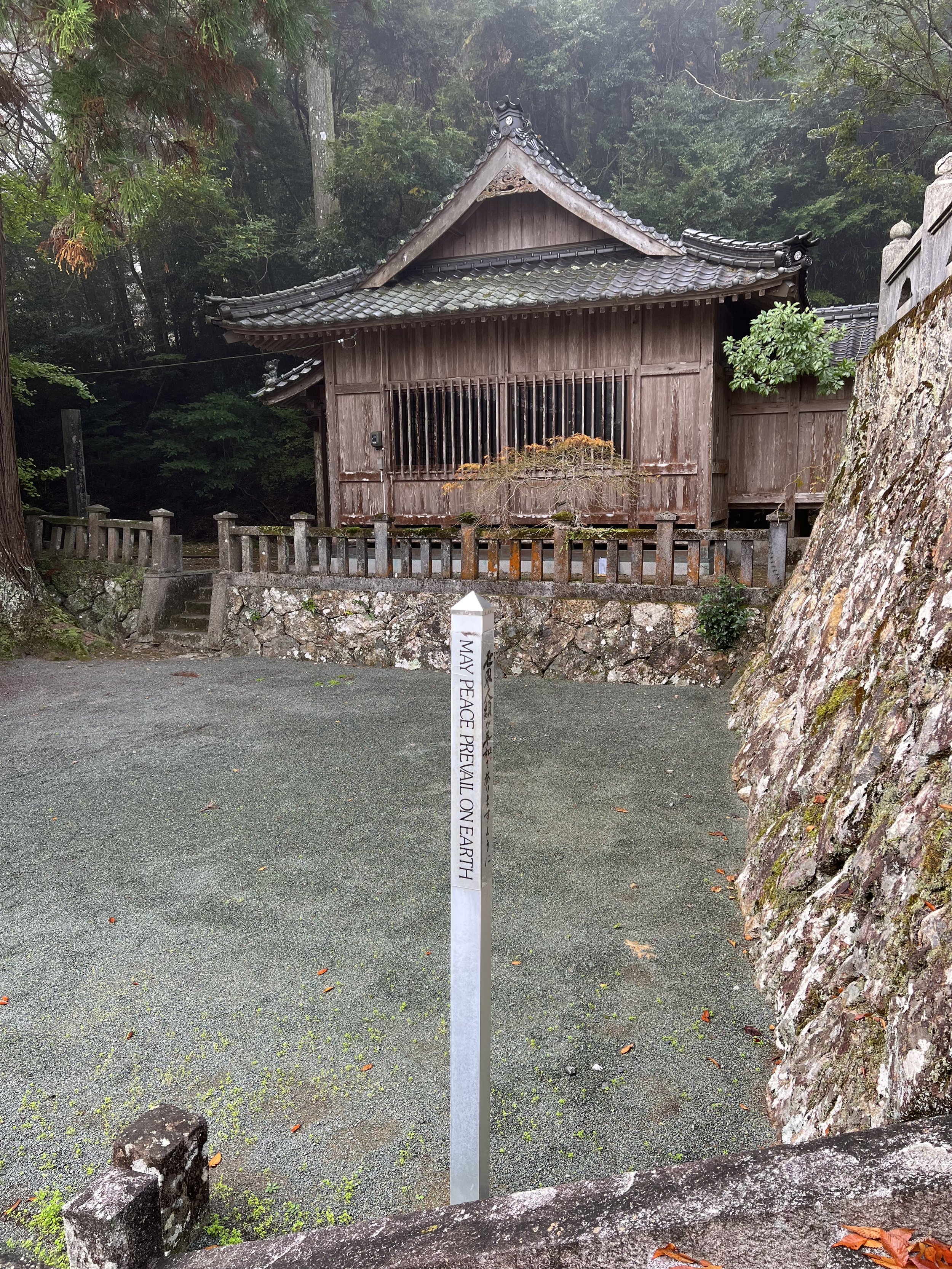
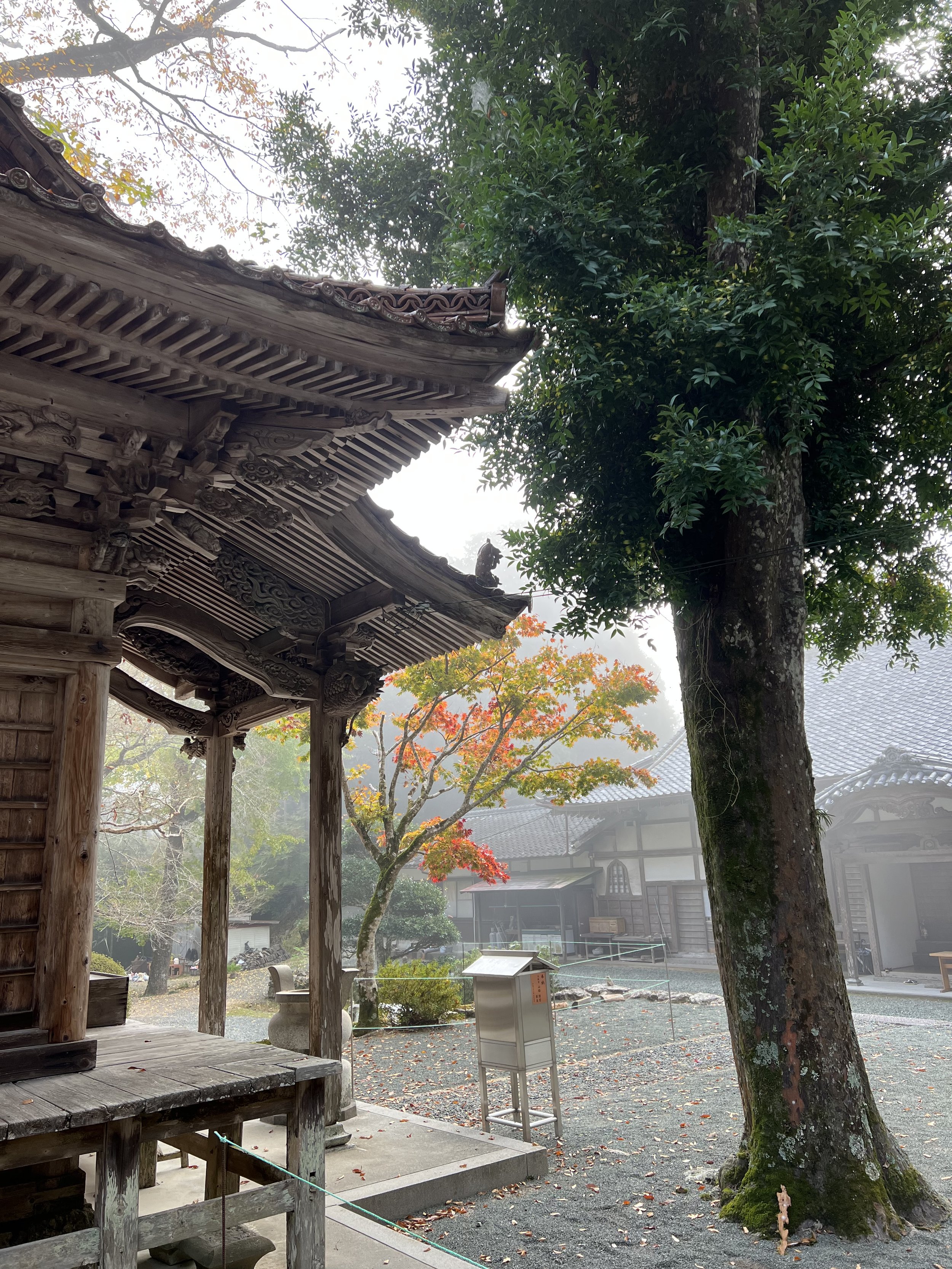
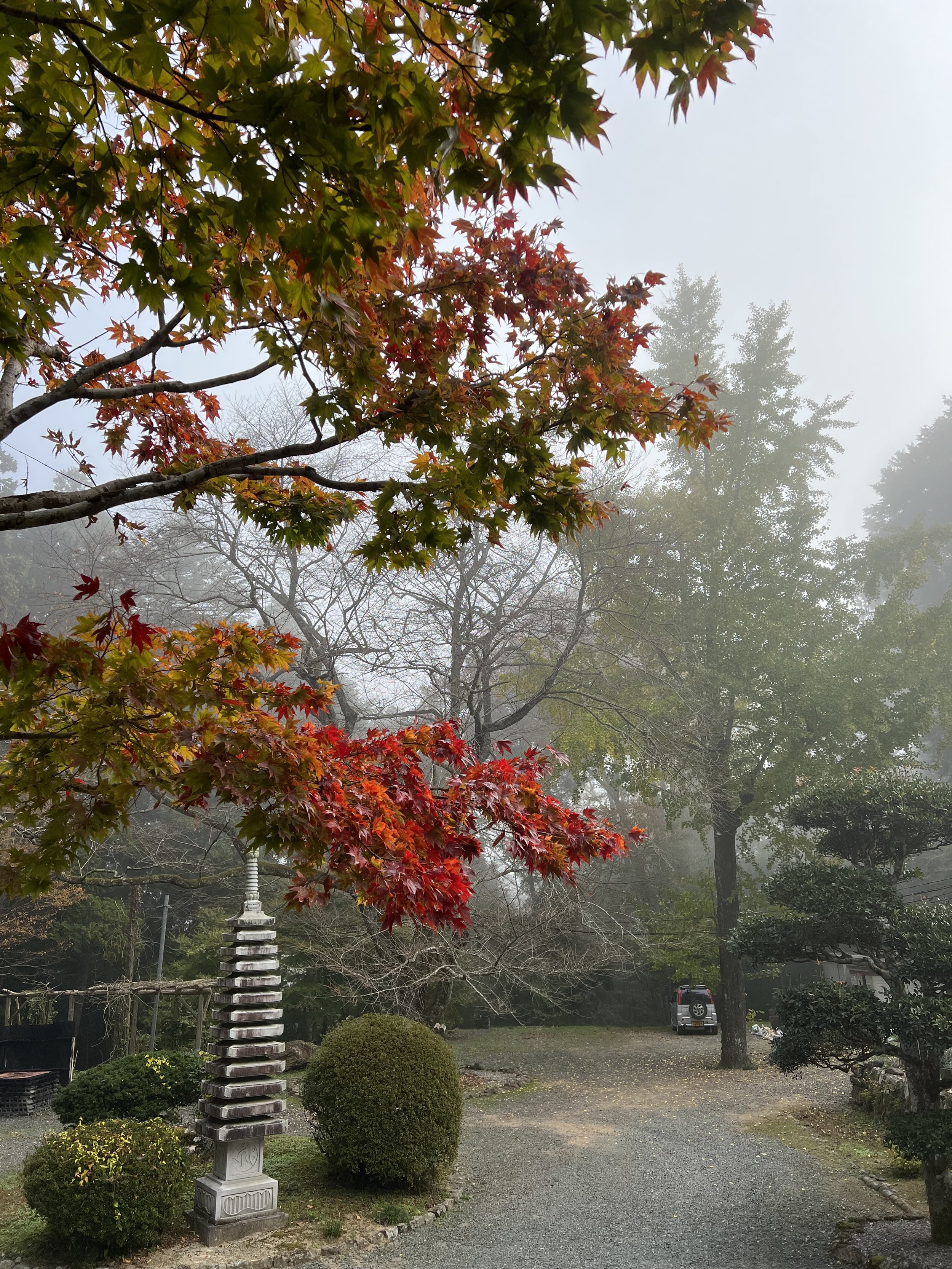
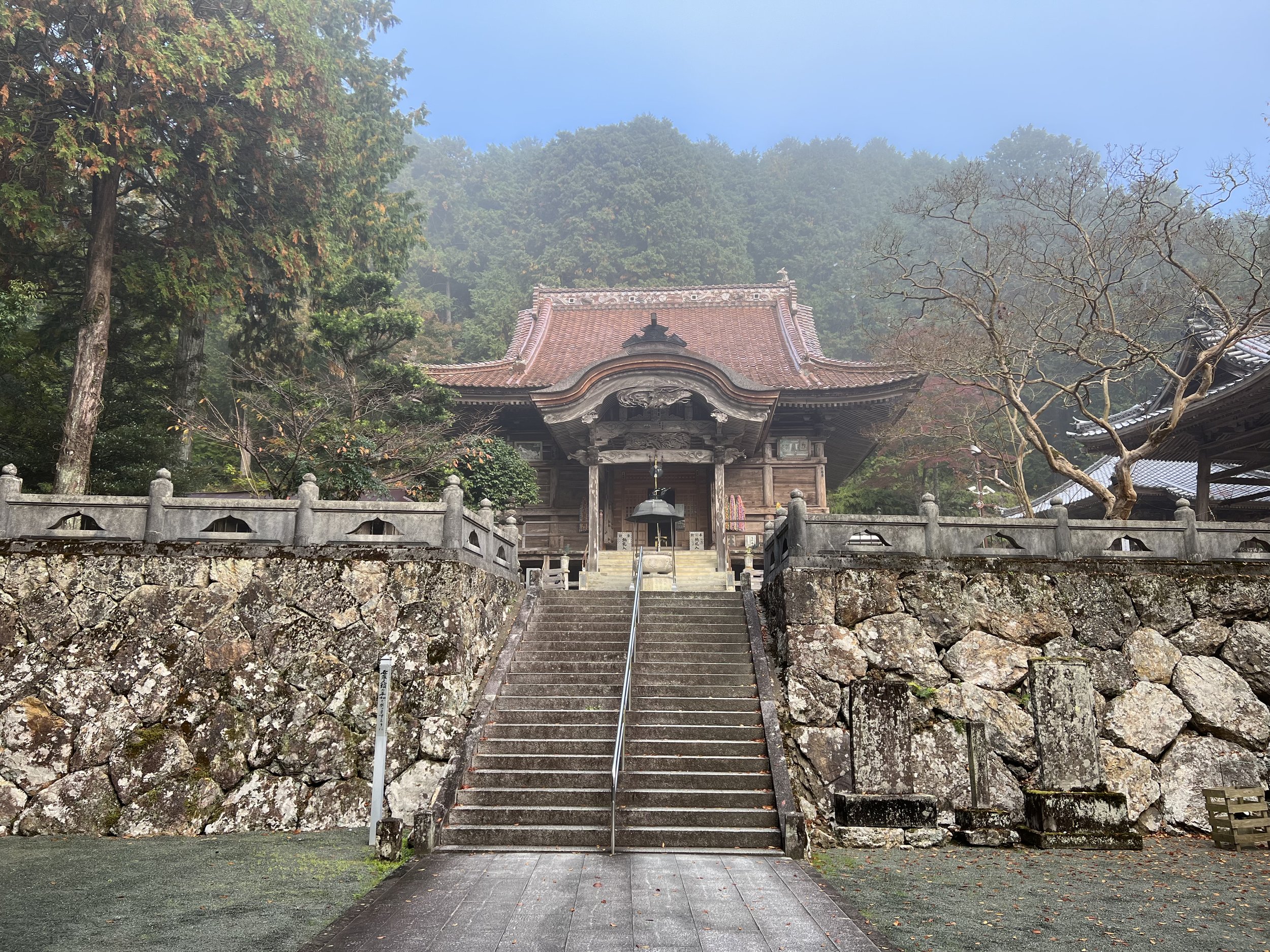
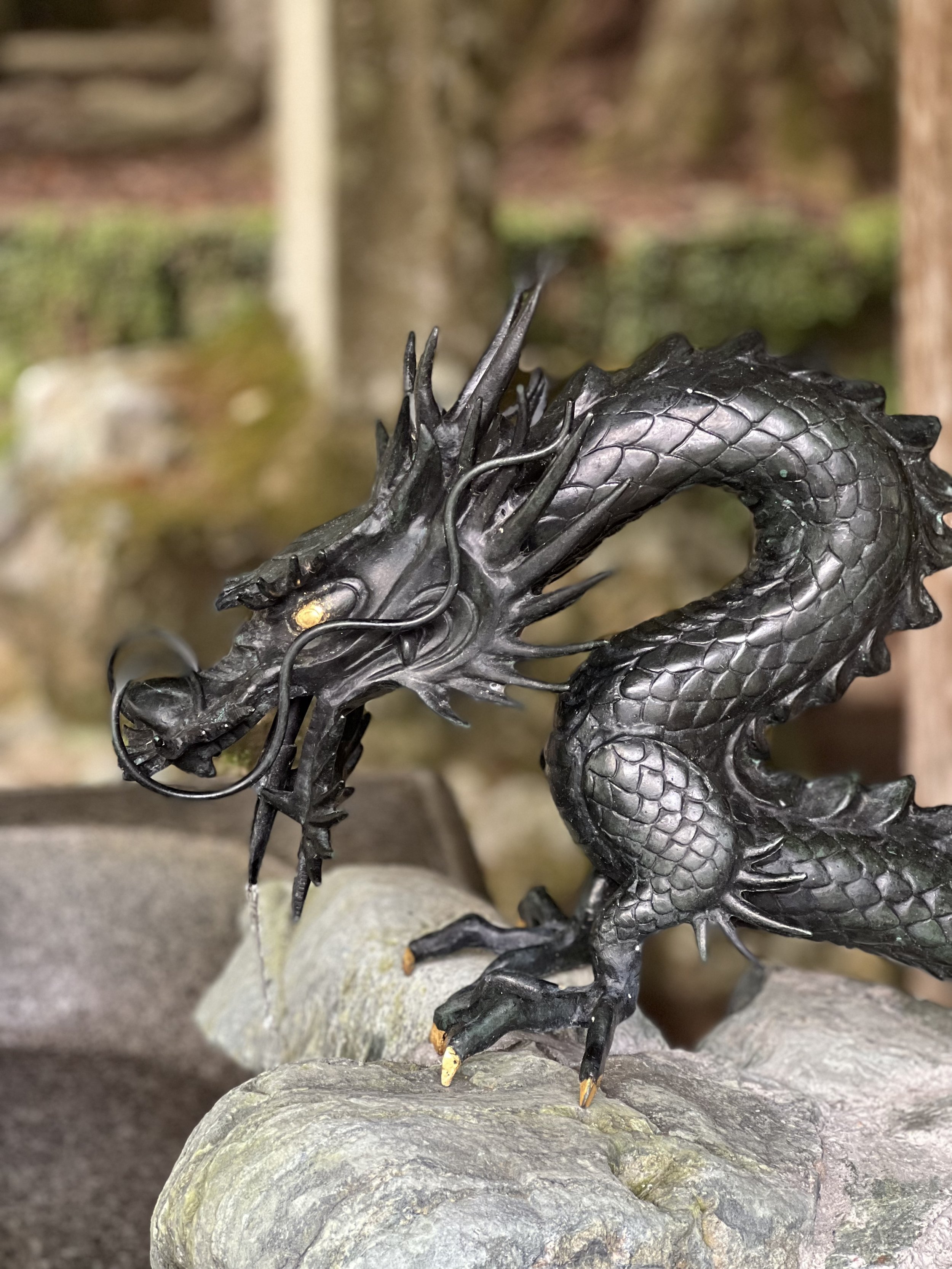
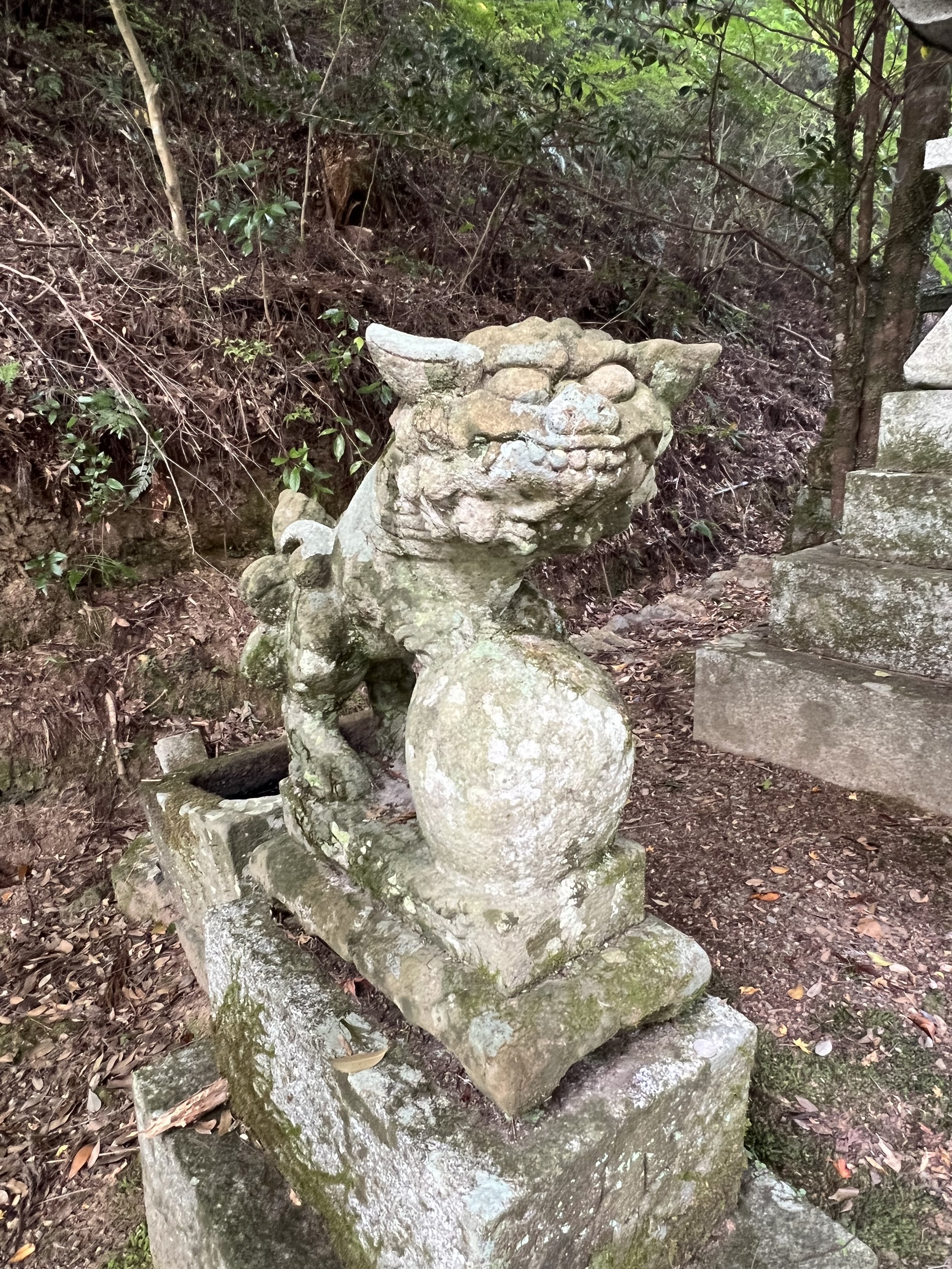
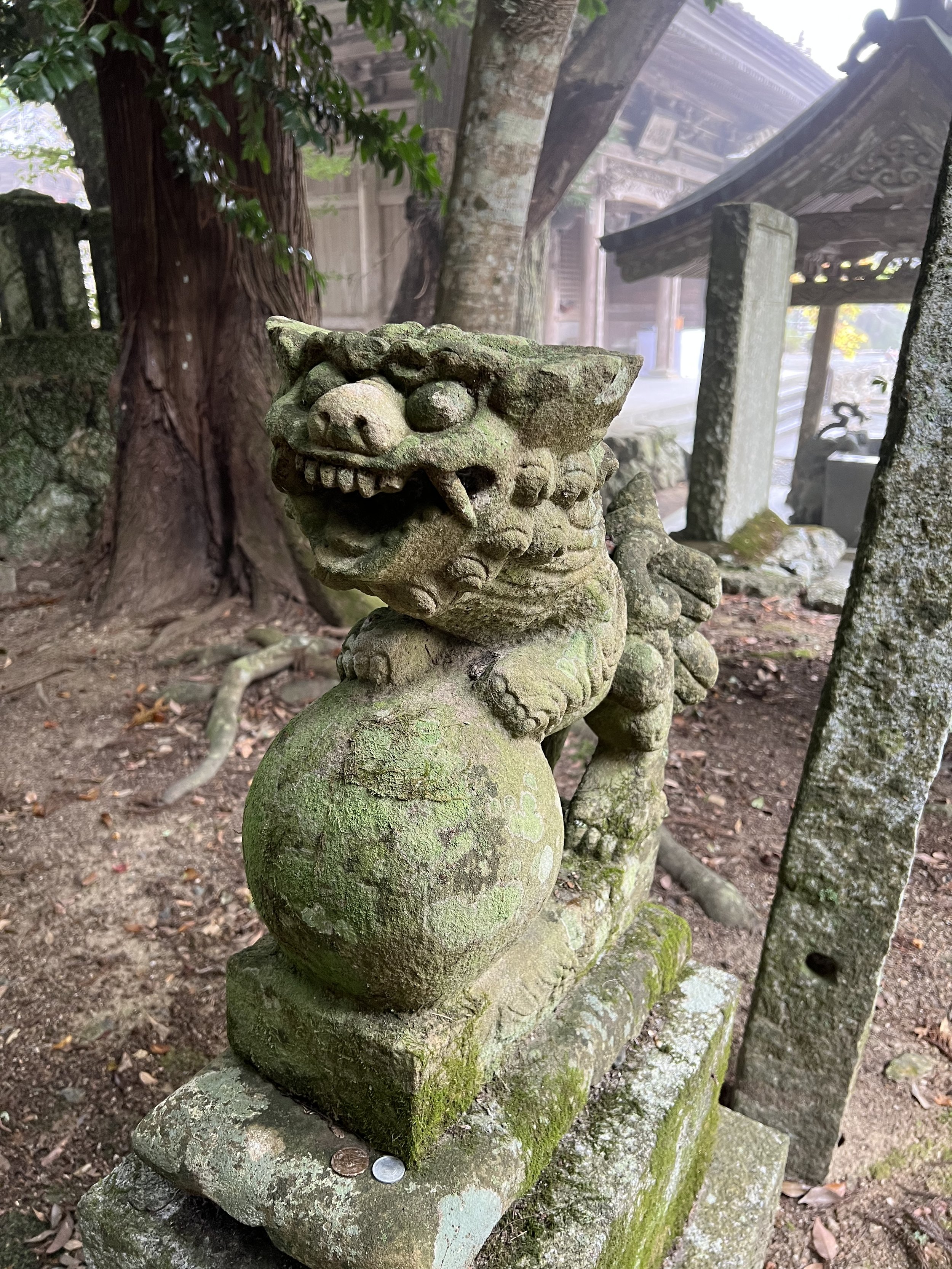
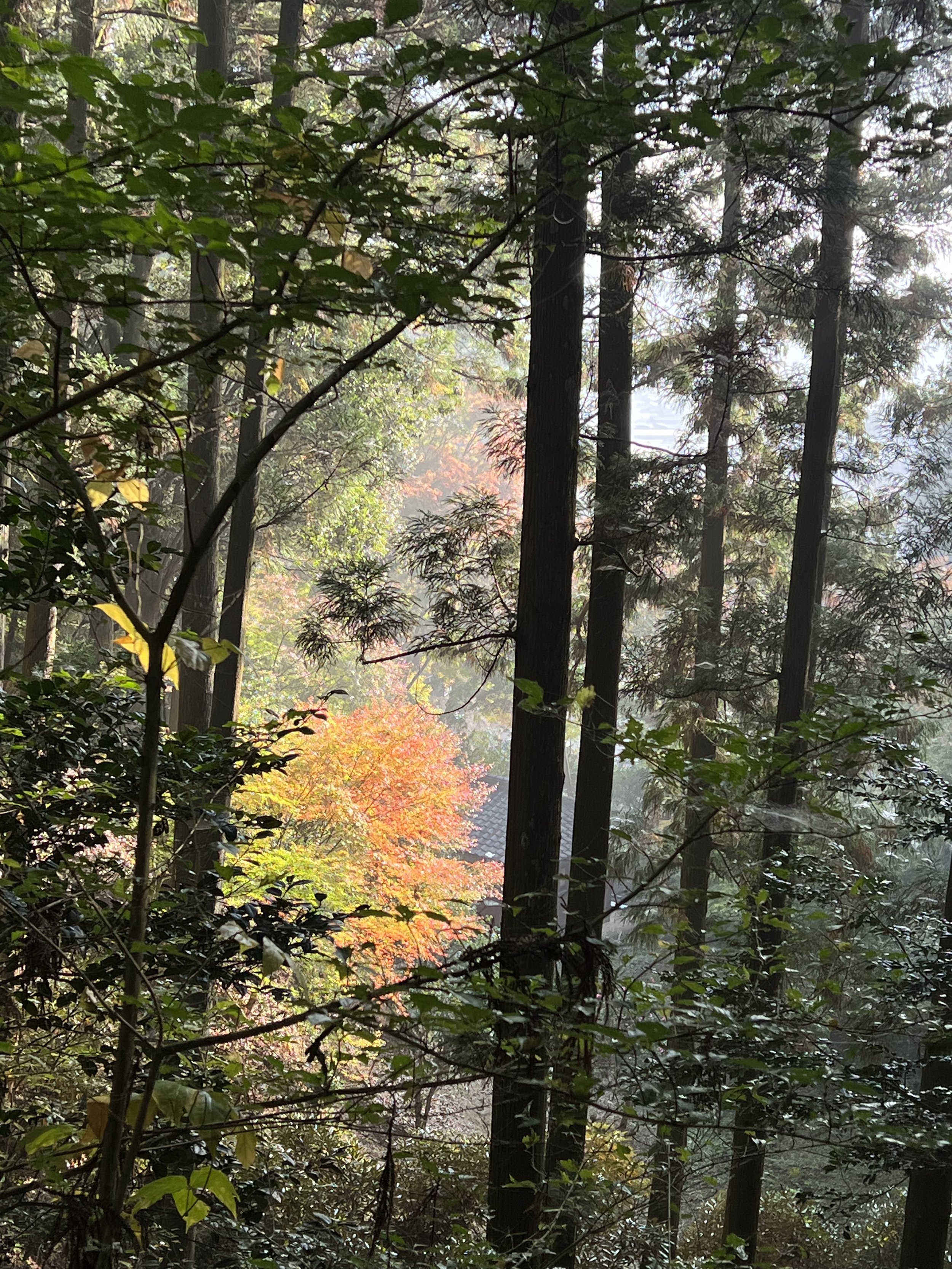
This morning, we walked the short distance from our lodging to temple 43, Meisekiji. It was a chilly morning and, truth be told, and for a variety of reasons, I was feeling deeply heavy of heart. Leaden skies didn’t help the mood. As soon as we reached the temple, I noticed an unusual quiet—we were almost the only pilgrims there, and soon the only ones. The sizable grounds were deserted, but very beautiful, tucked into a hillside covered in trees that were starting to turn. The ground was littered with small fallen leaves, and the old wooden roofs were framed in flashes of vibrant Fall color. I decided to give myself over to trying to record some of the beauty in photos. I’ve had an oddly difficult time with photography here—usually one of my great joys in places and with people I love. It was almost as though the heaviness I’ve carried for so much of the trip cast a shadow over everything I could see—even through a camera lens. But this morning, there was time to slow down enough to really look, and from there, to really see. I have wanted so much to share the beauty of this place, and I took more photos than I have in a long time in hopes of conveying some of what has been quietly beautiful here.
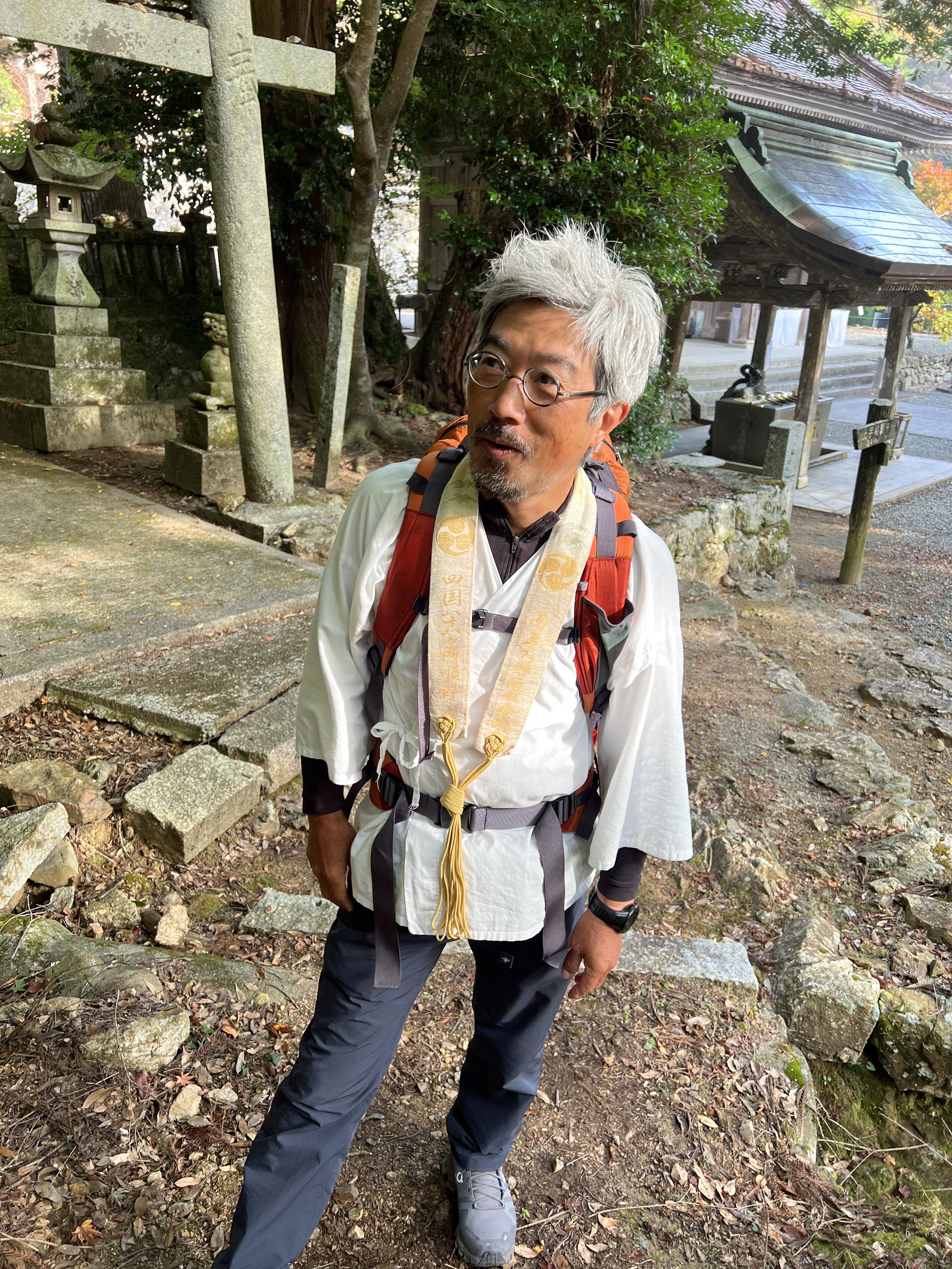
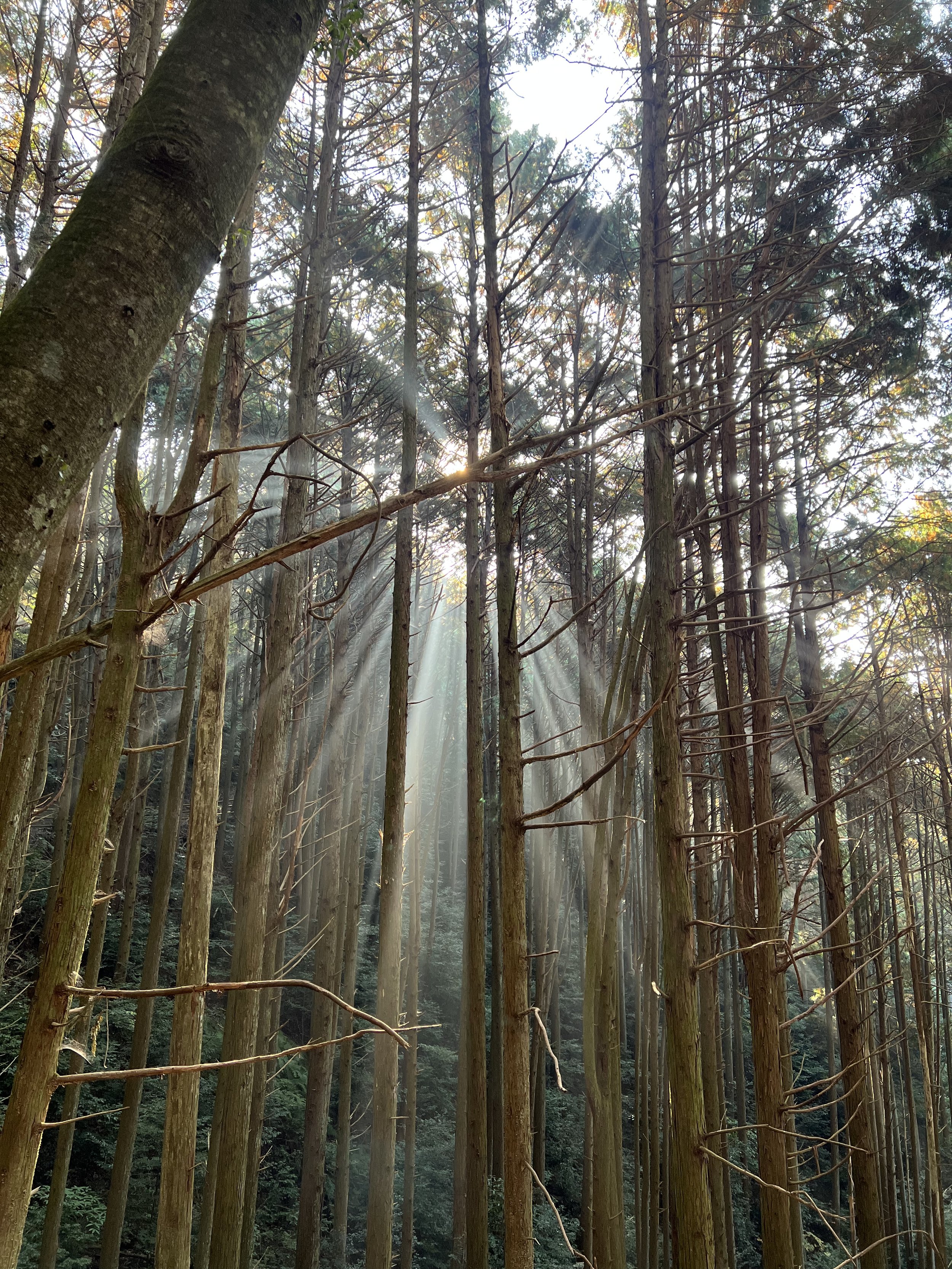
As we turned to leave, we saw an old trail through the woods, which seemed to lead back to where we would collect our packs and catch the next train. The sun was starting to break through the trees, and it looked thoroughly inviting. Not being in a hurry is such a gift—we decided to walk back through the woods. As I started up the trail, I heard a pilgrim’s staff behind me, and turned back just for a moment, only to glimpse a worn orange pack, a sedge hat, and an old friend topping the temple stairs. Here was Ito-San, the recently retired businessman who had shown me such kindness earlier in the trip, before and around temple 38. We had lost track of each other a week ago around the Ashizuri peninsula, where he had gone to connect with his wife on the third anniversary of her death. I had hoped and, ok, prayed that we’d see each other again before I left. I wanted to know whether he and his wife found each other, and I wanted to thank him for his kindness.
As soon as he walked up, beaming, I completely lost my composure. I had worked hard to prevent from cracking, but one sight of Ito-San was enough to break the painstakingly maintained surface calm of the past week and more. And of course when a surface cracks, there’s no uncracking it. The more we talked, the more tears came—nothing much to do once that starts. The end of the pilgrimage, the difficulties of the month, and maybe most of all the sight of a truly friendly face: all of these could finally be fully felt. As Dave surprised me by noting, later, but without skepticism, sometimes two people meet for the first time and yet have an instant and visible connection. Maybe, I thought, we know each other from before.
After warm and profuse greetings, and awkward attempts to hide my obvious emotion, Ito-San confirmed that he had had “success” on Ashizuri. He had had a meeting with his wife. He looked visibly lighter, smiling and warm. Dave explained that we would soon be “retiring” from the Henro—a word I hadn’t heard used before in this context. His response was immediate. “He says,” Dave translated, that “if Jody-san would like to come back and complete the Henro, he would like to offer himself as her guide.” I hadn’t previously considered returning, but if I ever do, it will be to receive the blessing of that offering.
I also remembered in that moment, shaking my head, that I had come here in part to consider and perhaps settle the question of whether and when to retire. The Gods have a sense of humor for sure. While as far as I know I’ve made no progress on that question as it relates to my worldly life, it’s certainly been a constant and more immediate preoccupation of my time on Shikoku as it relates to the pilgrimage itself—and now, at last, at least the question of that retirement is settled.
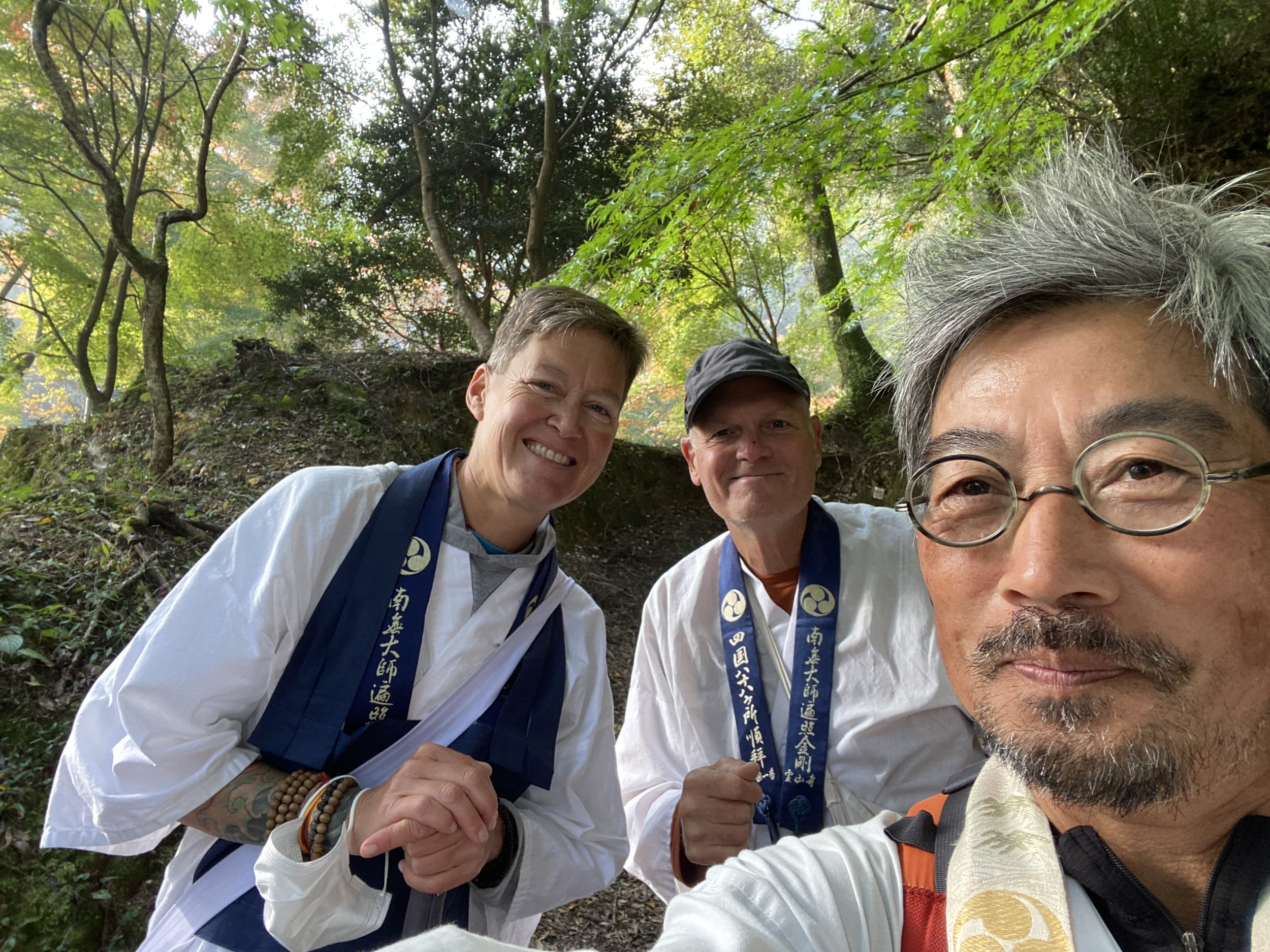
We parted ways with Ito-San after photos and mutual admonitions to take care: “Ki o tsukete.” We walked back down one of the most beautiful mountain trails of the whole trip, the sun breaking low through the trees. We’d missed it on the way up, the lettering somehow invisible on the usual route marker, but it was easy to find from the temple end of things. When we met at the trailhead, Ito-san had mentioned that the inn he stays at by 43 is run by an American, Benjamin, who lives there with his Japanese wife, farming and teaching martial arts. Ito-San had asked Benjamin if he’d seen us—apparently I wasn’t the only one holding out for another meeting—and Benjamin responded that yes, he’d seen us the day before from his truck. “A young guy and a woman in her 20s” seemed far-fetched, but no one could think of anyone else it could have been out here on this Gaejin-free trail. Ito-San showed us a picture of a beaming young man with a huge red beard. As we got back down to town a half hour later and turned onto the road, a truck passed and I saw … Benjamin. Laughing, I threw my hands up and caught his eye, as if greeting an old friend, and he pulled over so we could talk for a while. These meetings are inevitable at a certain point. But this one was hilariously timed and perfectly right.
Meisekiji means, “Daybreak and stone.” The story in my guidebook is simple. A “beautiful Goddess” carried stones all night in this place, praying, and then at first light she stopped. I don’t know why she was carrying those stones—but then, why do any of us keep hauling our burdens around in the darkness? Most of the time, even we don’t know. I don’t know what she was praying for either, but I suspect something to do with the rocks. But I think I do know a little bit more than I did a month ago about why, like the more fortunate among us, when the light finally broke, she simply recognized that it was time to put the stone down. No more questions. No more uncertainty. Just lay it down and see what happens next.


 Walking and Praying
Leave a comment