I’ve largely tried to steer clear of the “weird Japan” genre of posts, however tempting, but when “Edelweiss” blared across the massive town speakers at 6a.m. sharp in the tiny village where we were staying, at “there’s an imminent natural disaster” volume—on Sunday morning, to boot—i couldn’t resist. “Every morning you greet me”—get it?
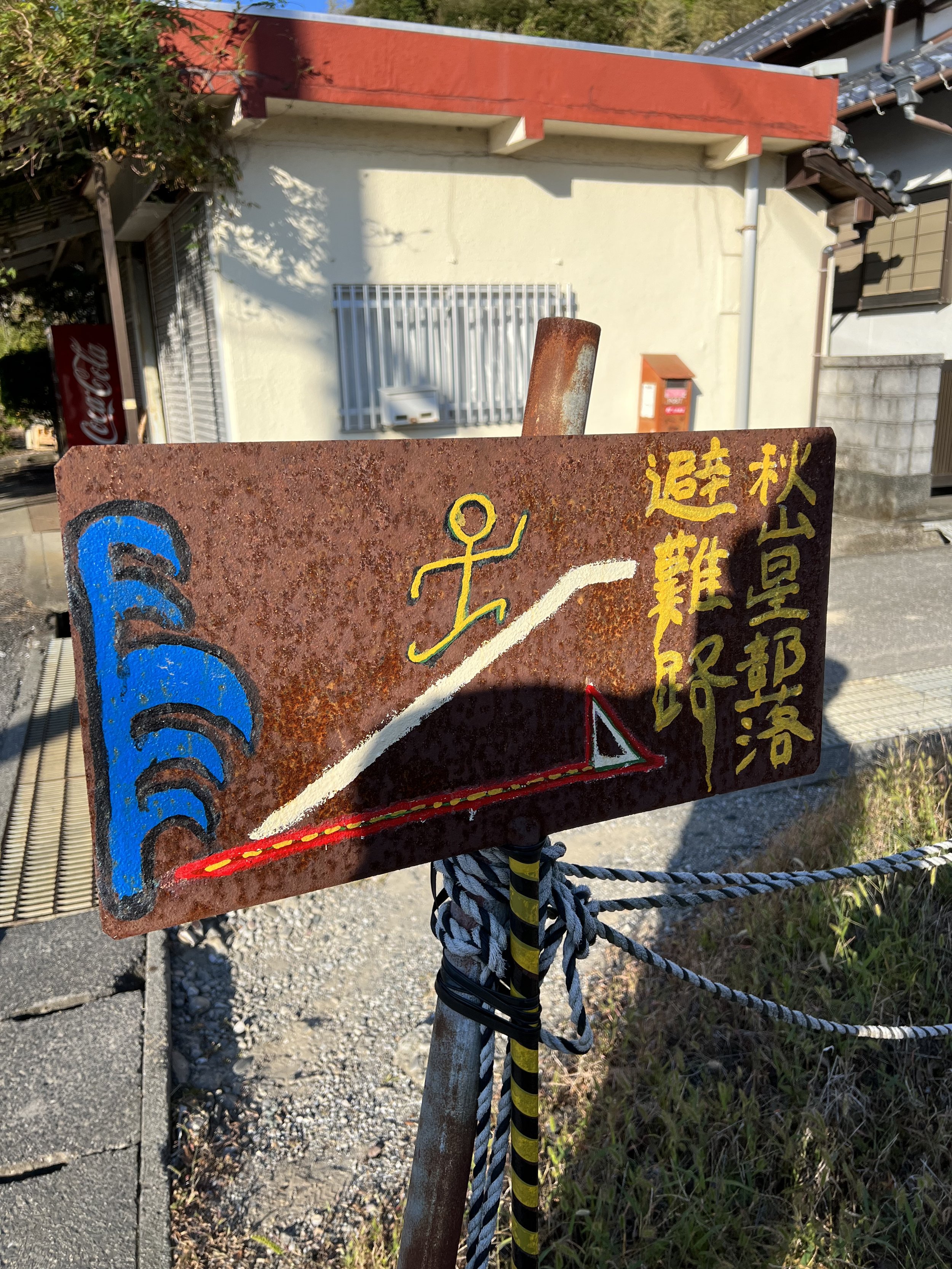
The whole experience of the Japanese public speaker system in small villages is a head-scratcher and occasionally downright worrisome. As far as I could tell, everyone here, from junior high school students to the elderly, has a mobile phone and engages with it liberally Perhaps a system of phone alerts—it’s noon, there’s an earthquake about to hit, it’s time to get up—would be equally useful? Sure, play the national anthem once a day, just in case anyone’s forgotten where they are. But constant announcements rolling out across deserted towns? I don’t get it And I can confirm that when a visitor hears dramatic music and a long announcement including the word “tsunami” multiple times, it’s quite hard to discern whether this is a basic reminder of the exit routes should one ever occur (by the way, there’s a sign every 100 feet or so on Shikoku to let you know what elevation you are at and which way to run—some of them quite adorable, as shown below) or an actual tidal wave headed your way right now. I worried that if there were such an impending mass casualty event, everyone might just tune it out due to a PSA overuse injury.
But I’m getting ahead of myself. My introduction to weird Japan started all the way back at the Osaka airport, on the morning I arrived in Japan. I had hours to kill before I could check into my hotel and most of the airport terminal seemed shut down or under construction. I tried going outside, but every bench and seating area was taped off due to COVID. I had just come from 10 weeks trekking in Ladakh and Nepal, hadn’t seen a mask in all that time, and could barely tolerate the thought of being inside the terminal for seven hours. And then some real magic happened—although it was weird magic indeed.
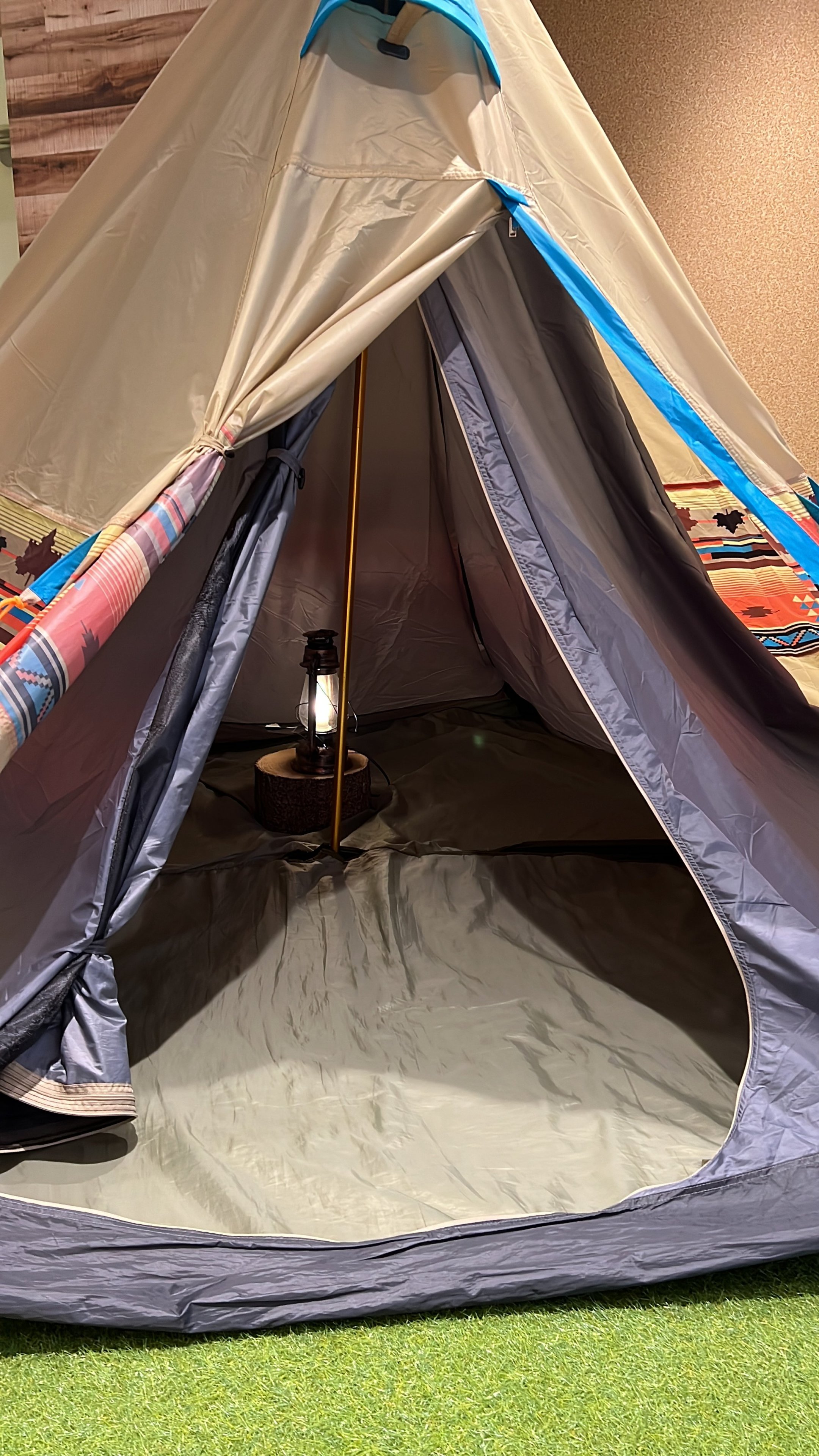
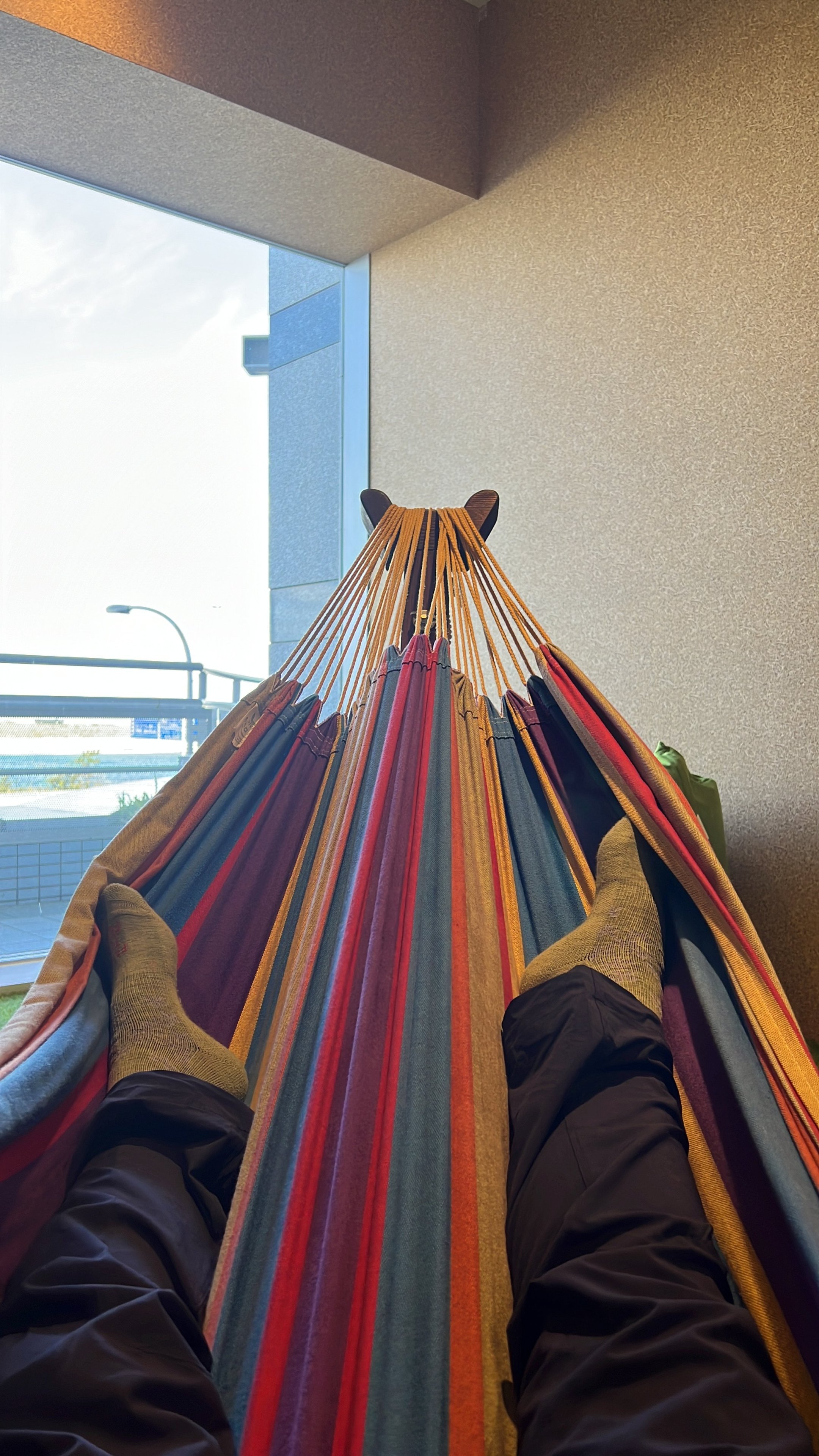
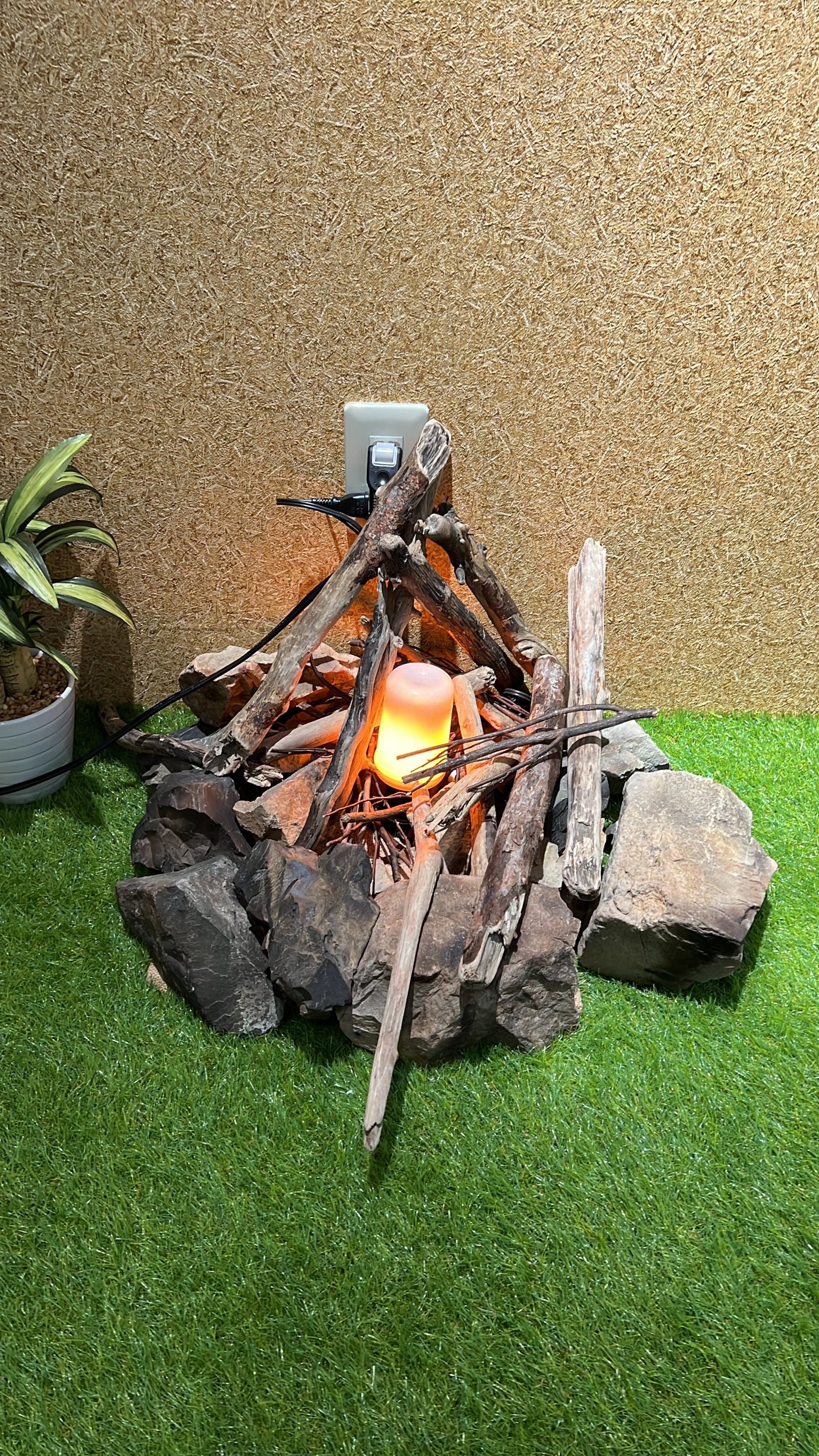
I decided to spend some hours at a coworking space with coffee, wifi, and empty desks, but once I’d entered and paid and had my temperature checked (for the first of hundreds of times) by some terrifying iPad kind of screen thermometer thing you stare into that talks at you, I turned a corner to find: fake camping paradise! Fake grass, a fake campfire, fake plants, but a very REAL wigwam (cultural appropriation content advisory) and an actual functional hammock. I slipped off my shoes, lay down in the hammock (my butt only slightly grazing the floor—they need some tips on hammock placement), and facetimed a friend. It was a perfectly absurd and kind of wonderful way to transition from Himalayan trekking to the utter strangeness of Japan.
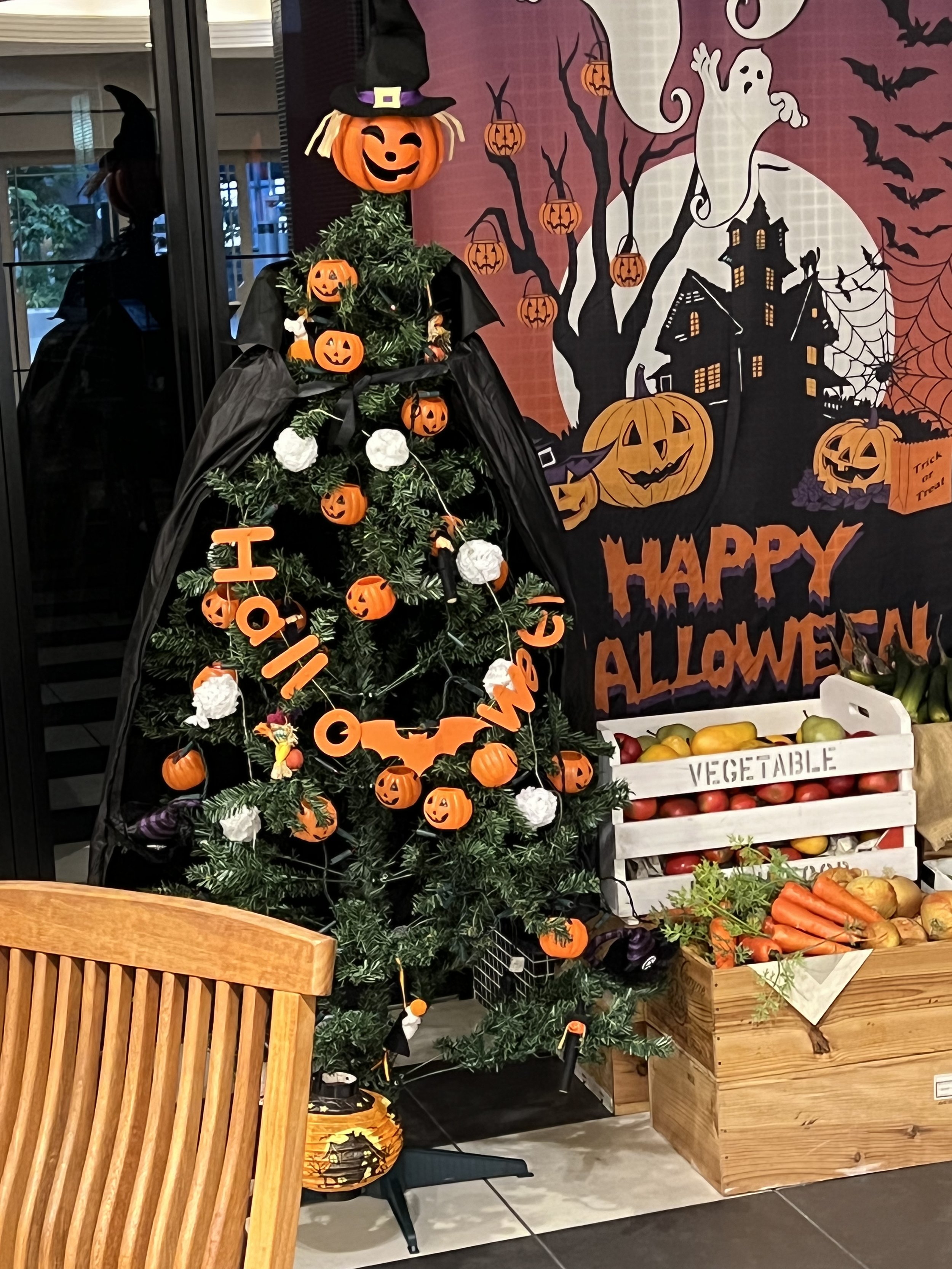
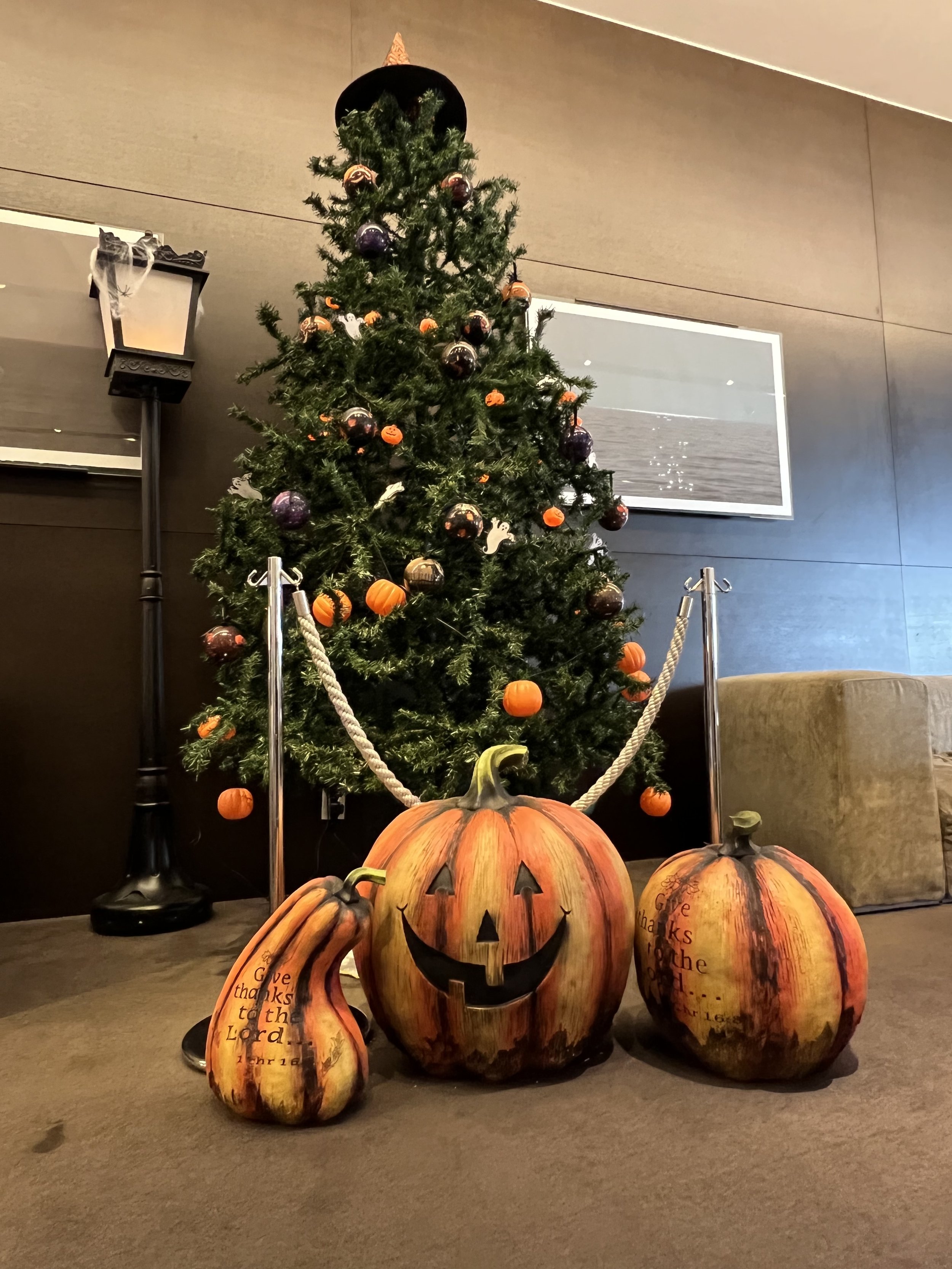
There were other things in the airport hotel to let me know that I wasn’t in Kansas anymore, though I was not entirely outside the sphere of US influence. Arriving on October 11, I particularly enjoyed the Hallowisthmas trees I saw in both Osaka and Tokushima hotel lobbies. From a consumption-reduction perspective, I have to say I loved to see it. Get a fake tree, put it in a costume for Halloween, and then redecorate at the start of November! I think, given the rush of holidays in the States at this time of year, we, too, might consider this kind of laborsaving festive mash-up. November interlude of paper pop-out turkeys arranged artfully around the tree, with a pilgrim hat in lieu of an angel on the treetop, anyone?
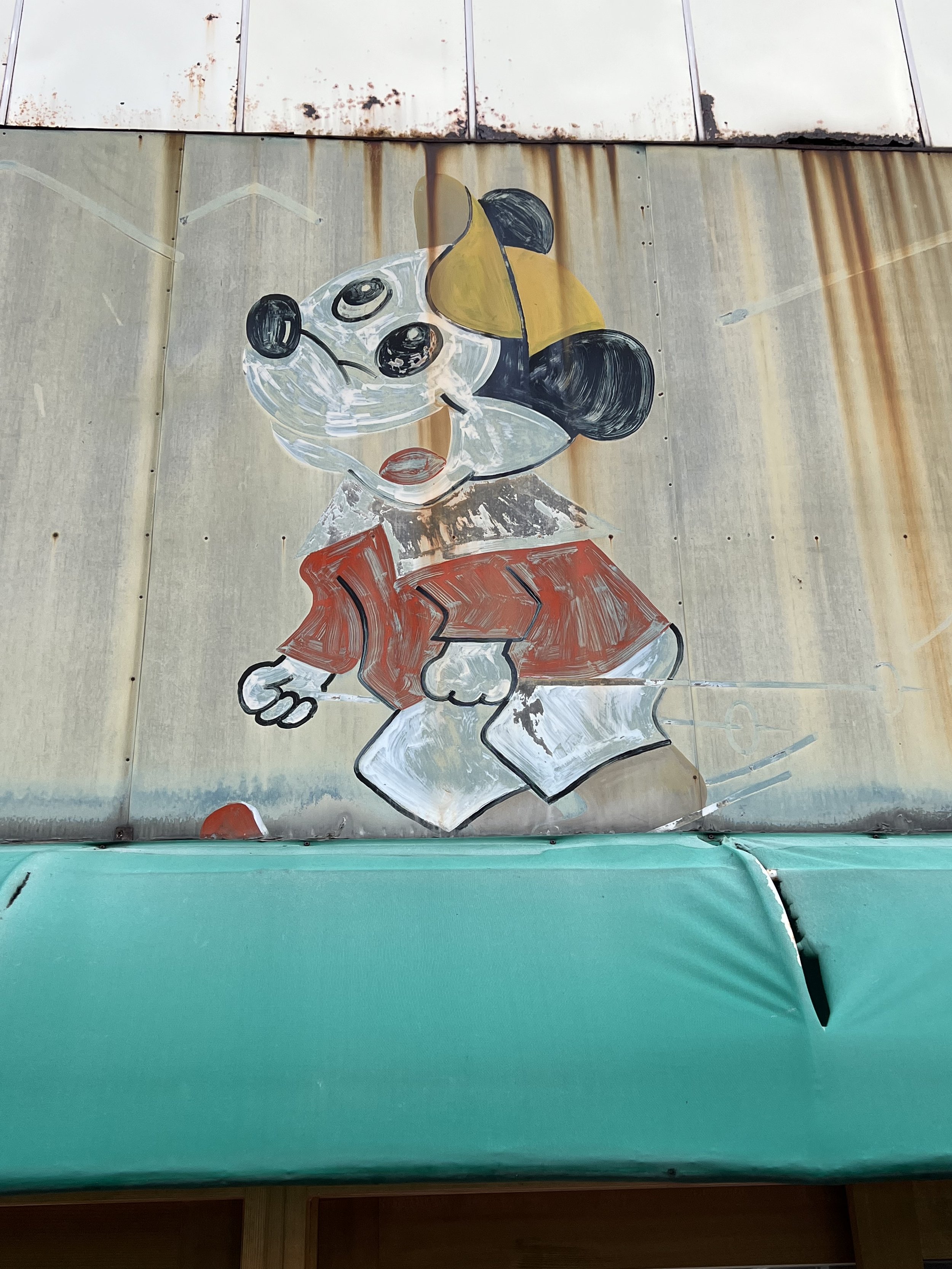
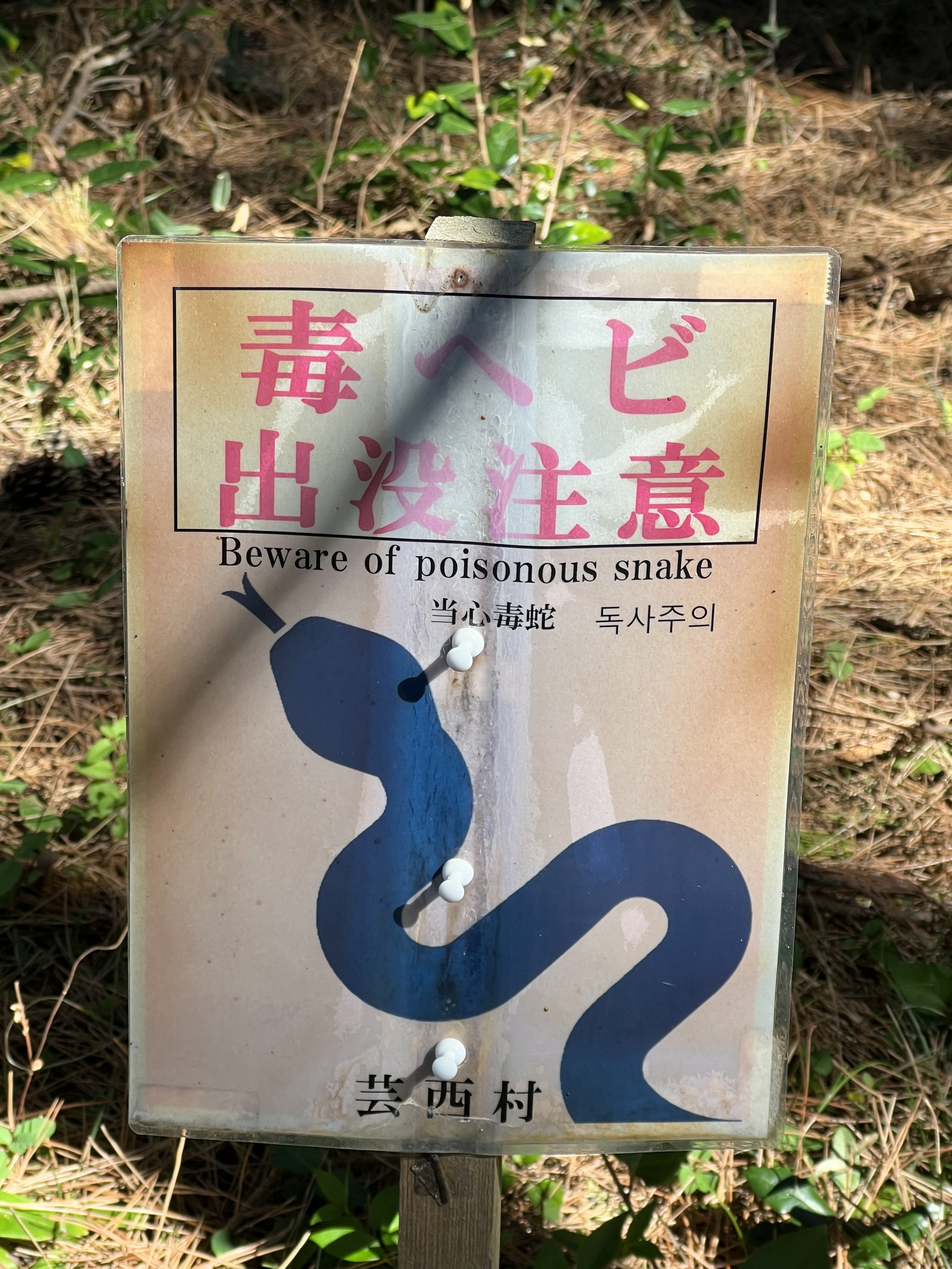
Speaking of Americana, I failed to photograph the temple garden we passed somewhere with five-foot high marble Mickey and Minnie statues. Murti? Anyway. As anyone who has been here knows, these two have clearly been added to the pantheon of Buddhas and Bodhisattvas and their images appear everywhere. I saw them more than once on the family shrine in an inn, and even occasionally painted on a wall near the temple. Cartoon characters are of course ubiquitous here, but what’s most interesting to me is the lack of what we might think of as context-specific graphic art choices. Mickey and Minnie in the temple, little cartoon rabbits and ducks demarcating barriers around highway roadworks, cartoon images of the Daishi everywhere. And maybe more alarming to me, a handmade sign with a cute blue snake (there was an even cuter image I failed to capture at, improbably, a highway rest area) warning of the presence of Shikoku’s only lethal venomous creature, the Mamushi. Now, the Mamushi is a snake about a foot long, silver and black, with a distinctive diamond pattern on its back and a famously triangular head. The cute blue snake pictured below (with the tiny tiny writing warning you of the possibility of imminent death) is not going to help you identify the thing about to kill you (though, as an aside, you do get to have a stone marker placed forever on the Henro route if you die while on pilgrimage here. I admit I was a bit shocked by how many of these markers we passed—or maybe not so much shocked as forewarned).
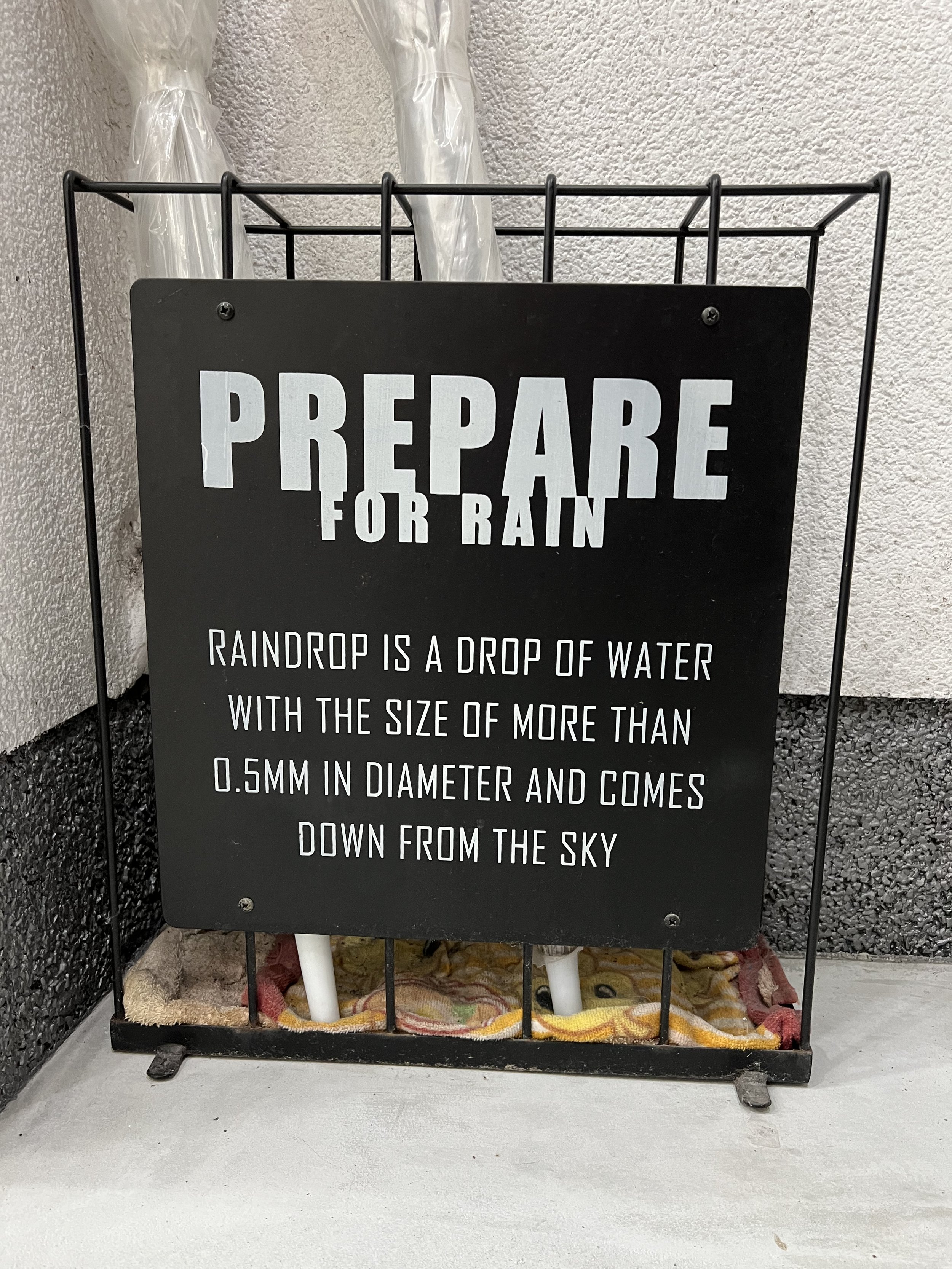
Well, of course, this brings us to signs. Where to begin, really? I eventually restored a good portion of my flagging sense of humor by watching for weird English phrases wherever I went. I noticed that anything written in French was invariably correct, but the English signage was … quite something. Sometimes hilarious, sometimes incomprehensible, occasionally kind of deep: it kept my spirits up along the way. Some were downright useful and even scientific—I finally learned the definition of a raindrop! Others qualified as pretty accomplished language poetry for sure.
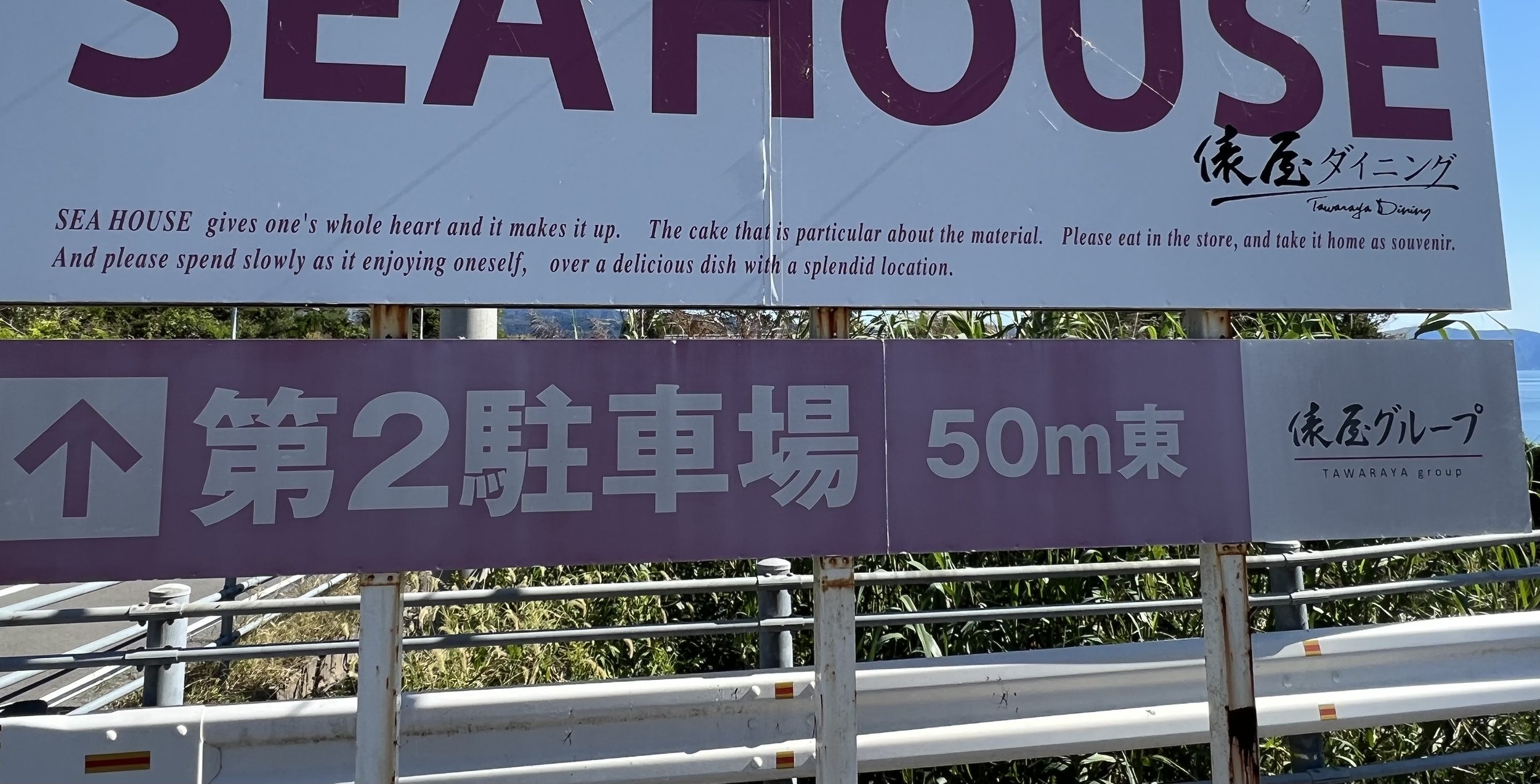
There was the abandoned restaurant called Seahouse with the slogan that began,
Seahouse gives one’s whole heart and it makes it up.
The cake that is particular about the material.
Please eat in the store, and take it home as souvenir.
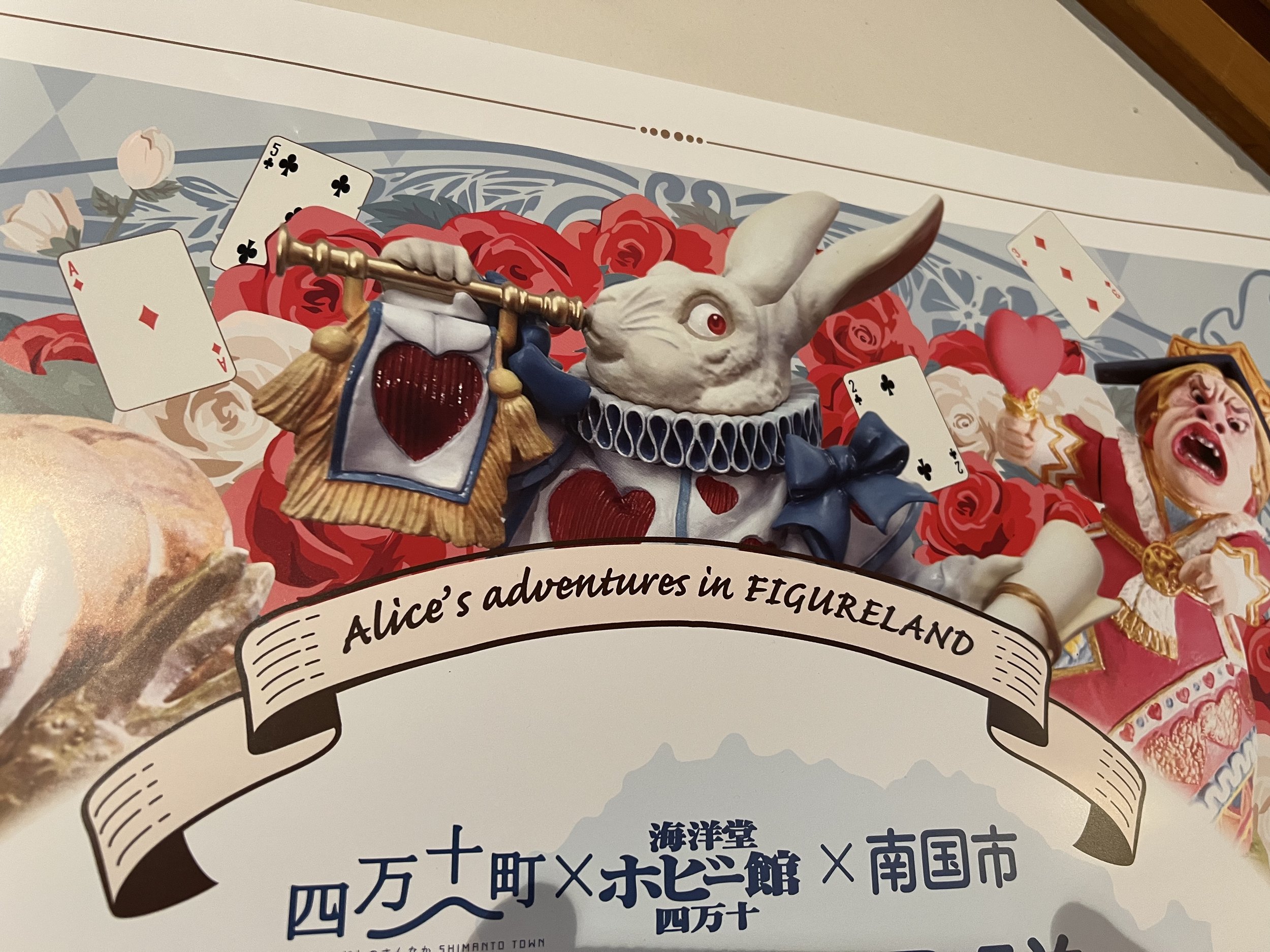
I could write a sizable essay about this excerpt. But even better, I’m pretty sure I could get a whole conference funded on the topic, “Alice’s Adventures in Figureland.” My Lit. Prof. colleagues agreed: it’s really an improvement on the original title, and better aligned with the book’s core themes.
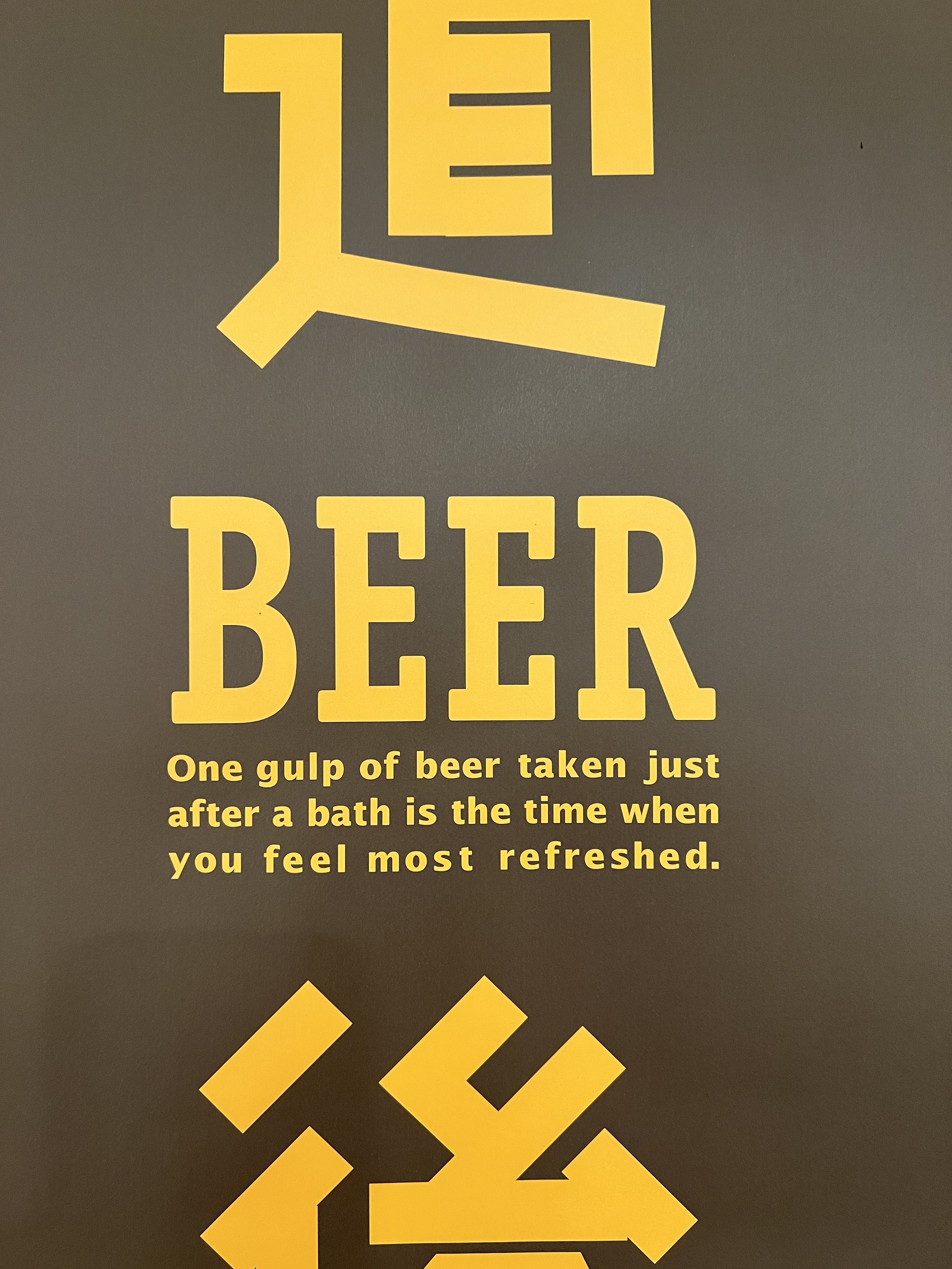
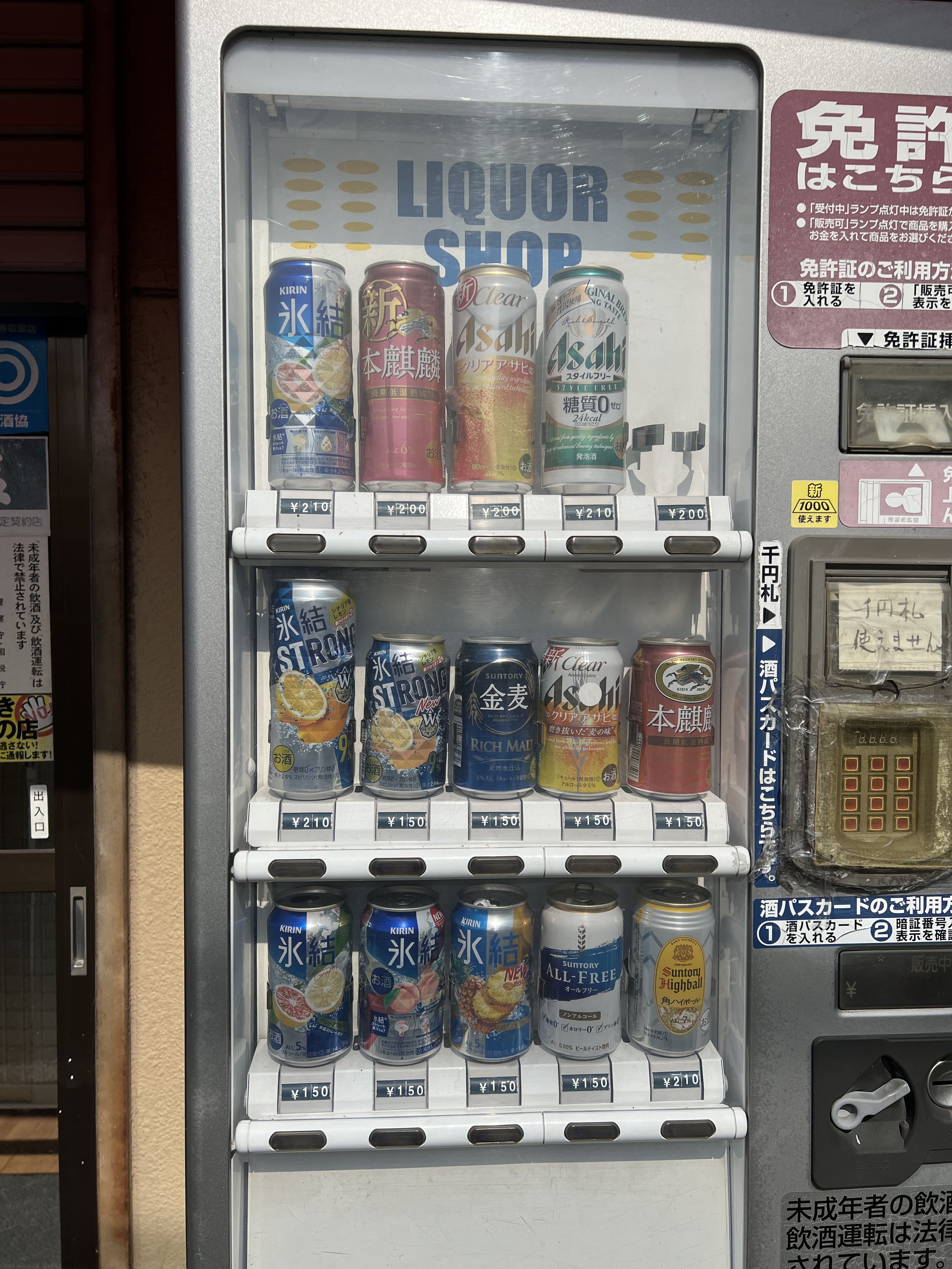
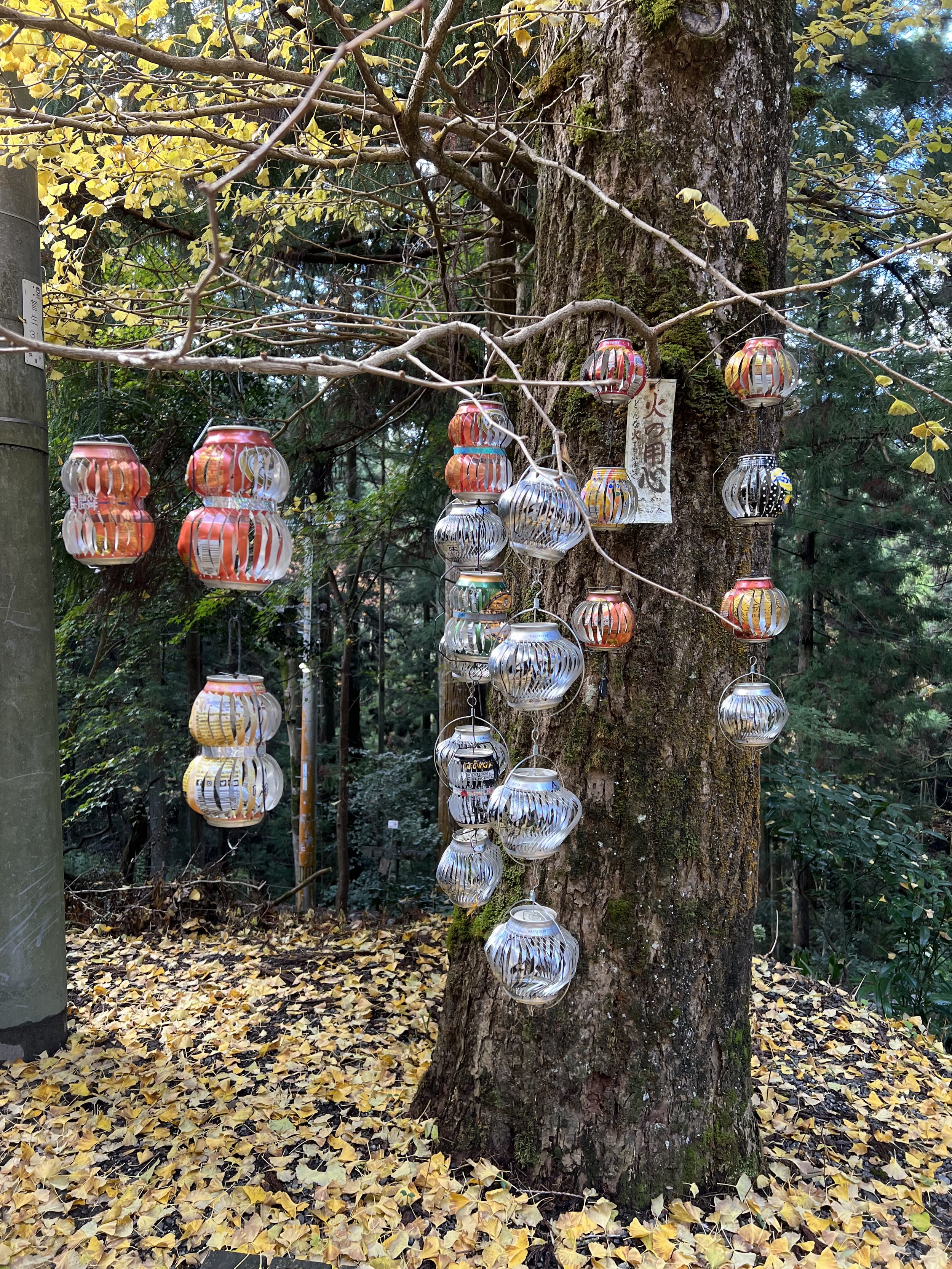
Our last night’s hotel featured large posters all around the lobby that offered the quasi-medical advice, “BEER: one gulp of beer taken just after a bath is the time when you feel most refreshed.” Sage advice, generally, though given that this was the hotel that denied me access to the bath on the grounds of my tattoos, not all that helpful. I resolved to test the hypothesis, replaced one gulp of beer with three or four, and found it sufficiently refreshing, even without the benefits of the onsen. The entire topic of alcohol in Japan is worthy of its own post, but I will say how much I appreciated the ubiquitous beer and canned cocktail vending machines, sometimes in hotels and inns and other times just sitting out on the street in a deserted town in the middle of nowhere—the vestigial “liquor shop.” Someone is keeping these things stocked, I can attest. And people seem to get incredibly creative with their empties—witness the below faux Japanese lantern mobile made out of beer cans, which I found just next to the Sanmon, the entry gate, at one of the temples on the Shikoku Henro route. Sugoi!
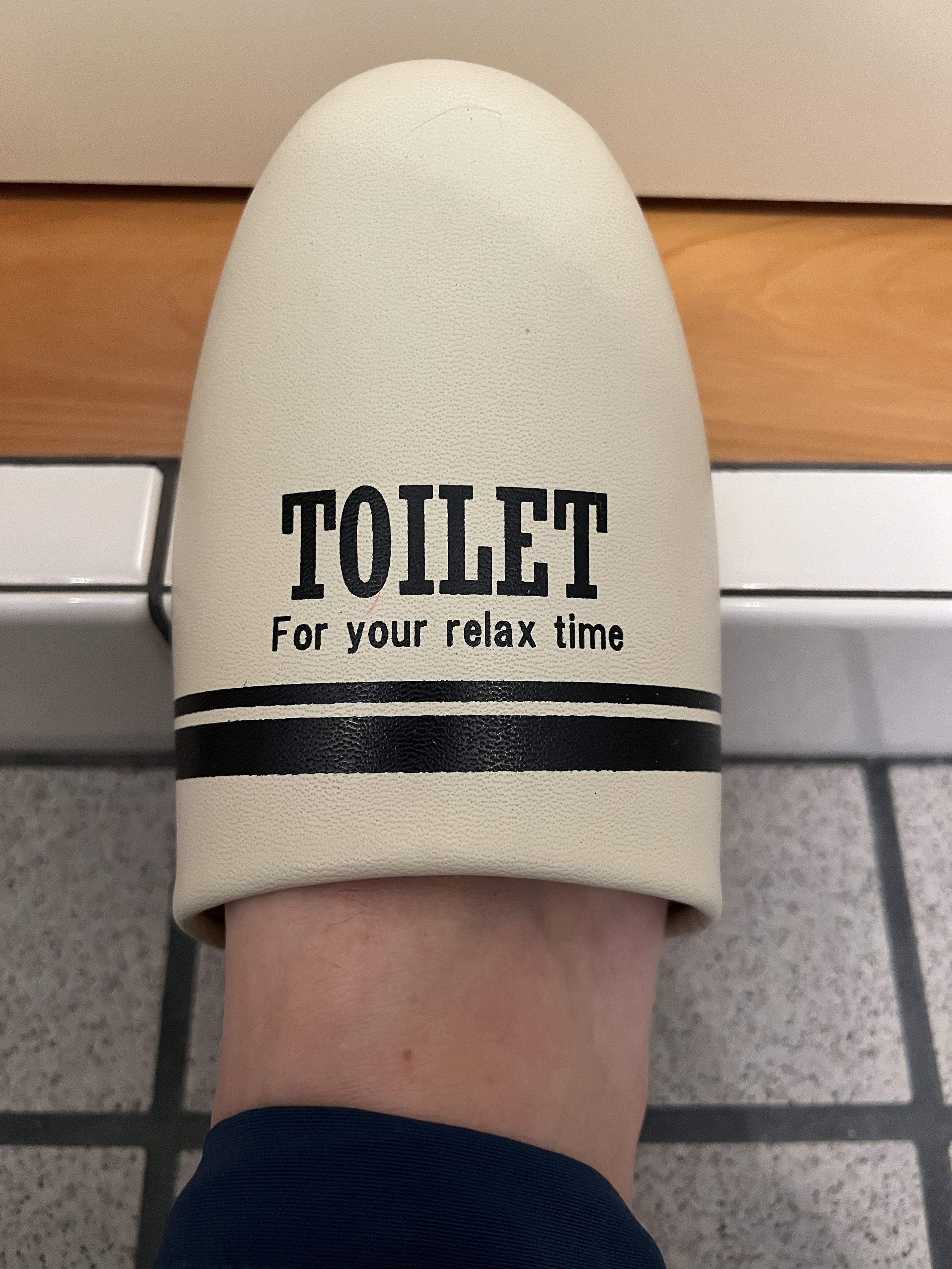
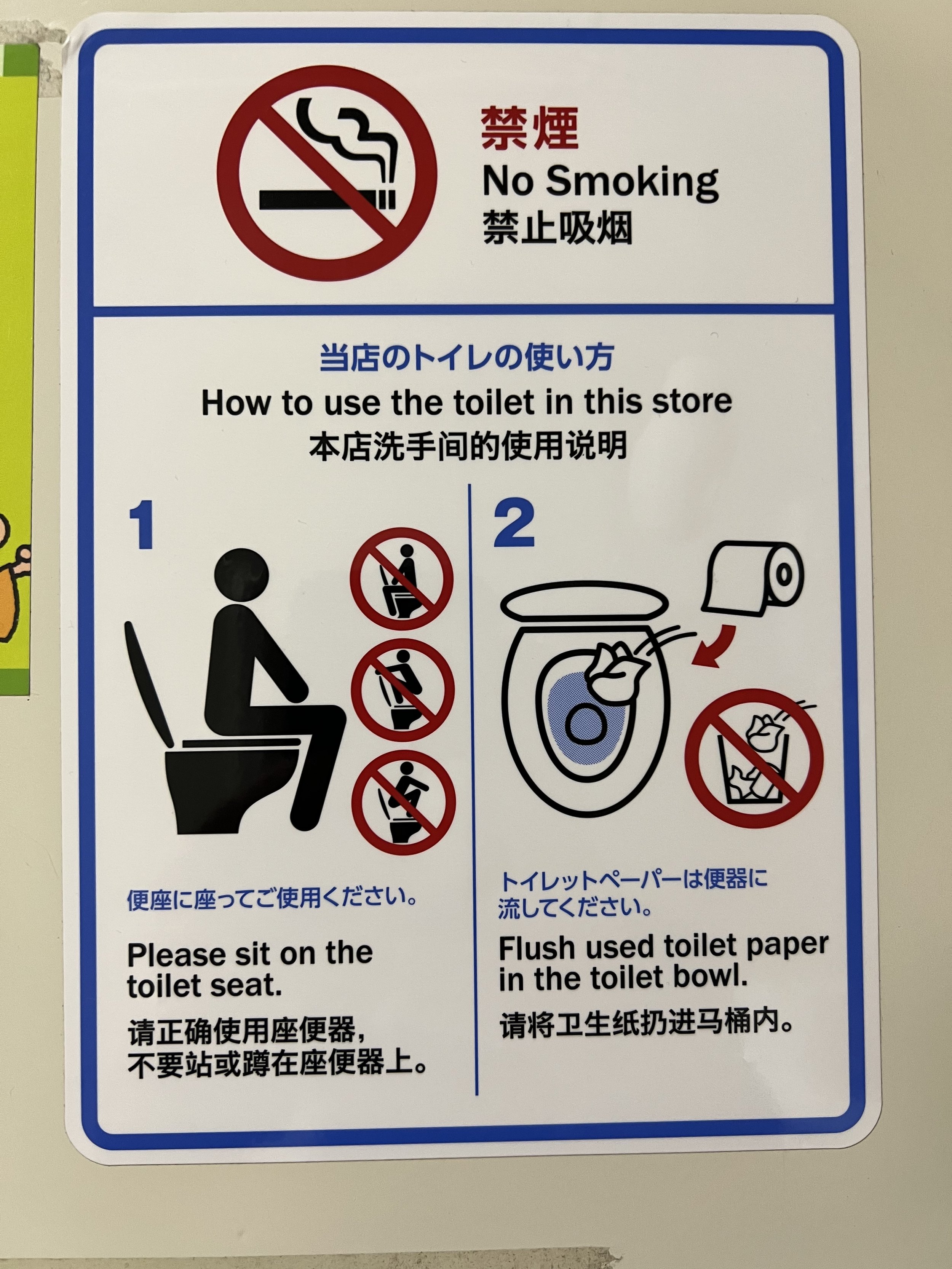
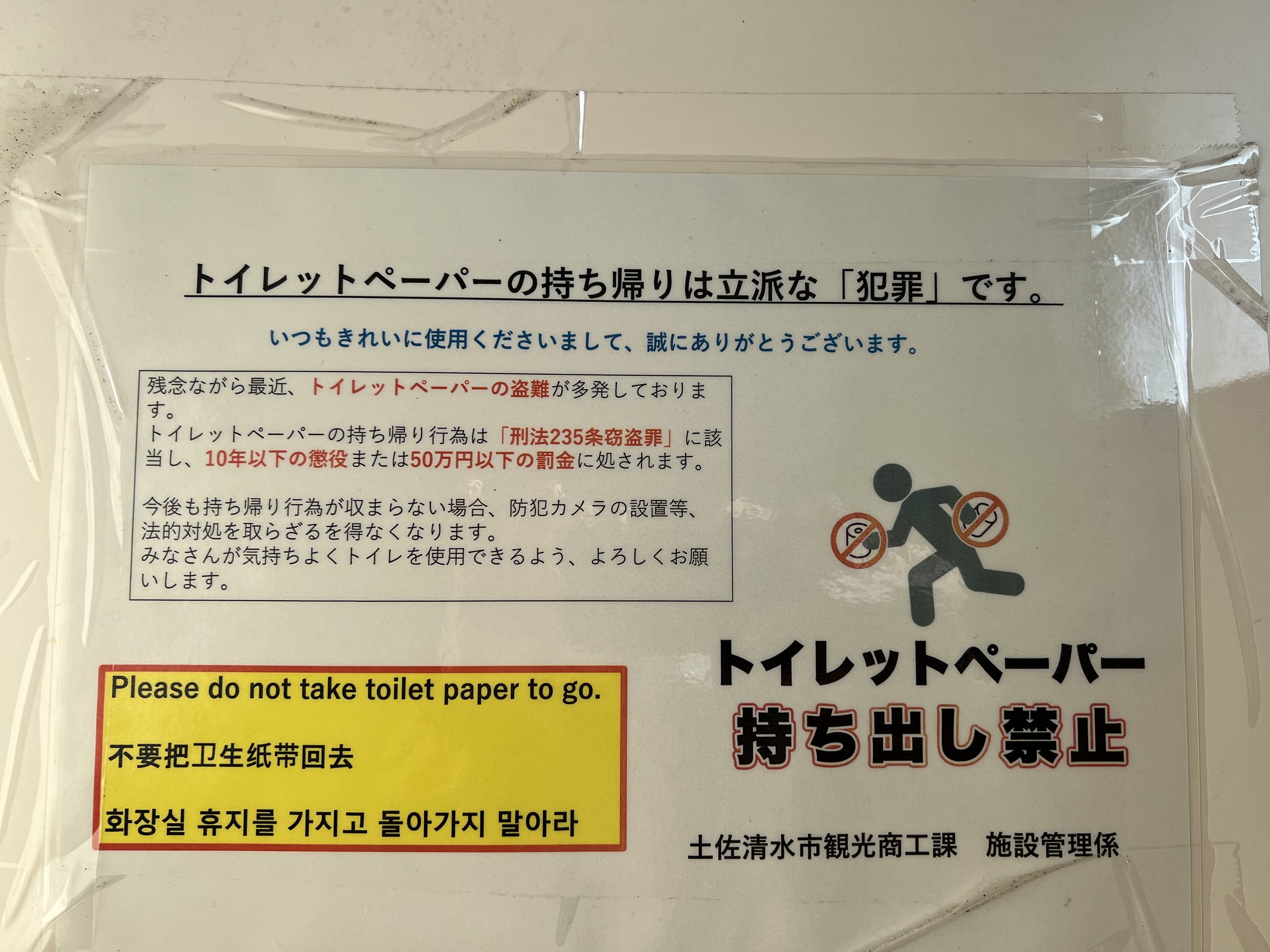
Enough has been said about Japanese toilets and Japanese bathrooms, and I won’t belabor the topic here. Still—the signage was epic. Both Dave and I live in regret that we did not snap a photo of the trashcan in the bath area of one of the small inns we stayed at. It said something like, “Have you given thought to what you are going to do with your life?” It was a lot to ponder in the bath and caused me to want to jump right ahead to the gulp of beer. I loved the toilet slippers encouraging me to enjoy my “relax time” along with the automated functions of the Toto. And I rarely visited a 7-11 without marveling at the detailed instructions in English for how to use the toilet—can’t trust these gaejin. I also appreciated and felt interpellated by the illustrated guidance in the bathroom near a mountain temple not to break the second Bodhisattva precept—“I vow not to take what is not given”— by absconding with the toilet paper: “Please do not take toilet paper to go.”
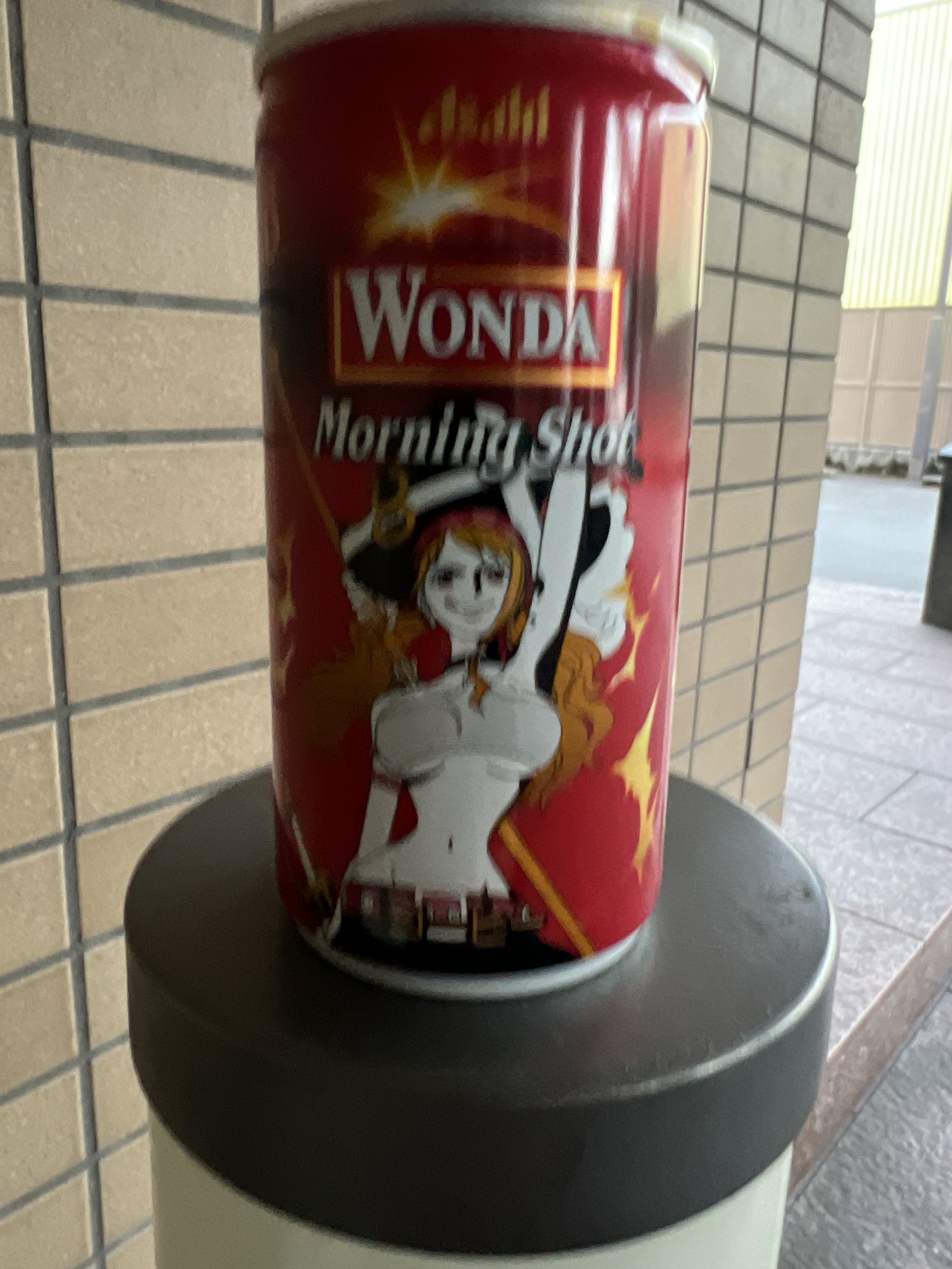
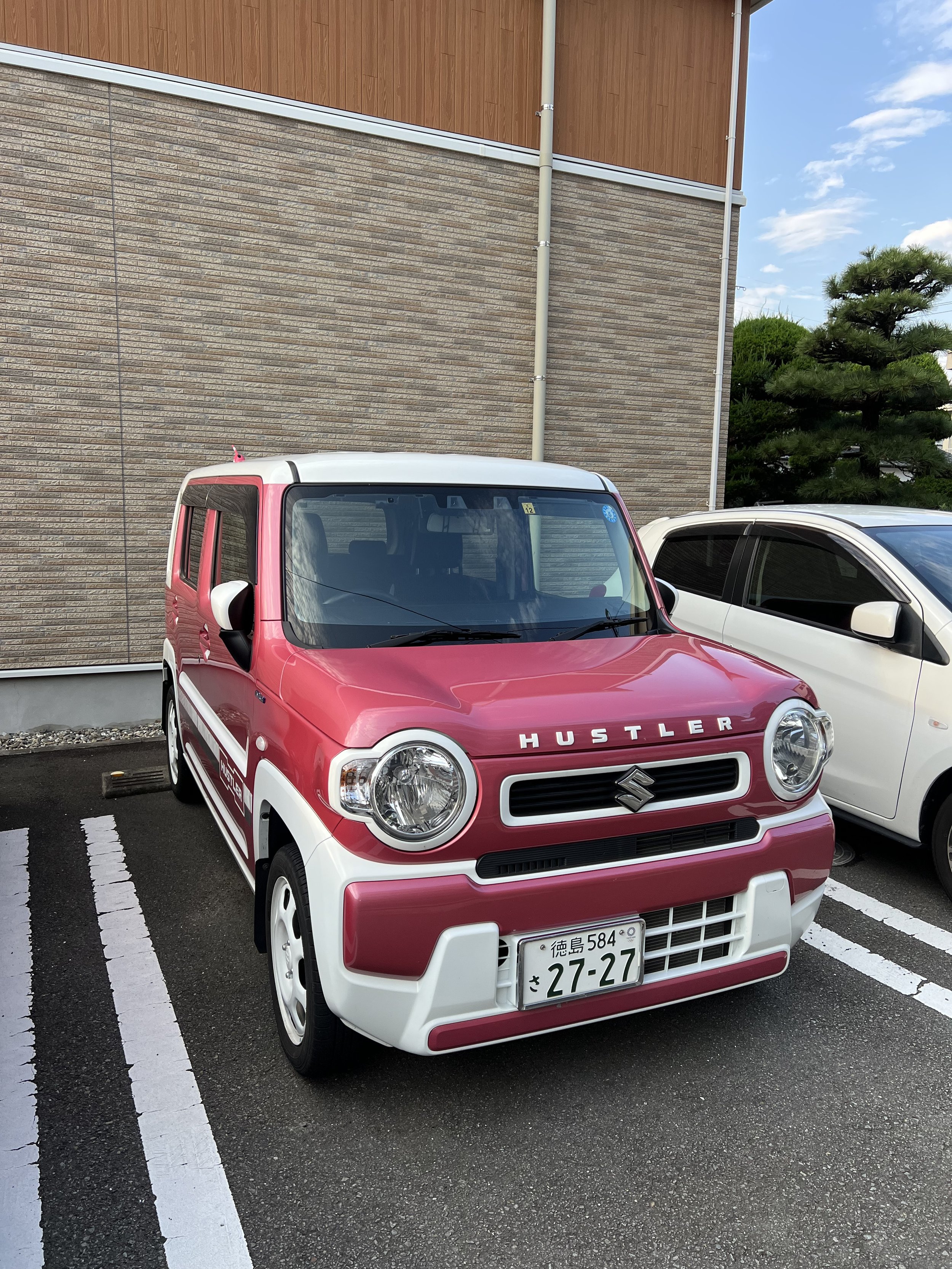
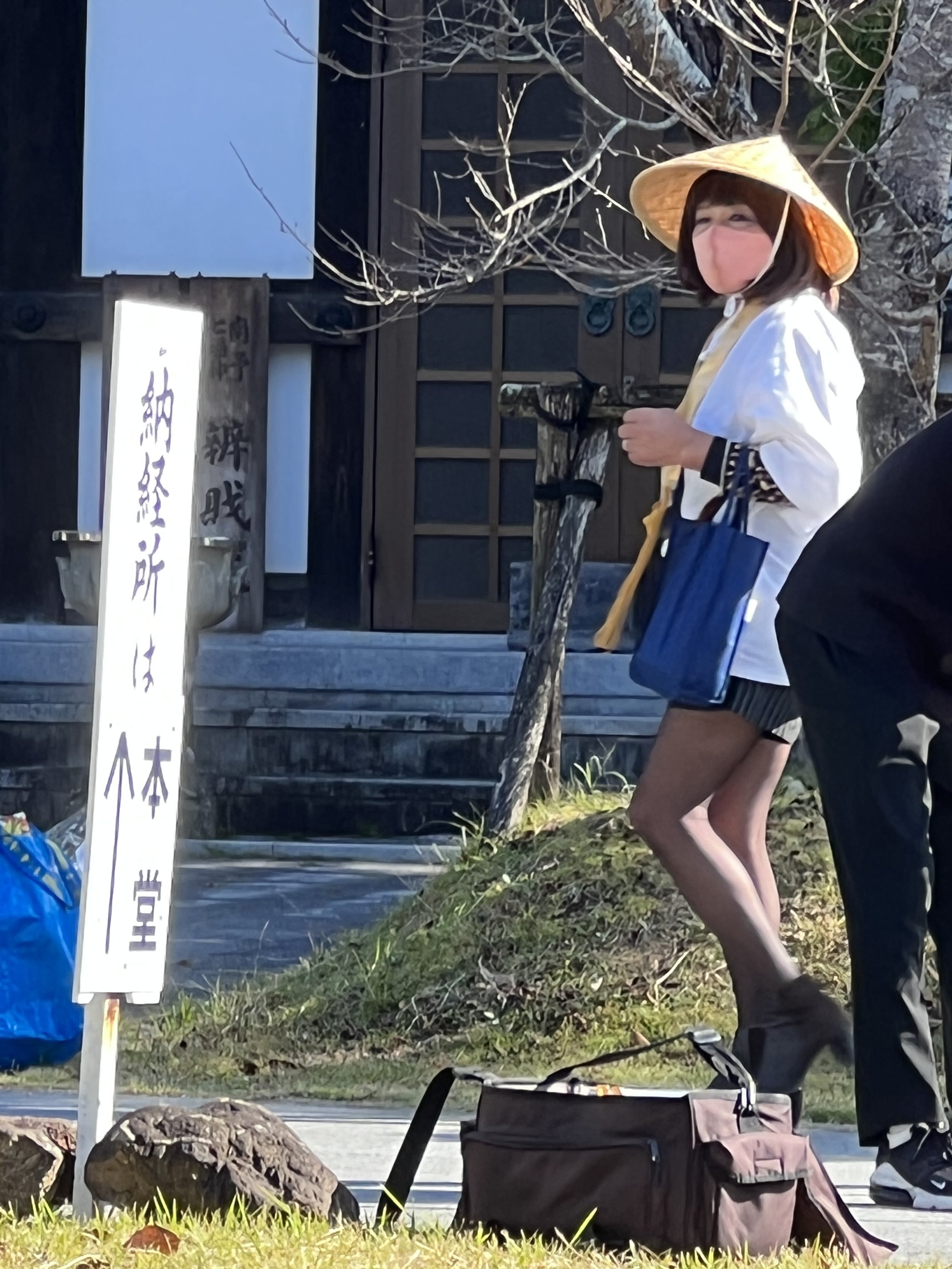
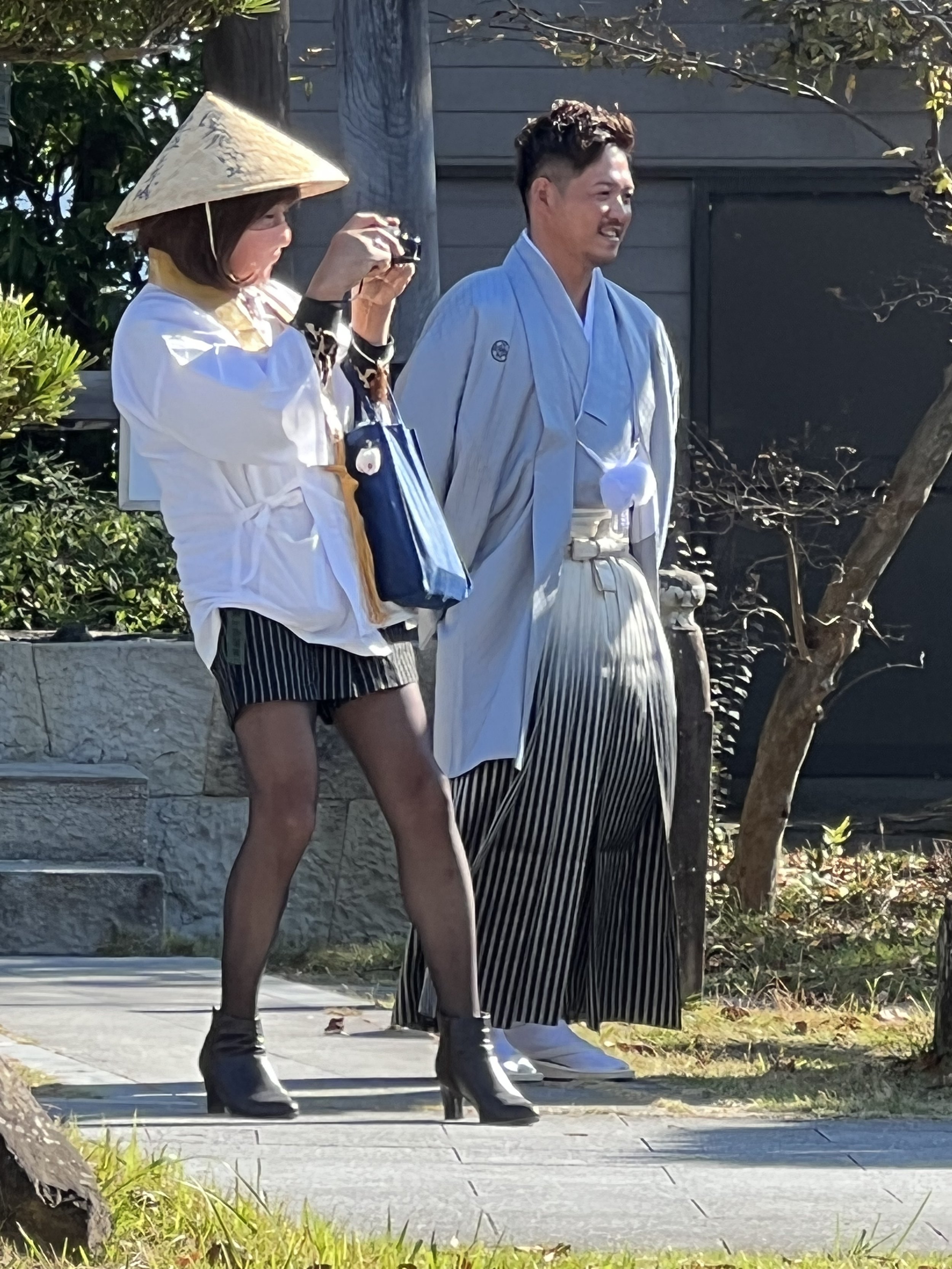
There was weird sexy Japan, including my frequent mid-morning pick-me-up, “Morning Shot,” a little can of coffee that I noticed came only from vending machines and was not sold in convenience stores, with a graphic conducive to some forms of awakening. There were the boxy Suzuki vehicles emblazoned with the word Hustler on the front and often colored hot pink While I’m pretty sure they weren’t meant to be sexy, I enjoyed the thought of rolling up to campus behind the wheel of one of these. And then there was that one time a woman Henro in shorts and fishnets appeared at the temple in the middle of a wedding photo shoot. I saw vanishingly few women Henros in my five weeks on Shikoku—and certainly no other that looked remotely like this one. She appeared at the temple and, on the way to her devotions, interrupted the photo shoot, sidling up to the groom to ask if she could take a picture of his new wife in full traditional bridal regalia. I understand why the groom looked like he wanted to disappear, but I have to say, she was kind of fabulous, and they always say, over and over again, that there’s no wrong way to do this pilgrimage. Ganbatte Kudasai! Do your best!
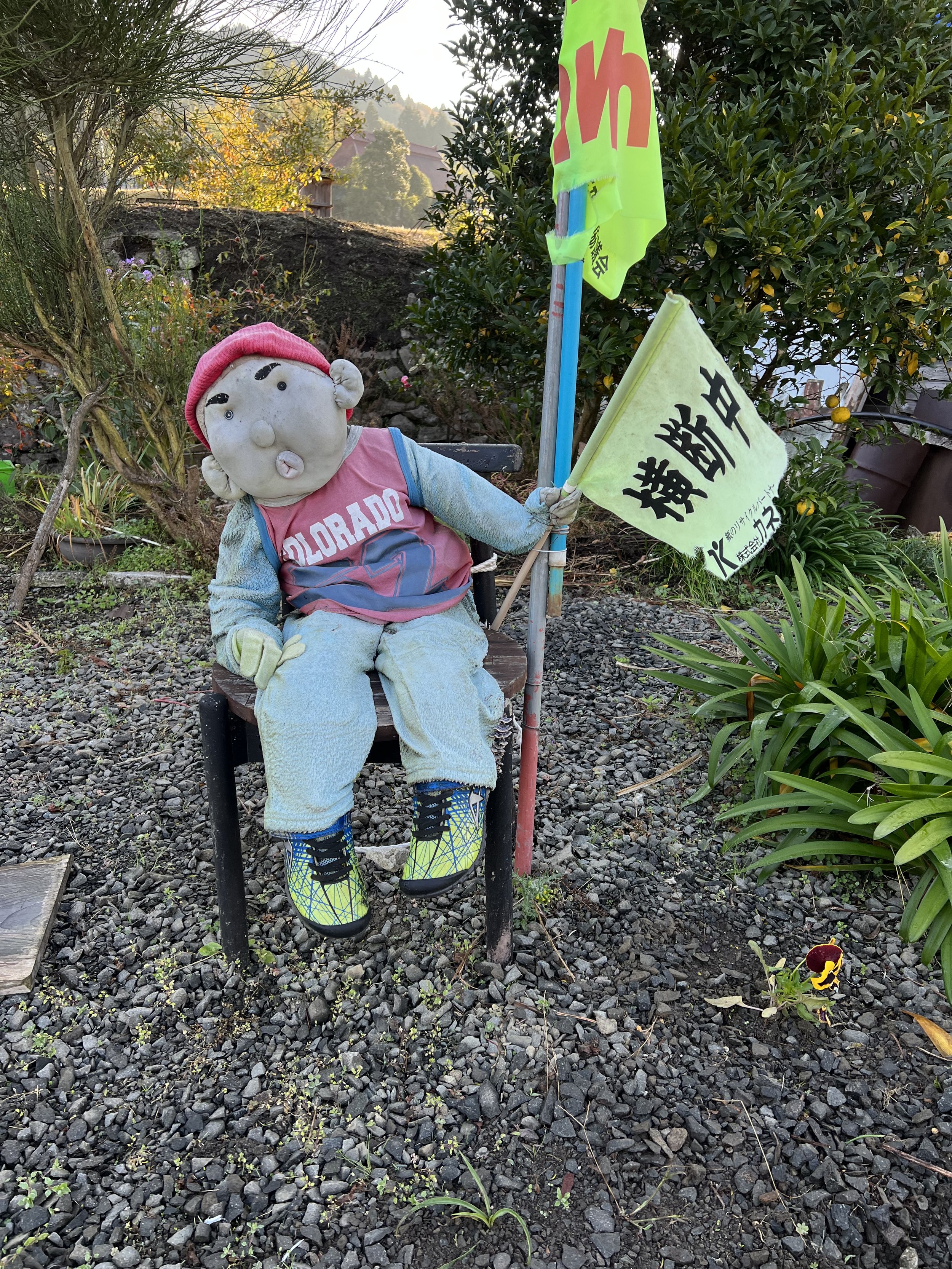
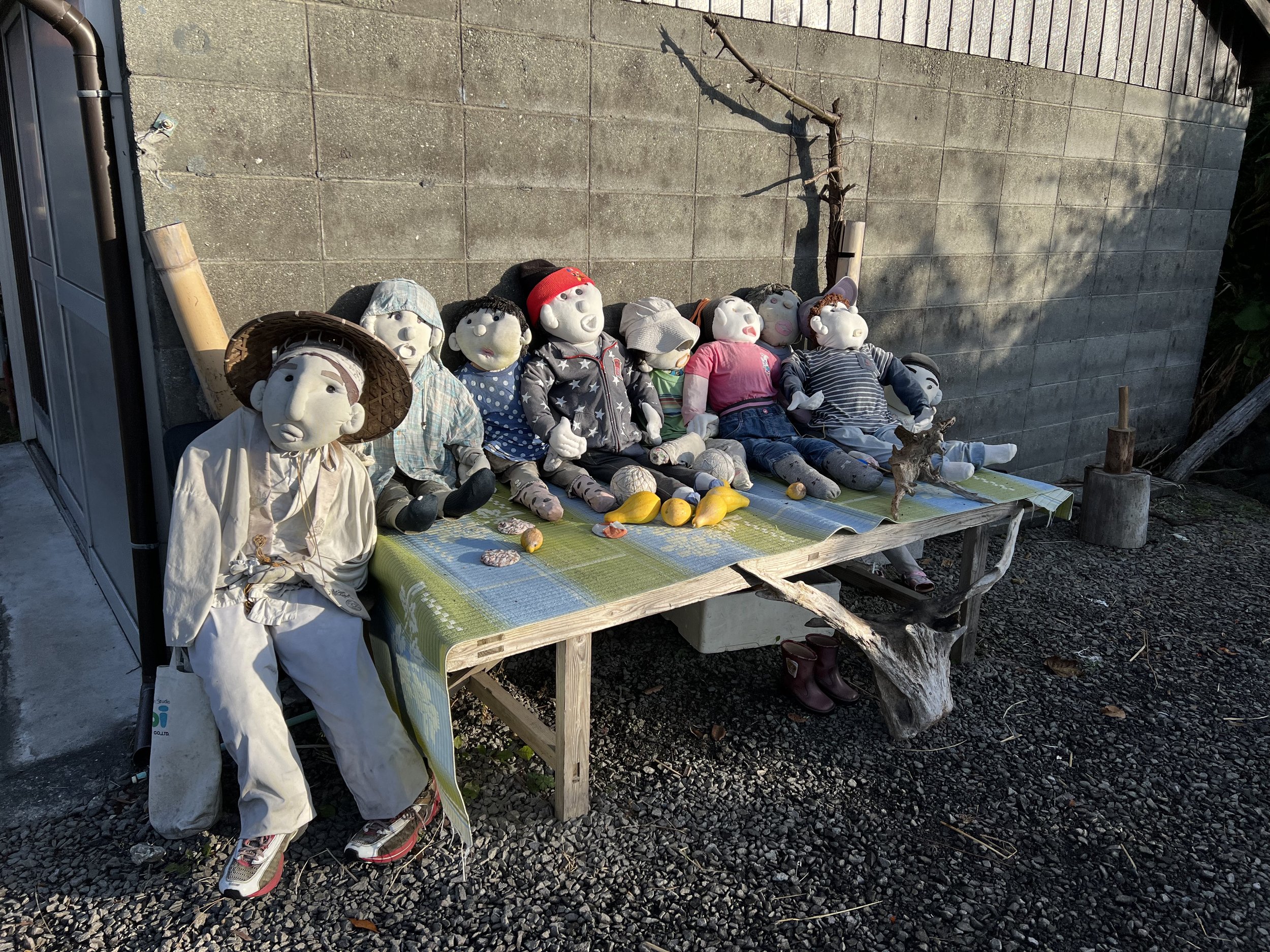
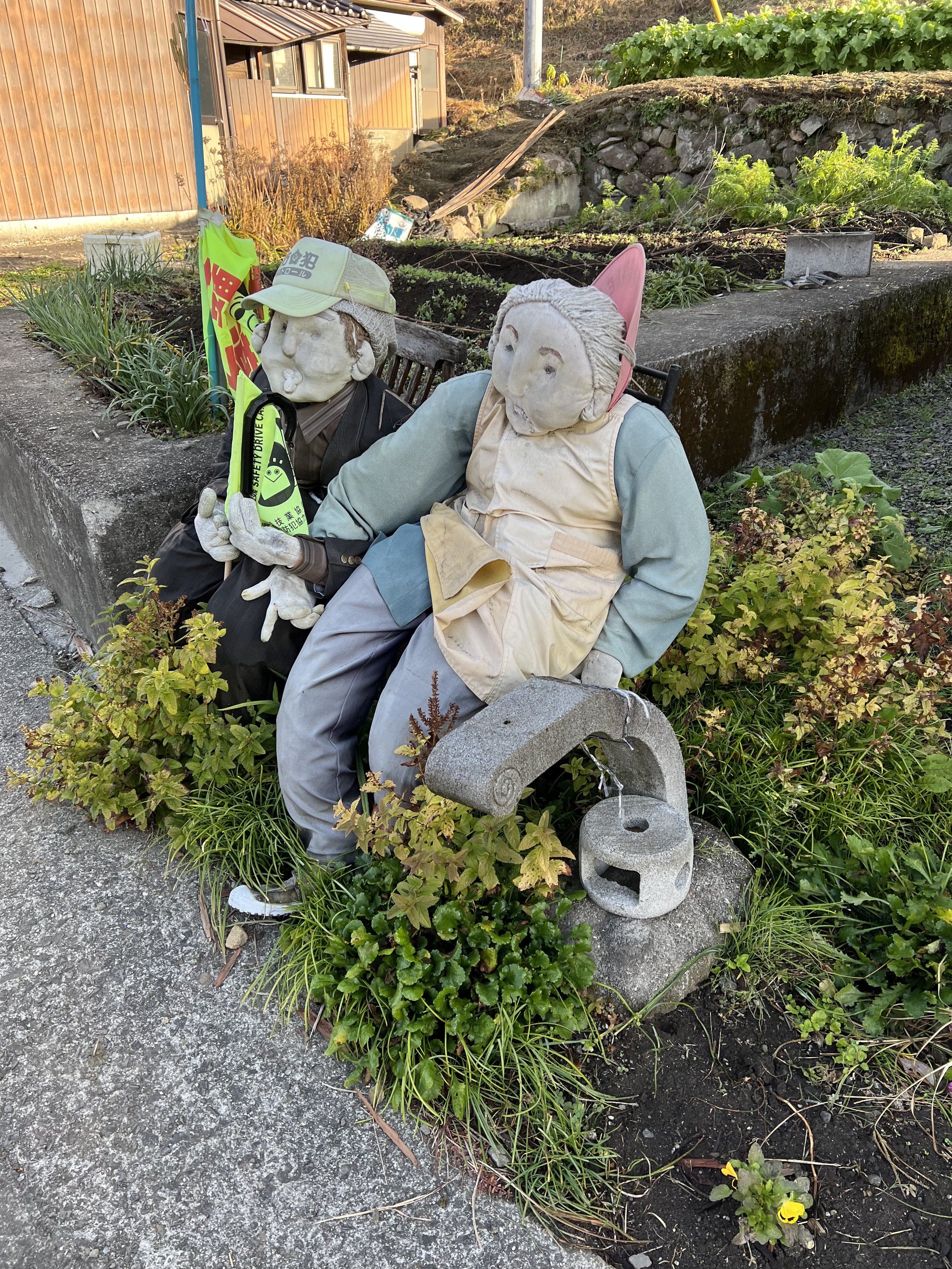
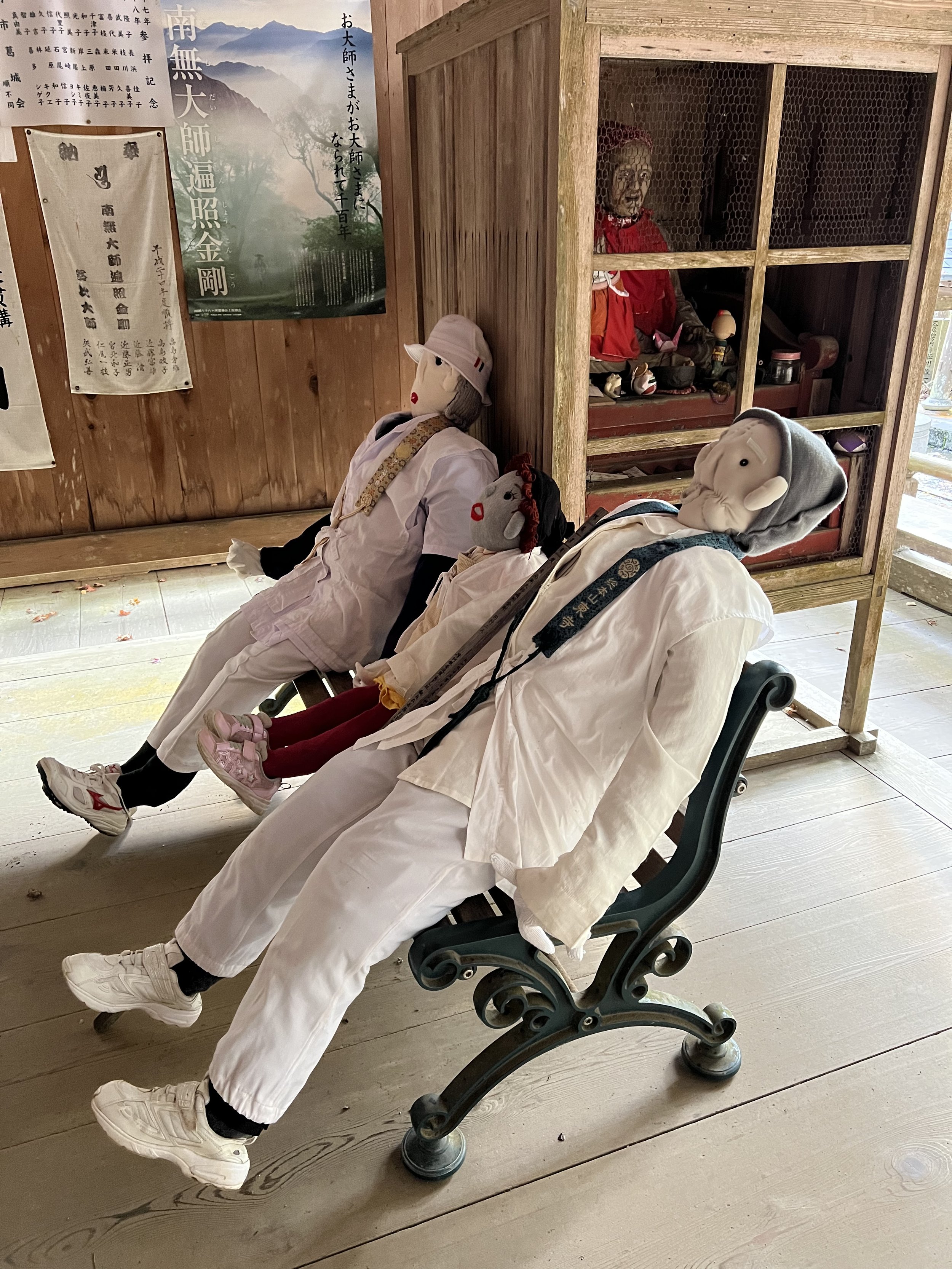
I’ve already talked a bit about the dolls, but I had declined to take their pictures (I mean, how to get their consent?). Here below are a few from one town without people—dolls of all ages! In my opinion one of the weirdest instances, though, involved dolls dressed as Henros … just outside the main hall of a temple where actual Henro visit every day. While I was chanting, I kept looking over at their weirdly slack bodies, wondering if they might start chanting along.
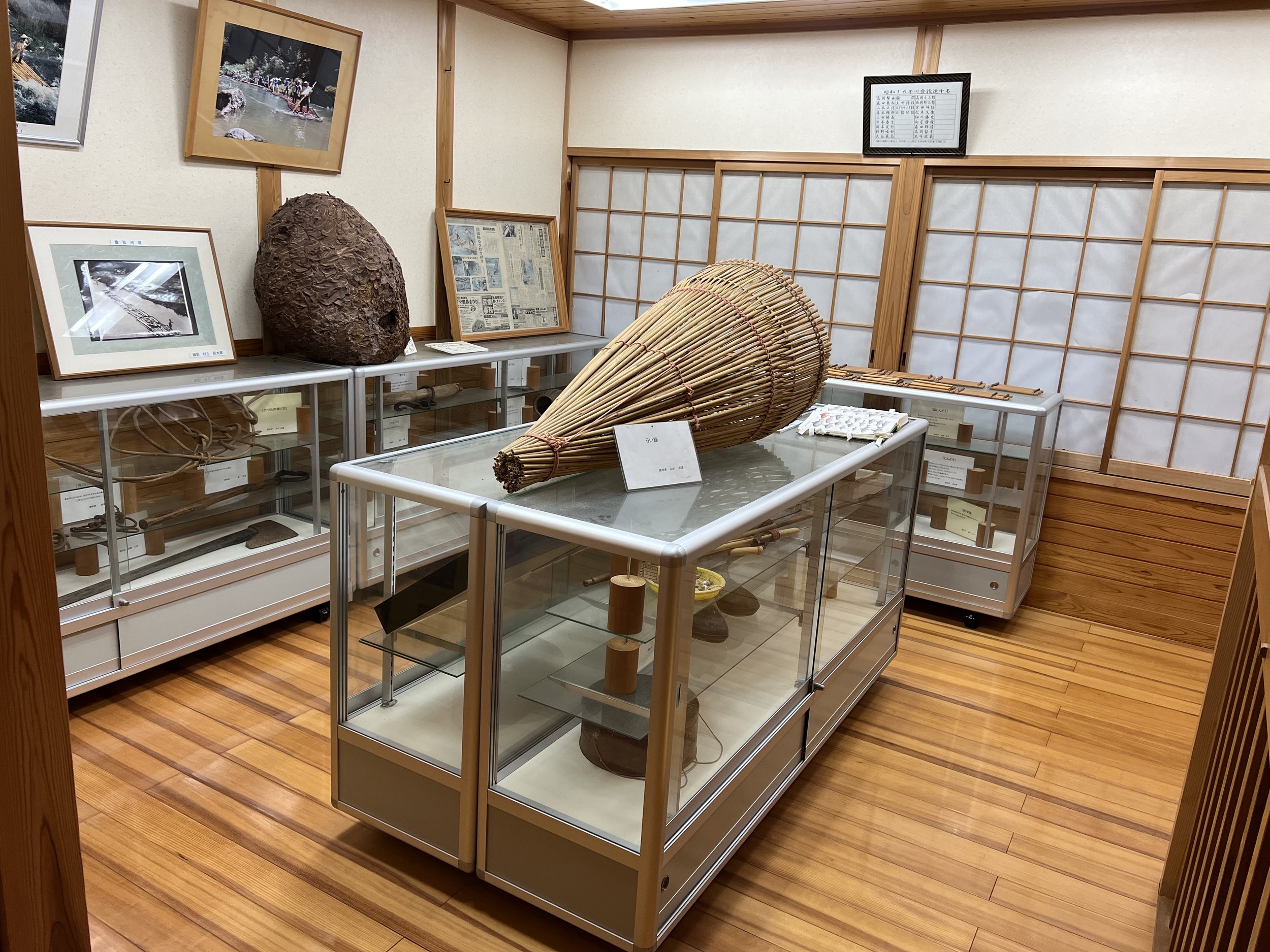
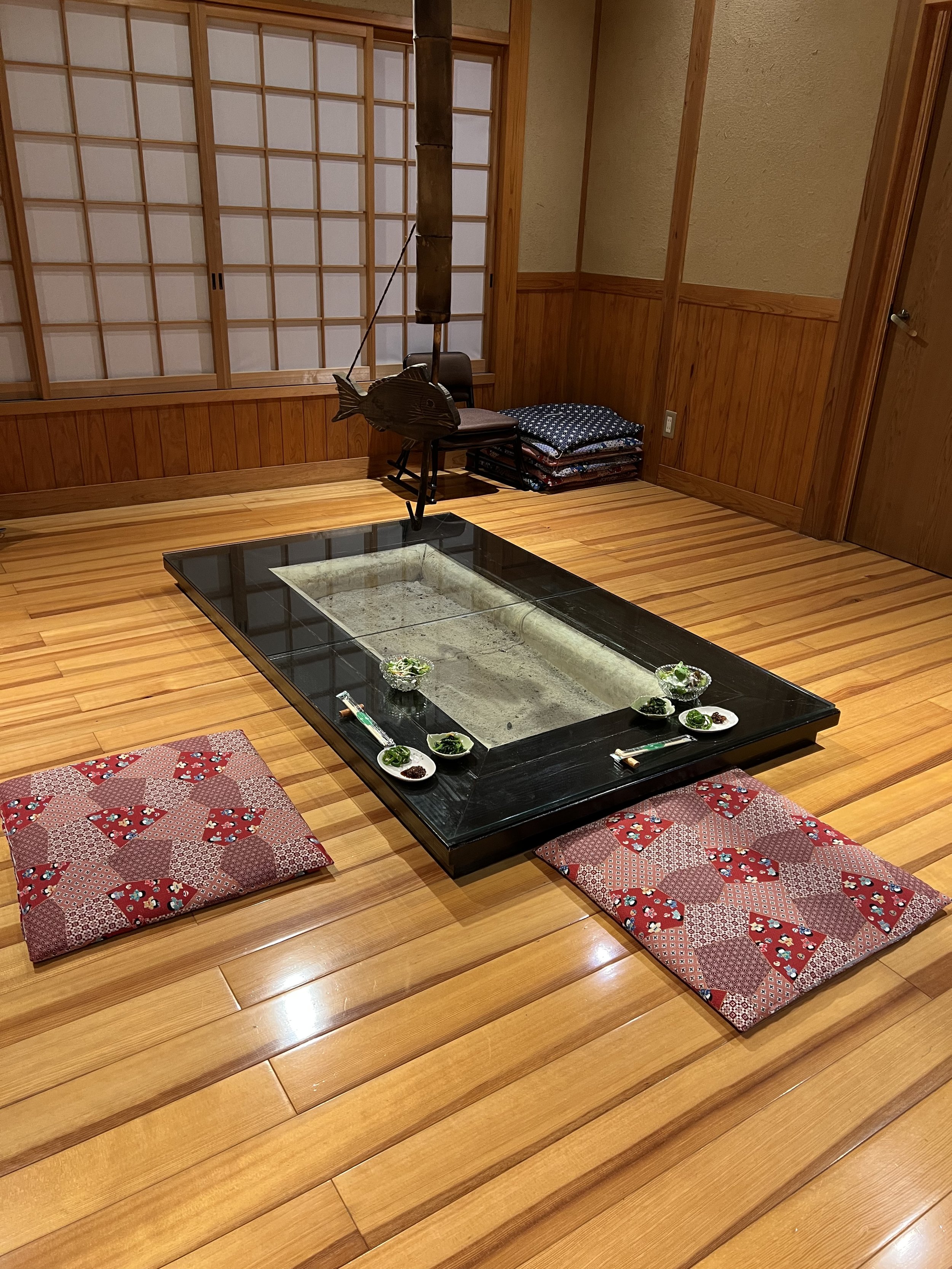
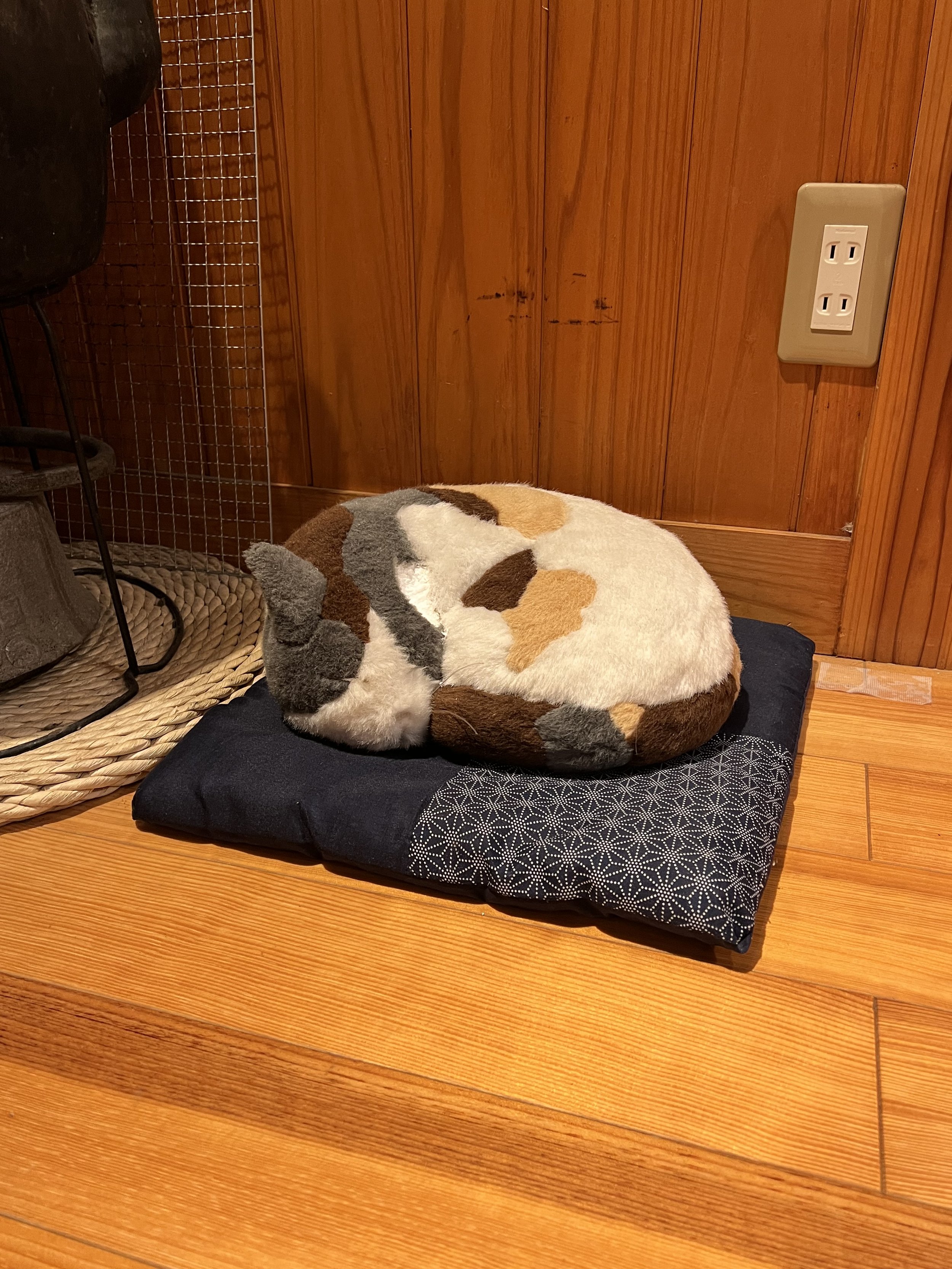
But by far my favorite, and one I considered taking home, was the stuffed cat. She/he/they reside(s) at the very same inn where I heard Edelweiss blaring across town during my morning pre-dawn stretching. This minshuku is the only one I encountered that is owned and run by a community. It’s gorgeous, in a 100-year old restored wooden school building, and even features a small folk museum and real indoor fire pits where they sometimes cook as their grandparents did—over large open fires. We ate sitting at one of these fire pits. Notwithstanding the gorgeous period details and authentic everything, there in the corner, curled up on a cushion, was a little calico cat … doll. Somehow I found her utterly endearing and yet totally out of sync with the whole vibe. A fake cat in a real restored schoolhouse and folk museum. As a friend of mine brilliantly asked, “but is it a real cushion?”
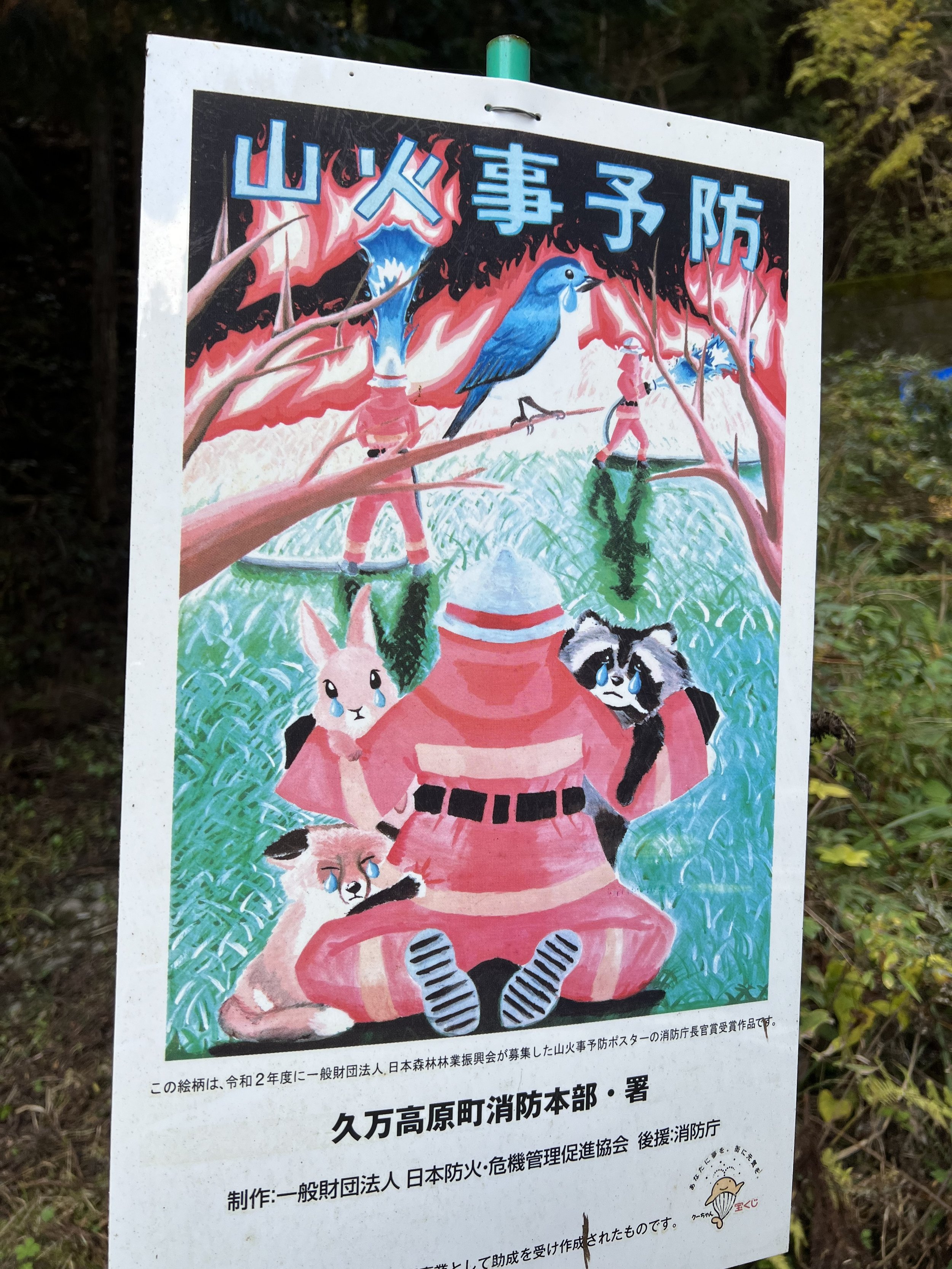
All of this strangeness aside, there were some profound and thought-provoking elements nestled deep within the Japanese weirdness. There was the fire safety poster I saw multiple times on the island, with weeping forest creature survivors turning their backs after escaping the flames, being embraced by a firefighter as their home and presumably neighbors burn. As a California resident, that one stopped me dead. More like this, please.
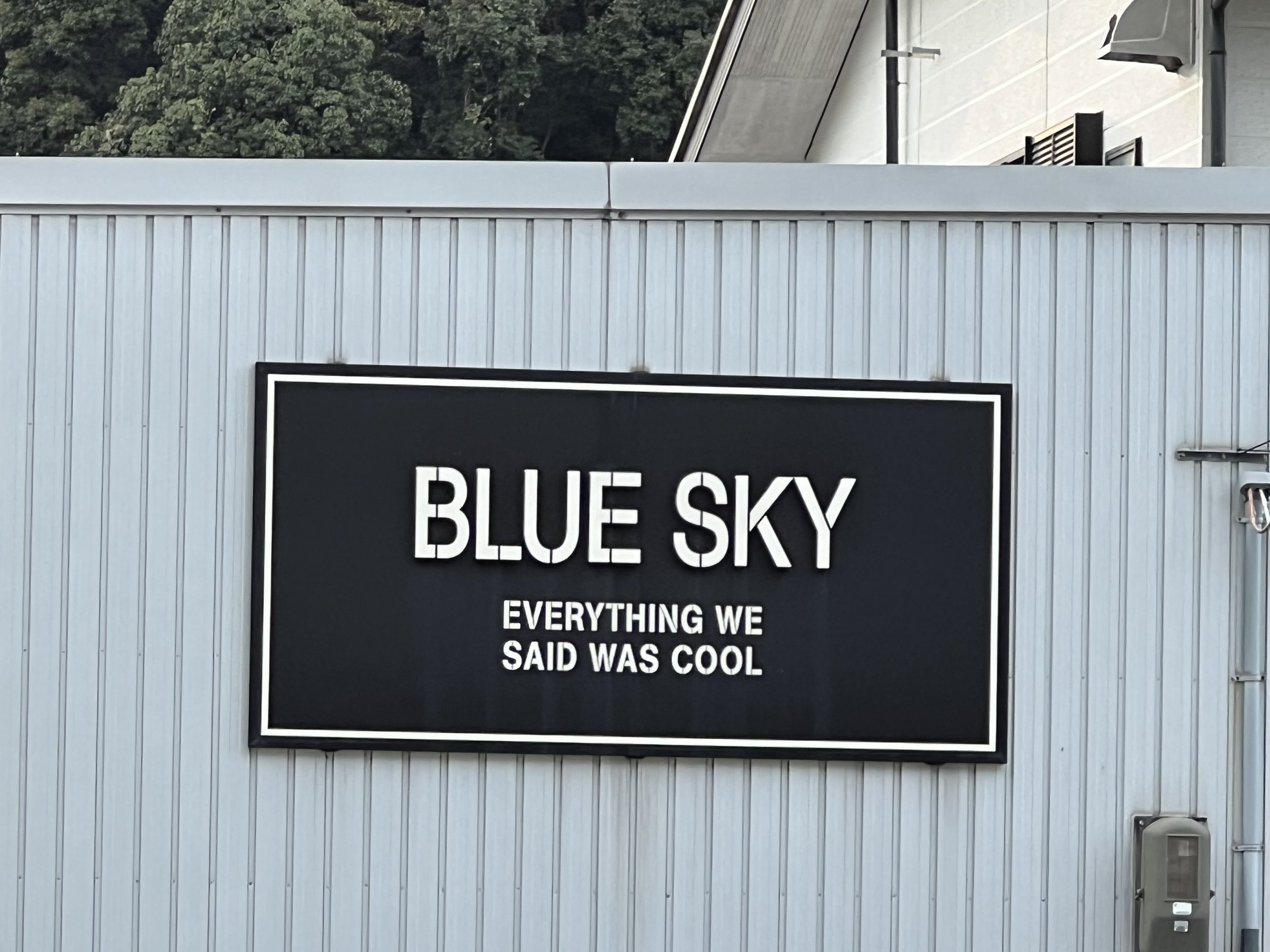
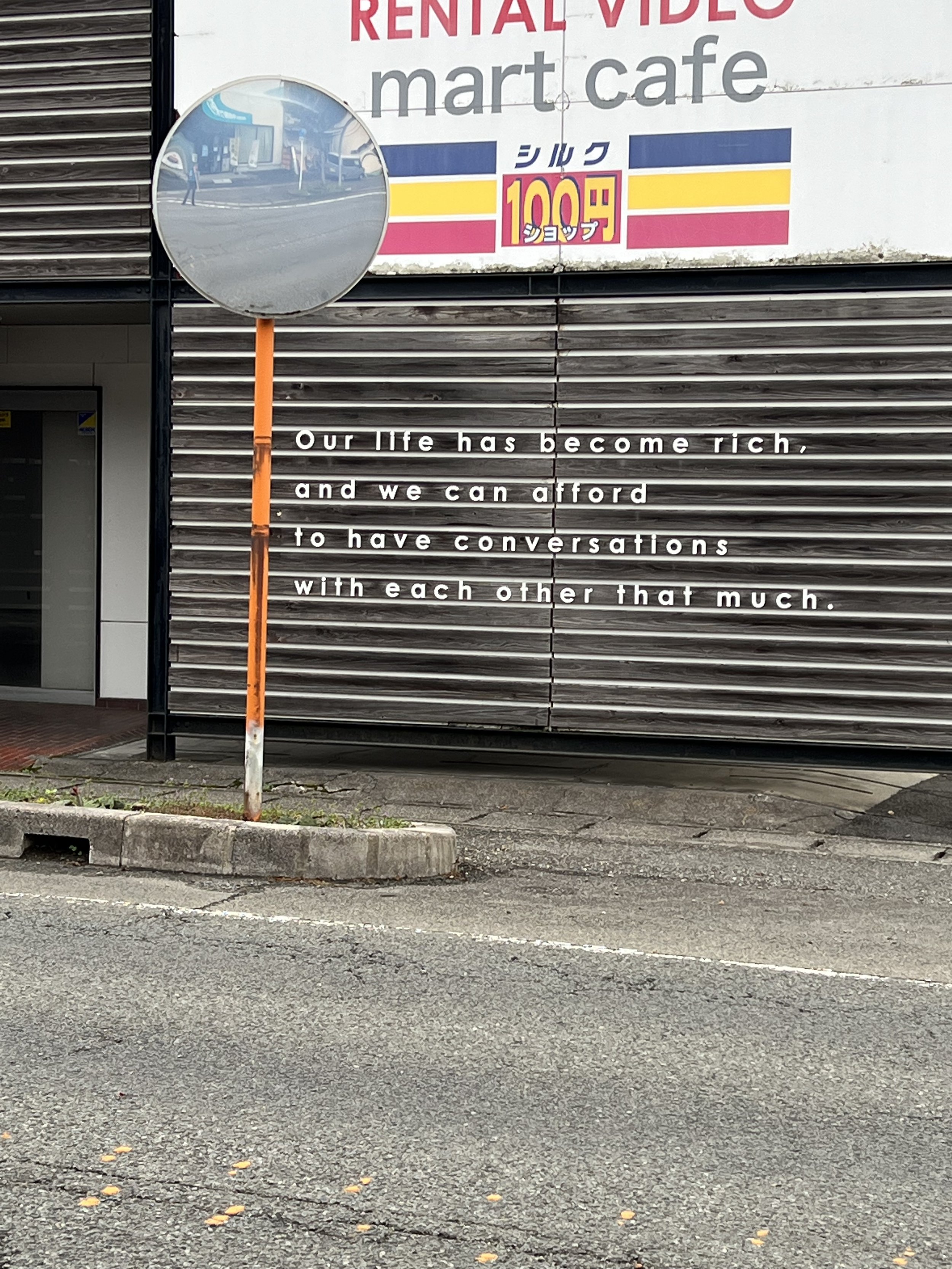
And there was the occasional nugget of wisdom emanating from a weird Japanese sign in broken English. Who among us can’t learn something from this aphoristic offering, posted on a billboard by the side of a highway:
Our life has become rich,
and we can afford
to have conversations
with each other that much.


 Walking and Praying
Leave a reply to Carla F Cancel reply